
Transitioning your toddler from a crib to a larger bed is a major developmental milestone, but it often brings worries about nighttime falls. A bed side guard serves as a physical barrier to keep your child secure during sleep. To choose the right one, you must evaluate material safety certifications, structural stability, precise sizing compatibility, and secure installation mechanisms. By focusing on these critical factors, you can create a secure sleeping environment that accommodates your child’s developmental stage and fits your specific home setup.
Key Safety Features and Material Checks
When shopping for a bed side guard, material safety and structural integrity should be your top priorities. Because toddlers frequently come into direct contact with the guard, the materials used must be completely non-toxic and free from harmful chemicals. Look for recognized safety standard labels on the packaging or product specification page, such as BS EN 71 (the European standard for toy safety and material toxicity) or ASTM F2085 (the standard consumer safety specification for portable bed rails). These certifications provide peace of mind that the fabric, plastics, and metals have been tested for lead, phthalates, and other hazardous substances.
The choice between mesh breathability and solid panel designs is another critical consideration, particularly in Singapore’s warm and humid climate. Mesh panels are highly recommended because they allow continuous airflow around the sleeping child, reducing the risk of overheating. Additionally, high-density mesh provides excellent visibility, allowing you to monitor your child from across the room without entering and risking waking them. Solid fabric or plastic panels, while sturdy, can restrict airflow and limit your line of sight, making them less suitable for humid environments unless paired with active ventilation.
Products mentioned in this guide
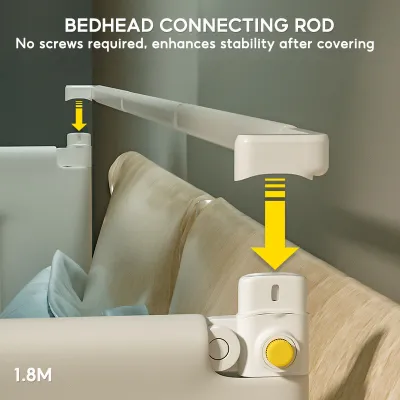
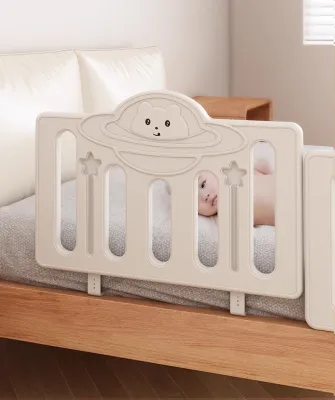
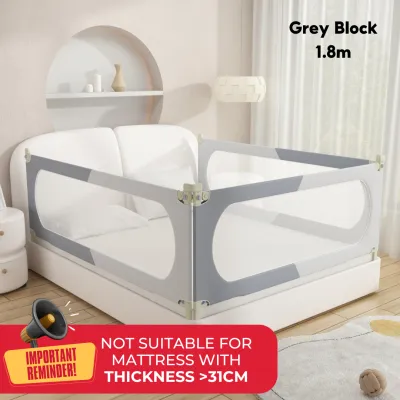
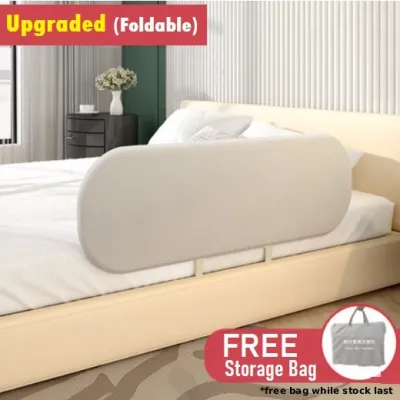
![Home Childrens Bed Fence Guardrail Assists In Getting Up Bedside Armrest Railing Prevents Elderly People From Falling Off [CSS]](https://img.lazcdn.com/g/p/d796a9dec3e76c9c8aa67f38e4770f95.jpg_400x400q80.jpg_.webp)
Prices are valid at publication and may change. Please refer to the product page for the latest price.
Beyond the fabric, you must inspect the frame material and construction quality. High-quality steel or lightweight aluminum frames offer robust structural durability without adding excessive weight to the bed. Carefully examine the frame for any sharp edges, rough welds, or exposed metal joints that could scratch your child. Ensure there are no pinch points in the folding joints where small fingers could get caught during operation. Finally, check that there are no small, detachable parts, such as loose plastic caps or easily unscrewed bolts, which could pose a serious choking hazard to a curious toddler.
Sizing, Fit, and Gap Prevention
Selecting the correct size for your bed side guard is not just about aesthetics; it is a critical safety step to prevent falls and eliminate dangerous entrapment hazards. Before making a purchase, you must measure your mattress thickness accurately. The effectiveness of a guard rail depends on how high it stands above the actual sleep surface once the child is lying down. Ideally, the top of the guard should extend at least 16 to 20 centimeters above the top of the mattress. If you use a thick pocket-spring mattress or a plush pillow-top mattress, you will need to look for extra-tall guard models to maintain this safe clearance.

The length of the guard relative to the bed size also requires careful calculation. A full-length guard covers almost the entire side of the bed, which is highly effective for younger toddlers who tend to move around excessively during sleep. However, if your child is older and learning to get in and out of bed independently, a partial-length guard is often more appropriate. A partial guard should cover the upper half of the bed while leaving a safe, unobstructed space at the foot of the bed. This allows the child to exit safely without attempting to climb over the rail, which can lead to awkward and dangerous falls.
The most severe hazard associated with bed side guards is entrapment, which occurs when a gap forms between the mattress and the guard rail. If a child slips into this gap, they can become trapped. To eliminate this risk, look for guards equipped with securing mechanisms that pull the rail flush against the side of the mattress. Many high-quality models use heavy-duty anchoring straps that wrap around the opposite side of the bed frame, or tensioning systems that lock the base firmly against the mattress edge. Regularly inspect this connection to ensure no shifting or loosening has occurred over time.
Installation Types and Stability Indicators
Different bed frames require specific mounting methods to ensure long-term stability and prevent the guard from shifting under pressure. Under-mattress weight-bearing bases rely on the weight of the mattress to hold the guard’s flat anchor plates in place. While convenient and easy to install, these systems are best suited for heavy, thick mattresses. For lighter mattresses, look for strap-based systems that anchor the guard to the opposite side of the bed frame, or screw-in systems that secure the base directly to wooden slats. Screw-in methods offer the highest level of stability but require permanent modification of the bed frame.
Many modern bed side guards feature a fold-down or hinge mechanism that allows the rail to swing downward. This feature is incredibly convenient for changing bed sheets, making the bed, or sitting on the edge of the mattress to read a bedtime story. When evaluating these models, inspect the locking mechanism closely. It should feature a double-action lock or a child-proof release system that requires two distinct, simultaneous movements to unlock. This design ensures that a curious toddler cannot accidentally release the lock from the inside of the bed.
When assessing stability, learn to identify red flags that indicate a poor-quality product. Avoid guards that rely solely on friction or the weight of a light mattress without any physical anchoring system. Flimsy locking pins made of thin plastic or loose-fitting joints are major warning signs, as they can fail under the pressure of a child leaning or rolling against the rail. If the guard wobbles significantly when gently shaken during installation, it lacks the structural integrity required to keep your child safe and should be adjusted or replaced.
Matching the Guard to Your Bed and Mattress Type
Your choice of bed side guard must align with your specific bed setup to ensure compatibility and a secure installation. In many Singapore apartments, space-saving platform beds, divans, or storage beds with hydraulic lifts are highly popular. These bed designs often lack the open space underneath required for standard under-mattress strap systems. If you have a platform bed, you must select a guard specifically designed with a flat, low-profile base that can sit flush on the platform surface without tilting the mattress, or one that can be securely fastened to the platform board.
For families utilizing floor beds or Montessori-style low beds, the safety requirements differ. Since the fall distance is minimal, a standard high-profile metal guard might be unnecessary or even create a climbing hazard. Instead, consider low-profile foam bumpers that slip under the fitted sheet, or specialized soft guards that provide a gentle boundary without the rigid structure of a traditional metal rail. These alternatives offer a softer transition for toddlers while maintaining the low-profile aesthetic of a Montessori sleeping area.
Finally, ensure the guard’s dimensions are compatible with standard mattress sizes in Singapore, which differ slightly from US or European standards. A standard local Single mattress is 91 cm wide and 190 cm long, while a Queen is 152 cm wide and 190 cm long. Check the manufacturer’s base dimensions and weight limits to ensure the guard’s support bars do not overhang the edges of your specific mattress size. An improper fit can compromise the stability of the entire guard, making it prone to tipping or sliding out of place.
Your Pre-Purchase Verification Checklist
Before finalizing your purchase, use this consolidated checklist to verify that the bed side guard is safe, compatible, and suitable for your child’s developmental stage:
- Verify Age and Weight Limits: Check the manufacturer's stated age, weight, and developmental limits. Most portable bed guards are designed for children aged 18 months to 5 years who can get in and out of bed unassisted. They are generally not suitable for infants under 18 months or children who are heavy enough to push the rail out of place.
- Confirm the Return Policy: Because bed frames and mattress configurations vary widely, there is always a risk that a guard will not fit your specific setup. Confirm the retailer's return or exchange policy before purchasing. This is especially important when buying from online marketplaces or specialty baby stores, where returning bulky items can sometimes be challenging.
- Review User Feedback: Spend time reviewing feedback from other parents. Look specifically for comments regarding long-term durability, ease of installation, and any issues with gaps forming over time. Pay close attention to mentions of fabric tearing, locking mechanisms becoming stiff, or the guard shifting when a child rolls against it.
Frequently Asked Questions (FAQ)
At what age should I stop using a bed side guard?
Rather than relying on a strict age limit, transition your child away from using a guard based on their physical abilities and developmental milestones. Once your child can safely navigate the edge of the bed, climb in and out without assistance, and no longer rolls excessively during sleep, the guard can be safely removed. For most children, this transition occurs between the ages of 3 and 5. If your child begins trying to climb over the guard rail, remove it immediately, as this poses a much greater fall hazard than sleeping without a guard.
Can I use a bed side guard on a bunk bed?
Standard portable bed side guards should never be used on bunk beds, loft beds, or any elevated sleeping surfaces. These guards are designed for standard low beds and may not withstand the forces or fit the structural requirements of an elevated bed. Top bunks require specialized, manufacturer-approved guardrails that are permanently bolted to the bed frame to prevent catastrophic falls. Always consult the bunk bed manufacturer’s guidelines for compatible safety rails.
How do I clean and maintain the mesh and frame?
Regular maintenance is essential to keep the guard hygienic and structurally sound. For the fabric and mesh panels, follow the manufacturer’s care label instructions; many models feature removable covers that can be machine-washed on a gentle cycle. For non-removable fabric, spot-clean with a mild, baby-safe detergent and warm water, ensuring it dries completely to prevent mold growth in Singapore’s humid climate. Periodically inspect the metal or plastic frame, tightening any loose screws and checking that the locking hinges operate smoothly without sticking.

Community discussion
Share your experience or ask a question. Comments are reviewed before publication.