
When selecting cotton tips for your baby, safety and material integrity are the most critical factors. Unlike standard adult swabs, baby-specific cotton tips are engineered with unique structural designs, such as bulbous safety shapes and flexible sticks, to prevent accidental over-insertion and minimize the risk of injury to delicate tissues. Caregivers should look for 100% pure or certified organic cotton heads, flexible paper or high-quality bamboo sticks, and clear manufacturer labels indicating non-toxic binders. By verifying these specifications on the packaging and understanding the strict boundaries of external-only cleaning, you can safely manage your infant’s daily grooming needs.
Why Baby-Specific Cotton Tips Differ from Adult Versions
Adult cotton swabs are generally designed with straight, narrow profiles and rigid shafts that are suitable for precise application or cleaning tasks by adults. However, these same characteristics pose significant risks when used on an infant. A baby’s ear canals, nasal passages, and skin folds are incredibly delicate and much smaller than those of an adult. The standard adult swab can easily slide too deep into a tiny opening, potentially causing painful scratches, eardrum damage, or impacted debris.
Baby-specific cotton tips are designed to address these anatomical vulnerabilities. The most prominent difference is the shape of the cotton head itself. Many infant swabs feature a bulbous or “safety” design, where the tip starts narrow but quickly widens into a thick collar. This physical barrier is designed to prevent the tip from entering deep into the ear canal or nasal passage, keeping the cleaning action strictly on the outer surfaces.
Products mentioned in this guide
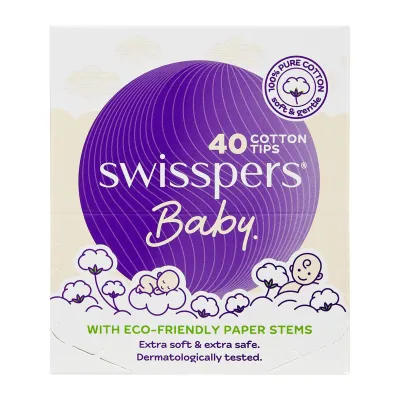
Prices are valid at publication and may change. Please refer to the product page for the latest price.
Additionally, the density of the cotton on baby swabs is wound tighter to prevent loose fibers from unraveling during use. The sticks are also engineered to be more flexible, reducing the force transmitted if the baby makes a sudden movement. When shopping, caregivers must check the manufacturer’s packaging for explicit age recommendations and intended use instructions. It is vital to remember that even the most carefully designed “baby-safe” cotton tip is intended solely for external grooming and must never be used for internal cleaning.
Key Material Features to Check on the Packaging
When evaluating baby cotton tips, the materials used in construction should be your first point of inspection on the product label. The cotton head comes into direct contact with your baby’s sensitive skin, making its purity paramount. Look for packaging that specifies the use of 100% pure cotton or certified organic cotton. Organic cotton is grown without synthetic pesticides, which reduces the likelihood of chemical residues remaining in the fibers.

Caregivers should also look for labels indicating that the cotton is unbleached or processed without chlorine. Traditional bleaching processes can leave behind trace chemical byproducts that may irritate a newborn’s highly sensitive skin. Hypoallergenic certifications or dermatologically tested labels are also valuable indicators to verify on the packaging, as they suggest the product has been evaluated to minimize allergic reactions.
The stick material is another critical component to compare. The three primary options are paper, bamboo, and plastic. Paper sticks, made from tightly wound compressed paper, are highly favored for their excellent balance of flexibility and strength; they bend easily under pressure rather than snapping or splintering. Bamboo sticks offer a sturdy, biodegradable alternative, but caregivers must verify that the manufacturer has applied a smooth, splinter-free finish. Plastic sticks are highly flexible but are increasingly being phased out due to environmental concerns and varying rigidity.
Finally, pay close attention to how the cotton head is secured to the stick. High-quality manufacturers use non-toxic, food-grade adhesives or specialized water-based binders to ensure the cotton tip remains firmly attached during use. Look for explicit statements on the packaging confirming that the adhesives are safe, solvent-free, and resistant to dissolving when wet, which prevents the cotton head from slipping off the stick during grooming.
Structural and Design Safety Checks
Before purchasing or using any cotton tips on your infant, a physical and visual inspection of the product’s design is essential. The shape of the tip should match the specific grooming task you need to perform. For instance, the classic bulbous safety shape is ideal for cleaning the outer folds of the ear (the pinna) because the wide base naturally blocks the tip from entering the ear canal. Other specialized shapes, such as spoon-shaped or wave-shaped tips, are designed to gently scoop away dry secretions from the outer skin folds or around the umbilical cord stump.
Stick flexibility is a crucial safety mechanism that acts as a shock absorber. If a baby wiggles or jerks their head during grooming, a rigid stick can poke and injure the delicate skin. A flexible stick, however, will bend under sudden pressure, absorbing the impact. You can check the product description on the packaging for terms like “flexible core” or “bendable safety stick.” If the packaging allows you to feel the product, or when you open a new pack, perform a gentle bend test by applying light pressure to the stick to ensure it yields easily without snapping.
Built-in safety stops or physical guards are another feature to look for. Some advanced baby cotton tips feature a distinct ring or a sudden widening of the stick itself, which acts as a mechanical stopper. This design ensures that even if you are applying light pressure, your fingers cannot slide too close to the tip, and the swab cannot physically penetrate past a safe depth. Verify the presence of these physical safety features visually before buying, ensuring they are molded securely into the product’s structure.
Safe Usage Boundaries and External Cleaning Rules
Even with the safest cotton tips, proper technique and strict adherence to safety boundaries are necessary to prevent injury. The most critical rule of infant grooming is that cotton tips must be used for external cleaning only. Under no circumstances should a swab be inserted into your baby’s ear canal or nostrils. The ear canal is self-cleaning, and inserting a tip can push wax deeper, leading to impaction, irritation, or damage to the delicate eardrum. Limit your use strictly to the visible outer folds of the ear and the skin surrounding the nose.
For specialized tasks like umbilical cord care or nail grooming, cotton tips can be highly effective tools when used correctly. If your pediatrician has instructed you to keep the umbilical cord stump clean and dry, you can use a baby cotton tip to gently apply prescribed antiseptic cleansers or to dab away moisture from the base of the stump. Always follow your healthcare provider’s specific instructions regarding the frequency and method of cleaning this sensitive area.
Supervision and physical control are paramount during any grooming routine. Ensure your baby is lying on a flat, stable surface, and keep one hand securely on their head or body to minimize sudden movements. Hold the cotton tip close to the cotton head to maximize your control, and maintain a gentle, light touch. If your baby becomes fussy, starts squirming, or moves unexpectedly, stop using the cotton tip immediately to avoid accidental pokes. Never leave a baby unattended with cotton tips, and store the container completely out of their reach.
When to Discard or Stop Using a Cotton Tip
Knowing when to discard a cotton tip is just as important as knowing how to use one safely. Before each use, inspect the swab for any signs of fiber shedding. If you notice loose, fuzzy cotton fibers pulling away from the head, do not use that swab. Loose fibers can easily detach during grooming and get trapped in your baby’s eyes, nose, or throat, posing an inhalation or irritation risk.
Structural integrity is another reason to discard a swab immediately. If you notice that a stick is bent, cracked, or showing signs of splintering—particularly with bamboo or compressed paper sticks—throw it away. A compromised stick can snap during use, leaving sharp edges that could scratch your baby’s delicate skin. Always handle the swabs with clean, dry hands to prevent introducing moisture into the packaging, which can weaken paper sticks over time.
Finally, adhere to a strict single-use rule for hygiene and safety. Never reuse a cotton tip, even if it appears clean. Once a tip has touched your baby’s skin, it can harbor bacteria. To prevent cross-contamination, use a fresh cotton tip for each separate area of the body—such as using one swab for the left ear and a completely new one for the right ear. If you are caring for multiple infants, never share swabs between them, and always discard used tips immediately in a secure waste bin.
Frequently Asked Questions (FAQ)
Can I use regular adult cotton swabs if I only clean the outer ear?
No, you should avoid using regular adult cotton swabs on infants, even for external cleaning. Adult swabs lack the bulbous safety shape designed to prevent accidental over-insertion, making them much riskier if your baby makes a sudden, unexpected movement. Additionally, adult swabs often have more rigid sticks that do not bend under pressure, increasing the risk of localized trauma, and their larger, less dense cotton heads may shed loose fibers more easily on delicate infant skin.
Are bamboo stick cotton tips safer than plastic ones for babies?
Neither material is universally safer; instead, safety depends on manufacturing quality and flexibility. While bamboo is a sturdy, biodegradable option, you must verify that the packaging indicates a smooth, splinter-free finish to prevent skin irritation. Plastic sticks offer excellent flexibility but lack environmental benefits. When choosing, look for products that meet verified infant safety standards, and ensure the stick—whether bamboo, paper, or plastic—is designed to bend gently under pressure rather than snap.
Community discussion
Share your experience or ask a question. Comments are reviewed before publication.