
Finding the right storage box for toys in a compact nursery requires balancing physical room constraints with your child’s changing developmental needs. In typical Singapore apartments, such as HDB flats or condominiums, floor space is highly valuable, meaning every square centimetre must be planned carefully. The ideal storage setup does not rely on a single massive chest, but rather a strategic combination of small, medium, and low-profile containers that fit your specific layout. By selecting dimensions that match both your room’s footprint and the types of toys your child plays with, you can maintain an organized, safe, and functional environment.
Assessing Your Nursery Space and Layout
Before purchasing any toy storage solutions, you must accurately measure the physical boundaries of your nursery. Start by mapping out the floor area, taking careful note of the permanent furniture placements such as the crib, changing table, and wardrobe. It is essential to measure not just the static footprint of these items, but also their operational clearance zones. For instance, ensure you account for the full swing radius of the nursery door, wardrobe doors, and any pull-out drawers to prevent newly purchased storage boxes from blocking daily access.
When floor space is limited, evaluating the trade-off between vertical and horizontal storage footprints becomes a critical decision. Horizontal storage units or wide floor bins provide easy access for young children but consume valuable floor space that could otherwise be used as a play area. Conversely, vertical storage solutions, such as tall shelving units with modular bins, maximize the room’s height but require careful securing to prevent tipping. For compact nurseries, a hybrid approach often works best, utilizing low-profile floor bins for immediate daily use and vertical shelving for items requiring adult supervision.
Products mentioned in this guide
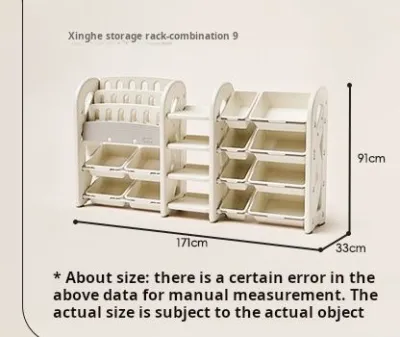
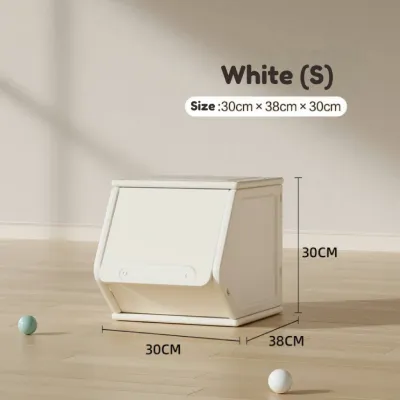
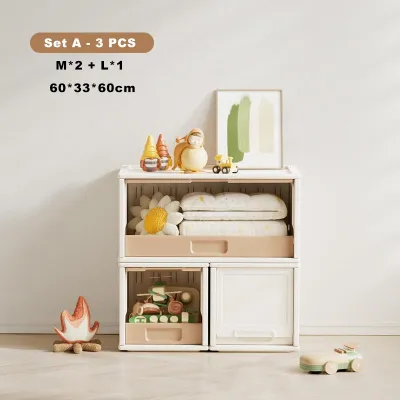
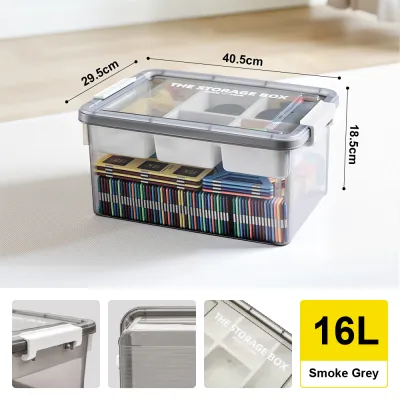
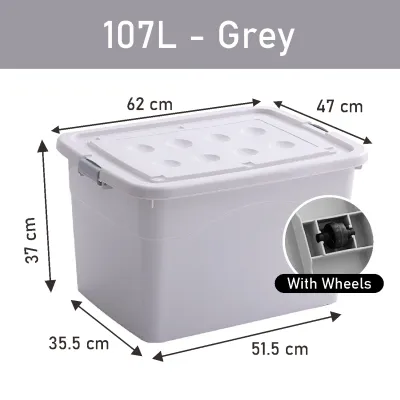
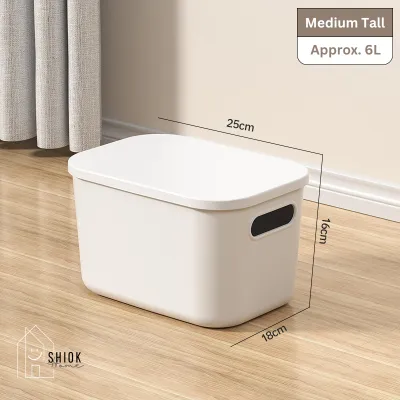
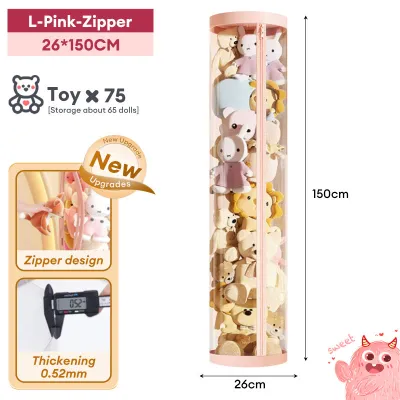
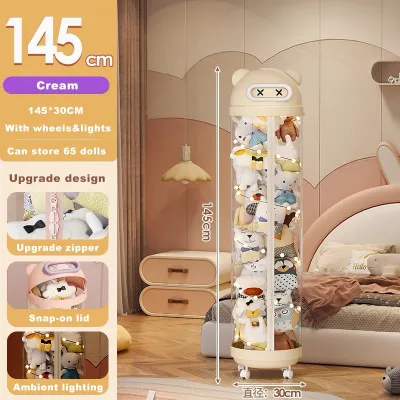
Prices are valid at publication and may change. Please refer to the product page for the latest price.
Maintaining clear, unobstructed pathways is paramount for both daily convenience and emergency safety. A cluttered floor plan increases the risk of trips and falls, especially during late-night feeding sessions or when carrying an infant. Ensure that the placement of your storage boxes leaves a clear walking path of at least 60 to 90 centimetres throughout the room. This spatial buffer allows you to move freely without navigating an obstacle course of plastic or fabric containers, keeping the nursery a serene and functional space.
Matching Box Dimensions to Toy Categories
Selecting the right storage box dimensions requires a clear understanding of the specific toy categories you need to organize. Bulky items, such as plush toys, large building blocks, and infant activity centers, require wide, deep bins with generous capacities. These larger containers allow you to quickly gather oversized items at the end of the day, keeping them off the floor. However, avoid using these deep bins for everything, as small toys will inevitably sink to the bottom, leading to frustration when your child tries to find them.

For smaller playthings, such as puzzle pieces, toy cars, and sensory items, shallow or divided containers are far more effective. Bins with a depth of 10 to 15 centimetres prevent deep stacking, ensuring that all items remain visible and easily accessible without the need to dump the entire contents onto the floor. Utilizing divided trays or modular insert boxes within a larger drawer can also help categorize tiny components, making clean-up times more structured and educational for toddlers.
When planning to stack storage boxes to save space, you must carefully check the manufacturer’s specifications for weight limits and structural integrity. Not all storage boxes are designed to support the weight of another filled container on top of them. Lightweight plastic bins may warp or crack under pressure, while soft fabric bins can collapse, potentially spilling their contents. Always verify that the bottom containers are rated for stacking and that the overall height of the stack remains stable and secure under normal daily use.
Evaluating Storage Box Features for Compact Rooms
In a small nursery, the design features of your storage containers can significantly impact how spacious the room feels. Collapsible or nestable designs are highly beneficial for managing fluctuating toy collections. When certain toys are rotated out of use or when your child outgrows specific items, collapsible fabric bins or nestable plastic tubs can be folded flat or stacked inside one another. This flexibility allows you to reclaim valuable physical space without having empty, bulky boxes cluttering the room.
Another key design choice is deciding between transparent materials and opaque bins paired with a labeling system. Transparent plastic containers offer immediate visual identification, allowing both parents and children to see exactly what is inside at a glance. However, some parents find that visible toy clutter can make a small room look visually chaotic. If you prefer a cleaner aesthetic, opaque bins with clear, child-friendly labels—using simple drawings or photos for pre-readers—provide an organized look while still encouraging independent clean-up.
You must also weigh the practical differences between lidded and open-top storage boxes. Lidded boxes offer excellent dust protection, which is particularly useful for items not played with daily, and they allow for neat stacking. However, lids can add an extra step to the clean-up process and may limit quick access for young children. Open-top bins, on the other hand, encourage quick and easy tossing of toys during tidy-up time, making them highly practical for high-use items, though they do not protect against dust accumulation.
Safety and Accessibility Considerations
When selecting storage box sizes, safety and accessibility must always be your top priorities. To foster independence, ensure that the height of daily-use bins allows your toddler to reach, remove, and return toys safely without assistance. For infants and toddlers, storage containers placed on the floor or on low shelves should ideally not exceed 50 to 60 centimetres in height. This accessible range allows young children to engage with their toys confidently while minimizing the risk of frustration or accidental strains.
Overly tall or top-heavy storage units pose significant safety hazards in a nursery. If you choose to stack storage boxes or use tall shelving units to maximize vertical space, you must check for anti-tip hardware requirements. Any furniture or stacked storage system taller than 60 centimetres should be securely anchored to the wall to prevent tipping accidents as children learn to pull themselves up or climb. Avoid placing heavy items in upper bins; always keep the heaviest toys in the lowest containers to maintain a low center of gravity.
If you opt for lidded storage boxes, closely inspect the lid design to prevent entrapment and pinching hazards. Look for toy chests equipped with safety hinges that prevent the lid from slamming shut on small fingers. For independent bins, lightweight, completely removable lids are often safer than heavy, attached ones. Additionally, ensure that any large, airtight plastic or wooden storage chests feature ventilation holes or gaps beneath the lid to prevent suffocation risks in the unlikely event a child climbs inside.
Common Sizing Mistakes to Avoid
One of the most frequent mistakes when purchasing nursery storage is forgetting to measure the entry pathways before buying large or rigid containers. A beautifully sized toy chest or a wide modular shelving unit is of little use if it cannot fit through your nursery doorway, narrow hallways, or apartment stairwells. Always verify the transit dimensions of your home, ensuring there is sufficient clearance to maneuver the storage furniture into its designated spot without damaging walls or door frames.
Another common error is choosing excessively deep boxes that bury smaller toys. While a deep chest might seem like an efficient way to clear clutter quickly, it often discourages tidy-up habits. Children are likely to dump the entire contents of a deep bin onto the floor just to find a single toy at the bottom, creating more mess than before. Opting for a series of smaller, specialized containers rather than one giant “catch-all” box keeps toys organized and makes clean-up much more manageable.
Finally, avoid purchasing a storage system that leaves no room for future growth or layout changes. Children’s toy preferences and sizes change rapidly as they transition from infancy to toddlerhood and beyond. If you fill every available centimetre of your nursery with rigid, fixed-size storage units today, you may struggle to accommodate larger toys or different furniture arrangements in the future. Leaving a small spatial buffer and choosing modular, adaptable storage systems ensures your nursery can evolve alongside your child’s developmental milestones.
Frequently Asked Questions (FAQ)
Can I use under-crib storage boxes in a small nursery?
Utilizing the space beneath the crib is an excellent way to maximize storage in a compact nursery. Before purchasing, you must measure the exact clearance height from the floor to the lowest point of the crib frame, as well as the distance between the crib legs. Look for low-profile, wheeled storage boxes designed specifically for under-bed use, which allow for easy sliding without scratching your floors. Ensure the boxes feature secure lids or zip-closures to protect toys from dust bunnies, and select materials that are easy to wipe clean regularly.
Are fabric storage bins better than plastic ones for small spaces?
Both materials offer distinct advantages depending on your specific nursery needs. Fabric storage bins are lightweight, soft, and often collapsible, making them highly safe for toddlers and easy to store away when empty. However, they may require a separate shelving unit or cubby frame to maintain their shape and support heavy loads without sagging. Plastic bins, while more rigid and visually prominent, offer superior structural integrity, are completely waterproof, and can be easily sanitized, making them ideal for storing art supplies, building blocks, or sensory toys.
Community discussion
Share your experience or ask a question. Comments are reviewed before publication.