
Selecting the right wet bag depends entirely on where it is going and what it needs to carry. For a child’s school bag, a compact, flat wet bag with a secure zipper and a snap loop is the most practical choice to contain damp swimsuits or soiled uniforms without taking up valuable space. For weekend outings, a larger, multi-compartment wet bag with dual pockets and adjustable straps is better suited to handle bulkier items like beach towels, spare clothes, and water shoes. Matching the bag’s design to the specific scenario ensures that damp gear remains isolated, preventing moisture from ruining schoolbooks or soaking your car. By evaluating capacity, closure styles, and carrying options, you can find the ideal balance between daily school utility and weekend adventure.
Matching Wet Bag Capacity to Your Child's Activities
When choosing a wet bag, the first step is to estimate the volume of the items your child needs to carry. School activities, such as weekly swimming lessons, typically require minimal gear. A standard school swim kit usually consists of a single swimsuit, a small microfiber towel, goggles, and a change of undergarments. For these items, a small to medium wet bag with a capacity of approximately two to three liters is generally sufficient. This size keeps the bag lightweight and prevents it from crowding the main compartment of a school backpack.
Weekend outings demand a much larger capacity. A day trip to a splash park, beach, or pool often involves packing multiple changes of clothes, large cotton beach towels, water shoes, and sunscreen. To accommodate these bulkier items, look for wet bags with a capacity of ten liters or more. These larger bags provide enough space to store wet gear for multiple children or to keep clean, dry clothes separated from damp items.
Products mentioned in this guide
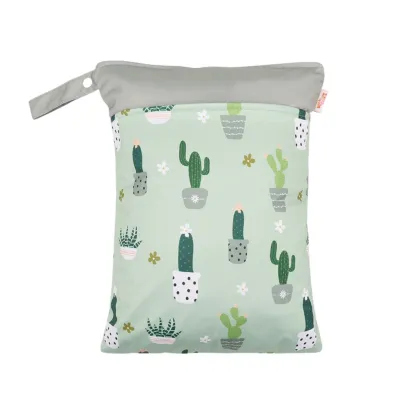
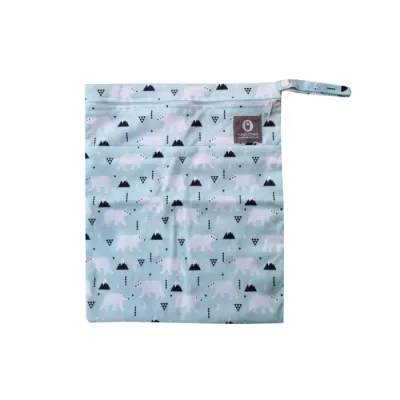
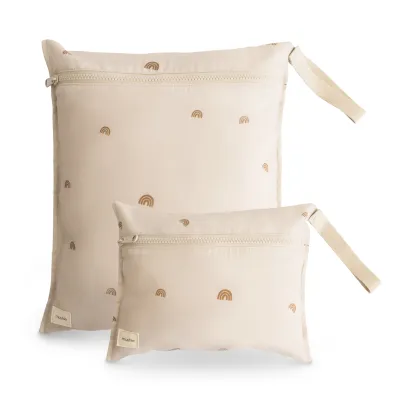

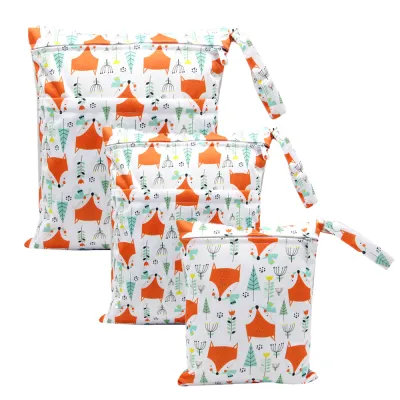



Prices are valid at publication and may change. Please refer to the product page for the latest price.
Rather than relying on visual size alone, always check the manufacturer’s capacity labels, which are often listed in liters or dimensions. Gusseted bottoms or expandable designs allow the bag to stand upright and hold significantly more volume than flat envelopes of the same height and width. Checking these specifications beforehand prevents the frustration of trying to stuff a plush beach towel into a bag designed only for a swimsuit.
Choosing the Right Style and Closure for Daily vs. Travel Use
The closure mechanism of a wet bag determines how well it contains moisture and odors, especially when stored alongside other belongings. For daily school use, a high-quality, water-resistant zipper is the gold standard. Zippers provide a tight, secure seal that prevents dampness from seeping out into a backpack filled with books and homework. Look for zippers that feature a protective fabric placket or a water-resistant coating over the teeth to ensure maximum containment.

For weekend trips, alternative closures like roll-tops or drawstrings can be highly practical. A roll-top closure offers excellent water resistance and allows you to adjust the bag’s size based on how much gear is inside. Drawstring closures are convenient for quick access at the beach or park, though they generally offer less protection against leaks if the bag is tipped over.
Strap configurations also play a major role in transport. For school bags, a short strap with a snap handle is incredibly useful, allowing your child to clip the wet bag to the outside of their backpack or secure it to an internal hook. For weekend travel, look for bags with adjustable shoulder straps or backpack-style straps. These configurations distribute the weight of heavy, wet gear across the shoulders, making it much easier to carry during long walks from the beach to the car.
Dual-compartment wet bags, often labeled as wet/dry bags, are particularly beneficial for weekend outings. These bags feature two separate pockets—one lined with a waterproof material for wet items and another dry pocket for clean clothes. This design eliminates the need to carry two separate bags, streamlining your packing routine and keeping your clean gear completely dry.
Fitting and Securing the Wet Bag Inside a School Backpack
Fitting a wet bag into a school backpack requires careful consideration of space and safety. Before purchasing, measure the internal dimensions of your child’s school bag and compare them to the folded and filled profile of the wet bag. A wet bag that is too wide or bulky will force your child to struggle when packing their lunchbox, water bottle, and textbooks. Opting for a flat, rectangular wet bag that can slide vertically alongside books is often the best way to maximize space.
Because schoolbooks and electronic devices are easily damaged by moisture, verifying the quality of the wet bag’s seams is critical. Standard stitched seams can allow water to slowly seep through the needle holes under pressure. Look for wet bags with heat-sealed or taped seams, which create a continuous waterproof barrier. Testing the bag at home by filling it with a damp towel and gently pressing on it can help you verify its leak-proof integrity.
Odor containment is another vital factor during the school day. A wet swimsuit or damp uniform can sit inside a locker or classroom for several hours before making its way home. To prevent unpleasant damp smells from escaping, choose a wet bag with a high-quality polyurethane laminate (PUL) or thermoplastic polyurethane (TPU) interior lining. These materials are highly effective at trapping odors, ensuring that your child’s backpack remains fresh.
Carrying and Organizing Bulkier Gear on Weekend Outings
Weekend trips often involve carrying heavier loads over longer distances, making carrying comfort a top priority. When wet towels and water shoes are packed together, the weight can quickly add up. Ergonomic, padded straps help distribute this weight comfortably, preventing the straps from digging into your shoulders during a family walk. If you plan to use a stroller, look for wet bags with integrated stroller straps or sturdy loops that can be attached to a carabiner, allowing you to hang the bag from the stroller handlebar.
Outdoor environments like beaches and parks introduce sand, dirt, and outdoor debris into the mix. To keep your wet bag in good condition, look for models with smooth, wipeable interior linings that do not trap sand in the corners. A quick shake or wipe down should be all it takes to clean the interior before packing it away. Additionally, choosing a bag with a durable, water-resistant exterior fabric, such as heavy-duty polyester or nylon, protects the bag from abrasions when placed on rough surfaces.
Organizing multiple wet bags can also simplify weekend travel. Using color-coded bags or bags with clear window panels allows you to quickly identify whose gear is inside without having to unzip every bag. This is especially helpful when managing gear for multiple children, ensuring that everyone’s dry clothes and wet swimsuits remain organized.
Verifying Materials and Care Instructions for Durability
To ensure your wet bag lasts through school terms and weekend trips, it is essential to verify the material specifications and care instructions provided by the manufacturer. Most high-quality wet bags utilize PUL or TPU linings to provide waterproofing. While both materials are highly effective, they have different tolerances for heat and washing. Reading the manufacturer’s tags will tell you the specific temperature limits and washing cycles recommended for your bag.
Following the labeled washing instructions is crucial to avoid stripping or cracking the waterproof laminate layer. Generally, wet bags should be washed on a gentle cycle with cool or warm water using a mild detergent. Avoid using bleach, fabric softeners, or vinegar in the wash, as these chemicals can degrade the waterproof coating over time. If the manufacturer allows tumble drying, use a low-heat setting; however, air drying is almost always the safest method to preserve the bag’s integrity.
Implementing a strict air-drying routine is the best way to prevent mold, mildew, and persistent odors from developing. After washing, turn the wet bag completely inside out and hang it in a well-ventilated area away from direct sunlight. Ensure the bag is thoroughly dry, especially along the seams and corners, before folding it up for storage. Taking these simple maintenance steps will keep your wet bags clean, hygienic, and ready for your next family adventure.
Frequently Asked Questions (FAQ)
Can one wet bag work for both school and weekends?
While you can use a single mid-sized wet bag (around five to six liters) for both school and weekends, it often requires compromises. A bag of this size may be unnecessarily bulky for a daily school backpack, leaving less room for books and lunchboxes. Conversely, it may prove too small for a full weekend outing with the family, forcing you to leave some damp gear unprotected. Having dedicated bags—a compact one for school and a larger, multi-compartment one for weekends—offers the greatest convenience and ensures you always have the right tool for the job.
How do I prevent a wet bag from developing a persistent odor?
To prevent persistent odors, never leave damp items sealed inside the wet bag for longer than necessary. Empty the bag as soon as you return home, rinse the interior with clean water to remove chlorine, salt, or sweat, and hang it inside out to air dry completely. If the manufacturer’s instructions permit, you can occasionally wash the bag with a mild, scent-free detergent. Always verify the care label before using any deodorizing sprays or alternative cleaning methods, as some products can damage the waterproof lining.
Community discussion
Share your experience or ask a question. Comments are reviewed before publication.