
When choosing a wearable breast pump, you are balancing freedom of movement against specific performance trade-offs. There is no single universal winner on the market; instead, the ideal device depends entirely on whether you prioritize maximum suction efficiency, ultra-quiet discretion, or all-day battery endurance.
Compact, in-bra models offer unmatched stealth and fit entirely within a standard nursing bra, but they often sacrifice some maximum vacuum strength and battery capacity to maintain their small profile. Conversely, larger over-bra designs or those with external, clip-on motors provide robust suction and longer runtimes, but they are more visible under clothing and generate more audible noise. Identifying your primary pumping environment—whether it is a quiet office, a busy household, or during a daily commute—will guide you toward the right balance of these three pillars. By understanding how these specifications interact, you can select a model that fits seamlessly into your daily routine without compromising your comfort or milk supply.
Suction Power: How to Compare Strength, Modes, and Comfort
Suction power in breast pumps is measured in millimeters of mercury (mmHg), which quantifies the negative pressure applied to the breast. While hospital-grade pumps typically reach vacuum levels of 250 to 350 mmHg using heavy-duty, AC-powered motors, standard personal electric pumps generally operate between 220 and 300 mmHg. Wearable breast pumps usually top out between 220 and 280 mmHg. Although these numbers appear comparable on paper, the miniature motors in wearable devices may take longer to achieve the same milk removal efficiency as a larger, plug-in tabletop motor.
Products mentioned in this guide
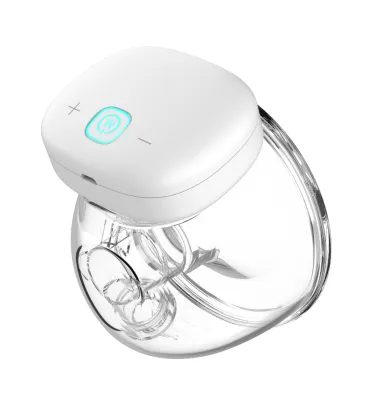
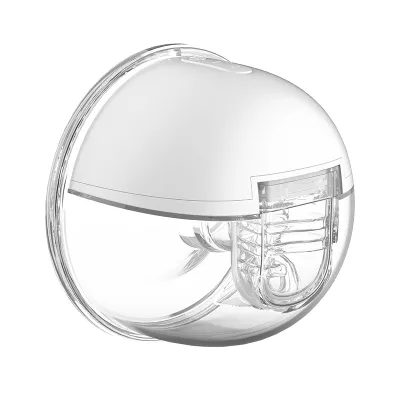
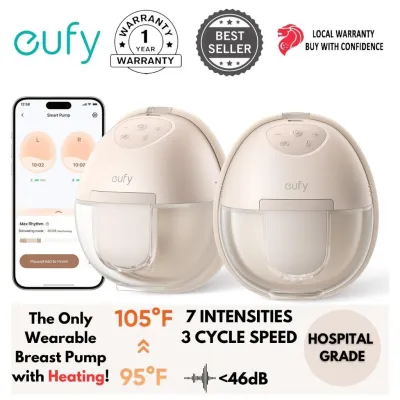
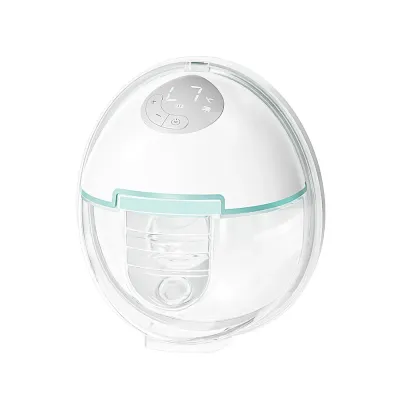
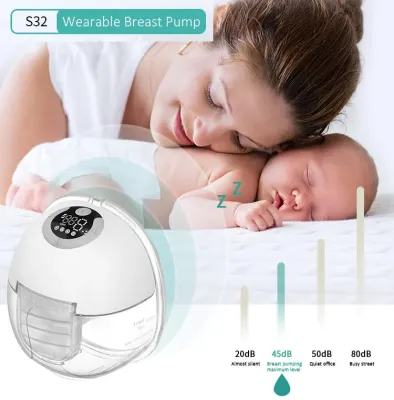
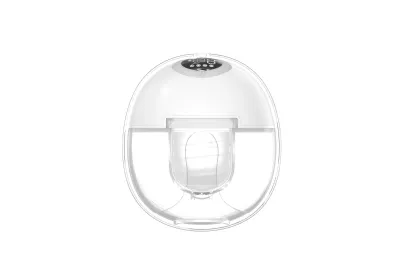
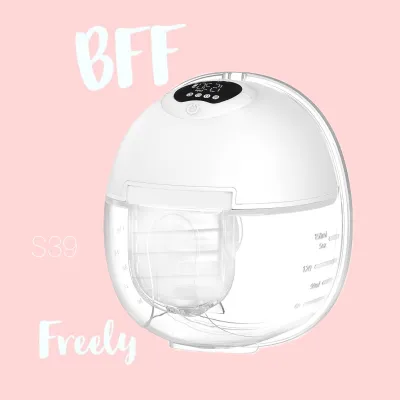
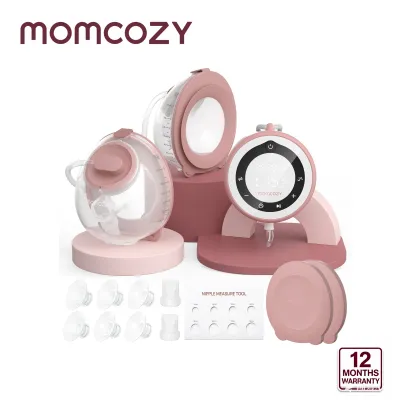
Prices are valid at publication and may change. Please refer to the product page for the latest price.
When evaluating suction, look closely at the available modes and cycle speeds rather than just the peak vacuum number. High-quality wearable pumps feature distinct phases: a let-down or massage mode, and an expression mode. Let-down mode uses fast, shallow cycles (typically 80 to 120 cycles per minute) to stimulate the nerves in the nipple, triggering the release of oxytocin and initiating milk flow. Expression mode transitions to slower, deeper cycles (typically 30 to 60 cycles per minute) to efficiently draw out the milk. A pump with highly adjustable suction levels allows you to fine-tune the transition between these phases, mimicking your baby’s natural nursing patterns.
To make an informed decision, check the manufacturer’s technical specifications for the exact mmHg range of each mode. Avoid relying on vague marketing terms like “ultra-strong” or “hospital-strength” without verifying the actual numbers on the product label. Additionally, ensure the pump offers a wide range of adjustment steps; a pump with ten micro-levels of suction is much easier to adjust to your comfort threshold than one with only three broad settings.
It is crucial to understand that higher suction does not translate directly to a greater volume of milk. In fact, using a suction level that is too high can cause tissue friction, swelling, and vasospasm, which can restrict milk ducts and actually decrease your overall output. If you experience pain, bruising, or nipple trauma while pumping, immediately lower the suction setting, stop using the device, and consult a certified lactation consultant or a healthcare professional in Singapore for personalized guidance.
Noise Levels: Evaluating Discretion for Office and Public Pumping
The acoustic profile of a wearable breast pump is a critical factor if you plan to use it in shared spaces, such as an office cubicle, a conference room, or while commuting on public transit in Singapore. Pump noise stems from three primary sources: the mechanical movement of the internal motor gears, the vibration of the pump housing against your chest, and the physical sound of milk dripping into the collection container.

To compare noise levels objectively, look for decibel (dB) ratings on the product packaging or the manufacturer’s technical datasheets. Sound is measured on a logarithmic scale, meaning a small increase in decibels represents a large increase in perceived loudness. For context, a quiet library typically registers at 40 dB, a normal conversation at home is about 60 dB, and a standard office environment sits around 50 dB. Most modern wearable pumps aim for an operating noise level between 40 dB and 50 dB. A pump operating at 42 dB will easily blend into the ambient background noise of an office, whereas a 52 dB pump may feel noticeably loud in a quiet room.
When comparing models, look for specific design features engineered to minimize sound. Brushless motors are highly desirable because they reduce mechanical friction, resulting in a lower-pitched, smoother hum that is easier to mask under clothing. Sound-dampening silicone enclosures and specialized internal baffles also help redirect acoustic waves inward, preventing the sound from radiating outward.
Because laboratory noise tests are conducted under ideal conditions, they may not perfectly reflect real-world usage. It is highly recommended to read verified user reviews to see how the pump performs when worn under different layers of clothing, such as professional wear or thick cotton. If possible, test the pump in a quiet room at home before your first day back at work to assess how audible the rhythm is and to build confidence for pumping in public spaces.
Battery Life: Comparing Capacity, Sessions, and Charging Flexibility
Because wearable breast pumps are designed for cordless operation, battery performance dictates how long you can remain untethered from a wall outlet. A pump’s battery life is determined by its battery capacity, measured in milliampere-hours (mAh), in relation to the power consumption of its motor. However, a larger mAh rating does not automatically guarantee a longer runtime. If a pump features heavy vibration modes, high suction settings, or dual-motor operation, it will deplete its battery much faster than a simpler model with a smaller battery capacity.
When researching models, prioritize the manufacturer’s estimated “pumping sessions per charge” or “minutes of continuous use” over raw battery size. A reliable wearable pump should provide at least 80 to 120 minutes of total run time on a single charge, which translates to roughly four to six 20-minute pumping sessions. This capacity ensures you can complete a full workday of pumping without needing to recharge the units midday.
Consider the charging methods and flexibility offered by each brand:
- USB-C Charging: This is the most versatile option, allowing you to charge your pumps using standard phone chargers, laptop ports, or portable power banks while traveling.
- Proprietary Docks: Some premium brands utilize specialized magnetic charging docks or cases. While these offer a neat storage solution, they require you to carry the dedicated dock or cable with you, limiting your charging options on the go.
- Fast-Charging Capabilities: Look for models that can recover 50% of their battery capacity within 30 minutes, which is incredibly useful when you are short on time between meetings.
Be sure to check the manufacturer’s guidelines regarding pass-through charging, which is the ability to use the pump while it is plugged into an electrical outlet. Many wearable models disable the pumping function entirely during charging as a safety precaution to prevent overheating. Additionally, lithium-ion batteries naturally degrade over time. To preserve battery health, avoid leaving the pumps plugged in overnight, do not charge them in hot environments, and always use the charging cables and adapters approved by the manufacturer.
Specification Checklist: What to Verify on the Product Label
Because technical specifications can change across product generations and regional model variations, you should compile and verify these exact data points from official brand websites or authorized retailers in Singapore before making a purchase. Use the template below to compare your candidate models side-by-side.
| Specification Dimension | Compact In-Bra Wearable | Standard Over-Bra Wearable | What to Verify on the Product Label |
|---|---|---|---|
| Peak Suction (mmHg) | Typically 220 – 260 mmHg | Typically 240 – 280 mmHg | Verify the maximum vacuum pressure in expression mode. |
| Noise Level (dB) | Typically 40 – 45 dB | Typically 46 – 52 dB | Check for independent decibel ratings at maximum suction. |
| Battery Capacity | Often 800 – 1,200 mAh | Often 1,200 – 1,600 mAh | Look for total minutes of continuous use per full charge. |
| Charging Port Type | USB-C or Proprietary | USB-C or Micro-USB | Confirm if a standard mobile power bank can be used. |
| Weight per Motor (g) | Typically 130 – 180g | Typically 180 – 250g | Ensure the weight will not cause your nursing bra to sag. |
| Flange Sizing (mm) | Includes standard sizes | Includes standard sizes | Check for included inserts (e.g., 17mm, 19mm, 21mm, 24mm). |
When evaluating flange sizing, remember that an incorrect fit can severely compromise both suction efficiency and comfort. Many brands ship their pumps with a standard 24mm or 28mm breast shield, but offer smaller silicone inserts separately. Measure your nipple diameter accurately before purchasing to ensure the brand supports your required size.
Decision Framework: Which Wearable Pump Type Fits Your Needs?
To choose the right wearable breast pump, match the technical specifications of the different categories to your daily schedule, lifestyle, and physiological needs.
- Choose a compact, in-bra model if: Discretion, a low profile under clothing, and quiet operation in shared offices or public transit are your absolute top priorities. This style is ideal for mothers who have a well-established milk supply, do not require intense vacuum pressure to empty their breasts, and want to pump completely hands-free while multitasking.
- Choose a larger, over-bra or external-motor model if: You require strong suction comparable to a traditional tabletop pump, need faster breast emptying times, or have a high milk yield that requires larger collection cups (e.g., 180ml or more per side). This style is best suited for those who primarily pump in private offices, at home, or in dedicated lactation rooms where a slightly bulkier silhouette and audible hum are not concerns.
- Choose a model with extended battery life and USB-C charging if: You travel frequently, work long shifts away from power outlets, or commute regularly. The ability to charge via a portable power bank ensures you will never be caught with a dead battery during a critical pumping session.
Frequently Asked Questions (FAQ)
Do wearable breast pumps match the suction of hospital-grade models?
Generally, wearable breast pumps do not match the raw motor power, rapid cycle speeds, or multi-phase programming of true hospital-grade rental pumps. Hospital-grade models utilize heavy-duty, AC-powered motors designed specifically to initiate, build, and maintain milk supply for mothers of premature infants or those facing supply challenges. Wearable pumps are designed primarily for convenience, mobility, and supply maintenance. If you are experiencing low milk supply or have specific medical conditions, consult a lactation professional in Singapore to determine if a hospital-grade rental is more appropriate for your needs.
Is it safe to use a wearable pump while it is plugged in?
Whether you can safely pump while charging depends entirely on the electrical design and safety certifications of your specific pump model. Many manufacturers build a safety lock into the device that completely disables the motor while the charging cable is connected to prevent overheating, battery damage, or electrical hazards. Always consult your product’s user manual before attempting to use it while plugged in. If the manufacturer prohibits pass-through charging, you must wait for the battery to charge fully before starting your session to avoid damaging the lithium-ion cells or voiding your warranty.

Community discussion
Share your experience or ask a question. Comments are reviewed before publication.