
Finding the right waterproof pouch for your diaper bag is not about finding a universal “best” brand, but rather about matching the pouch’s physical capacity to your daily parenting routine. A pouch that is too small will leave you struggling to stuff soiled clothes inside during an emergency, while an oversized pouch will crowd out dry essentials like formula, diapers, and toys. To make an efficient choice, you must look past generic marketing labels like “medium” or “extra-large” and evaluate how a pouch’s dimensions, materials, and structural design interact with your specific diaper bag.
In warm and humid climates, managing wet items quickly is essential to prevent mold and odors from developing during outings. Whether you are dealing with damp bibs from a quick cafe visit or soaked swimwear after a session at a water play park, the way a pouch handles volume and moisture containment will dictate its utility. By understanding your storage needs and learning how to read manufacturer specifications, you can select a pouch that keeps your diaper bag organized, balanced, and completely dry.
Assessing Your Diaper Bag's Wet Storage Needs
Before browsing online marketplaces or baby boutiques, you must audit what you actually carry on a typical day. The volume of wet storage you require depends heavily on your baby’s developmental stage and your lifestyle. For example, parents of newborns often deal with frequent spit-ups and diaper blowouts, requiring space for one or two complete changes of clothes. On the other hand, parents of toddlers might need to store damp bibs, reusable food pouches, or wet wipes used during messy self-feeding sessions.
Products mentioned in this guide
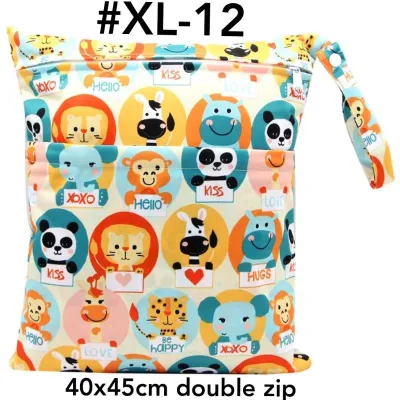
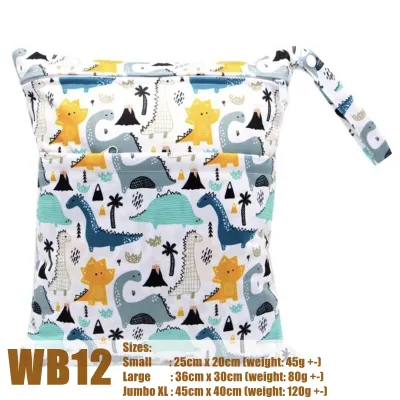
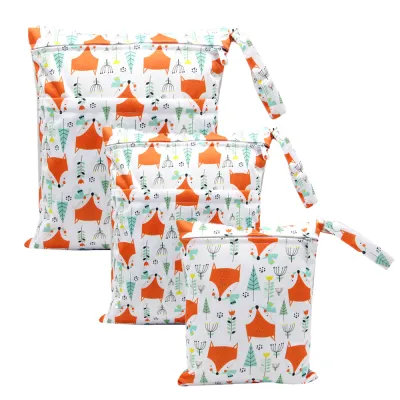
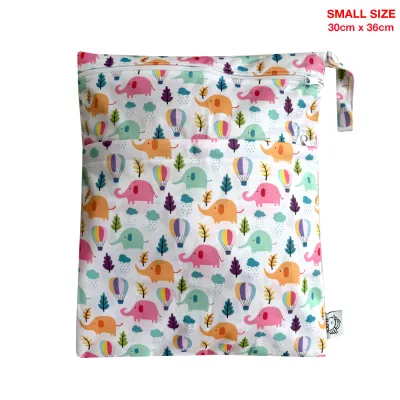
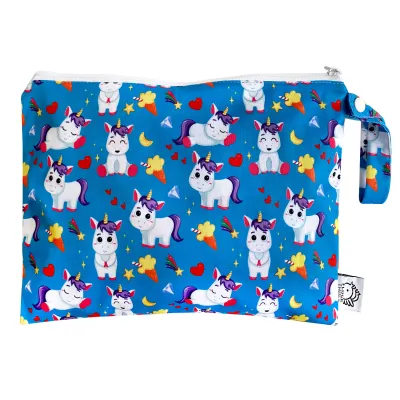
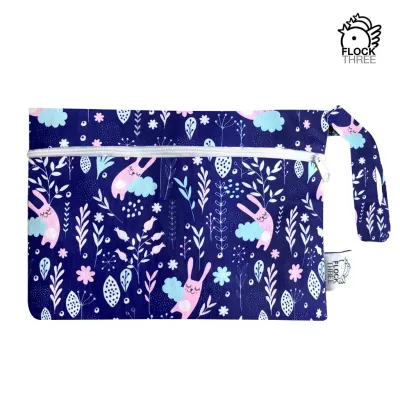
Prices are valid at publication and may change. Please refer to the product page for the latest price.
If your routine includes swimming lessons or sensory play, your capacity needs will increase significantly. A single wet swimsuit and a small microfiber towel require far more physical volume than a few soiled cotton onesies. Cloth diapering parents face the greatest volume demands, as clean and dirty cloth diapers are inherently bulky and require dedicated, reliable containment throughout the day. Listing these items beforehand prevents you from purchasing a pouch that is either frustratingly small or unnecessarily bulky.
Once you have identified your typical cargo, you must measure the physical space available inside your diaper bag. A common mistake is buying a highly rated waterproof pouch only to find it takes up eighty percent of your bag’s main compartment. Use a measuring tape to check the height, width, and depth of your diaper bag’s interior. Keep in mind that a filled waterproof pouch expands outward, which can compress adjacent items like baby bottles or diaper clutches, making them difficult to access in a hurry.
Finally, consider the weight and balance of your diaper bag when fully loaded. Water-logged garments, damp towels, and soiled diapers carry significant weight. If you place a heavy, fully packed waterproof pouch at the very top or to one side of your diaper bag, it can cause the bag to tip over when placed on a flat surface. It can also strain your shoulders or cause stroller clips to slip. Choosing a pouch size that encourages you to pack only what is necessary helps maintain the structural balance of your diaper bag.
Design Features That Dictate True Usable Capacity
A pouch’s advertised dimensions can be highly misleading if you do not account for its structural shape. Flat pouches, often referred to as envelope-style pouches, are excellent for space-saving but have very limited depth. When you stuff a flat pouch with bulky items, the sides pull inward, significantly reducing the usable height and width. These pouches are best reserved for flat, flexible items like single outfits, bibs, or dry breast pump parts.

For bulkier items, a gusseted or expandable base is essential. A gusset is an extra fold of fabric sewn into the bottom or sides of the pouch that allows it to expand outward when filled. This design enables the pouch to stand upright on its own, making it much easier to pack with one hand while holding a baby. A gusseted pouch accommodates three-dimensional items like shoes, thick towels, or multiple cloth diapers without distorting the overall shape of the pouch or putting excessive stress on the seams.
Another critical design choice is the division of space within the pouch. Many brands offer dual-pocket designs, commonly marketed as “wet/dry” bags. These pouches typically feature two separate compartments: one lined with a waterproof barrier for wet items and another breathable compartment for clean, dry spares. While highly convenient for keeping an entire outfit change in one place, the internal divider occupies physical space. If you pack the dry side to its maximum capacity, it will compress the wet side, reducing the volume available for soiled items later in the day.
The zipper clearance and opening width also dictate how much of the internal volume you can actually use. A pouch might have generous dimensions, but if the zipper opening is narrow or recessed, you will struggle to insert bulky items without tearing the seams. Look for designs where the zipper runs fully from edge to edge, or even curves slightly around the corners. This wide-mouth opening ensures you can easily slide in a rolled-up towel or a soiled sleep sack without having to compress it into a tight ball first.
Evaluating Brand Specifications and Material Trade-offs
To make an accurate comparison between different brands, you must rely on precise physical measurements rather than subjective size classifications. One brand’s “large” might be equivalent to another brand’s “medium.” Always locate the manufacturer’s specification sheet or product label to check the exact length, width, and depth in centimeters or inches. If a brand only lists a single volume measurement in liters, treat it with caution, as volume does not tell you if a long, narrow item like a baby bottle or a change mat will fit inside.
The materials used to construct the pouch play a major role in both its durability and its actual usable capacity. Thermoplastic Polyurethane (TPU) is a popular choice for modern wet bags because it is lightweight, flexible, and bonded to fabric, allowing the pouch to conform easily to the contours of your diaper bag. Polyvinyl Chloride (PVC) is highly waterproof and rigid, but it can be stiff, heavy, and difficult to fold when empty. Silicone pouches are incredibly durable and easy to clean, but their thick, rubbery walls do not compress easily, meaning they occupy a fixed amount of space in your bag regardless of how much they contain.
Thicker materials and heavy-duty linings provide excellent leak protection, but they also introduce a trade-off in terms of weight and flexibility. A heavy silicone or thick PVC pouch can add several hundred grams to your diaper bag before you even put a single item inside. Furthermore, stiff materials do not bend around other items in your bag, creating awkward empty spaces that waste valuable storage volume. If you prioritize a lightweight, highly packable diaper bag, a flexible TPU-lined fabric pouch is often the most space-efficient option.
Before purchasing, always check the product packaging or manufacturer’s website for specific warnings regarding weight limits and liquid containment. Most fabric-based waterproof pouches are designed to hold damp items, not pooling liquids. If you overstuff a pouch or place soaking-wet garments inside without wringing them out first, the pressure can force moisture through the zipper teeth or the stitched seams. Understanding these material limitations prevents unpleasant leaks that could ruin dry items, electronics, or the interior lining of your diaper bag.
Decision Framework: Matching Pouch Types to Your Routine
To simplify your selection process, you can match your specific daily routine to a corresponding pouch configuration. If your typical outings consist of short trips to the local supermarket, quick clinic visits, or brief playdates, your wet storage needs are minimal. For these scenarios, a compact, flat single-layer pouch measuring roughly 20 by 25 centimeters is ideal. It takes up virtually no space when empty, adds no noticeable weight, and easily holds a couple of wet bibs, dirty wipes, or a single soiled onesie until you return home.
For full-day excursions, family day trips, or swimming sessions, you will require a more robust solution. In these cases, look for a large, gusseted dual-pocket pouch measuring approximately 30 by 40 centimeters. This size provides enough volume to separate clean clothes from wet swimwear, soiled cloth diapers, or damp muslin wraps. The dual-pocket design is particularly useful here, as it allows you to carry your entire changing setup in a single, self-contained unit that can be easily pulled out of your diaper bag when needed.
Before investing in multiple external pouches, take a close look at the interior design of your current diaper bag. Many modern diaper bags, especially those designed for travel, come equipped with built-in wet compartments lined with waterproof materials. If your bag already features a spacious, easy-to-clean wet pocket that meets your daily needs, you may not need a separate large pouch at all. Instead, you might only require a small, highly portable pouch to isolate exceptionally messy items, such as teething toys or dirty pacifiers, from the rest of the compartment.
If you decide to purchase an external pouch, consider how it will secure to your diaper bag. Many models feature a snap-handle strap that allows you to hang the pouch from the exterior of your bag or stroller handlebar. This is an excellent space-saving feature for crowded diaper bags, as it frees up internal volume for dry essentials while keeping damp, odor-prone items completely outside the main bag. Ensure the snap and strap are made of durable, reinforced materials that can support the weight of wet garments without unfastening unexpectedly.
Maintenance and Hygiene Checks for Repeated Use
To ensure your waterproof pouch remains hygienic and functional over time, you must establish a regular cleaning and inspection routine. Because these pouches hold damp, soiled items in enclosed, warm environments, they are highly susceptible to mold, mildew, and bacterial growth. Always consult the manufacturer’s care label before washing. While many TPU-lined fabric pouches are machine washable, high water temperatures or harsh detergents can degrade the waterproof membrane, causing it to crack, peel, or delaminate over time.
When drying your pouch, air drying is generally the safest method to preserve the integrity of the waterproof lining. Hang the pouch inside out in a well-ventilated area away from direct sunlight, which can cause certain plastics and TPU coatings to become brittle. If the manufacturer permits tumble drying, use a low-heat setting to avoid melting the inner lining or damaging the zipper tape. Never store a damp waterproof pouch folded up in a dark cupboard, as this creates the perfect environment for persistent odors and mold to take hold.
Regularly inspect the structural integrity of your pouch, paying close attention to the seam seals and zipper tracks. Over time, the constant tension of opening, closing, and stuffing the pouch can cause the stitching to loosen or the waterproof tape along the seams to lift. If you notice any fraying threads, separation at the corners, or cracks in the internal lining, the pouch’s waterproofing is compromised. Testing the pouch periodically by filling it with a damp cloth and gently pressing it over a sink can help you identify slow leaks before they occur inside your diaper bag.
Finally, know when it is time to retire and replace your waterproof pouch. Even with meticulous care, the specialized coatings and linings have a finite lifespan. If a pouch begins to retain a sour or musty odor even after a thorough wash, or if you notice the inner lining peeling away from the outer fabric, it is no longer safe or hygienic for storing baby items. Replacing a worn-out pouch promptly ensures that your diaper bag remains a clean, organized, and stress-free environment for you and your baby.
Community discussion
Share your experience or ask a question. Comments are reviewed before publication.