
VTech baby walkers can be a helpful tool for a child’s play and development, but their safety is not an absolute guarantee. Whether a walker is safe for your baby depends on the specific model’s design, its compliance with current safety standards, the physical condition of the unit, and, most importantly, constant adult supervision. No baby walker—especially traditional sit-in models—is entirely risk-free, as mobility devices inherently introduce new physical dynamics and potential hazards into a child’s environment. To ensure your child remains secure, you must treat the walker as an active developmental tool that requires careful setup, regular inspection, and strict environmental controls.
Before placing your baby in any walker, your first step must be to locate and thoroughly read the manufacturer’s safety labels, warning tags, and instruction manual. These documents contain critical specifications regarding age limits, weight ranges, and developmental milestones that your child must meet before using the device. Never assume a walker is suitable for your baby based solely on the product name or general age recommendations on the box. Instead, verify that your baby’s physical development matches the exact criteria outlined in the manual, such as the ability to sit up unsupported or hold their head up steadily.
You should also inspect the product packaging or the walker’s base for recognized safety standard marks. In Singapore, nursery products and toys are subject to safety regulations, and verifying compliance with international standards such as EN 71 (European standard for toy safety) or ASTM F977 (standard consumer safety specification for infant walkers) is a vital step. These marks indicate that the design has undergone testing for structural integrity, stability, and the presence of hazardous substances. If you cannot find these safety marks on the packaging, the product base, or within the user manual, contact the manufacturer directly to verify compliance before allowing your child to use it.
Products mentioned in this guide

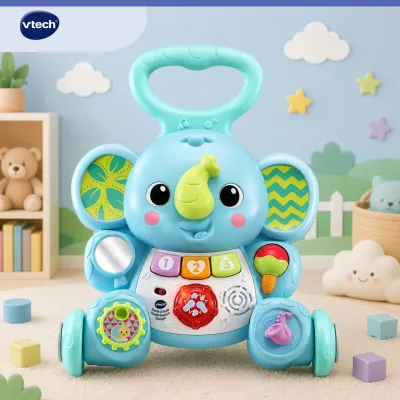

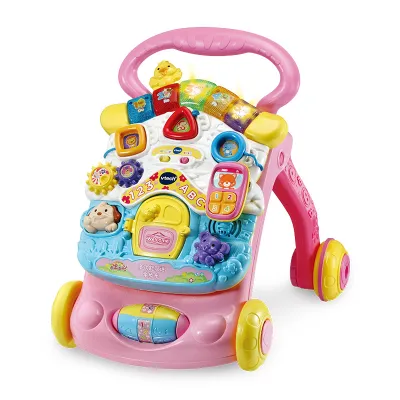

Prices are valid at publication and may change. Please refer to the product page for the latest price.
Finally, always register your newly purchased walker with the manufacturer. Product registration is a simple yet often overlooked step that ensures you receive immediate notifications in the event of a product recall or safety update. Manufacturers use these registration databases to contact parents directly when a specific batch or model is found to have a defect. Relying on general news or social media for recall information can lead to dangerous delays, so taking a few minutes to submit your product details online or via the registration card is an essential protective measure.
Key Safety Features to Inspect Before Use
Before introducing your baby to the walker, you must conduct a thorough physical inspection of its design features to ensure it provides a stable and secure environment. Start by evaluating the base width and weight distribution of the walker. A safe walker should feature a wide, stable base that is significantly wider than the upper tray or seat frame. This wide footprint prevents the walker from tipping over when your baby leans sideways or reaches for toys. Gently push the walker from different angles on a flat surface to observe its stability; it should resist tipping and remain firmly planted on the ground.
Next, inspect the underside of the walker for stair-fall prevention mechanisms or friction pads. Many modern walkers are equipped with rubberized strips or friction pads on the bottom of the base. These pads are designed to grip the floor and stop the walker instantly if one or more wheels lose contact with the ground, such as when reaching a step or a threshold. Check that these pads are clean, securely attached, and free of dust or hair, which can reduce their effectiveness. If your model features locking mechanisms to temporarily convert the walker into a stationary play center, test these locks to ensure they hold firmly under pressure.
Wheel quality and speed control settings are equally critical to your baby’s safety. Inspect the wheels to ensure they roll smoothly without sticking, but also verify if the walker has adjustable speed controls or resistance settings. Many push-style and sit-in walkers feature tension dials or rubber traction strips on the rear wheels to prevent the device from rolling too quickly on smooth surfaces like tile or hardwood. Adjust these settings to match your baby’s strength and developmental stage, ensuring the walker does not roll out from under them or move at a speed they cannot safely control.
For sit-in models, you must carefully evaluate the seat design and construction. The fabric seat must provide adequate lower back support and feature secure, double-stitched seams that can easily support your baby’s weight. Check the crotch strap and seat attachments to ensure there are no tears, loose threads, or weak plastic clips that could fail during use. The seat must hold your baby securely in an upright position, preventing them from slipping downward or climbing out of the leg openings. If you notice any fraying or structural weakness in the seat area, discontinue use immediately.
Essential Usage Precautions and Environment Setup
Even the most robust safety features cannot replace active caregiver supervision and a carefully prepared environment. You must maintain constant, direct adult supervision whenever your baby is using the walker. This means staying within arm’s reach at all times, rather than simply being in the same room or watching from a distance. A baby in a walker can move surprisingly fast, covering significant distances in a fraction of a second. Being close by allows you to intervene immediately if the walker encounters an unexpected obstacle or if your baby attempts a risky maneuver.

Baby-proofing the environment is a non-negotiable prerequisite before placing your child in a walker. You must physically block access to high-risk areas such as staircases, steps, swimming pools, balconies, and kitchens. Use sturdy, hardware-mounted safety gates at the top and bottom of all stairs, and ensure these gates are securely locked. Keep kitchen doors closed or blocked off, as a walker elevates your baby, allowing them to reach hot surfaces, oven doors, or heavy items on countertops that would otherwise be out of reach. Additionally, ensure the walker is only used on flat, level surfaces, avoiding transitions between different flooring types that could cause a sudden stop or tip.
You must also clear the walker’s path of all potential hazards. Walk the room yourself to identify and remove tripping hazards, loose rugs, electrical cords, and charging cables that could catch on the wheels. Ensure that toxic household plants, cleaning supplies, and small objects that present a choking hazard are moved to high shelves well out of your baby’s elevated reach. Remember that a walker allows your baby to explore a higher plane of space, meaning items on coffee tables, low shelves, and tablecloths can suddenly be pulled down, potentially causing injury.
Finally, manage the duration of your baby’s time in the walker. Pediatricians and developmental experts generally recommend limiting walker use to short intervals, such as 15 to 20 minutes per session, and no more than a couple of times a day. Overusing a walker can lead to developmental delays, muscle strain, or an unnatural walking posture, as babies may rely on the device to support their weight rather than developing their own core strength and balance. Balancing walker play with plenty of supervised floor time, tummy time, and independent crawling is essential for healthy motor skill development.
When to Stop Using the Walker
Knowing when to retire your baby’s walker is just as important as knowing how to use it safely. You must stop using the walker immediately once your baby reaches the manufacturer’s stated maximum weight or height limits. Exceeding these limits compromises the structural integrity of the frame and can cause the walker to collapse, tip over, or fail to support your child properly. Regularly weigh and measure your baby, and compare these figures against the specifications in your user manual to ensure the device remains safe for their size.
You should also discontinue use if your baby exhibits behaviors that increase the risk of injury. If your child attempts to climb out of the seat, leans dangerously over the sides to reach objects on the floor, or shows signs of frustration and discomfort while inside, it is time to transition them out of the walker. These actions alter the center of gravity, making the walker highly unstable and prone to tipping. A baby who is frustrated or trying to escape the device is also more likely to make sudden, erratic movements that can lead to accidents.
As your baby reaches new developmental milestones, the walker will naturally lose its utility. When your baby begins pulling themselves up to a standing position using furniture or starts taking independent steps, they no longer require the artificial support of a walker. At this stage, continuing to use a sit-in walker can actually hinder their progress by restricting their natural movement and preventing them from practicing crucial balance and coordination skills. Transitioning them to open floor play or a sturdy push toy under close supervision will better support their journey toward independent walking.
Lastly, perform regular maintenance checks and retire the unit if you observe any visible wear and tear. Inspect the wheels for flat spots, cracks, or loose axles that could cause sudden stops. Check the seat seams, plastic frame joints, and locking mechanisms for signs of stress, cracking, or warping. If any part of the walker is damaged, loose, or malfunctioning, do not attempt temporary home repairs. Retire the unit immediately to prevent a sudden structural failure while your baby is using it.
Frequently Asked Questions (FAQ)
Are push walkers safer than sit-in walkers?
Push walkers and sit-in walkers have distinct safety profiles and developmental impacts. Push walkers generally carry a lower risk of certain severe accidents, such as falling down stairs, because the child is not suspended inside a frame and can easily step away if they lose balance. However, push walkers can still tip over or roll too quickly if the wheels lack adjustable resistance or if the child pushes them on an uneven surface.
From a developmental perspective, push walkers are often preferred by pediatric specialists because they encourage a more natural walking posture. They require the baby to actively engage their core, bear their own weight, and practice balance, whereas sit-in walkers can encourage babies to walk on their tiptoes and rely on the seat for support. To safely introduce a push walker, your baby should already be able to pull themselves up to a standing position independently and show a degree of standing balance.
Can a baby sleep in a VTech walker?
No, a baby must never be allowed to sleep in a walker. Allowing a baby to sleep in a seated or upright position in a walker carries a severe risk of positional asphyxia, where the baby’s head slumps forward, potentially obstructing their airway and restricting breathing. Because babies have weak neck muscles, they cannot easily correct their head position when asleep, making this a critical safety hazard.
Additionally, a sleeping baby in a walker is at risk of accidental movement. If the walker is not locked in place, the baby’s relaxed body weight or involuntary movements could cause the walker to roll into hazardous areas, near stairs, or against furniture, leading to falls or collisions while the caregiver is unaware. If your baby falls asleep while playing in the walker, you must immediately remove them and transfer them to a flat, firm, and approved sleep surface, such as a crib or bassinet, to ensure safe sleep.
Community discussion
Share your experience or ask a question. Comments are reviewed before publication.