
Choosing the right laundry detergent for your baby’s sensitive skin is one of the most important decisions you make in the early months of parenthood. While front-of-pack marketing claims often highlight gentleness, understanding the actual ingredient list on your Pureen liquid detergent bottle is the most reliable way to evaluate its suitability. By learning to decode these labels, you can make an informed decision that protects your baby’s delicate skin barrier while keeping clothes clean.
Reading the Ingredient Label on Pureen Detergent
To truly understand what goes onto your baby’s clothes, you must look past the front label and examine the back of the packaging. Marketing buzzwords such as “natural” or “hypoallergenic” are not strictly regulated and can mean different things depending on the manufacturer. The real story lies in the chemical ingredient list, which lists components in descending order of concentration. When inspecting a bottle of Pureen liquid detergent, locate this list to verify exactly what active agents, stabilizers, and additives are present in the formula.
Standard naming conventions can initially seem complex, but they follow predictable patterns. Cleaning agents are often listed by their chemical families, such as alkyl polyglucosides, rather than their everyday names. Preservatives might appear as phenoxyethanol, while enzymes are listed by their specific functions, such as amylase or protease. Recognizing these terms allows you to bypass vague marketing claims and identify the exact substances that will come into contact with your baby’s skin.
Products mentioned in this guide
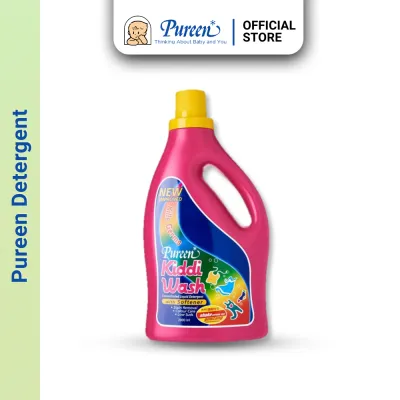
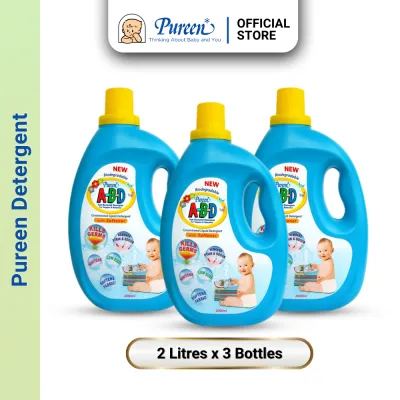
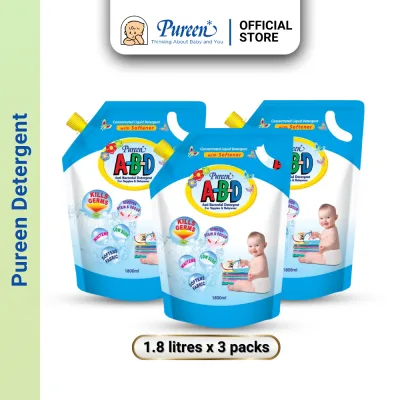
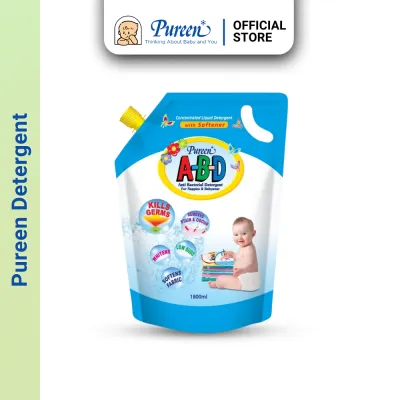
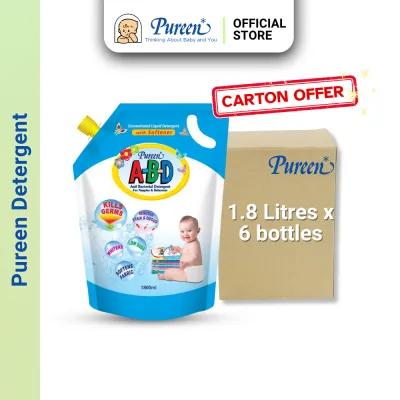
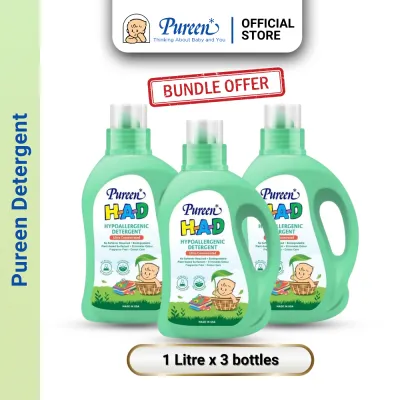
![[PUREEN] - BUNDLE OF 3 - Liquid Cleanser Refill 600ml CARTON SALE](https://img.lazcdn.com/g/ff/kf/S8f06b13e6a2047b1bbd42c6080e7e08cE.jpg_400x400q80.jpg_.webp)
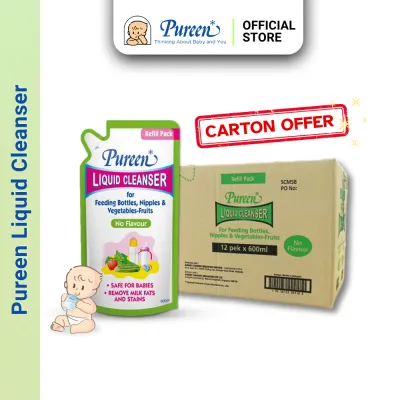
Prices are valid at publication and may change. Please refer to the product page for the latest price.
Additionally, always check the packaging for explicit allergen warnings, age recommendations, and manufacturer safety instructions. Some formulations are specifically tailored for newborns with highly sensitive skin, while others are designed for older infants who require stronger stain-removing properties. Reading these instructions ensures you use the product safely.
Common Detergent Ingredients and How They Affect Baby Skin
An infant’s skin is fundamentally different from an adult’s. It is thinner, more permeable, and lacks a fully developed acid mantle, making it highly susceptible to absorbing chemical residues left behind on clothing fibers. When detergent residues remain trapped in the weave of a baby’s onesie, they can rub against the skin, leading to irritation, dryness, or contact dermatitis.

Understanding how common detergent ingredients interact with this developing skin barrier is crucial. While some ingredients are necessary to lift stubborn milk and food stains, others are added purely for aesthetic reasons, such as scent or color. Balancing effective cleaning power with skin safety requires a closer look at these primary categories.
Surfactants and Cleaning Agents
Surfactants, or surface-active agents, are the core cleaning components of any liquid detergent. Their primary job is to break the surface tension of water, allowing it to penetrate fabric fibers, bind to oils, and lift away stubborn stains like breast milk, formula, and bodily fluids. In baby detergents, these are typically categorized into anionic surfactants, which provide excellent foaming and cleaning power, and non-ionic surfactants, which are generally milder and highly effective at breaking down greasy residues.
While surfactants are essential for hygiene, harsh variants can strip the natural lipids and oils from your baby’s skin barrier if they are not thoroughly rinsed out. This stripping effect leaves the skin dry, flaky, and vulnerable to environmental irritants. Milder, plant-derived surfactants, such as those derived from coconut or corn, are often preferred in baby formulations because they clean effectively without aggressively depleting the skin’s natural moisture.
If your baby has a history of eczema or highly reactive skin, it is vital to check the label for the specific types of surfactants used. Avoiding formulations with strong, stripping anionic surfactants can significantly reduce the risk of localized skin irritation.
Enzymes, Preservatives, and Fragrances
Enzymes are biological catalysts added to detergents to target specific types of stains. For instance, proteases break down protein-based stains like milk and spit-up, while amylases target starch-based baby foods. While enzymes are highly effective at keeping baby clothes looking clean, they can occasionally trigger irritation if they remain active on the fabric and come into contact with compromised or broken skin, such as an active diaper rash or eczema patch.
Preservatives are another essential component of liquid detergents, preventing the growth of harmful bacteria, mold, and yeast in the water-based formula. Without preservatives, a liquid detergent would quickly spoil and pose a microbial risk to your household. However, certain synthetic preservatives are known sensitizers that can trigger allergic contact dermatitis in sensitive individuals. Checking the label for milder preservative options is a key step for parents of babies with reactive skin.
Fragrances and dyes are the most common culprits behind detergent-related skin reactions. It is important to distinguish between “fragrance-free” and “unscented” labels. “Fragrance-free” means the product contains absolutely no added fragrance chemicals, whereas “unscented” may contain masking fragrances to neutralize the natural smell of the raw ingredients. For newborns and infants with sensitive skin, choosing a completely fragrance-free and dye-free formula is the safest way to minimize the risk of skin sensitization.
Evaluating if the Detergent is Right for Your Baby
Determining whether a specific liquid detergent is compatible with your baby’s skin requires careful observation. Because every child’s skin chemistry is unique, a product that works perfectly for one infant might cause irritation in another. Parents should monitor their baby’s skin for localized redness, dry patches, small bumps, or unexplained fussiness, particularly in areas where clothing fits tightly against the skin, such as the collar, cuffs, and diaper line.
To safely evaluate a new detergent, you can perform a simple fabric patch test. Wash a single, non-essential item, such as a small baby blanket or a single cotton onesie, using the new detergent. Have your baby wear or use this item for a few hours while closely monitoring the contact areas for any signs of irritation. If the skin remains clear and free of redness over the next twenty-four to forty-eight hours, the detergent is likely suitable for broader use on the rest of their wardrobe.
If you observe any signs of a skin reaction, stop using the detergent immediately. Wash the affected clothing items in plain, warm water or a known safe alternative to strip away any lingering residues. If a rash develops, worsens, or causes your baby significant discomfort, consult a pediatrician or a pediatric dermatologist for professional guidance rather than relying on over-the-counter soothing creams.
Washing and Rinsing Practices to Minimize Skin Irritation
Even the mildest baby detergent can cause skin issues if it is not used correctly. One of the most common mistakes parents make is using too much detergent, operating under the assumption that more soap equals cleaner clothes. Excess detergent does not rinse away easily, leaving a soapy residue trapped within the fabric fibers that can rub against your baby’s skin throughout the day. Always measure the detergent precisely using the cap or a measuring cup, adjusting the dose based on the actual load size and soil level rather than guessing.
Optimizing your washing machine’s rinse cycle is another highly effective way to protect your baby’s skin. In humid tropical climates, where sweat can react with detergent residues to cause friction rashes, ensuring a clean rinse is even more critical. Consider selecting an “extra rinse” or “deep rinse” cycle on your washing machine to thoroughly flush out any remaining surfactants, enzymes, or preservatives from the clothing fibers before drying.
For heavily soiled items, such as diapers or clothes stained with blowout residues, avoid the temptation to overload the main wash cycle with extra detergent. Instead, pre-treat the stains directly with a small amount of detergent or a safe stain remover, let it sit briefly, and rinse it out before running the items through a standard wash cycle. This targeted approach keeps the overall detergent concentration in the main wash low, ensuring a cleaner, safer rinse.
Frequently Asked Questions (FAQ)
Can I use regular adult detergent instead of a baby-specific formula?
Standard adult detergents are formulated to tackle heavy outdoor soils, body odors, and synthetic fabric stains, which often requires a higher concentration of strong surfactants, optical brighteners, synthetic dyes, and heavy fragrances. These ingredients are highly likely to leave residues that can irritate a baby’s delicate skin barrier. While some mild, fragrance-free, and dye-free adult detergents may be suitable for the whole family, it is generally safer to stick to a dedicated baby-specific formula if your child has a history of eczema, dry skin, or extreme sensitivity.
What should I do if my baby develops a rash after washing their clothes?
If you suspect a detergent-related skin reaction, immediately stop using the product and switch to washing your baby’s clothes in plain, warm water or a detergent you know they tolerate well. Rewash all recently laundered clothing, bedding, and towels with an extra rinse cycle to strip away any remaining chemical residues. Keep the baby’s skin clean and dry, and avoid applying heavily fragranced lotions. If the rash does not improve within a few days, spreads, or is accompanied by fever or extreme fussiness, seek professional medical advice promptly.
Community discussion
Share your experience or ask a question. Comments are reviewed before publication.