
Deciding between a dual-firmness and a standard firmness Tutti Bambini mattress comes down to how long you plan to use the same sleep surface and your budget flexibility. For parents seeking a single, long-term investment that transitions from infancy through the toddler years, a dual-firmness mattress offers a highly practical design with two distinct support levels. Conversely, a standard single-firmness mattress is often the more straightforward, budget-friendly choice if you only need to cover a specific developmental window or plan to transition your child to a dedicated toddler bed early on.
To make the right choice, you must balance your child’s immediate safety needs with their long-term comfort. This guide compares the structural logic, lifespan, and practical trade-offs of both mattress types to help you match the right firmness level to your baby’s age and mobility.
Understanding Firmness Needs by Developmental Stage
During the first year of life, a baby’s skeletal system undergoes rapid development. Newborns have soft, pliable bones and a spine that is still forming its natural curves. Because infants spend up to 18 hours a day sleeping, they require a highly firm, flat sleep surface. A firm mattress provides the necessary resistance to support spinal alignment and prevents the baby’s head from sinking into the material, which is crucial for keeping their airways clear and reducing suffocation risks.
Products mentioned in this guide
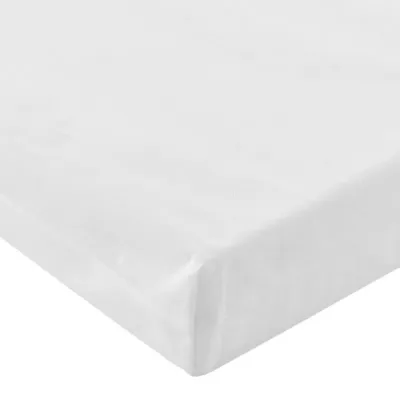
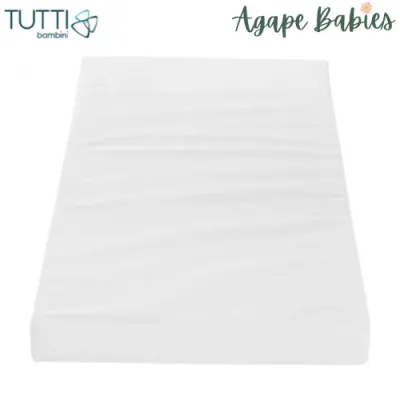

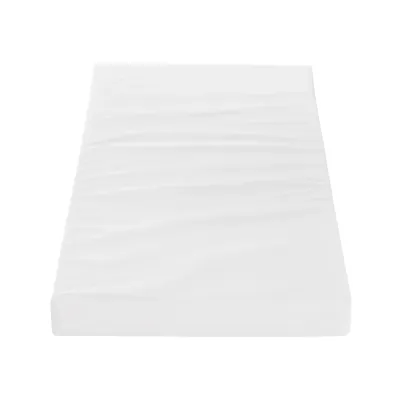
Prices are valid at publication and may change. Please refer to the product page for the latest price.
As your baby transitions into a toddler, their physical needs change significantly. With increased weight and mobility, a toddler benefits from a slightly softer, more resilient surface that offers pressure relief for their growing shoulders, hips, and joints. A surface that is too rigid may cause discomfort, leading to frequent waking and restless sleep as they attempt to find a comfortable sleeping position.
Recognizing when your child is ready for a softer sleep surface involves observing key developmental milestones rather than relying solely on age. If your child can roll over independently in both directions, sit up without assistance, and has transitioned completely out of a swaddle, they may be physically ready for a slightly more cushioned surface. However, you should always verify these milestones against the specific guidelines provided by the mattress manufacturer.
Evaluating Tutti Bambini Dual-Firmness Mattresses
Dual-firmness mattresses are engineered with a split-personality design to accommodate two distinct stages of childhood growth within a single product. Typically, one side of the mattress features an extra-firm layer designed specifically for the safety requirements of newborns and young infants. The reverse side is constructed with a slightly softer, more contouring material that provides the comfort and pressure relief needed by active toddlers.

To use a dual-firmness mattress safely, you must carefully read the manufacturer’s label and instruction manual. These documents specify the exact age, weight, or developmental milestones required before you can safely flip the mattress to the toddler side. Prematurely flipping the mattress can expose a young infant to a surface that is too soft, compromising their safety during sleep.
From a financial perspective, a dual-firmness mattress offers excellent long-term cost-effectiveness. While the initial purchase price may be higher than a standard model, it eliminates the need to buy a second mattress when your baby outgrows the infant stage. This single-purchase solution can comfortably last for three to four years, provided you maintain its structural integrity through proper care.
Evaluating Tutti Bambini Standard Firmness Mattresses
Standard firmness mattresses feature a uniform level of support throughout the entire core of the mattress. These models are typically engineered to excel within a specific developmental window, most commonly the infant stage. Because they do not feature a softer reverse side, they maintain a consistent, high level of firmness designed to keep newborns safe from birth until they transition out of their first crib.
Parents must remain vigilant for physical and behavioral signals indicating that a child has outgrown a standard infant mattress. If your toddler begins to show signs of sleep discomfort, wakes up frequently, or if you notice visible sagging or deep body indentations on the mattress surface, it is time for a replacement. Using an infant-firmness mattress for an older, heavier toddler can lead to poor sleep quality and inadequate joint support.
To maximize the lifespan of a standard mattress, establishing a regular maintenance routine is essential. You should rotate the mattress head-to-toe every few months to distribute wear evenly across the surface, though you must never flip a single-sided mattress over. Keeping the mattress clean, dry, and protected with a breathable, waterproof cover will help preserve its supportive properties and prevent premature degradation of the core materials.
Key Comparison Dimensions for Your Decision
When choosing between these two mattress types, comparing their expected usable lifespan is a critical first step. A dual-firmness mattress is designed to accompany your child from birth up to approximately four years of age, making it a highly durable option. A standard infant mattress, while highly supportive, has a shorter functional lifespan for a single child, often requiring you to purchase a softer toddler mattress or a toddler bed setup after 12 to 18 months.
Your initial budget versus the long-term cost of ownership is another essential factor to weigh. In Singapore, a standard firmness mattress might require a lower upfront investment, perhaps costing around S$100 to S$150. A dual-firmness model may carry a higher initial price tag of S$200 to S$300. However, when you calculate the cost of buying a second mattress later, the dual-firmness option often emerges as the more economical choice over a four-year period.
Physical handling and daily maintenance should also influence your decision. Dual-firmness mattresses often incorporate denser, multi-layered cores—such as pocket springs, natural coir, or high-density foam—to achieve two different support levels. This complex construction can make them heavier and stiffer than standard foam mattresses. If you live in a compact apartment and need to lift the mattress frequently to change sheets, a lighter, standard mattress may offer greater daily convenience.
Finally, pay close attention to the cover materials and breathability features of each model. In warm, humid climates, excellent air circulation is vital to prevent heat retention and mold growth. Look for mattresses featuring 3D mesh covers, organic cotton, or specialized breathable fibers. Always verify these material claims by checking the physical product tags and care labels rather than relying solely on promotional descriptions.
Verifying Safety and Crib Fit Before Purchase
Regardless of the firmness type you choose, verifying a precise fit inside your crib is paramount for safety. You should perform the “two-finger rule” once the mattress is placed inside the crib frame. If you can fit more than two fingers between the edge of the mattress and the crib wooden rails, the gap is too wide. A loose fit creates a severe entrapment hazard where a baby’s limbs or head could become wedged.
Before finalizing your purchase, locate and read the physical manufacturer’s tags attached to the mattress. These tags contain critical safety information, including maximum weight limits, recommended age ranges, and compliance with local safety standards. Never remove these tags, as they serve as an important reference point throughout the lifespan of the product.
Another practical safety check involves testing the mattress edges and corners. Press down firmly on the outer perimeter of the mattress to ensure the edges do not collapse easily under pressure. Strong edge support is crucial because as babies learn to roll and pull themselves up, they often migrate to the edges of the crib. Weak edges can cause the mattress to slope, potentially trapping the baby against the crib side.
Lastly, protect your investment by verifying the warranty terms, return policies, and trial periods directly with the retailer or online marketplace. A reputable manufacturer typically offers a warranty against structural defects, such as premature sagging or core splitting. Understanding these policies beforehand ensures you can exchange the mattress if it does not fit your crib or meet your expectations upon delivery.
Final Decision Framework: Which Mattress to Choose
You should choose a dual-firmness mattress if you want a single, long-term sleep solution that will adapt to your child’s changing physical needs from birth through toddlerhood. This option is ideal for parents who prefer the convenience of one purchase and are committed to following the manufacturer’s guidelines for flipping the mattress at the appropriate developmental milestone.
On the other hand, a standard firmness mattress is the right choice if you are working with a stricter initial budget, only need a temporary sleep surface for the first year, or plan to transition your child directly into a specialized toddler bed or single bed early on. It is also a practical option if you prefer a lighter mattress that is easier to lift and clean on a regular basis.
If your child has specific medical conditions, mobility delays, or respiratory sensitivities, do not rely solely on standard product categories. Stop and consult your pediatrician or a qualified healthcare professional. They can provide personalized recommendations regarding the exact mattress firmness and material composition required to support your child’s unique health needs.
Frequently Asked Questions (FAQ)
Can I flip a dual-firmness mattress before my baby transitions to a toddler bed?
No, you should not flip a dual-firmness mattress to the softer toddler side prematurely. Doing so exposes an infant to a sleep surface that lacks the necessary rigidity to support their developing spine and keep their airways clear. Always wait until your child has reached the specific age, weight, or developmental milestones detailed on the manufacturer’s label before flipping the mattress.
How do I physically check if a standard mattress is firm enough for a newborn?
To check the firmness of a standard mattress at home, perform a simple hand-press test. Press your palm down firmly into the center and along the edges of the mattress, then release. A safe infant mattress should feel highly resistant to pressure and snap back immediately to its original flat shape without leaving any temporary hand indentation or hollow pocket. Always cross-reference your physical observations with the manufacturer’s official age and weight specifications.

Community discussion
Share your experience or ask a question. Comments are reviewed before publication.