
Choosing the right baby carrier is one of the most significant decisions for new parents, particularly when balancing daily convenience with the physical development of a growing infant. Among the leading names in the baby gear industry, Tula and Ergobaby stand out as two of the most popular choices. Both brands have built their reputations on ergonomic designs that aim to distribute a baby’s weight evenly while supporting natural skeletal alignment. However, parents often find themselves torn between Tula’s streamlined, fabric-focused simplicity and Ergobaby’s highly adjustable, feature-rich structures.
When evaluating these brands, the primary concern must always be how well they support your baby’s developing hips and spine. A carrier that fails to maintain proper positioning can place undue stress on immature joints, whereas an ergonomic carrier encourages healthy joint development. Beyond the baby’s physical needs, caregiver comfort is equally vital, especially in warm, humid climates like Singapore where heat retention and strap breathability can quickly impact how long you can comfortably wear your child. This comparison explores the design philosophies, adjustment mechanisms, and ergonomic profiles of both brands to help you make an informed choice tailored to your family’s specific needs.
Understanding Hip-Healthy Positioning in Baby Carriers
To evaluate any ergonomic baby carrier, caregivers must first understand the biomechanics of infant hip development. At birth, a baby’s joints are still highly flexible, consisting largely of soft cartilage rather than hard bone. The hip joint is a ball-and-socket structure that requires proper alignment to mature correctly. If a baby’s legs are allowed to dangle straight down, the constant downward pull can stretch the joint capsule and increase the risk of hip subluxation or developmental dysplasia of the hip (DDH).
Products mentioned in this guide

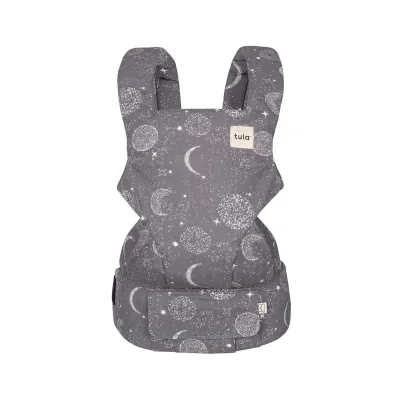
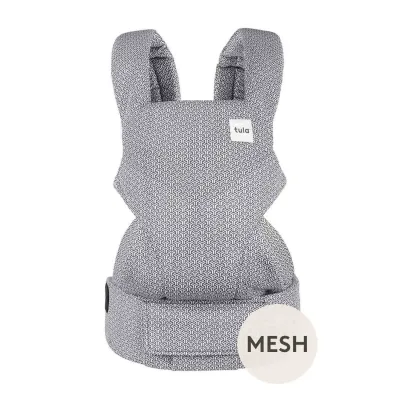
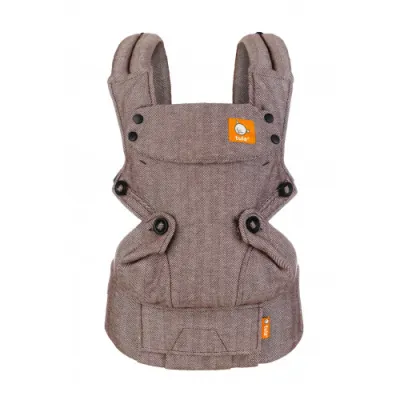
Prices are valid at publication and may change. Please refer to the product page for the latest price.
The optimal position for healthy hip development is widely known as the “M-shape,” “froggy,” or spread-squat position. In this posture, the baby’s thighs are spread around the caregiver’s torso, with the hips bent so that the knees sit higher than the bottom. This alignment ensures that the head of the femur sits securely in the center of the hip socket, distributing forces evenly and promoting natural joint deepening. When checking a carrier, the seat panel must extend fully from knee crease to knee crease, supporting the entire thigh so that the lower legs can dangle freely without pulling the thighs downward.
To assist parents in identifying safe gear, the International Hip Dysplasia Institute (IHDI) evaluates baby carriers and acknowledges those that support proper positioning as “hip-healthy.” Caregivers should look for this official acknowledgment on product packaging, labels, or the manufacturer’s documentation. However, because a baby’s proportions change rapidly, a carrier that provides proper knee-to-knee support for a newborn may become too narrow as the child grows. Understanding how a carrier adjusts—and when it is time to transition to a larger size or adjust the seat width—is essential for maintaining ergonomic support from infancy through toddlerhood.
Tula Carriers: Ergonomic Features and Fit
Tula carriers are highly regarded for their intuitive designs, vibrant fabric patterns, and straightforward usability. The brand’s design philosophy centers on providing a comfortable, wide-base panel that naturally encourages the recommended M-shape positioning without requiring complex adjustments. By focusing on a streamlined structure, Tula minimizes the learning curve for caregivers while maintaining a strong emphasis on ergonomic support for the child.

The brand offers several distinct lines tailored to different developmental stages. The Tula Free-to-Grow model features an adjustable base panel that can be narrowed or widened using snap settings along the waistband, allowing the carrier to grow alongside the baby’s changing leg span. For older babies, the Tula Standard and Tula Toddler models offer fixed, wider bases designed to support the longer thighs of older infants and toddlers. This structured panel design ensures that the baby’s weight remains evenly distributed across their thighs and bottom, preventing the legs from dangling straight down.
For the caregiver, Tula utilizes a thick, structured waistband and heavily padded shoulder straps to distribute the baby’s weight across the hips and shoulders. This design is particularly beneficial for long-term carrying, though the robust padding can feel warm in tropical climates. Before purchasing, caregivers must verify the specific requirements of their chosen Tula model. While adjustable models like the Free-to-Grow are designed to accommodate newborns without extra accessories, older or standard models may require a separate infant insert to support smaller babies safely. Always check the manufacturer’s weight and height guidelines on the product tag to ensure a safe fit.
Ergobaby Carriers: Ergonomic Features and Fit
Ergobaby has long been a pioneer in the ergonomic baby carrier market, known for its highly adjustable, multi-functional designs. The brand focuses on creating versatile carriers that adapt to multiple carrying positions—including front-inward, front-outward, hip, and back carry—while maintaining strict ergonomic standards. This adaptability makes Ergobaby a popular choice for parents seeking a single carrier that can handle diverse daily activities and growth phases.
The core of Ergobaby’s ergonomic support lies in its innovative seat designs, such as those found in the Omni and Aerloom series. These models utilize adjustable sliders, velcro tabs, or button systems to customize the seat width precisely to the baby’s height and leg span. This granular adjustability ensures that the baby can maintain a healthy M-shape posture whether they are a newborn or an active toddler. The structured, bucket-style seat is engineered to tilt the baby’s pelvis slightly inward, naturally rounding the spine into a healthy C-curve.
Caregiver comfort is another area where Ergobaby offers distinct structural features. Many models include a dedicated lumbar support pad on the waistband, which helps stabilize the lower back and prevent strain during extended use. Additionally, some models feature shoulder straps that can be crossed in an “X” pattern across the back, offering a highly customizable fit that can accommodate different body types and assist with postpartum recovery. Before buying, caregivers should verify the minimum weight requirements for newborn use and inspect the specific adjustment mechanisms to ensure they can easily operate them independently.
Direct Comparison: Tula vs Ergobaby for Hip Health and Comfort
When comparing Tula and Ergobaby directly, the choice often comes down to a preference for simplicity versus adjustability. Both brands excel at maintaining the crucial M-shape positioning, but they achieve this through different engineering approaches. Tula relies on a simpler, fabric-focused panel adjustment that is easy to set and leave in place, whereas Ergobaby offers highly adjustable, mechanical seat systems designed to accommodate multiple carrying directions, including outward-facing positions.
The adjustment mechanisms of the two brands present distinct user experiences. Tula’s snap-based adjustments on the waistband are straightforward but offer fewer incremental settings. Ergobaby’s slider or velcro systems allow for highly precise, continuous adjustments to match your baby’s exact knee-to-knee width, though they can require more effort to configure initially. For caregiver comfort, Ergobaby’s lumbar support pad and crossable straps provide excellent weight distribution for those prone to back fatigue, while Tula’s thick, plush shoulder padding offers a classic, cushioned feel that many parents find highly comfortable.
To guide your decision, consider the following framework:
- Choose Tula if you prefer a straightforward, lightweight carrier with intuitive adjustments, highly breathable fabric options, and a focus on inward-facing or back-carrying positions without the complexity of multiple strap configurations.
- Choose Ergobaby if you want maximum versatility, including the option for ergonomic outward-facing carrying, advanced lumbar support for your lower back, and highly adjustable straps that can be crossed to fit different caregiver body shapes.
- Verify first if your baby is currently between standard size ranges, or if you live in a particularly warm climate like Singapore, where you should prioritize mesh or lightweight fabric variations from either brand to prevent overheating.
The following matrix outlines the key specifications caregivers should verify on the product packaging or official manufacturer websites before making a purchase:
| Verification Dimension | Tula Carriers | Ergobaby Carriers |
|---|---|---|
| IHDI Hip-Healthy Status | Verify on product label or official site | Verify on product label or official site |
| Newborn Insert Requirement | Check model specifications (some require inserts) | Check model specifications (most modern lines are insert-free) |
| Seat Adjustment Type | Snap-based or fixed panel width | Slider, velcro, or button-based bucket seat |
| Carrying Positions | Typically inward, back, and select hip options | Inward, outward, hip, and back options (model dependent) |
| Caregiver Support Features | Padded waistband and thick shoulder straps | Lumbar support pad and option for crossable straps |
How to Verify Proper Fit and Hip Support at Home
Once you have selected and purchased a carrier, verifying the fit at home is crucial to ensuring your baby’s safety and hip health. Every time you secure your baby in the carrier, perform a quick visual and tactile assessment. Start by checking the baby’s leg position: their knees must be bent and positioned higher than their hips, forming a clear “M” shape when viewed from the front. The fabric of the seat panel should extend all the way to the back of the knees but should not bunch or press tightly into the knee creases, which could restrict circulation.
Next, observe the baby’s spine and airway. The baby’s back should curve naturally like a “C” shape, rather than being forced into an unnaturally straight position. Ensure the baby’s head is positioned close enough to kiss, with their face fully visible and their airway completely clear of fabric, clothing, or the caregiver’s chest. For your own comfort, the waistband should sit snugly on your hip bones rather than your waist, distributing the weight evenly. The shoulder straps should lie flat without twisting or digging into your neck.
Caregivers must remain attentive to physical cues during use. If your baby shows signs of persistent distress, or if you notice deep red marks or indentations on their inner thighs after removal, cease using the carrier immediately. These marks can indicate that the seat panel is too wide, too narrow, or that the fabric is rubbing incorrectly. Similarly, if you experience persistent back, shoulder, or hip pain, stop using the carrier and consult the manufacturer’s adjustment guides or a qualified professional to ensure the carrier is adjusted correctly for your body type.
Frequently Asked Questions (FAQ)
Can a baby carrier cause hip dysplasia?
An ergonomic baby carrier used correctly does not cause hip dysplasia. However, carriers that force a baby’s legs into an unnatural, straight position with the knees and hips extended can exacerbate underlying joint instability or contribute to developmental dysplasia of the hip. Ensuring the carrier supports a wide, M-shaped leg position is the recommended way to promote healthy joint development. If your family has a history of hip dysplasia, consult your pediatrician before using any baby carrier.
Do I need an infant insert for Tula or Ergobaby?
Whether you need an infant insert depends entirely on the specific model and your baby’s weight. Many modern adjustable carriers from both Tula and Ergobaby are designed to be used from birth without an insert, provided the baby meets the manufacturer’s minimum weight requirement. Older or non-adjustable standard models often require a structured infant insert to support a newborn’s head, neck, and hips safely. Always consult the product manual to verify if an insert is required for your specific model and baby’s current weight.
How long can my baby stay in the carrier each day?
There is no universal time limit for babywearing, but usage should always be guided by the baby’s comfort, temperature, and your own physical fatigue. In warm climates, pay close attention to heat buildup between your body and the baby. It is highly recommended to take regular breaks every few hours to take the baby out of the carrier, allowing them to stretch their limbs, move freely on a flat surface, and change positions to support overall motor development.
Community discussion
Share your experience or ask a question. Comments are reviewed before publication.