
Choosing the right baby carrier in a tropical environment requires balancing structural support with heat management. In Singapore, where temperatures consistently hover around 30°C and relative humidity frequently exceeds 80 percent, babywearing can quickly become a warm, sweaty experience for both parent and child. The debate between the Tula Mesh (often referred to as the Tula Coast) and the Tula Standard (classic cotton canvas) centers largely on how these materials perform under different environmental conditions. While the Tula Mesh is specifically engineered to maximize airflow during outdoor excursions, the Tula Standard provides a robust, full-coverage structure that excels in air-conditioned indoor spaces. Understanding how each fabric behaves in local conditions is key to selecting the carrier that best supports your daily routine, lifestyle, and your baby’s comfort.
Ultimately, the better choice depends on your primary daily environment and routine. The Tula Mesh is generally preferred for outdoor humidity and high heat due to its ventilated back panel, while the Tula Standard offers versatile, structured comfort that excels in air-conditioned environments and provides more coverage. The following sections break down the specific material, ergonomic, and scenario-based differences to help you decide.
Material and Breathability: Mesh vs Canvas in High Humidity
To understand the performance differences, one must look closely at the structural fabric composition of each carrier. The Tula Standard is constructed primarily from 100 percent premium cotton canvas. Cotton is a natural fiber celebrated for its softness, durability, and structural strength, making it highly supportive for carrying growing infants. However, cotton canvas is a dense, tightly woven material that naturally traps air and absorbs moisture. In Singapore’s humid climate, when a baby is held close to a parent’s chest, this solid fabric panel acts as an insulating barrier. The heat generated by both bodies becomes trapped within the canvas, often leading to rapid sweat accumulation and discomfort for both the wearer and the baby.
Products mentioned in this guide
![[10 year local warranty] Ergobaby Omni Classic Mesh Baby Carrier - Onyx Black](https://img.lazcdn.com/g/p/503768552496f696cf14573b69c59d65.png_400x400q80.png_.webp)
Prices are valid at publication and may change. Please refer to the product page for the latest price.
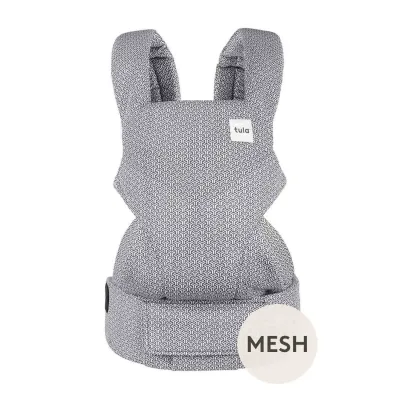
In contrast, the Tula Mesh carrier incorporates a large, open-weave polyester mesh panel directly into the center of the baby’s back support. This design replaces a significant portion of the solid canvas with a highly breathable, perforated fabric. The primary benefit of this construction is the facilitation of cross-ventilation. Any ambient breeze or movement allows air to pass freely through the mesh, directly cooling the baby’s back and promoting the rapid evaporation of sweat. This active ventilation is crucial for preventing heat retention and reducing the occurrence of heat rash, a common skin irritation in tropical environments.
It is important to note that the mesh model is not entirely made of mesh. The surrounding frame, including the shoulder straps, waistband, and side panels, is still constructed from durable cotton canvas or a structured cotton blend to ensure the carrier remains safe and supportive. Because fabric blends and material specifications can vary slightly across different collections, limited-edition releases, or production runs, parents should always check the manufacturer’s product labels and detailed descriptions for precise material percentages before purchasing.
Comfort and Ergonomics for Baby and Wearer
When evaluating any baby carrier, ergonomic support for the child’s developing spine and hips is the absolute priority. Both the Tula Standard and the Tula Mesh are designed to support the natural, developmental “M-position” (spread-squat position), where the baby’s knees are aligned higher than their hips, and their weight is distributed evenly across the thighs and buttocks. The solid, structured canvas of the Tula Standard provides a highly uniform, snug seat that easily maintains this ergonomic shape, cradling the baby’s spine in its natural “C-curve.”

Ergonomics for the Baby
M-Position Support Both carriers maintain a healthy hip position, ensuring the thighs are supported from knee to knee. This reduces the risk of hip dysplasia and ensures a comfortable ride for growing infants.
Spine Alignment The structured canvas frame of both models supports the natural curved posture of a young baby’s spine, preventing slumping while keeping the airway completely clear.
Developmental Verification Parents must verify the manufacturer’s specified weight ranges, minimum height requirements, and developmental milestones for each specific model. For instance, some Tula models require an infant insert for newborns, while others feature adjustable panels that grow with the child. Always consult the official user manual to ensure the carrier matches your baby’s current physical development.
Ergonomics for the Wearer
Weight Distribution Both models feature heavily padded shoulder straps and a wide, structured waistband designed to shift the load from the wearer’s shoulders to their hips. This helps prevent localized muscle strain during long walks.
Contact Points Because the waistband and shoulder straps are padded with dense foam and covered in fabric, they will still accumulate moisture where they press against the parent’s body, regardless of whether you choose the mesh or standard version.
Fussiness Reduction The Tula Mesh offers an indirect but significant comfort benefit: because the baby remains cooler and less sweaty, they are less likely to become fussy. A calm baby is less likely to squirm or lean away from the parent’s body, which helps maintain an optimal center of gravity and reduces physical strain on the wearer’s lower back.
Practical Scenarios: Outdoor Heat vs Air-Conditioned Indoors
Selecting the ideal carrier requires a realistic assessment of where you spend your days in Singapore. For families who enjoy outdoor activities, such as walking through the Singapore Botanic Gardens, visiting open-air hawker centres, or navigating non-air-conditioned public transit hubs, the Tula Mesh is exceptionally advantageous. In these warm, outdoor environments, the open-weave panel allows maximum airflow, helping to keep the baby’s core temperature stable even when the heat index is high.
Conversely, Singapore’s urban landscape is filled with heavily air-conditioned environments, from shopping malls along Orchard Road to MRT trains and indoor play areas. In these spaces, the ambient temperature can drop significantly, and cold air drafts from overhead vents are common. The Tula Standard, with its solid canvas panel, acts as an excellent shield against these sudden temperature drops, keeping the baby cozy and protected. In a highly cooled indoor space, a mesh carrier can sometimes feel unnecessarily drafty, potentially causing a lightly dressed baby to become uncomfortably cold.
Sun exposure is another critical factor to consider when using these carriers outdoors. The open-weave design of the Tula Mesh panel provides very little physical barrier against ultraviolet (UV) radiation. Parents must remember that the mesh fabric does not offer built-in sun protection, meaning direct sunlight can easily reach the baby’s sensitive skin through the perforations. When wearing a mesh carrier outdoors, it is essential to implement additional sun safety measures, such as dressing the baby in lightweight, long-sleeved UV-protective clothing, using a wide-brimmed sun hat, and utilizing the carrier’s integrated hood when appropriate.
Care, Durability, and Maintenance in Tropical Climates
Maintaining a baby carrier in a tropical climate requires regular care to prevent the buildup of sweat, oils, and environmental moisture, which can lead to mold and mildew. Both the Tula Standard and Tula Mesh can be machine washed, but they require different levels of care. Always consult the care label stitched inside your specific carrier before washing. As a general rule, use cold water, a gentle cycle, and a mild, baby-safe detergent that is free from optical brighteners or fabric softeners, as these chemical residues can clog the pores of mesh fabrics and degrade the fibers.
Because mesh fabrics are constructed from delicate synthetic loops, they are much more susceptible to snagging on zippers, buttons, or velcro during a wash cycle. To protect your Tula Mesh carrier, always secure all plastic buckles, fasten any hook-and-loop closures, and place the entire carrier inside a large, mesh laundry bag before placing it in the washing machine. For minor spills, drool, or spit-up, spot cleaning with a damp cloth and mild soap is highly recommended to minimize the wear and tear associated with frequent machine washing.
Drying the carrier thoroughly is the most critical step in preventing the growth of mold and mildew, which thrive in Singapore’s high humidity. After washing, hang the carrier to air dry in a well-ventilated, shaded area with plenty of airflow, or place it in a room with a standing fan running nearby. Avoid drying either carrier in direct, intense tropical sunlight. While the sun’s UV rays are sanitizing, prolonged exposure will cause the vibrant dyes of the canvas to fade prematurely and can degrade the structural integrity of the elastic loops and internal foam padding.
Over time, the two materials will exhibit wear differently. The Tula Standard’s cotton canvas will naturally soften and may show gradual color fading, particularly along the seams and edges, which many parents find gives the carrier a comfortable, well-loved aesthetic. The Tula Mesh is highly resistant to color fading but can develop pilling or snags if it repeatedly rubs against abrasive surfaces, such as the rough nylon of a diaper bag or the velcro straps of other baby gear. Regularly inspect all stitching, buckles, and webbing for signs of wear to ensure the carrier remains safe for use.
How to Decide: A Conditional Framework for Parents
To make the final decision, parents should weigh their daily routines against the specific strengths of each Tula model. The choice is rarely about which carrier is universally superior, but rather which one aligns with your family’s lifestyle.
Choose the Tula Mesh if:
- You spend a significant portion of your day outdoors, walking in parks, visiting open-air markets, or commuting without air-conditioning.
- Your baby naturally runs hot, perspires heavily, or is highly prone to developing heat rash in warm weather.
- You want to maximize ventilation and evaporative cooling during the hottest hours of the day.
Choose the Tula Standard if:
- Your daily routine primarily involves air-conditioned indoor spaces, such as shopping malls, libraries, offices, or indoor play centers.
- You prefer a classic, uniform look and want to choose from a wider variety of solid canvas prints, patterns, and limited-edition designs.
- You want a solid fabric barrier that provides natural wind resistance and shields your baby's back from chilly drafts and direct sunlight.
Verify First: Before making your final purchase, verify the current stock availability and colorways at authorized local retailers or the official brand store. Ensure you check the specific weight and height limits of the model you select to guarantee it is appropriate for your baby’s current developmental stage. Additionally, confirm the retailer’s return, exchange, and warranty policies so you can make your purchase with absolute peace of mind.
Frequently Asked Questions (FAQ)
Can I use a Tula Mesh carrier in air-conditioned malls?
Yes, you can absolutely use a Tula Mesh carrier in air-conditioned malls. However, because the mesh panel is designed to let air flow freely, it does not provide thermal insulation. When transitioning from the warm outdoors into a cool, heavily air-conditioned shopping center, monitor your baby’s temperature. It is wise to dress your baby in comfortable, light layers, such as a long-sleeved cotton onesie, or keep a breathable muslin blanket on hand to drape over the carrier if the indoor drafts feel too chilly.
Do Tula carriers provide sun protection for outdoor use?
Neither the Tula Standard nor the Tula Mesh is designed to serve as a primary sun protection barrier. While the solid cotton canvas of the Standard model naturally blocks more direct sunlight than the open-weave mesh panel, both carriers require active sun management. To protect your baby’s delicate skin from tropical UV rays, use the carrier’s integrated sleeping hood (ensuring it does not block their airway and is age-appropriate), dress them in lightweight clothing, put a wide-brimmed sun hat on their head, and seek shaded paths during peak daylight hours.
Community discussion
Share your experience or ask a question. Comments are reviewed before publication.