
Choosing a baby bath tub with a stand in Singapore requires balancing daily convenience with strict safety considerations. While bathing a newborn at waist height reduces physical strain on caregivers, elevated stands introduce unique mechanical risks that demand careful evaluation. To make a secure purchase, you must understand how local regulatory frameworks apply to these products, how to verify international safety certifications, and how to assess specific structural designs against your home layout.
To ensure your child’s safety, you should look beyond brand names and verify specific engineering standards. While Singapore’s Consumer Product Safety Office (CPSO) monitors general consumer goods, bath stands are often categorized as voluntary compliance items that rely on international certifications. Brands like Stokke and Angelcare offer robust stand options, but safety ultimately depends on verifying structural features, weight limits, and proper setup on typical Singapore bathroom surfaces.
Understanding Singapore Safety Standards for Baby Bath Tubs
In Singapore, the Consumer Product Safety Office (CPSO), which operates under Enterprise Singapore, is the key regulatory body safeguarding consumers from unsafe general merchandise. The CPSO enforces the Consumer Protection (Consumer Product Safety Requirements) Regulations (CGSR). Unlike high-risk electrical appliances that require a mandatory SAFETY Mark before sale, baby bath tubs and stands generally fall under the category of general consumer goods. This means they are not subject to mandatory pre-market registration or licensing in Singapore, but they must still be safe for consumer use and comply with recognized international safety standards.
Products mentioned in this guide
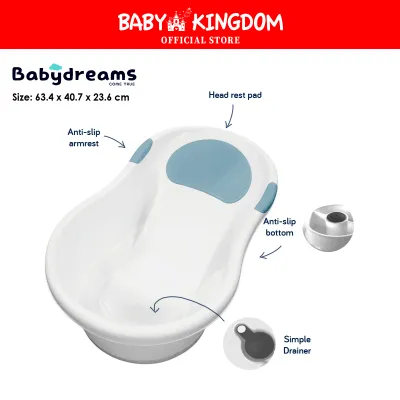
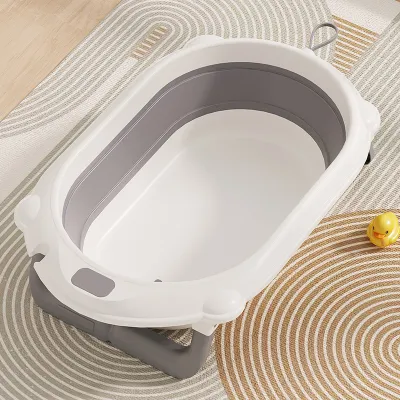
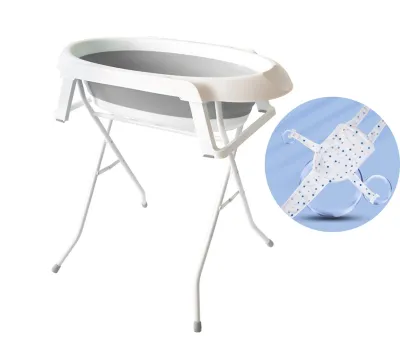

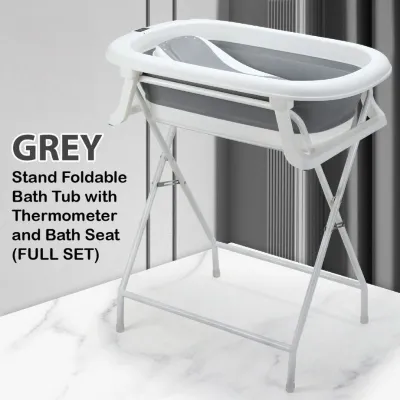
Prices are valid at publication and may change. Please refer to the product page for the latest price.
Because baby bath stands elevate a tub filled with water and a moving infant, they introduce specific mechanical risks that do not exist with floor-level tubs. The primary hazard is tipping, which can occur if the stand’s center of gravity is too high, if the legs are placed on an uneven surface, or if the infant shifts weight abruptly. Folding mechanism failures are another critical risk; if a stand’s locking pins are not fully engaged, the weight of the water and baby can cause the structure to collapse. Furthermore, poorly designed hinges or joints can create pinch points, leading to finger entrapment for both caregivers and curious siblings.
Since local safety marks are not mandatory for these items, suppliers in Singapore rely on voluntary compliance with established international standards to demonstrate product safety. This regulatory landscape places the responsibility on you, the buyer, to actively verify safety credentials. Rather than relying solely on a brand’s marketing claims or its general reputation, you must look for physical proof of compliance, such as certified testing labels on the packaging and robust structural engineering.
Before purchasing any bathing accessory, always check the manufacturer’s instructions and the product’s applied safety labels to verify its intended age, weight range, and assembly requirements. If the manufacturer’s guidelines are missing, unclear, or conflict with your intended setup, do not use the product. Instead, consult the manufacturer or a qualified retail professional to clarify safety parameters.
How to Verify Safety Certifications and Build Quality
When evaluating a baby bath tub with a stand, the first step is to check the product packaging, user manual, or official manufacturer specifications for recognized international testing standards. For infant bath tubs, look for compliance with ASTM F2670 (the Standard Consumer Safety Specification for Infant Bath Tubs established by the American Society for Testing and Materials). For bath stands or combined changing and bathing units, look for EN 12221 (the European safety standard that specifies requirements for stability, structural integrity, and child entrapment hazards). These standards guarantee that the product has undergone rigorous laboratory testing for load-bearing capacity, tip-over resistance, and mechanical durability.

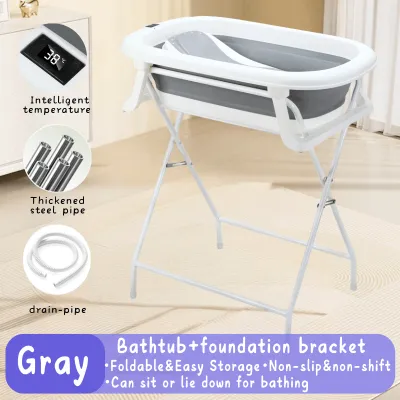
Beyond checking for certification labels, you should physically inspect the build quality of the stand before its first use. Start by testing the locking mechanisms; a high-quality stand will feature dual-action locks or physical safety pins that prevent the stand from folding accidentally. Gently shake the assembled stand to ensure there is no excessive wobble or play in the joints. Inspect the feet of the stand; they must be equipped with robust, non-slip rubber grips that can maintain traction on wet, tiled surfaces. Finally, locate the manufacturer’s weight capacity label, which must clearly state the maximum load the stand can safely support, including both the water and the baby.
Buying a second-hand baby bath stand carries significant safety risks and is generally discouraged. Over time, metal stands can develop internal rust from high-humidity bathroom environments, and plastic joint connectors can suffer from material fatigue or micro-cracks. Locking pins may become worn down, and critical safety labels or instruction manuals are frequently lost. Furthermore, a second-hand item may have been subject to a manufacturer recall that the previous owner failed to track or disclose. If you must use a pre-owned stand, perform a meticulous inspection of every weld, hinge, and fastener, and cross-reference the model number with global recall databases.
To protect your family against future hazards, always register your newly purchased bath tub and stand with the manufacturer or the authorized local distributor in Singapore. Registration ensures that you will receive immediate, direct notifications in the event of a product recall or safety update. Keep your proof of purchase and the original user manual in a safe place so you can easily reference the manufacturer’s maintenance guidelines and safety warnings throughout the product’s lifespan.
Reputable Baby Bath Tub Brands with Stands to Consider
While several well-known baby brands distribute bath tubs with stands in Singapore, you must remember that a brand’s general reputation does not guarantee that a specific model will suit your home environment or meet your safety expectations. Every bathroom setup is different, and a stand that is stable on a wide, dry floor may pose risks in a compact, wet HDB bathroom. Below is an evaluation of three popular options available to Singapore parents, highlighting their design features, safety mechanisms, and practical limitations.
Stokke Flexi Bath with Stand
The Stokke Flexi Bath is widely recognized for its space-saving, foldable design, making it a popular choice for compact Singapore homes. The dedicated Stokke Flexi Bath Stand is engineered specifically to fit this folding tub, offering a cohesive bathing system. The stand features a double-action locking mechanism with visual safety indicators (typically orange markers that disappear when the stand is fully locked open) to prevent accidental folding during use. It elevates the tub to an ergonomic height, allowing caregivers to bathe their infants without bending over, thereby reducing back strain during daily routines.
However, the convenient folding design means you must exercise extra caution during setup. Before every single bath, you must verify that the stand is placed on a completely flat, non-slip surface and that all locking pins are fully engaged and have audibly clicked into place. Refer to the manufacturer’s manual to confirm the specific weight limit for your model batch, which typically supports infants from birth up to 10 kg, or until the child can sit up unassisted. Once your baby reaches this developmental milestone or the weight limit, you must stop using the stand immediately and transition the tub to the floor.
Angelcare Soft Touch Baby Bath with Stand
The Angelcare Soft Touch Baby Bath offers a different approach, utilizing a fixed-structure stand paired with a mold-resistant, soft-touch plastic tub. The tub itself is designed with an ergonomic shape that cradles the baby securely, and it features a built-in, heat-sensitive drainage plug that changes color to warn you if the water is too hot. The accompanying stand is constructed from sturdy metal tubing with a wide, stable footprint, which significantly reduces the risk of tipping compared to narrower folding models. Because the stand does not fold down as compactly as others, it minimizes the mechanical risks associated with moving hinges and locking pins.
While the fixed stand offers superior stability, its larger footprint requires careful consideration. You must measure your bathroom floor space beforehand to ensure the stand can sit completely flat without resting on drainage grates, shower curbs, or uneven tiles. The non-slip rubber grips on the legs must be inspected regularly to ensure they remain free of soap scum and mold, which can compromise traction on wet bathroom floors. This setup is generally suitable for infants from birth up to approximately 9 kg, or until the baby attempts to sit up independently; always verify the exact limits in the product’s user manual.
Puj Flyt (Suspended Bathing Alternative)
For parents looking to completely eliminate the tipping and folding risks associated with traditional floor-level stands, the Puj Flyt offers a unique suspended bathing alternative. Made from a soft, slip-resistant, closed-cell foam that does not absorb moisture, the Puj Flyt is a folding tub designed to be placed directly inside a standard bathroom or kitchen sink. By suspending the baby at sink height, it provides the same ergonomic benefits as a bath stand—allowing you to stand upright while bathing your child—without the need for a separate metal frame.
Despite its safety advantages, the Puj Flyt has strict compatibility requirements that you must verify before purchase. You must check your sink’s dimensions and shape against the manufacturer’s compatibility guide, as it will not fit deep, narrow, or highly irregular basins. Additionally, you must ensure that your sink and vanity structure are structurally sound and capable of supporting the dynamic weight of the water, the tub, and your growing baby. This product is designed strictly for early infancy, typically supporting babies up to 7.7 kg or until they begin to push up or roll over; always refer to the manufacturer’s instructions for precise developmental limits.
Comparing Key Features for Your Bathroom Setup
To help you decide which bathing system is best suited for your home, the table below compares the essential decision-making dimensions of folding stands, fixed stands, and sink-suspended alternatives.
| Feature | Folding Stand (e.g., Stokke Flexi Bath Stand) | Fixed Stand (e.g., Angelcare Stand) | Sink-Suspended (e.g., Puj Flyt) |
|---|---|---|---|
| Footprint & Storage | Compact; folds flat for easy storage behind doors or in cabinets. Ideal for small HDB bathrooms. | Larger footprint; requires dedicated floor space. Harder to store in tight spaces. | Extremely compact; folds flat or hangs on a hook. Requires zero floor space. |
| Ergonomic Support | Excellent waist-height elevation; reduces caregiver back strain during bathing. | Excellent waist-height elevation; provides a highly stable, rigid working height. | Excellent sink-level height; utilizes existing home counter space for support. |
| Drainage Method | Requires a dedicated drainage hose or must be positioned directly over a floor drain. | Typically drains directly onto the floor or requires manual lifting to empty the tub. | Drains directly into the sink basin; no lifting or extra hoses required. |
| Material Durability | Metal frame must be dried regularly to prevent rust; plastic joints must be checked for wear. | Heavy-duty metal frame with rust-resistant coating; requires regular cleaning of rubber feet. | Closed-cell foam is naturally mold-resistant and quick-drying; no metal parts to rust. |
When evaluating these options for a Singapore home, keep the local climate in mind. Our high relative humidity can accelerate mold growth on soft plastics and cause rust on exposed metal joints. If you choose a folding or fixed metal stand, ensure you wipe it down with a dry cloth after each use and store it in a well-ventilated area. For compact HDB bathrooms, a folding stand or a sink-suspended option is often the most practical choice, whereas a spacious master bathroom can easily accommodate the wider, highly stable footprint of a fixed stand.
Essential Safety Rules for Using Bath Stands
Operating a baby bath stand safely requires strict adherence to daily operational rules. No matter how highly certified your bath stand is, it can never replace active adult supervision. By establishing consistent safety habits, you can prevent the most common bathing accidents.
- Maintain Constant Physical Contact: Never leave your baby unattended on a bath stand for even a single second. Drowning can occur in as little as two centimeters of water and in less than a minute. Before you begin the bath, gather all necessary supplies—including towels, soap, clean diapers, and clothing—and place them within arm's reach. If the phone rings or you must leave the room, pick up your baby, wrap them in a towel, and take them with you. Do not rely on older siblings to supervise the baby.
- Set Up on a Flat, Dry Surface: Always position the bath stand on a completely flat, level, and dry surface. Avoid placing the stand on uneven floor tiles, wet shower trays, or sloping drainage areas common in HDB bathrooms. Moisture on the floor can dramatically reduce the grip of the stand's rubber feet, increasing the risk of sliding or tipping when water is added or when the baby moves.
- Double-Check All Locks and Latches: Every single time you unfold or adjust the bath stand, physically inspect and test every locking mechanism, safety pin, and hinge. Apply downward pressure on the empty stand to ensure it is fully locked and structurally stable before placing the tub on top or adding water. Never bypass a safety latch or use a stand if any component feels loose, stiff, or damaged.
- Monitor Weight and Developmental Limits: Strictly adhere to the manufacturer's stated weight capacity, keeping in mind that this limit includes the combined weight of the tub, the water, and your baby. More importantly, monitor your baby's developmental milestones. You must stop using an elevated bath stand immediately once your baby attempts to sit up, roll over, pull themselves up, or push up on their hands and knees. At this stage, the child's shifting center of gravity makes an elevated stand highly unstable, and you must transition to bathing them in a tub placed directly on the bathroom floor.
Frequently Asked Questions (FAQ)
Are second-hand baby bath stands safe to use in Singapore?
No, second-hand baby bath stands are generally not recommended due to hidden safety risks. Over time, exposure to high humidity in Singapore bathrooms can cause internal rust in metal frames and degrade plastic joints, leading to structural fatigue that is not visible to the naked eye. Worn locking pins, missing safety labels, and the lack of original manufacturer instructions further compromise safety. Additionally, you may not be notified if the product is subject to a manufacturer recall. If you must use a pre-owned stand, inspect every joint meticulously, verify that all original safety mechanisms are intact, and check global recall databases for that specific model.
What should I do if a bath stand lacks a specific Singapore safety mark?
If a baby bath stand does not have a local Singapore SAFETY Mark, it does not necessarily mean the product is unsafe. In Singapore, baby bath accessories are classified as general consumer goods and are not subject to mandatory pre-market registration or safety marking by the CPSO. Instead, you must verify that the product complies with recognized international safety standards, such as ASTM F2670 or EN 12221, which are typically printed on the packaging or detailed in the user manual. You should also perform a thorough physical inspection of the stand’s locking mechanisms, frame rigidity, and non-slip feet to ensure its structural integrity before use.
Community discussion
Share your experience or ask a question. Comments are reviewed before publication.