
A travel cot is an indispensable tool for parents on the move, but ensuring it provides a safe sleep environment requires careful scrutiny. Before purchasing a travel cot in Singapore, you must verify that it meets recognized international safety standards, features a firm and tight-fitting mattress, utilizes secure locking mechanisms, and provides highly breathable mesh sides. Because infants spend hours unsupervised while sleeping, checking these physical and regulatory benchmarks is the single important step you can take to prevent accidental injury, entrapment, or suffocation.
While convenience, weight, and ease of folding are common priorities for traveling parents, structural integrity must always come first. A travel cot should never be treated as a standard playpen unless it has been explicitly tested and certified for safe sleep. By understanding what safety markings to look for and how to physically inspect a cot’s construction, you can confidently choose a model that protects your child wherever you travel.
Verifying Safety Certifications and Regulatory Compliance in Singapore
When shopping for nursery furniture in Singapore, you should understand how safety is monitored and regulated. The Consumer Product Safety Office (CPSO) acts as the key authority safeguarding consumers from unsafe general merchandise, including baby products. While the CPSO monitors the market and investigates safety complaints, the responsibility often falls on parents to actively verify that a travel cot carries legitimate safety credentials before bringing it home.
Products mentioned in this guide
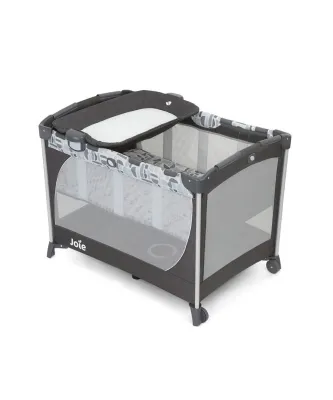

![[SG SELLER] COCOBABY Multifunctional Double-deck Rollaway Play Bed Playards Playpen Portable Baby Cribs Travel Folding Newborn Infant Kids Sleep Bed Installation free with Diaper changing table/Toy rack](https://img.lazcdn.com/g/p/bf8e2e27adf9d0291fb23354d52a0d4a.jpg_400x400q80.jpg_.webp)


Prices are valid at publication and may change. Please refer to the product page for the latest price.
Rather than relying on vague marketing claims, you must look for physical compliance labels, tags, or stamps on the product packaging or the cot frame itself. These markings indicate that the product has undergone rigorous laboratory testing under specific international safety frameworks. Key standards to look for include the European standard (EN 716), the American standard (ASTM F406), or the Australian/New Zealand standard (AS/NZS 2195). These frameworks govern everything from structural stability to chemical toxicity and physical entrapment hazards.
Before finalizing your purchase from a physical boutique or a trusted online marketplace, always check for active recall notices. Local consumer protection portals and international product safety databases regularly publish alerts for nursery items found to have manufacturing defects or design flaws. Taking five minutes to search the specific brand and model name online can prevent you from unknowingly purchasing a compromised product.
It is vital to remember that a premium price tag or a highly recognizable brand name does not automatically guarantee compliance with current safety standards. Some imported models sold online may bypass local safety checks entirely. Always demand to see the physical safety certification labels on the actual product box or within the user manual, and do not hesitate to ask the retailer for verification documentation if you are in doubt.
Inspecting Critical Structural Safety Features Before Use
Even when a travel cot carries the correct certification markings, you should perform a hands-on inspection of its physical design. Manufacturing variances or shipping damage can compromise a cot’s safety, making a manual check essential before your baby ever sleeps inside.

Mesh Siding Breathability and Weave Size
Singapore’s warm and humid climate makes excellent ventilation a necessity for infant sleep. The side panels of a travel cot must be made of breathable, high-quality mesh that allows continuous airflow even if your baby rolls over and presses their face directly against the side.
When inspecting the mesh, examine the weave size carefully. The holes must be exceptionally fine—ideally less than 1.5 millimeters—to prevent small fingers, toes, or clothing buttons from getting caught. The mesh should also be taut and securely stitched to the fabric frame, with no loose threads or sagging areas that could pose a strangulation or entrapment risk.
Locking Mechanisms and Hinges
To prevent sudden, catastrophic collapses, a travel cot must feature secure, child-proof locking systems on all folding joints. Most high-quality models utilize a dual-action locking system, which requires you to perform a specific sequence of physical actions to fold the frame.
When setting up the cot, listen for a distinct, audible click that indicates the hinges have locked into place. Once assembled, test the structure by applying firm downward pressure on the center of the top rails and the middle of the base. The frame must remain rigid and unyielding under pressure, ensuring it will not fold inward if your baby moves vigorously or leans against the sides.
Mattress Fit and Base Firmness
Suffocation and entrapment are the most severe risks associated with improper travel cot setup. The mattress pad supplied with the cot must be exceptionally firm and flat, resisting any indentation when you press your hand into it.
There must be no gaps wider than 2 centimeters between the edge of the mattress and the mesh sides of the cot. To test this, try to slide two fingers between the mattress and the side panel; if you can do so easily, the mattress is too small, creating a dangerous space where a baby’s head could become wedged. Additionally, ensure the mattress is designed to be securely fastened to the base of the cot using the manufacturer’s provided Velcro straps or button snaps to prevent it from shifting or lifting.
Stability and Weight Distribution
An active toddler can easily tip over a lightweight or poorly balanced travel cot. Look for a model with a wide, stable base and a low center of gravity. The legs should spread outward slightly beyond the footprint of the upper frame to provide maximum resistance against tipping.
If the travel cot features wheels for easy transport, verify that at least two of the wheels have reliable, independent locking brakes. Test these brakes on a smooth floor surface to ensure the cot does not slide or roll when pushed. The frame should feel sturdy and solid, with no wobbling or flexing when you shake the upper rails.
Evaluating Material, Chemical, and Fire Safety Labels
Because infants spend hours with their skin in direct contact with travel cot fabrics—and may chew on the rails when teething—the chemical composition of the materials is just as important as the structural design.
Non-Toxic Finishes
You must verify that all paints, coatings, plastics, and fabrics used in the travel cot are completely non-toxic and free from harmful substances. Check the manufacturer’s product specifications or safety data sheets to ensure the materials are certified free from lead, heavy metals, and phthalates. Avoid products that do not explicitly state their chemical safety compliance, especially when buying budget-friendly models from unverified online sellers.
Fabric and Mattress Treatments
Many travel cots are treated with flame-retardant chemicals to comply with international fire safety laws. However, some chemical flame retardants have been linked to health concerns.
When possible, look for travel cots that achieve fire safety compliance through the use of inherently low-flammability fibers and tight weaves rather than heavy chemical additives. Read the product labels carefully to identify any OEKO-TEX or similar textile certifications, which verify that the fabric has been tested for harmful levels of toxic substances.
Odor and Off-Gassing Management
New travel cots often emit a strong, distinct chemical smell upon first being unpacked, which is a sign of volatile organic compounds (VOCs) off-gassing from the manufacturing process. To protect your infant’s sensitive respiratory system, never use a travel cot immediately after unboxing.
Set up the new cot in a well-ventilated space, such as a sheltered balcony or a room with open windows and a fan running, for at least 48 to 72 hours before its first use. If a strong, pungent chemical or plastic odor persists after several days of airing out, this may indicate low-quality material processing or inadequate factory curing, and you should contact the manufacturer or return the product.
Establishing Safe Setup, Usage Limits, and Environmental Boundaries
Even the safest, most highly certified travel cot can become hazardous if it is used incorrectly or placed in an unsafe environment. Establishing strict operational rules is essential for maintaining a secure sleep space.
Weight, Age, and Developmental Limits
Never assume a travel cot is suitable for your child based on age alone. You must consult the manufacturer’s specific product documentation to verify the exact weight and height limits.
Crucially, you must stop using the travel cot as a sleep space immediately once your child reaches any of the developmental milestones specified by the manufacturer, such as being able to roll over, sit up, kneel, or pull themselves up using the side rails. Once a child can stand, they can easily climb out or tip the cot over, presenting a severe fall hazard. If you are unsure about your child’s developmental readiness or sleep safety, consult a qualified pediatrician.
The Danger of Aftermarket Accessories
A common and highly dangerous mistake made by well-meaning parents is adding an extra, thicker mattress, a folded duvet, or a standard crib mattress to the travel cot to make it “comfier” for the baby. Travel cots are specifically designed to be used only with the thin, firm mattress pad supplied by the manufacturer.
Adding any aftermarket mattress or soft bedding creates a massive suffocation and entrapment risk. A baby’s head can easily become wedged in the gap between an extra mattress and the flexible mesh sides, or their face can sink into soft bedding, blocking their airway. Never place pillows, thick blankets, quilts, sheepskins, or cot bumpers inside a travel cot.
Environmental Placement Rules
When setting up the travel cot in a hotel room, relative’s home, or your own house, evaluate the surrounding environment carefully. Position the cot well away from windows, where blind cords, curtain strings, or window latches could present a strangulation or climbing hazard.
Keep the cot clear of electrical outlets, baby monitor cords, heaters, and air conditioning vents that could blow cold air directly onto your sleeping baby. Ensure there are no heavy shelves, wall decorations, or hanging objects nearby that could fall into the sleeping area during the night.
Routine Maintenance and Pre-Use Checks
Travel cots are subjected to significant wear and tear as they are folded, packed, transported, and reassembled. Before every single use—especially after checking the cot as airline baggage—perform a thorough visual and physical inspection.
Check for any tears in the mesh siding, exposed sharp metal edges, cracked plastic joints, or failing zippers. Ensure that all fabric sleeves covering the metal frame are intact and properly positioned. If you detect any damage, missing parts, or malfunctioning locks, stop using the travel cot immediately and contact the manufacturer for professional repair or replacement.
Frequently Asked Questions (FAQ)
Is it safe to use a second-hand travel cot?
Using a second-hand travel cot carries inherent safety risks and is generally not recommended unless you can verify its complete history. Older models may not comply with modern safety standards, and critical structural components like locking mechanisms or joints may be worn, weakened, or damaged from previous use. Furthermore, second-hand cots may be missing the original user manual, essential safety straps, or the correct manufacturer-approved mattress. If you must use a pre-owned unit, conduct a meticulous physical inspection, confirm that all original parts are present, and cross-reference the model number against active recall databases.
Can I use a regular crib mattress in a travel cot?
No, you must never use a regular crib mattress in a travel cot. Standard crib mattresses are typically much thicker and stiffer than travel cot pads, which alters the height of the safety barrier and makes it easier for a baby to climb or fall out. More importantly, regular mattresses rarely fit the exact dimensions of a travel cot’s flexible frame, creating dangerous gaps along the sides where an infant can easily become trapped and suffocate. Only use the specific mattress pad supplied by the manufacturer for that exact travel cot model.
What should I do if the travel cot's locking mechanism fails?
If any locking mechanism or hinge on your travel cot fails to click into place, slips, or feels loose, you must stop using the product immediately and remove your child from the area. Do not attempt to use makeshift props, tape, or DIY fixes to hold the frame together, as these temporary solutions can easily fail under the baby’s weight or movement. Contact the manufacturer or the authorized local retailer to inquire about replacement parts or professional repair services. If the product is under warranty, follow the official claims process, and do not resume use until a qualified professional has certified the cot as safe.

Community discussion
Share your experience or ask a question. Comments are reviewed before publication.