
When shopping for a travel baby cot, prioritizing safety certifications is the most critical step in protecting your infant from sleep-related hazards. Because portable cots rely on folding joints, lightweight frames, and thin mattresses to remain mobile, they require rigorous structural testing to ensure they do not collapse, trap, or suffocate a child. The primary safety standards to look for are the European standard EN 716 and the American standard ASTM F406. Verifying these certifications on the product packaging or label ensures the cot has undergone strict testing for stability, material safety, and structural integrity.
While standard wooden cribs remain stationary, travel cots are designed to be packed, transported, and reassembled repeatedly. This frequent movement subjects the joints and locking mechanisms to wear and tear, making compliance with international safety frameworks essential. By understanding what these standards cover and how to verify them, you can make an informed purchase that keeps your baby safe during trips, staycations, or visits to family.
Understanding International Safety Standards for Travel Cots
International safety standards establish the baseline for what makes a portable crib safe for unsupervised sleep. The most widely recognized benchmark in Singapore and globally is the European standard, designated as EN 716 (specifically EN 716-1 for safety requirements and EN 716-2 for test methods). This standard applies to children’s cots for domestic use with an internal length between 900 millimeters and 1400 millimeters. It subjects the cot to rigorous testing, including impact tests on the base, strength tests on the sides, and checks to ensure there are no gaps that could trap a child’s head, limbs, or fingers.
Products mentioned in this guide


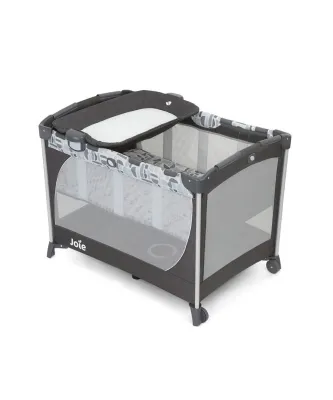
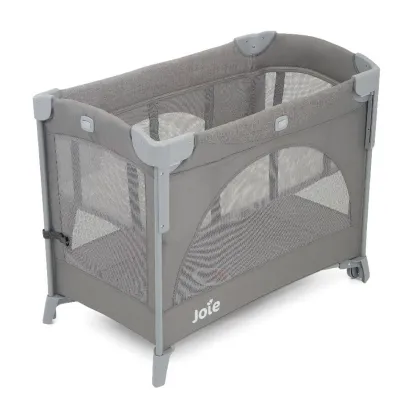




Prices are valid at publication and may change. Please refer to the product page for the latest price.
Another highly respected framework is the American standard, ASTM F406, which covers non-full-size baby cribs and play yards. Developed by the American Society for Testing and Materials, this standard focuses heavily on preventing accidental folding, ensuring mattress support strength, and eliminating strangulation hazards from corner posts or decorative cutouts. If a travel cot complies with either EN 716 or ASTM F406, it indicates that the manufacturer has submitted the design to an independent laboratory to verify its structural safety under stress.
In Singapore, consumer goods are overseen by Enterprise Singapore under the Consumer Protection (Safety Requirements) Registration Scheme. However, it is important to note that non-electrical nursery furniture, including travel cots, does not carry a mandatory local “Safety Mark” like home appliances do. Instead, local authorities and retailers rely on these established international standards to gauge product safety. Therefore, the responsibility falls on parents to look for European or American certification marks as their primary safety reference.
When browsing online marketplaces or physical stores, you must learn to distinguish between genuine certification claims and generic marketing language. Phrases like “tested for safety,” “pediatrician approved,” or “meets all safety guidelines” carry no legal weight without a specific standard number attached. A truly compliant product will explicitly state the exact standard it meets, such as “Complies with EN 716-1:2017,” on its packaging, user manual, and the physical product label itself.
Key Design Features That Indicate a Safe Travel Cot
Beyond checking for paper certifications, you should physically inspect the travel cot’s design features to ensure they meet basic safety principles. The mattress is the most critical component for safe sleep. Unlike adult mattresses, a baby’s sleep surface must be exceptionally firm to prevent suffocation. When you press your hand onto the travel cot mattress, it should not conform to your hand or leave an indentation. Furthermore, the mattress must fit perfectly within the cot base with no gaps wider than 30 millimeters along the sides, preventing a baby from slipping into a gap and becoming trapped.

Locking mechanisms are another vital safety feature unique to folding cots. A compliant travel cot must feature a secure, dual-action locking system on the frame. This means it should require two distinct, deliberate physical actions to unlock and fold the cot, making it impossible for a child inside or a sibling outside to accidentally trigger a collapse. When setting up the cot, the joints should click firmly into place, and the frame should remain completely rigid when shaken.
Mesh sides are standard on most modern travel cots, providing both ventilation and visibility. However, the quality of the mesh matters. The weave must be incredibly fine—so small that a baby’s tiny fingers, toes, or clothing buttons cannot catch in the holes. The mesh fabric must also be securely stitched to the frame, with no loose threads or fraying seams that could unravel and present a strangulation or choking hazard.
Finally, examine the cot for any sharp edges, exposed metal hardware, or small detachable parts. All metal tubes should be covered by fabric or rounded plastic caps, and any zippers used for side-access panels must feature child-proof pulls that lock out of the baby’s reach. There should be no decorative cutouts or protrusions on the corner posts, as these can snag a baby’s clothing and pose a serious hanging risk.
How to Verify Compliance Before You Buy
Verifying safety claims requires a proactive approach, especially when shopping on digital platforms where product descriptions can be easily copied or exaggerated. Your first step should be to look for high-resolution photos of the physical product’s warning labels. Legitimate, certified travel cots are required by law under EN 716 and ASTM F406 to have permanent, non-detachable warning labels stitched into the fabric or printed on the base. These labels must display the manufacturer’s name, the model number, the specific safety standard met, and clear weight or age limits.
If you are shopping online and cannot find this information, do not hesitate to contact the seller or manufacturer directly. Ask them to provide the specific compliance declaration or a copy of the independent laboratory test report. Reputable brands will readily share this documentation or point you to a downloadable PDF on their official website. If a seller avoids the question or cannot name the specific testing standard, it is safest to choose a different product.
Reviewing the instruction manual before purchase is another excellent way to gauge safety. Most major manufacturers upload their product manuals online. A compliant manual will feature clear, step-by-step assembly diagrams, explicit warnings about safe sleep practices, and detailed guidelines on when to stop using the cot. If the manual is poorly translated, lacks clear safety warnings, or does not specify weight limits, it is a strong indicator of a low-quality product that may not have undergone proper safety testing.
While saving money is a priority for many families, buying a second-hand travel cot carries significant risks. Over time, plastic joints can become brittle, fabric can tear, and locking mechanisms can wear down without showing obvious external signs of damage. Furthermore, older cots may have been recalled due to safety hazards discovered after their release, or they may lack the latest safety improvements mandated by updated standards. If you must use a pre-owned cot, ensure it comes with the original manual, has all its original parts, shows no signs of wear, and is verified against online recall databases.
Safe Setup and Usage Boundaries
Even the most highly certified travel cot can become unsafe if it is set up or used incorrectly. The golden rule of travel cot safety is to use only the mattress or folding pad supplied by the manufacturer. It can be tempting to add a thicker, softer aftermarket mattress or a mattress topper to make the cot seem more comfortable, but doing so is incredibly dangerous. Travel cots are designed with flexible fabric sides; adding a thicker mattress raises the baby higher, increasing the risk of them falling out or getting wedged between the mattress edge and the flexible fabric wall, which can lead to suffocation.
Where you position the cot in your room is just as important as how you assemble it. Always place the travel cot on a flat, level, and stable floor surface. Keep it well away from windows, where blind cords, curtains, or electrical wires could present a strangulation hazard. Ensure the cot is positioned away from heaters, air conditioning vents, and heavy furniture that a child could pull down or use to climb out of the cot.
Every travel cot has strict developmental and weight limits that you must respect to prevent accidents. Most manufacturers specify a maximum weight limit, but developmental milestones are often more important. You must stop using the travel cot for sleep or play immediately once your child can sit up, kneel, pull themselves up to a standing position, or climb out of the cot. At this stage, the risk of the child tipping the cot over or falling over the side increases dramatically.
Finally, make a habit of performing a quick safety inspection before every single use. Check that all four corner joints and the central base lock are fully engaged and rigid. Inspect the mesh sides for any new tears or holes, and ensure the mattress is securely fastened to the bottom of the cot using the provided straps or Velcro tabs. Taking two minutes to verify these details before putting your baby down ensures that the cot’s safety features can perform exactly as they were designed to do.
Frequently Asked Questions (FAQ)
Is it safe to use a travel cot as a primary bed for a baby?
Travel cots are designed for temporary, short-term use during travel or occasional naps, and they are not recommended as a permanent replacement for a standard wooden crib. The mattresses in travel cots are intentionally thin and firm to allow the cot to fold compactly, which does not provide the same level of long-term orthopedic support as a dedicated crib mattress. Additionally, the lightweight fabric and folding joints of a travel cot experience much faster wear and tear under daily, continuous use, which can compromise the structural integrity of the locking mechanisms over time.
What should I do if my travel cot fails a safety check or breaks?
If you notice a broken joint, a torn mesh panel, a malfunctioning lock, or a sagging mattress base, you must stop using the travel cot immediately. Do not attempt to repair the cot yourself using tape, glue, or non-original parts, as these temporary fixes can easily fail under the weight of a moving baby. Contact the manufacturer or the authorized retailer to check if the issue is covered under warranty or if there is an active safety recall for your model. If the cot cannot be professionally repaired by the manufacturer, disable it by cutting the fabric or removing key parts before disposing of it, ensuring that no one else retrieves and uses a compromised product.

Community discussion
Share your experience or ask a question. Comments are reviewed before publication.