
Quick Answer: Which Baby Food Maker Should You Consider?
When introducing solid foods to your infant, choosing the right kitchen appliance can significantly streamline your daily routine. The decision between a budget-friendly option like the toyomi baby blender and premium, all-in-one steam-and-blend systems like those from Philips Avent and Beaba ultimately depends on your kitchen workflow, counter space, and budget. There is no single universal winner, as each brand caters to distinct household priorities and weaning styles.
If your primary goal is finding a straightforward, cost-effective tool dedicated strictly to pureeing pre-cooked ingredients, a standalone blending unit is highly practical. For families prioritizing a seamless, single-jar workflow that handles both steaming and blending with minimal cleanup, an all-in-one system is more suitable. Before making a final purchase, always verify the exact model specifications, voltage compatibility, and accessory availability with local distributors in Singapore.
Core Dimensions for Comparing Baby Food Makers
To make an informed choice, you must evaluate how different appliances align with your daily food preparation habits. Comparing baby food makers requires looking closely at several technical and functional dimensions rather than relying solely on brand popularity. Understanding these core axes helps prevent post-purchase regret and ensures the appliance safely supports your child’s feeding stages.
Products mentioned in this guide
![[NEWLY UPGRADED] TOYOMI NourishMix 5 In 1 Baby Food Maker BBF 7003 Steam Blend Sterilise Reheat Chop](https://img.lazcdn.com/g/p/ec1f4b6978a7c191659ec764bfe67b19.jpg_400x400q80.jpg_.webp)
![[NEWLY UPGRADED] TOYOMI NourishMix All-In-One Baby Food Maker BBF 7003](https://img.lazcdn.com/g/p/71065d29f0e3e108344a7919d97f50dc.png_400x400q80.png_.webp)
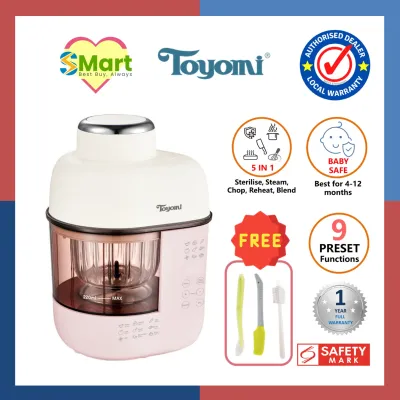
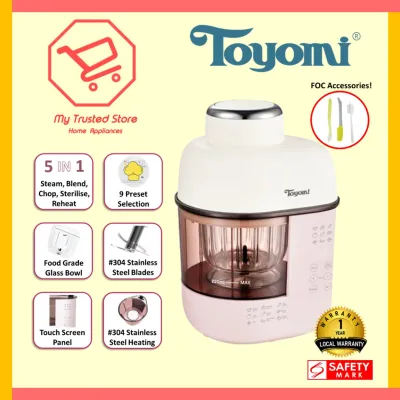
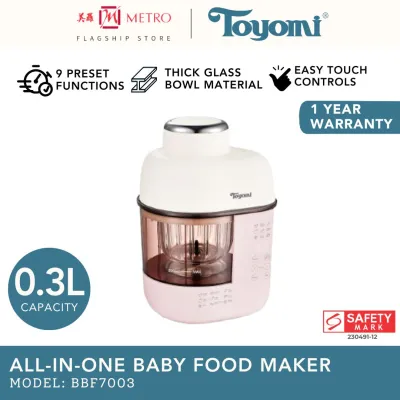
Prices are valid at publication and may change. Please refer to the product page for the latest price.

Functionality and Workflow
The primary distinction lies between standalone blenders and integrated steamer-blenders. Standalone blenders require you to steam or boil ingredients in a separate pot or rice cooker before transferring them to the blender jar. Integrated units allow you to steam raw ingredients and blend them in the same container, reducing the transition steps and minimizing the number of dirty dishes.
Capacity and Batch Sizes
Consider whether you prefer making fresh, single-portion meals daily or preparing large batches to freeze for the week. Compact jars are excellent for small, fresh portions during the early weaning stage (around six months). Larger capacity jars (ranging from 800ml to over one liter) are better suited for batch-prepping multiple meals at once, saving time as your baby’s daily intake increases.
Material Safety and Build Quality
Because these appliances handle hot food, material integrity is paramount. Look for food-grade, heat-resistant materials such as borosilicate glass, stainless steel, or certified BPA-free and BPS-free plastics. Always verify the manufacturer’s material safety certifications on the official packaging or user manual rather than assuming safety based on brand reputation.
Motor Power and Texture Control
As your baby transitions from smooth purees at six months to chunkier, textured meals around eight to ten months, your blender must offer adaptable performance. High-speed motors easily pulverize tough fibrous vegetables, while pulse control features allow you to achieve precise, coarser textures. Checking the motor wattage and blade configuration helps determine if the machine can handle dense root vegetables without overheating.
Feature and Performance Breakdown: Toyomi Baby Blender vs. Competitors
Toyomi Baby Blender
Toyomi is well-regarded in Singapore for producing practical, value-driven household appliances. The typical toyomi baby blender is designed as a compact, dedicated blending tool that focuses on straightforward operation and space-saving design, making it an excellent fit for smaller HDB kitchen counters.
When evaluating Toyomi models, verify whether the specific unit is strictly a blender or if it includes heating elements. Most compact Toyomi blenders require you to cook the food beforehand. You must check the user manual to confirm the maximum continuous run time; many small motors require a cool-down period after 30 to 60 seconds of continuous blending to prevent overheating when processing dense ingredients like sweet potatoes or pumpkin.
Additionally, confirm the jar material before purchasing. While some models feature durable glass jars that resist odors and staining, others use lightweight, shatterproof plastics. Always follow the manufacturer’s age-specific guidelines to ensure you are blending foods to a safe, developmentally appropriate consistency for your child’s current weaning stage.
Philips Avent Baby Food Makers
Philips Avent is a staple in the infant care market, particularly known for its “steam, flip, and blend” design philosophy. This workflow allows caregivers to steam raw vegetables, meats, or fish in the jar, and then simply flip the jar upside down onto the motor base to blend, eliminating the need to transfer hot, steaming food between different containers.
When considering a Philips Avent model, verify the exact water tank capacity and check for automatic shut-off safety features that prevent dry heating if the water runs out. Because these units combine water heating and blending, they contain multiple detachable parts—including silicone seals, blade assemblies, and lid covers—that must be thoroughly cleaned and dried to maintain hygiene.
It is also important to check if the specific model available in Singapore supports extended functions such as defrosting and reheating pre-packaged baby food portions. These multi-in-one features can save significant time, but they also require a larger physical footprint on your countertop compared to basic, standalone blenders.
Beaba Baby Food Makers
Beaba, particularly through its Babycook range, is recognized for premium aesthetics, ergonomic designs, and specialized multi-functionality. These appliances often appeal to parents looking for high-quality materials and precise control over the cooking process, offering features like patented steam modulation and separate cooking baskets.
If you are looking at Beaba models, verify the construction materials of the steam basket and the blending jar. Premium iterations often utilize borosilicate glass and stainless steel baskets, which offer excellent durability and eliminate plastic contact with hot food. However, these premium materials make the appliance heavier and require careful handling during washing.
Before purchasing, check the availability of replacement parts—such as sealing gaskets, replacement blades, and descaling liquids—through authorized local distributors in Singapore. Because Beaba units use specialized accessories, relying on unauthorized third-party sellers for replacement components can compromise the safety and warranty of your machine.
Evaluating Price and Long-Term Value in Singapore
When shopping for baby gear in Singapore, looking solely at the initial retail price can be misleading. A comprehensive financial assessment must factor in the appliance’s lifespan, the cost of replacement parts, and the reliability of local warranty coverage. This ensures you receive genuine value for your investment throughout your weaning journey.
To help guide your budget, consider these general pricing tiers in the local market:
- Budget-Friendly (Under S$100): Typically consists of standalone blenders, including many Toyomi models, which offer reliable blending performance but require separate cooking equipment.
- Mid-Range (S$100 to S$250): Mostly comprises standard all-in-one steam-and-blend units, such as entry-level Philips Avent models, offering convenient single-jar workflows.
- Premium (Above S$250): Includes high-end multi-functional appliances like Beaba Babycook models, featuring premium materials like glass and stainless steel, advanced programming, and larger capacities.
Beyond the initial purchase, check the cost and availability of wear-and-tear parts. Silicone gaskets, sealing rings, and blending blades naturally degrade over time due to high heat and frequent washing. Purchasing from authorized local retailers ensures you can easily source genuine replacement parts and access local repair services if a technical fault occurs.
Avoid purchasing parallel imports from unauthorized online marketplace sellers. While these listings may offer lower upfront prices, they often lack local Singapore Safety Marks, may not match local 230V voltage standards, and typically carry no valid local warranty. Investing in an officially distributed model protects your household from electrical hazards and ensures reliable customer support.
Cleaning, Maintenance, and Food Safety
Maintaining strict hygiene is crucial when preparing food for developing immune systems. Because baby food makers handle warm, moist environments, they are highly susceptible to bacterial growth and mold if not cleaned and maintained correctly after every single use.
Compare the disassembly process of each brand before buying. Some models feature complex lid assemblies and deep blade wells that easily trap food residue, requiring specialized cleaning brushes. Always verify the manufacturer’s care label to check if the blending jar, lid, and accessories are top-rack dishwasher safe, or if they must be washed exclusively by hand to prevent warping.
For models with integrated steam generators, regular descaling is mandatory. Tap water in Singapore contains minerals that gradually build up as scale inside the water reservoir, reducing heating efficiency and potentially flakes into the steam path. Follow the manufacturer’s exact instructions for descaling, which typically involve running a cycle with food-grade citric acid or distilled white vinegar; never use harsh chemical cleaners that could leave toxic residues.
Regularly inspect the physical condition of your appliance. If you observe any micro-scratches in plastic jars, dull or nicked blades, or stretched silicone gaskets, cease use immediately and replace the affected parts. If you notice persistent musty odors from the water tank or find that food is not heating evenly, consult the user manual or contact a certified professional to service the heating element.
Final Decision Framework: Choosing the Right Fit
To finalize your purchase, align your household’s specific kitchen space, daily schedule, and budget with the strengths of each brand.
Choose Toyomi if:
- You already have a reliable method for steaming foods (such as a rice cooker, food steamer, or stove-top setup) and only need a dedicated blending tool.
- You are working with a defined budget and prefer a highly cost-effective, straightforward appliance.
- You have limited kitchen counter space and require a compact, easily storable blender.
Choose Philips Avent if:
- You prioritize a streamlined, all-in-one workflow that minimizes food handling and reduces kitchen cleanup.
- You want a trusted, mid-range appliance with widely available local customer support and replacement parts in Singapore.
- You prefer a simple, intuitive mechanical interface that other caregivers or grandparents can easily operate.
- Your kitchen setup allows space for a dedicated, permanently placed countertop appliance.
Choose Beaba if:
- You prefer premium appliance materials, such as borosilicate glass and stainless steel, to minimize plastic contact with hot food.
- You want advanced cooking features, such as precise pulse blending, multi-basket steaming, or dual-jar capacities for batch cooking.
- You value modern kitchen aesthetics and want a stylish appliance that complements your home decor.
- You are willing to invest a higher upfront amount for premium build quality and specialized accessories.
Verify first before checkout:
- Voltage Compatibility: Ensure the unit is rated for Singapore's 230V, 50Hz electrical standard to prevent electrical damage.
- Warranty Terms: Confirm that the seller provides an official local warranty rather than a shop-level or international warranty.
- BPA-Free Labels: Double-check the product packaging to ensure all food-contact components are certified food-safe and chemical-free.
- Caregiver Supervision: Always read the manufacturer's safety warnings regarding hot steam release and blade handling to protect yourself and your child.
Frequently Asked Questions (FAQ)
Do I really need a dedicated baby food maker, or can I use a regular blender?
While a standard household blender can puree ingredients, it is often designed for much larger volumes. Attempting to blend small, infant-sized portions in a large blender frequently results in food getting stuck under the blades, requiring you to add excess liquid which can make the puree too watery for early weaning stages. Dedicated baby food makers are engineered specifically for small batch sizes, allowing you to achieve the precise, smooth consistencies needed for early feeding. Furthermore, integrated steam-and-blend models save significant time by consolidating cooking and pureeing into a single vessel, reducing kitchen cleanup.
How long will my baby actually use a dedicated food maker?
The intensive pureeing phase is relatively short, typically lasting from the start of weaning at around six months until your baby transitions to chunkier, table-textured foods between 12 and 18 months. However, you can extend the useful lifespan of a baby food maker by using it to prepare family-style sauces, fruit coulis, dips, salad dressings, or small portions of soup. When choosing a model, check if the manufacturer provides recipes or guidelines for processing family foods, which can help justify the initial investment long after your child has transitioned to solid family meals.
Community discussion
Share your experience or ask a question. Comments are reviewed before publication.