
Caring for an infant’s delicate skin requires careful attention to everything that touches it, especially the fabrics they wear throughout the day. Because a baby’s skin barrier is significantly thinner and more permeable than an adult’s, residual chemicals left behind by laundry detergents can easily penetrate the skin, leading to dryness, redness, or contact dermatitis. In Singapore, where the warm, humid tropical climate often leads to sweating and frequent clothing changes, choosing a mild yet effective detergent is a top priority for parents. When evaluating tollyjoy laundry detergent, understanding the precise ingredient profile is essential to determining whether the formulation is truly safe for your little one’s unique skin needs.
While marketing claims on the front of the packaging often promise gentle care, a closer look at the actual chemical composition is the only way to make an informed decision. By analyzing the cleaning agents, potential irritants, and proper washing techniques associated with baby laundry care, you can protect your baby’s developing skin barrier while keeping their clothes clean and fresh.
Understanding Tollyjoy Laundry Detergent's Core Cleaning Ingredients
Surfactants, or surface-active agents, are the workhorses of any laundry detergent. Their primary job is to lower the surface tension of water, allowing it to penetrate fabric fibers, surround soils, and lift them away into the rinse water. In baby laundry care, surfactants must be strong enough to break down tough organic stains—such as breast milk, formula, spit-up, and food purees—while remaining mild enough not to leave irritating chemical residues on the fabric. Traditional detergents often rely on harsh, petroleum-based anionic surfactants like sodium lauryl sulfate (SLS), which can strip moisture from the skin. In contrast, dedicated baby detergents frequently utilize plant-derived surfactants, such as those sourced from coconut or palm kernel oil, which offer a much gentler cleaning action.
Products mentioned in this guide
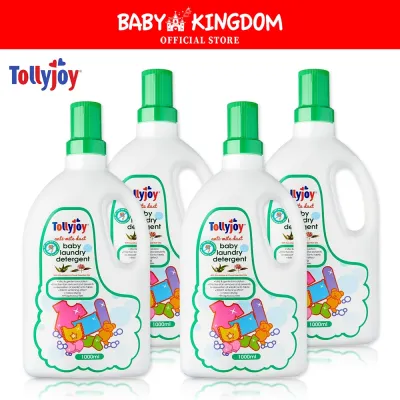
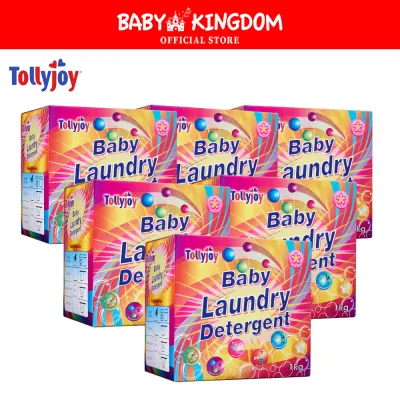
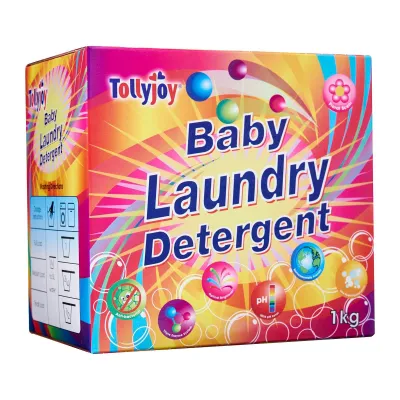
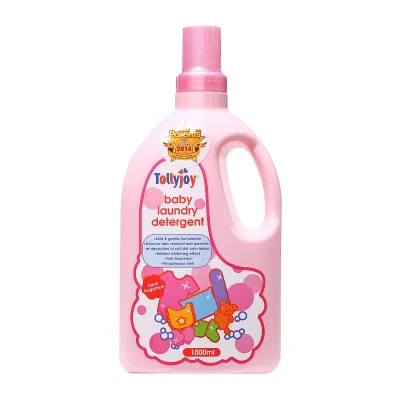
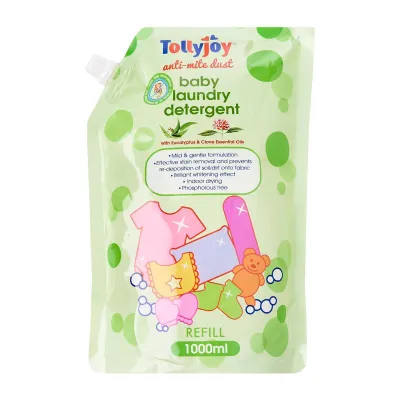
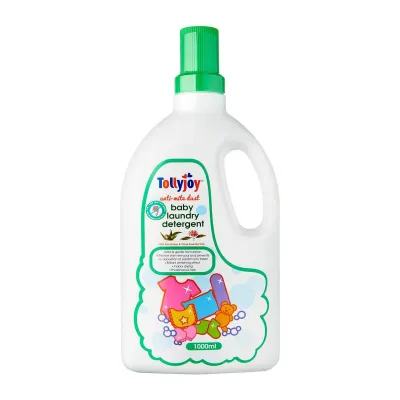
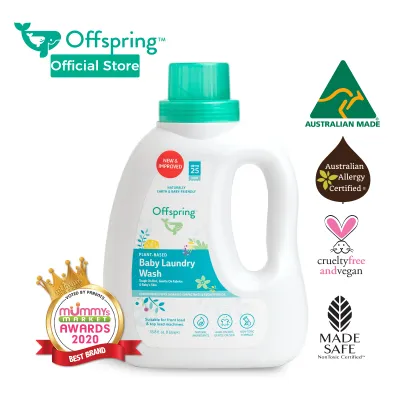
Prices are valid at publication and may change. Please refer to the product page for the latest price.
When examining a bottle of Tollyjoy laundry detergent, parents should locate the full ingredient list, which is typically found on the back panel of the packaging. Look for terms indicating the chemical families used, such as non-ionic surfactants (for example, alkyl polyglucosides). Non-ionic surfactants are highly favored in baby-specific formulations because they carry no electrical charge, making them exceptionally gentle on sensitive skin while remaining highly effective at cutting through greasy milk residues. Verifying these chemical families on the label helps ensure you are choosing a product designed with infant skin safety in mind.
Enzymes are another class of ingredients frequently discussed in baby laundry care. These biological catalysts are highly efficient at breaking down specific types of stains: proteases target protein-based stains like milk and blood, while amylases target starch-based stains like baby food and purees. While enzymes are highly effective at stain removal, some infants with extremely sensitive skin or compromised skin barriers (such as infantile eczema) may experience mild irritation from residual enzymes left on clothing. When used and rinsed strictly according to the manufacturer’s instructions, enzyme-formulated detergents are generally safe for baby clothes, but parents of highly sensitive babies should monitor their child’s skin closely.
It is also important to clarify the distinction between “natural” or “plant-based” marketing claims and absolute safety. While plant-derived surfactants are generally milder than their petroleum-based counterparts, “natural” does not automatically mean allergen-free. Plant-derived ingredients can still trigger botanical sensitivities or allergic contact dermatitis in babies with specific predispositions. Always review the detailed ingredient list to check for specific plant extracts or oils if your baby has a known sensitivity to certain botanical families.
Potential Irritants and Allergens to Check on the Label
While the core cleaning agents are designed to lift dirt, many standard laundry detergents contain secondary additives that serve purely aesthetic or optical functions. Optical brighteners are synthetic chemicals designed to absorb ultraviolet light and emit blue light, making fabrics appear whiter and brighter than they actually are. Because these chemicals are formulated to remain bound to the fabric fibers even after the rinse cycle, they stay in constant, direct contact with your baby’s skin. Pediatric dermatologists frequently recommend avoiding optical brighteners for infant clothing, as the constant friction against chemically treated fibers can easily trigger skin irritation and flare-ups of eczema.

Synthetic dyes are another common additive that parents should watch out for. These colorants are added solely to make the liquid or powder look appealing in the bottle and serve absolutely no functional cleaning purpose. Because synthetic dyes represent an unnecessary risk of chemical exposure and skin sensitization for newborns, premium baby care lines generally exclude them from their formulations. When selecting a Tollyjoy variant, opt for clear or white liquids and powders that indicate a dye-free formulation.
Fragrance is one of the most common triggers for infant skin irritation and allergic contact dermatitis. The term “fragrance” or “parfum” on a label can represent a complex mixture of dozens of individual synthetic chemicals, many of which are known allergens. Even naturally derived essential oils can pose risks, as compounds like limonene or linalool can cause allergic reactions in sensitive individuals. For newborns and babies with highly sensitive or eczema-prone skin, strictly fragrance-free or unscented formulations are the safest choice, as they eliminate the risk of fragrance-induced skin barrier disruption.
Preservatives are a necessary component of any water-based liquid detergent. Without them, the product would quickly become a breeding ground for bacteria, mold, and yeast, posing a significant health risk to your family. Common preservatives include phenoxyethanol, methylisothiazolinone (MIT), and parabens. While necessary for shelf life, some preservatives (like MIT) are known sensitizers that have been linked to contact dermatitis. Premium baby care lines often opt for milder preservative systems. Parents should verify which preservatives are listed on their specific Tollyjoy variant to ensure they align with their baby’s skin tolerance.
To ensure your baby’s safety, always cross-reference the “free-from” claims on the front of the Tollyjoy bottle with the detailed ingredient list on the back. Marketing terms like “gentle” or “mild” are not tightly regulated, and a product labeled as such may still contain synthetic fragrances, dyes, or preservatives that could compromise your baby’s skin health. Taking a few moments to read the back label is the most reliable way to verify what actually goes onto your baby’s clothing.
Evaluating "Baby-Safe" and Hypoallergenic Claims
When shopping for baby care products in Singapore, parents are inundated with terms like “hypoallergenic” and “dermatologically tested.” Understanding what these terms actually mean is crucial for making safe choices for your family. The term “hypoallergenic” is not a legal or medical guarantee that a product will never cause an allergic reaction. Instead, it indicates that the product has been formulated with ingredients that have a lower statistical probability of causing an allergic response compared to standard consumer products. It is a helpful starting point, but it does not eliminate the need for careful ingredient monitoring.
Similarly, “dermatologically tested” or “pediatrician approved” labels indicate that the product has undergone clinical evaluation, often involving patch testing on human volunteers under the supervision of medical professionals. However, because the exact testing protocols, sample sizes, and criteria can vary widely between brands, these claims should be viewed as supportive evidence rather than absolute proof of safety. Parents should look for independent third-party certification seals or clear testing details on the manufacturer’s official documentation to verify the rigor of these claims.
Another critical factor is the pH balance of the detergent. A newborn’s skin is naturally protected by a slightly acidic barrier known as the acid mantle, typically maintaining a pH of around 5.5. This acidic environment is essential for maintaining skin barrier integrity and defending against harmful pathogens. Using highly alkaline detergents can disrupt this mantle, leading to dryness, irritation, and increased susceptibility to infections. Baby-safe detergents should ideally be formulated to be pH-neutral or slightly acidic when diluted in water, helping to preserve the natural balance of your baby’s developing skin.
Ultimately, parents must establish clear safety boundaries when introducing any new laundry product. Every baby’s skin is unique, and individual tolerances can vary widely. If your baby develops localized rashes, dry patches, or persistent redness, discontinue use of the detergent immediately. Thoroughly rinse the affected clothing with plain water, and consult a pediatrician or dermatologist to identify the specific trigger and receive appropriate care.
Best Practices for Washing Baby Clothes Safely
Even the mildest baby detergent can cause skin issues if used incorrectly. One of the most common mistakes is using too much detergent. When you exceed the recommended dosage, the excess soap cannot be fully rinsed out, leaving a concentrated chemical residue trapped within the fabric fibers. In Singapore’s humid climate, this trapped residue can also attract moisture, leading to musty odors and bacterial growth, while the physical friction of soapy buildup against the skin can cause significant irritation. Always follow the manufacturer’s dosage lines on the cap based on your load size.
To further minimize the risk of skin contact with cleaning agents, utilize the extra rinse cycle on your washing machine. Modern high-efficiency (HE) washing machines use minimal water, which can sometimes leave trace amounts of surfactant on clothing. Activating an extra rinse cycle is a highly effective, low-risk way to ensure all cleaning agents are thoroughly flushed from the fabric, particularly for newborn wear, cloth diapers, and bedding. This simple step provides an extra layer of protection for babies with eczema-prone or highly sensitive skin.
Before washing your baby’s entire wardrobe with a new detergent, implement a simple patch-testing protocol. Wash a single, high-contact item (such as a muslin swaddle, bib, or bodysuit) using the new detergent. Have your baby wear or use this item for 24 hours while monitoring their skin for any signs of redness, irritation, or bumps. If no reaction occurs, you can proceed with washing the rest of their clothes with confidence, knowing the formulation is well-tolerated by their skin.
Water temperature also plays a significant role in both stain removal and fabric care. While warm water (around 30°C to 40°C) is ideal for dissolving liquid detergent and lifting body oils or milk fats, excessively hot water can permanently set protein-based stains (like milk or blood) and break down the soft fibers of organic cotton. Always check the garment care labels on your baby’s clothes to select the optimal temperature that balances hygiene with fabric longevity.
Frequently Asked Questions (FAQ)
Can I use regular Tollyjoy detergent for newborn clothes?
Newborn skin is incredibly delicate and lacks the fully developed protective barrier of older infants and adults, making it highly susceptible to chemical irritants. Regular family detergents often contain optical brighteners, synthetic dyes, and heavy fragrances designed to linger on clothes for days. Dedicated baby variants, such as Tollyjoy’s specialized baby detergents, are formulated with milder surfactants and fewer unnecessary additives. For the first few months, it is highly recommended to stick to dedicated baby-safe formulas to minimize the risk of skin irritation.
Do I need to use a fabric softener with Tollyjoy baby detergent?
Traditional liquid fabric softeners and dryer sheets work by depositing a thin chemical film over the fabric fibers to make them feel slick and soft. This chemical layer can significantly reduce the breathability of cotton fabrics, decrease the absorbency of cloth diapers and towels, and compromise the flame-retardant properties of baby sleepwear. It is safer to skip fabric softeners entirely. If you want to maintain fabric softness naturally, consider using wool dryer balls, or rely on the mild conditioning agents already integrated into high-quality baby detergents.
Community discussion
Share your experience or ask a question. Comments are reviewed before publication.