
Weaning is a major milestone that marks your child’s transition from a liquid-only diet to the exciting world of solid foods. This phase is not just about nutrition; it is a complex developmental journey where oral motor skills, swallowing coordination, and grip strength change rapidly. To support these physical milestones, the utensils you use must evolve alongside your baby.
Choosing the wrong utensil can stall progress or make mealtime stressful. For instance, using a spoon with a bowl that is too large, too deep, or made of a rigid material can easily trigger a baby’s sensitive gag reflex. This can cause immediate discomfort, leading to mealtime frustration and a reluctance to try new foods.
To set your baby up for a positive relationship with food, expect to transition through two or three distinct spoon types during their first year of solids. Matching the utensil’s shape, size, and weight to your child’s specific age and development level ensures a smoother, safer, and more enjoyable weaning experience.
Products mentioned in this guide
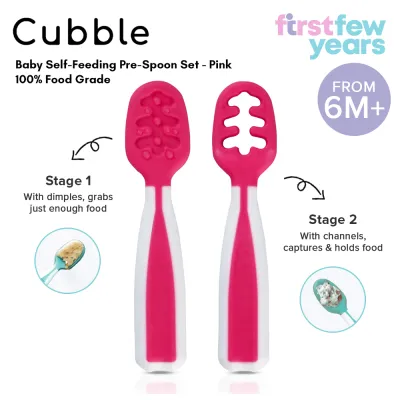
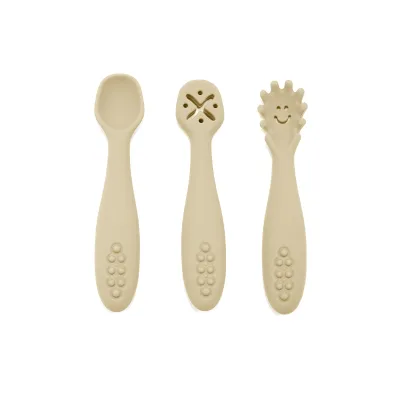
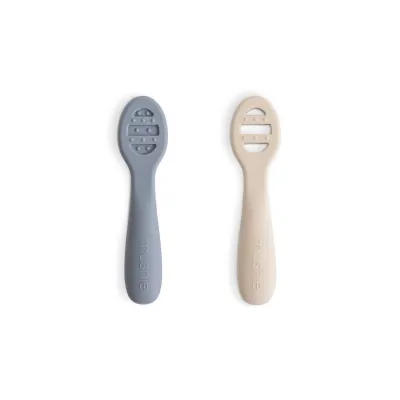
![Mushie Toddler Starter Spoons [Set of 2][12+ months][Food Grade Silicone]](https://img.lazcdn.com/g/p/6a835bec8bb372b6318dfee5b4b5ff0d.jpg_400x400q80.jpg_.webp)
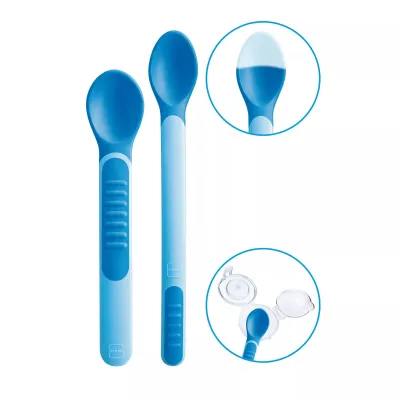
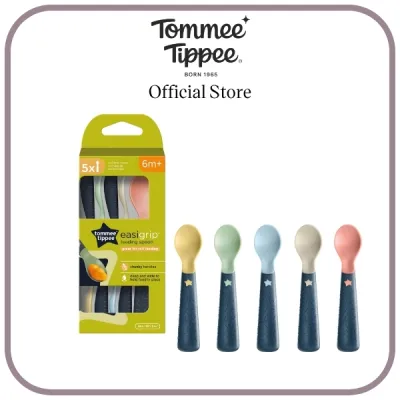
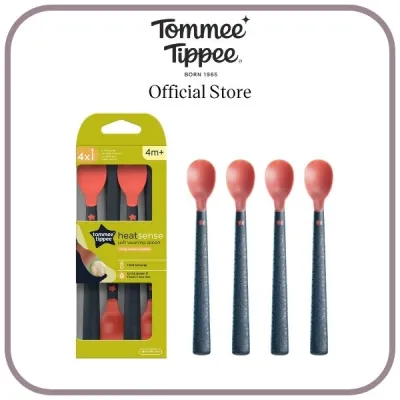
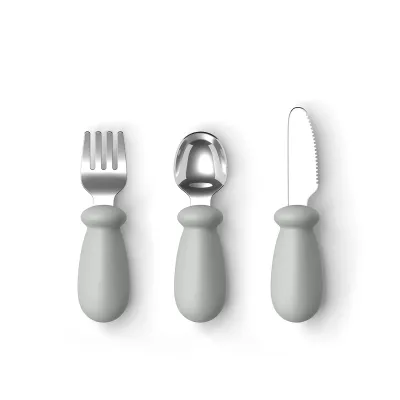
Prices are valid at publication and may change. Please refer to the product page for the latest price.
How Spoon Design Supports Your Baby's Development
The physical transition from parent-fed smooth purees to independent eating of family foods requires distinct oral and motor skills. In the beginning, a baby simply needs to learn how to clear food from a spoon using their upper lip. Over time, they must master scooping, balancing food, and navigating the utensil to their mouth without tipping it.
A spoon that does not match your baby’s developmental stage can make these tasks unnecessarily difficult. If the spoon bowl is too deep, the baby cannot easily clear the food with their lips, leaving them frustrated. If the handle is too long or thin for a toddler’s developing grip, they will struggle to control it, often leading to spilled food and mealtime tantrums.
Investing in stage-appropriate spoons helps your child build confidence. By providing the right tool at the right time, you support their natural progression from passive swallowing to active self-feeding. This gradual transition minimizes stress for both you and your baby, turning mealtimes into a positive learning experience.
Stage 1 (Around 4–6 Months): Spoons for First Tastes and Parent Feeding
Around four to six months of age, babies typically begin their weaning journey with very smooth, runny purees. At this initial stage, the primary goal is introducing the physical sensation of swallowing solids rather than consuming large volumes. Your baby is learning how to use their tongue to move food from the front of the mouth to the back, rather than relying on their natural sucking reflex.

Because their mouths are small and their gums are highly sensitive—often due to early teething—the design of the spoon is critical. The ideal Stage 1 spoon features an extra-small, shallow bowl. This shallow profile ensures that only a tiny, manageable amount of food is offered at once, preventing the baby’s mouth from being overwhelmed.
The tip of the spoon must be incredibly soft and flexible. Food-grade silicone is the preferred material here, as it acts as a gentle cushion against tender gums. A flexible tip also allows you to scrape stray purees from your baby’s chin gently without causing skin irritation.
For the parent doing the feeding, a long, slender handle is a necessity. This length allows you to easily reach the bottom of deep commercial baby food jars or homemade puree containers. It also gives you better leverage and control to comfortably guide the spoon to your baby’s mouth from a seated position.
During this stage, parents should strictly avoid hard plastics, bare metal, or deep, wide bowls designed for older toddlers. These materials can easily scrape the roof of the mouth or deliver too much food, leading to coughing or choking.
When starting out, focus on tiny portions and let your baby set the pace. Allow them to explore the spoon by touching it, sniffing the food, and getting used to the feel of the silicone against their lips and tongue. If your baby pushes the spoon away or shows signs of distress, pause the session and consult your pediatrician or a feeding specialist for guidance.
Stage 2 (Around 6–8 Months): Spoons for Thicker Textures and Early Grasping
By six to eight months, your baby’s oral coordination is developing rapidly. They are ready to progress from silky purees to thicker mashes, finely minced foods, and soft lumps. At the same time, their physical curiosity is peaking, and they will begin reaching out to grab the spoon during meals.
This stage marks the transition from passive feeding to early active participation. Your baby is developing their palmar grasp, which means they use their entire hand to clutch objects. To accommodate this, look for a spoon with a shorter, thicker handle that features an easy-grip, non-slip texture.
The bowl of a Stage 2 spoon should be slightly wider and deeper than a first-stage spoon. This shape allows it to hold thicker, more textured foods like mashed avocado, sweet potato, or traditional rice congee.
Some innovative Stage 2 designs feature angled or curved handles. These unique shapes help bridge the physical gap between the bowl and the baby’s mouth. Because babies at this age lack the wrist rotation needed to keep a straight spoon level, a curved design helps them guide food into their mouth with fewer spills.
Avoid using spoons with long, thin handles during this stage. If a baby grabs a long-handled spoon and shoves it into their mouth, they can easily push it too far back, triggering a severe gag reflex or causing minor throat injury.
A practical tip for managing this transition is the “two-spoon method.” Give your baby their own easy-grip spoon to hold, chew on, and explore while you use a secondary spoon to actually feed them. This keeps their hands busy, builds hand-eye coordination, and reduces mealtime power struggles.
Stage 3 (9+ Months): Spoons for Independent Self-Feeding
At nine months and beyond, many toddlers actively demand independence at the dining table. They are developing their pincer grasp—using their thumb and index finger to pick up small objects—and are ready to tackle chunkier, family-style foods. This is the prime window for encouraging self-feeding.
Spoons designed for this stage must support a toddler’s fist grip. Look for short, chunky, and ergonomically shaped handles that fit snugly into a small palm. These handles give the child the maximum leverage needed to scoop up food independently.
The spoon bowl should be larger and deeper, allowing your toddler to successfully scoop up chunks of food like diced vegetables, pasta, or minced meats. Because toddlers often bite down hard on utensils and frequently drop them from high chairs, the materials must be exceptionally durable.
Useful design features to look for include non-slip rubberized grips, weighted bases, or built-in spoon rests. A weighted base or integrated stand keeps the dirty bowl of the spoon elevated off the table surface, maintaining hygiene during messy meals. One-piece designs made entirely of silicone or durable plastic are ideal because they have no seams or crevices where food particles and bacteria can hide.
Expect plenty of mess during this stage, as spilling is a natural part of the learning process. Focus your attention on encouraging the scoop-and-lift motion rather than enforcing perfect table manners. If your child struggles significantly or refuses to eat, offer gentle assistance, but avoid forcing the spoon into their mouth.
Material, Safety, and Care: A Pre-Purchase Checklist
When shopping for baby spoons in retail stores or online marketplaces, evaluating materials is your first line of defense. Different materials offer distinct benefits and require specific maintenance:
- Food-Grade Silicone: Highly popular because it is soft, gentle on gums, and resistant to biting. However, it can occasionally retain food odors or become stained by vibrant ingredients like pumpkin or turmeric.
- Stainless Steel: Incredibly durable, hygienic, and easy to sanitize, making it a staple for older toddlers. If you choose stainless steel for a younger baby, ensure it features a soft silicone or plastic coating on the tip to protect their mouth.
- Bamboo and Wood: Offer an appealing, natural aesthetic. However, these materials require specific hand-washing care and must be dried thoroughly to prevent cracking, splintering, or mold growth, especially in humid climates.
Safety verification is paramount. Always physically inspect the product packaging for clear food-safe labels, certifying that the item is free from Bisphenol A (BPA), polyvinyl chloride (PVC), and phthalates. Do not rely solely on online marketing claims; look for official certification symbols on the physical box before use.
Cleaning requirements vary significantly by material. While most silicone and plastic spoons are dishwasher-safe, wooden utensils and those with temperature-sensitive sensory coatings usually require gentle hand-washing. Always check the manufacturer’s care instructions to prevent damaging the materials.
Regularly inspect your baby’s spoons for wear and tear. Discard silicone spoons immediately if they develop deep bite marks, tears, or structural weakness, as small pieces could tear off and present a choking hazard. Wooden spoons should be replaced at the first sign of splintering or rough edges.
Frequently Asked Questions (FAQ)
When should I introduce a metal spoon to my baby?
Bare metal spoons are generally best reserved for older toddlers who have a full set of front teeth and have mastered basic self-feeding coordination. Metal is rigid and can be harsh on tender, developing gums or newly erupted baby teeth if a child bites down too hard. Some metal spoons feature a soft silicone outer coating, which can be introduced earlier; always verify the manufacturer’s specific age and developmental guidelines on the packaging before use.
Are heat-sensing baby spoons necessary for weaning?
Heat-sensing spoons that change color when food is too hot are a convenient visual aid, but they are not a safety necessity. The most reliable way to prevent burns is to manually test the temperature of the food on the inside of your wrist before offering it to your baby. Never rely solely on a spoon’s color-changing technology to guarantee food safety.
Community discussion
Share your experience or ask a question. Comments are reviewed before publication.