
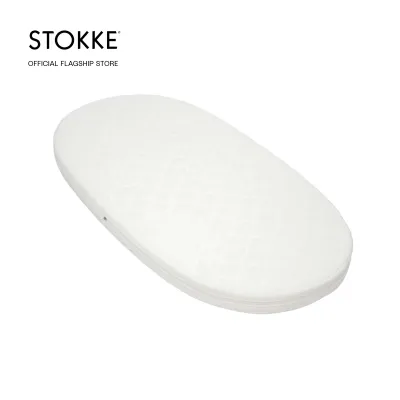
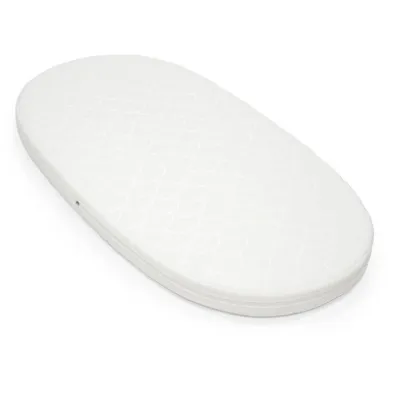
The Stokke Sleepi mattress is designed to be exceptionally firm, providing a rigid, flat surface that does not contour to your baby’s body. This structural stiffness is an intentional, safety-first design choice rather than a comfort flaw.
For newborns, a soft or plush sleeping surface poses significant safety hazards. The firmness of this specific mattress is engineered to prevent your baby’s face from sinking into the material, protecting their airway and supporting their rapidly developing spine during sleep. Parents should expect a surface that feels highly supportive and resists deep compression under a hand’s pressure.
Why Mattress Firmness Is Critical for Newborn Safety
Newborn babies spend up to 18 hours a day sleeping, making their sleep environment a primary factor in their overall health and safety. During the first few months of life, infants lack the motor skills, neck strength, and coordination to lift or turn their heads if their breathing becomes obstructed. A soft mattress that conforms to the baby’s face can block their nose and mouth, creating a dangerous risk of suffocation.
Products mentioned in this guide
Prices are valid at publication and may change. Please refer to the product page for the latest price.
A firm sleeping surface is also a fundamental defense against Sudden Infant Death Syndrome (SIDS). When an infant sleeps on a plush surface, they can breathe in their own exhaled carbon dioxide trapped in the fabric indentations, leading to oxygen deprivation. A rigid, unyielding surface ensures that even if a baby accidentally rolls onto their stomach, their airway remains clear and unobstructed.
Furthermore, soft sleep surfaces can contribute to physical exhaustion. When an infant sinks into a soft mattress, they must work much harder to move or turn their head. This extra physical exertion can cause rapid muscle fatigue, leaving the baby too exhausted to adjust themselves out of a hazardous face-down position.
Beyond immediate breathing safety, proper mattress firmness is crucial for skeletal development. A newborn’s skeleton is highly flexible and consists largely of soft cartilage. A flat, firm base provides the uniform support required to keep the spine in neutral alignment, preventing unnatural curving and supporting healthy bone growth.
Pediatric health authorities globally, including major medical boards and safety councils, universally recommend that infants sleep on a firm, flat mattress for at least the first year of life. Soft bedding, including pillows, quilts, and thick mattress pads, should be entirely kept out of the cot to maintain a safe sleep environment.
Decoding the Stokke Sleepi Mattress Specifications
Firmness and Support Level
The core of the Stokke Sleepi mattress is engineered to resist deep localized pressure, ensuring that your baby remains positioned safely on top of the mattress rather than sinking into it. This level of support is calibrated to distribute your baby’s weight evenly across the surface.

To verify the precise support level, avoid relying solely on subjective touch at a retail showroom. Instead, check the manufacturer’s product label and official documentation for compliance with international safety standards, such as the European safety standard EN 16890 for children’s cots and mattresses. This standard uses a specialized test sphere that simulates a baby’s head to measure exact indentation depth, guaranteeing that the mattress has undergone rigorous mechanical testing to prove its safety.
Breathability and Material Composition
In Singapore’s warm and humid tropical climate, temperature regulation is a vital safety consideration for sleeping infants. Babies cannot regulate their body temperature as efficiently as adults, making them highly susceptible to overheating, which is a known risk factor for sleep-related accidents.
The Stokke Sleepi mattress addresses this issue through its material design, which typically features a breathable 3D mesh cover and a pressure-resistant core designed to facilitate continuous airflow. This open structure allows heat and moisture to dissipate away from your baby’s body. You should verify the specific material composition of your mattress model directly from Stokke’s official product documentation, as materials may vary across different product generations.
Dimensional Fit and Gap Prevention
The unique oval shape of the Stokke Sleepi cot requires a mattress that matches its dimensions perfectly. Standard rectangular mattresses cannot be used in this frame, as they leave dangerous empty spaces at the curved ends where a baby’s limbs or head could become trapped.
To ensure a safe fit, parents should perform the “two-finger rule” after placing the mattress inside the cot. If you can fit more than two fingers between the outer edge of the mattress and the wooden rails of the cot, the mattress is not fitting correctly. Always use the official, specifically shaped Stokke Sleepi mattress designed for your exact bed model (such as the Mini or the standard Bed) to eliminate entrapment hazards.
How to Verify Mattress Firmness and Safety at Home
Ensuring your baby’s sleep environment remains safe requires routine checks and proper maintenance. You can easily evaluate and monitor the safety of your Stokke Sleepi mattress using the following practical steps:
- The Hand Press Test: Place the mattress flat on the floor. Press your palm down firmly into the center of the mattress, then lift your hand. The surface should immediately spring back to its original flat shape without leaving a lingering indentation or handprint. Repeat this test along the edges to ensure the support is uniform across the entire surface.
- Verify Safety Labels: Upon receiving your mattress, inspect the physical safety tags stitched into the cover. Confirm that the product lists safety certifications relevant to infant bedding. Keep these tags intact, as they contain essential model numbers and care instructions.
- Follow Care Instructions: Clean the mattress cover strictly according to the manufacturer's instructions on the care label. Avoid using aftermarket waterproof covers or plastic sheets that are not approved by the manufacturer, as these can block the mattress's built-in ventilation and trap heat. If a spill occurs, ensure the mattress core is completely dry before placing it back in the crib to prevent mold growth.
- Monitor for Wear: Regularly inspect the mattress for signs of physical degradation. If you notice any sagging, permanent body indentations, soft spots, or broken seams, stop using the mattress immediately. A degraded mattress can no longer guarantee the firm support your baby needs, and you should consult the manufacturer or an authorized distributor for a replacement.
Frequently Asked Questions (FAQ)
Can I add a soft mattress topper to the Stokke Sleepi for comfort?
No, you should never add any aftermarket mattress toppers, sheepskins, pillows, or extra padding to the Stokke Sleepi mattress. Adding soft layers compromises the engineered firmness of the mattress and introduces severe suffocation and entrapment hazards. The mattress is designed to be firm for your baby’s safety, and modifying it with unapproved accessories voids the manufacturer’s safety design and warranty.
When should I transition my baby from the Sleepi bassinet to the crib mattress?
The transition from the smaller Sleepi Mini bassinet mattress to the larger Sleepi Bed mattress depends on your baby’s physical development and weight. You should transition your baby when they reach the manufacturer’s specified weight or height limits, or when they hit developmental milestones such as rolling over, pushing up on their hands and knees, or attempting to sit up. Always check the official Stokke Sleepi user manual for the exact developmental thresholds and safety instructions for your specific model configuration.
Community discussion
Share your experience or ask a question. Comments are reviewed before publication.