
For newborns up to 12 months of age, a baby mattress must be extra-firm and rigid to ensure a safe sleep environment. Only after your child reaches their first birthday, and has met key motor milestones, should you consider transitioning them to a slightly more pressure-relieving, medium-firm toddler surface.
Selecting the correct firmness level for a Stokke mattress is not a matter of subjective comfort, but a fundamental safety requirement. Stokke designs its sleep systems, such as the Sleepi line, to support infants through distinct developmental phases. Understanding how to identify, verify, and maintain the correct mattress firmness ensures your baby remains safe and supported during sleep.
Why Mattress Firmness is Critical for Infant Sleep Safety
An infant’s sleep surface must be rigid and unyielding because their physical capabilities are vastly different from those of older children or adults. During the first year of life, babies develop the muscle strength required to lift their heads, roll over, and clear their airways if their breathing becomes obstructed. A soft or plush mattress allows an infant’s heavy head to sink, which can lead to localized carbon dioxide rebreathing or physical suffocation if they turn onto their stomach.
Products mentioned in this guide
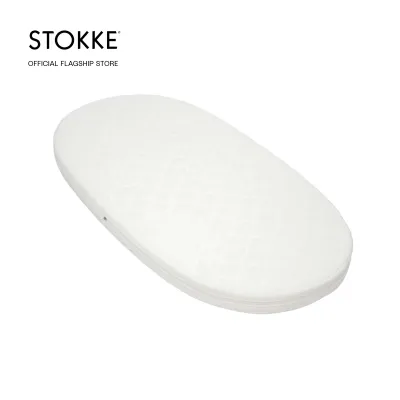
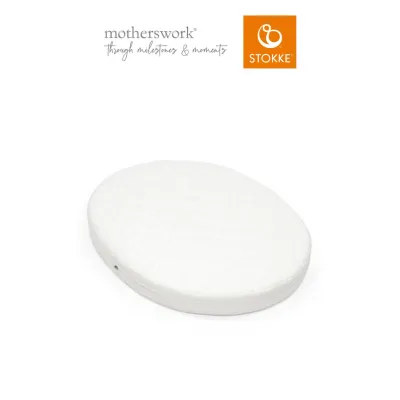
Prices are valid at publication and may change. Please refer to the product page for the latest price.
International safe sleep guidelines emphasize that a firm mattress is one of the most effective preventative measures against Sudden Infant Death Syndrome (SIDS) and accidental suffocation. When a baby lies on a compliant surface, the material can conform to the shape of their face, blocking the nose and mouth. A firm surface keeps the airway wide open and stable, regardless of the baby’s sleep position.
Beyond immediate breathing safety, mattress firmness directly impacts musculoskeletal health. An infant’s skeleton consists largely of malleable cartilage, and their spine grows rapidly during sleep. A firm, flat surface provides the continuous resistance necessary to support natural spinal alignment. Without this structural support, the spine can sag, potentially leading to long-term postural issues or muscle strain.
Decoding Stokke Mattress Firmness by Developmental Stage
Stokke mattresses are engineered to accommodate a child’s changing physical needs as they grow from a fragile newborn into an active toddler. Many of these mattresses feature specialized dual-sided construction or layered materials designed to offer varying levels of resistance. To use these systems safely, caregivers must match the mattress configuration to the child’s precise age and physical development.

Newborns to 12 Months: The Extra-Firm Infant Side
During the first 12 months, your baby requires the firmest sleep surface possible. Newborns lack the neck strength and motor control to rescue themselves from soft pockets of fabric or foam. If your Stokke mattress features a dual-sided design, you must ensure the extra-firm side is facing upward for the entire first year.
To identify the infant side of a Stokke mattress, consult the product manual and inspect the physical tags sewn into the cover. Manufacturers typically label the infant side clearly with a dedicated tag, or position the primary zipper assembly in a way that indicates the correct orientation. The infant side utilizes high-density materials, such as specialized polyester fibers or dense foam cores, which offer maximum resistance and minimal compression under weight.
To an adult, this infant side will feel surprisingly hard, resembling a padded board rather than a traditional bed. This is the correct and safest specification. Do not attempt to soften this surface with blankets or unauthorized pads, as the rigid resistance is precisely what keeps your newborn’s airway safe and their spine aligned.
Toddlers (12 Months and Older): Transitioning to the Toddler Side
As your child passes the 12-month mark, their physical capabilities change dramatically. They can roll over easily, sit up independently, and push themselves to a standing position. At this stage, their skeletal structure requires a balance of firm support and pressure relief to accommodate their increased body weight and active movement.
If you are using a dual-sided Stokke mattress, this is the appropriate time to flip the mattress to the toddler side. The toddler side is designed to be medium-firm. It provides a slightly more forgiving surface that cushions the shoulders, hips, and joints while maintaining a highly supportive core that prevents deep sinking.
Before making this transition, verify your child’s developmental progress and consult the specific user guide for your Stokke mattress model. Some older or alternative mattress versions are single-sided and do not require flipping. If your child is experiencing developmental delays or muscle tone variations, consult your pediatrician before changing their sleep surface.
How to Verify the Firmness of Your Stokke Mattress
Parents should never rely on visual estimation or assumptions based on mattress thickness to determine safety. Instead, use reliable physical tests to confirm that your baby’s mattress provides the necessary resistance.
The Hand Press Test
- Place the mattress on a flat, stable surface.
- Press your palm firmly down into the center of the mattress, applying significant downward pressure.
- Lift your hand quickly and observe the surface. The mattress should immediately spring back to its original flat shape without leaving a temporary handprint or indentation.
- Repeat this test along the edges and corners to ensure the structural integrity is consistent across the entire surface.
The Snug Fit Test
- Place the mattress inside the Stokke crib frame.
- Attempt to insert your fingers between the edge of the mattress and the wooden rails of the crib.
- A properly sized and safe mattress should leave no gap wider than two fingers (approximately 3 centimeters).
- If you can easily slide multiple fingers or your hand into the gap, the mattress is either the incorrect model for your specific crib frame or has shrunk over time. This gap creates a severe entrapment risk that compromises the overall safety of the sleep environment.
Always prioritize physical resistance and official manufacturer tags over the name of the material. Whether the mattress is made of polyurethane foam, coconut coir, or breathable polyester fiber, its physical behavior under pressure is the only true measure of safety.
Factors That Can Compromise Mattress Firmness
Even a high-quality Stokke mattress can become unsafe if it is paired with improper accessories or subjected to wear and tear. Caregivers must actively protect the mattress’s structural integrity to maintain a safe sleep environment.
Adding thick mattress toppers, quilted mattress pads, or plush waterproof covers can instantly turn a safe, extra-firm mattress into a hazardous, soft surface. These aftermarket products create a compressible layer on top of the firm mattress core, reintroducing the risk of suffocation. Only use thin, breathable, manufacturer-approved fitted sheets that wrap tightly around the mattress without bunching.
Environmental factors can also degrade mattress materials over time. In warm, humid environments like Singapore, moisture from sweat, spills, or high ambient humidity can seep into the mattress core. If the mattress is not kept dry and well-ventilated, this moisture can cause the internal fibers or foam to soften, sag, or develop mold. Regularly inspect the mattress for soft spots, permanent center depressions, or a loss of edge support. If you notice any permanent sagging or if the mattress fails the hand press test, it has lost its structural integrity and must be replaced immediately.
Frequently Asked Questions (FAQ)
Can I add a soft mattress topper to my Stokke mattress for my newborn?
No, you should never add a soft mattress topper, pillow, or thick quilted pad to a newborn’s mattress. Adding these items negates the engineered firmness of the Stokke mattress and creates a highly dangerous sleep surface. Soft toppers conform to an infant’s face, significantly increasing the risk of suffocation, carbon dioxide rebreathing, and SIDS. Stick strictly to a tight-fitting, thin mattress sheet approved by the manufacturer.
How do I know if my Stokke mattress is too soft for my baby?
Your Stokke mattress is too soft for an infant if it fails the hand press test by retaining a hand impression after you lift your palm. Other warning signs include the mattress visibly conforming to the shape of your baby’s head or body weight, or your baby’s face slightly sinking into the material when they turn onto their side. If you observe any of these conditions, stop using the mattress immediately and verify that you are using the correct, extra-firm infant side.
Community discussion
Share your experience or ask a question. Comments are reviewed before publication.