
Determining whether your baby bottles are safe to sterilize in a Momcozy sterilizer depends on two critical factors: the specific sterilization technology your device uses (steam or UV) and the manufacturer’s material specifications for each bottle. Because baby bottle materials react differently to high heat and ultraviolet light, relying on general material names is not enough. This guide will help you identify your device’s capabilities, interpret bottle material labels, and establish a safe verification routine to prevent damage or safety hazards.
When preparing your feeding equipment, safety and material integrity must always come first. A sterilizer is an essential tool for protecting your infant’s developing immune system, but using the wrong cycle for a specific material can lead to warped plastics, degraded silicone, or even shattered glass. By understanding how different materials interact with heat and light, you can protect your investment in quality bottles and ensure every feed is safe.
Identify Your Momcozy Sterilizer's Technology
Before loading any items, you must determine the exact sterilization method your Momcozy device uses. Momcozy manufactures different models, and some rely on high-temperature steam while others utilize UV-C light technology. To confirm your specific model’s technology, locate the model number on the base of the unit and consult the official Momcozy user manual.
Products mentioned in this guide
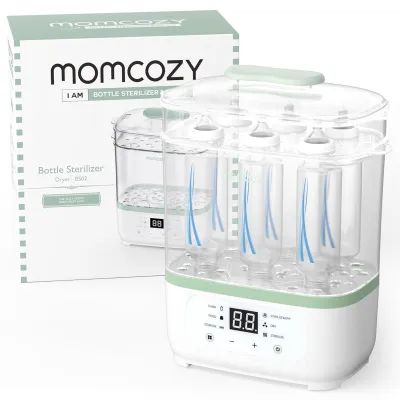
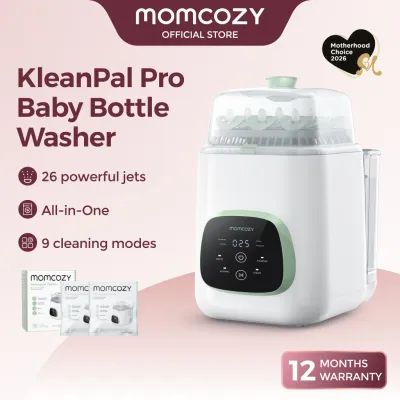
Prices are valid at publication and may change. Please refer to the product page for the latest price.
Steam sterilizers heat water to a boil, creating dense steam that circulates throughout the chamber. This process requires all loaded bottles and accessories to withstand sustained high temperatures and humidity. Most steam sterilizers reach temperatures around 100°C (212°F), which can warp low-tolerance plastics.
In contrast, UV sterilizers use ultraviolet-C light rays to eliminate microorganisms at lower temperatures. While this avoids extreme heat, UV-C light can accelerate the degradation of certain plastics and silicone over time, even if they are rated as heat-resistant.
Always check your Momcozy user manual for explicit warnings regarding prohibited materials. For example, items with metal components, certain natural rubbers, or specific non-UV-compatible plastics should never be placed inside a UV sterilizer. Knowing your device’s technology is the first step in preventing accidental damage.
Assess Glass Bottles for Heat and Thermal Shock
Glass baby bottles are highly favored for their durability and natural resistance to high temperatures. However, you must verify the specific type of glass used in your bottles before placing them in a steam sterilizer. Most high-quality glass bottles are made from borosilicate glass, which is engineered to withstand rapid temperature changes.

To identify the glass type, check the bottle’s base or packaging. Borosilicate glass contains boron trioxide, giving it a very low coefficient of thermal expansion. Standard soda-lime glass is much more sensitive to temperature fluctuations and is more likely to crack under sudden heat exposure.
Even durable borosilicate glass remains vulnerable to thermal shock from rapid temperature transitions. To prevent cracking, never transfer a cold glass bottle directly from the refrigerator into a preheated steam sterilizer, and never rinse a hot, freshly sterilized bottle with cold water.
Before every sterilization cycle, carefully inspect each glass bottle for micro-cracks, chips, or deep scratches. Even minor structural compromises can cause the glass to shatter under the pressure of steam heat. If you detect any physical damage, discard the bottle immediately to prevent safety hazards during feeding or sterilization.
After the sterilization cycle finishes, allow the glass bottles to cool naturally inside the unit. Avoid placing hot glass directly onto cold stone countertops or metal drying racks, as the sudden temperature drop can cause stress fractures.
Check Plastic Bottles for Material Codes and Heat Limits
Plastic baby bottles are lightweight and shatterproof, but they require careful evaluation before sterilization due to varying heat tolerances. Common plastics used in baby bottles include Polypropylene (PP), Polyphenylsulfone (PPSU), and Polyethersulfone (PES). Each of these materials has a distinct maximum temperature threshold that you must verify.
To identify the exact plastic type, locate the recycling code and material abbreviation molded into the base of the bottle. Polypropylene is typically marked with a recycling code 5 and the letters “PP”. PPSU and PES bottles are usually labeled clearly with their respective abbreviations.
Cross-reference the plastic type with the bottle manufacturer’s stated temperature limits. PP bottles generally tolerate up to 110°C to 120°C (230°F to 248°F), making them suitable for steam sterilization but closer to the safety margin. PPSU and PES bottles offer much higher heat resistance, often tolerating temperatures up to 180°C (356°F).
Regularly inspect plastic bottles for signs of heat degradation. Over time, repeated exposure to steam and heat can cause plastics to warp, develop a cloudy appearance, show deep scratches, or retain a persistent odor. These changes indicate that the plastic polymer is beginning to break down.
Establish a strict stopping condition: discard and replace any plastic bottle that shows physical deformation, warping, or fails to meet the required heat threshold. Using degraded plastic bottles can compromise cleanliness and may lead to material breakdown.
Evaluate Silicone Bottles and Accessories
Silicone is a highly flexible, durable material widely used for modern baby bottles, nipples, and anti-colic valves. Before sterilizing silicone items, verify that they are explicitly labeled as food-grade or medical-grade. High-quality silicone is naturally resistant to high temperatures and performs exceptionally well in steam sterilizers.
However, silicone behaves differently when exposed to UV light. If you are using a Momcozy UV sterilizer, be aware that prolonged exposure to UV-C rays can accelerate the aging of silicone. Over time, UV exposure can cause silicone nipples and accessories to become sticky, brittle, or discolored.
To ensure thorough sterilization and protect the material, always fully disassemble all silicone components before placing them in the sterilizer. Separate the silicone nipple from the plastic collar, and remove any anti-colic valves or vents. Disassembling these parts allows steam or UV light to reach all surfaces and prevents moisture from pooling in hidden crevices.
Monitor your silicone accessories closely after each cycle for changes in texture, elasticity, or color. If a silicone nipple feels tacky, shows discoloration, or tears easily, replace it immediately. Always consult the bottle manufacturer’s care instructions for specific UV compatibility warnings.
Verify Compatibility Before Every Cycle
To maintain a safe feeding routine, establish a consistent verification checklist before running any sterilization cycle. Never assume that a bottle is compatible simply because it fits inside the chamber. Taking a few moments to verify compatibility prevents damage to both your bottles and your Momcozy sterilizer.
Always cross-check the guidelines in your Momcozy device manual against the specific care labels of the bottles and accessories you plan to load. If a bottle manufacturer explicitly advises against steam sterilization or UV exposure, respect those guidelines and use an alternative sanitizing method.
When loading the sterilizer, arrange all items according to the manufacturer’s loading instructions. Ensure that plastic and silicone parts do not come into direct contact with the heating element, metal walls, or UV lamps, which can cause localized overheating and melting.
Thoroughly wash and rinse all bottles and accessories with warm, soapy water to remove milk residue before sterilization. Remaining milk fats or proteins can bake onto the bottle surfaces during the heating cycle, causing permanent staining and potentially damaging the sterilizer’s heating plate over time.
If you observe any unusual odors, melting, or excessive condensation that does not clear during the drying phase, stop the cycle immediately. Unplug the unit, allow it to cool, and inspect both the sterilizer and the bottles. Consult the manufacturer to resolve any safety concerns before attempting to use the devices again.
Frequently Asked Questions (FAQ)
Can I sterilize bottle nipples and pacifiers in the Momcozy sterilizer?
Yes, silicone nipples and pacifiers are generally safe for steam sterilization, but you must check the specific heat limits and UV compatibility on their packaging. Be cautious with latex pacifiers and nipples. Latex has a much lower heat threshold than silicone and may degrade, warp, or melt in steam sterilizers. Always verify the manufacturer’s instructions for latex items. To ensure safety, disassemble all parts and place small items in the designated accessory basket to prevent them from falling onto the heating elements.
Why did my plastic bottle turn yellow or cloudy after sterilizing?
Cloudiness or yellowing can result from repeated exposure to high heat, hard water mineral deposits, or residual milk fats baking onto the plastic. Check the bottle for physical changes like warping, stickiness, or deep scratches, which indicate that the plastic polymer is breaking down and the bottle should be replaced. To minimize surface degradation, ensure bottles are completely free of milk residue before sterilizing, and consider using distilled water to prevent mineral buildup.
Is it safe to leave bottles in the sterilizer after the cycle ends?
If your Momcozy model includes a dedicated drying and sterile-hold function, bottles can safely remain inside according to the manual’s specified time limit. However, avoid leaving bottles inside a steam sterilizer that lacks a drying function. Trapped moisture in a warm, closed environment can promote bacterial growth once the unit cools down. If your device supports a sterile holding mode, ensure the lid remains completely closed to maintain the sterile environment.

Community discussion
Share your experience or ask a question. Comments are reviewed before publication.