
Choosing between a steam-blend and a blend-only baby food blender depends on your baby’s current weaning stage, your meal preparation style, and how you prefer to manage kitchen cleanup. For families starting early weaning with smooth, single-ingredient purées, an all-in-one steam-blend model offers hands-off convenience by cooking and blending in a single jar. Conversely, if your baby is transitioning to textured mashes or you prefer to prepare family-sized meals and portion out your baby’s share, a dedicated blend-only model provides superior texture control and long-term kitchen utility.
Understanding the Core Functional Differences
Before comparing specific models, it is essential to understand how these two appliance categories operate mechanically. A steam-blend baby food maker is designed as an all-in-one system. It features an integrated water tank, a steaming basket, and a blending blade within a single vessel. You place raw ingredients into the basket, set a steam timer, and then either manually flip the container or allow the machine’s automated cycle to blend the cooked food into a purée. While highly convenient, these unified designs often have smaller overall capacities and more complex internal parts that require careful maintenance.
A blend-only baby food blender, on the other hand, focuses entirely on motor power and blade efficiency. These machines do not heat or cook food; they require you to soften ingredients beforehand using external methods such as a stovetop steamer, a microwave, or a standard pot. Because they lack heating elements and water reservoirs, blend-only models typically offer larger blending jars, simpler mechanical designs, and more precise speed controls. When shopping, you should always check the manufacturer’s specifications for maximum capacity, minimum blending volumes, and material safety labels, such as BPA-free certifications, to ensure the appliance fits your daily cooking volume.
Products mentioned in this guide
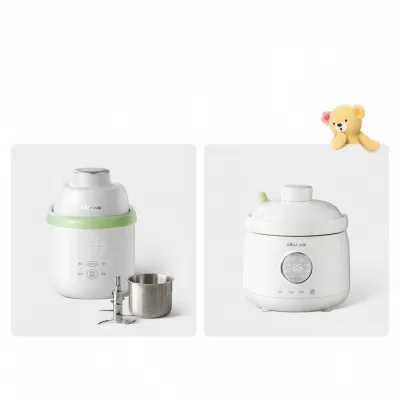
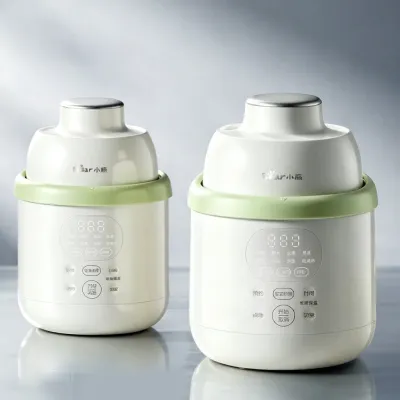
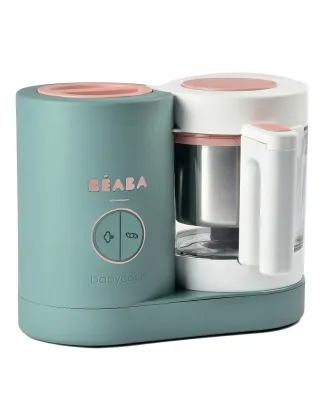
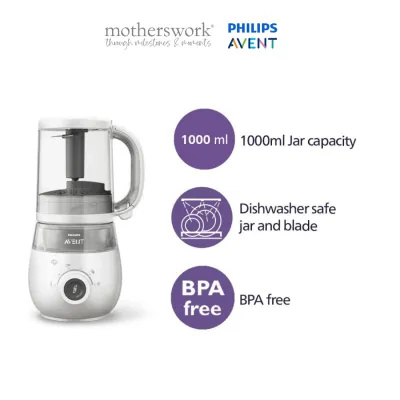
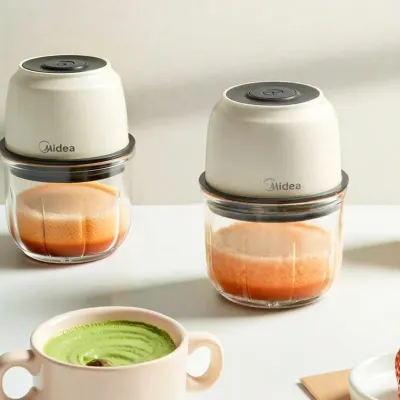
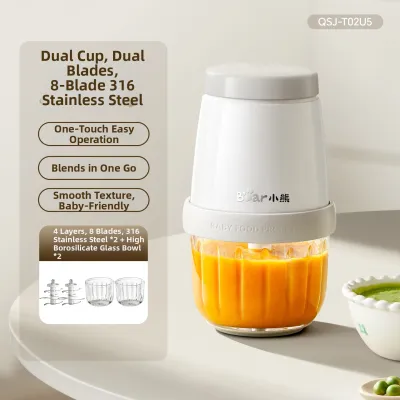
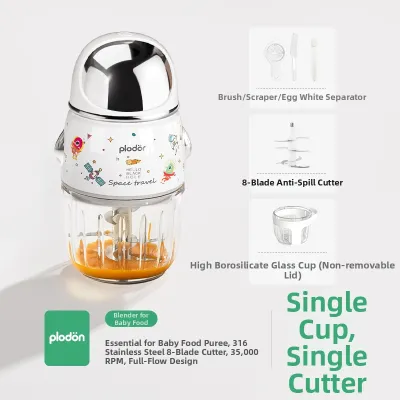
Prices are valid at publication and may change. Please refer to the product page for the latest price.
Matching Blender Functions to Weaning Stages
As your baby grows, their developmental relationship with food changes rapidly. Weaning is not a static process; it is a progressive journey where texture requirements shift from completely liquid-like purées to coarse mashes, minced foods, and eventually solid finger foods. Choosing the right blender function requires aligning the appliance’s mechanical capabilities with your baby’s current oral motor skills. The motor control, blade design, and cooking integration of your chosen tool will directly impact how easily you can achieve these shifting textures.

Early Weaning: Smooth Purées and Batch Prep
During the initial stage of weaning, which typically begins around six months of age depending on your baby’s developmental readiness, the primary goal is introducing single-ingredient purées. At this stage, the food must be completely smooth and free of lumps to prevent choking and ease the transition from milk. Steam-blend blenders excel during this phase because they streamline the entire process. You can steam a small portion of sweet potato or apple and immediately blend it in the same container, minimizing the loss of moisture and reducing the number of dishes to wash.
For parents who prefer to prepare large batches of food to freeze in silicone trays, steam-blend models can simplify the workflow. However, you must verify the manufacturer’s instructions regarding the maximum fill lines to ensure even steaming throughout the basket. If you choose a blend-only model for this stage, you can achieve the same ultra-smooth consistency, but you will need to steam the ingredients on your stovetop first. This requires active monitoring to ensure the food is tender enough to blend easily, and you must carefully transfer the hot ingredients and cooking liquid into the blender jar. Whichever style you use, always observe your baby’s swallowing cues and consult a pediatrician or qualified professional if you notice persistent gagging or feeding difficulties.
Mid to Late Weaning: Textures and Finger Foods
As your baby reaches seven to nine months and moves into advanced weaning stages, their oral motor skills develop, and they require thicker, more textured foods to practice chewing. This is where the mechanical differences between the two blender types become highly apparent. To create coarse mashes, finely minced meats, or chunky vegetable mixtures, you need precise control over the blending duration and speed. Over-processing food at this stage can delay your baby’s acceptance of solid textures, making manual control a critical feature.
Blend-only blenders often perform exceptionally well during mid-to-late weaning because they typically feature variable speed dials or highly responsive pulse functions. This allows you to chop ingredients into tiny, uniform pieces without turning them into a liquid purée. In contrast, some automated steam-blend models operate on pre-programmed cycles that may over-process delicate ingredients. To achieve the necessary coarse textures with an all-in-one machine, you will often need to bypass the automatic settings, use short manual blending bursts, or steam the food slightly less to maintain structural integrity. Always check the product manual to see if your specific model allows for manual pulse control before attempting to make textured meals.
Practical Considerations for Your Kitchen and Routine
Beyond your baby’s current weaning stage, your daily household routine and kitchen setup should play a major role in your decision. If you prefer to prepare dedicated, separate meals for your baby, a steam-blend appliance fits naturally into your workflow. It operates independently on your countertop, allowing you to steam and blend a small portion of vegetables while your main stovetop remains free for family cooking. This standalone approach is highly efficient for parents who want to keep baby food preparation completely separate from adult meals.
However, if your family’s cooking style involves preparing a large pot of soup, stew, or steamed vegetables and simply blending a portion of it for the baby, a blend-only model is far more practical. You can easily scoop a portion of the family meal directly into the blender jar, adjust the texture, and serve. Additionally, cleaning and maintenance routines differ significantly between these two types of appliances. Steam-blend units feature integrated water tanks that require regular descaling with vinegar or food-safe descaling agents to prevent mineral buildup, especially in areas with hard water. They also have multiple internal valves and steam pathways that must be thoroughly dried to prevent mold.
In contrast, blend-only blenders are generally much simpler to clean. They consist of a motor base, a blending jar, and a blade assembly, many of which are dishwasher-safe or can be cleaned quickly by blending warm water with a drop of dish soap. You should also consider the long-term utility of the appliance. A specialized steam-blend maker is highly focused on baby food and may have limited use once your child transitions fully to family meals. A high-quality blend-only blender, however, can easily transition into a general kitchen tool for making morning smoothies, grinding nuts, or preparing sauces and soups for the entire household, offering greater value over time.
Decision Framework: Which Baby Food Blender Should You Choose?
To make the final choice, evaluate your current kitchen habits, budget, and how long you plan to use the appliance. If you are at the very beginning of your weaning journey and want a dedicated, hands-off machine that handles both cooking and puréeing in one compact unit, a steam-blend blender is an excellent investment. This option is ideal for busy parents who want to minimize active cooking time and do not mind performing the regular descaling and maintenance required to keep the water tank clean.
If your baby is already showing signs of readiness for textured foods, or if you prefer a versatile tool that will remain useful long after the weaning phase is over, a blend-only blender is the more practical choice. This path is best for families who already have reliable steaming setups on their stovetops and want precise control over food consistency. Before making any purchase, always verify the motor specifications, minimum blending capacities, and warranty terms provided by the manufacturer. Ensure that the materials used are certified food-safe and that replacement parts, such as extra blades or sealing rings, are readily available.
Frequently Asked Questions (FAQ)
Can I use a regular kitchen blender instead of a dedicated baby food blender?
Yes, you can use a standard household blender to prepare baby food, but there are several practical limitations to keep in mind. Standard kitchen blenders are typically designed for larger volumes, meaning they may struggle to blend the small, single-portion meals common during early weaning. The blades may spin above the food without catching it, requiring you to make much larger batches than necessary. Additionally, you must ensure rigorous cleaning protocols to prevent cross-contamination. If you regularly use your household blender for spicy ingredients, raw garlic, or onions, microscopic residues can remain on plastic jars or rubber gaskets, which may irritate your baby’s sensitive palate. If you choose to use a regular blender, verify that the jar is thoroughly sanitized and consider dedicating a specific blending cup or jar solely for baby food.
Do steam-blend blenders retain more nutrients than traditional stovetop steaming?
Nutrient retention in vegetables and fruits is primarily determined by cooking temperature, exposure to water, and total heating time, rather than the specific appliance used. Traditional stovetop steaming and integrated steam-blend appliances both use steam to cook food, which generally preserves water-soluble vitamins better than boiling, where nutrients leach into the cooking water. The main advantage of a steam-blend model is that any condensation or juices released during steaming remain inside the blending jar, allowing you to easily reincorporate them during the blending phase. To maximize nutrient retention with either method, avoid overcooking the food. Follow the manufacturer’s guidelines for water levels and steaming times, and stop the cooking process as soon as the ingredients are tender enough to be easily pierced with a fork.
Community discussion
Share your experience or ask a question. Comments are reviewed before publication.