
Selecting a baby food processor requires balancing your child’s developmental needs with your kitchen’s practical constraints. Because weaning is a rapidly evolving journey, an appliance that excels at preparing smooth starter purees might not have the capacity or texture control needed for older infants. Rather than searching for a universally perfect brand, parents should focus on how specific steam-and-blend functions align with each weaning stage, while verifying safety certifications and maintenance requirements. In Singapore’s compact kitchens, space efficiency and ease of maintenance are equally critical factors when choosing between an all-in-one unit and standalone appliances.
Understanding Weaning Stages and Processor Needs
During Stage 1 (typically around six months, though developmental readiness should always be confirmed with a pediatrician), your baby requires ultra-fine, completely smooth purees. At this stage, single-ingredient foods like apples, pears, or pumpkin are introduced in very small quantities. A food processor baby appliance must be capable of blending small batches efficiently; otherwise, the blades may spin above the food without processing it. Look for models with narrow, tapered blending jugs and low-positioned blades designed specifically to handle minimal volumes without leaving hazardous lumps.
As your baby transitions to Stage 2 (usually around seven to nine months), their nutritional needs expand to include mashed, minced, and multi-ingredient meals. This stage demands greater texture control and a slightly larger steaming capacity. Instead of a continuous blend, you will need an appliance with a responsive pulse function that allows you to gradually coarsen the texture of steamed vegetables, grains, and proteins. The steaming basket should also be spacious enough to accommodate mixed ingredients, allowing you to steam a protein and a vegetable together before blending them to a textured mash.
Products mentioned in this guide
![[SG SELLER] MISUTA 4 in 1 Baby Food Processor Blender and Steamer (SG Local Plug)](https://img.lazcdn.com/g/p/0bb929f86db64c43ec3edea4ec41e195.jpg_400x400q80.jpg_.webp)
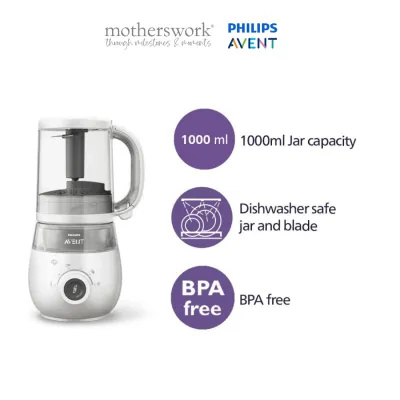
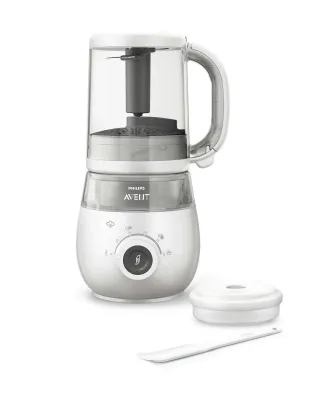
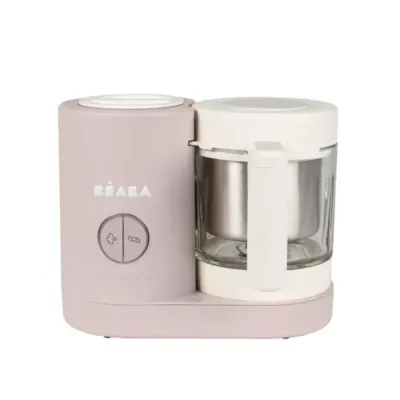
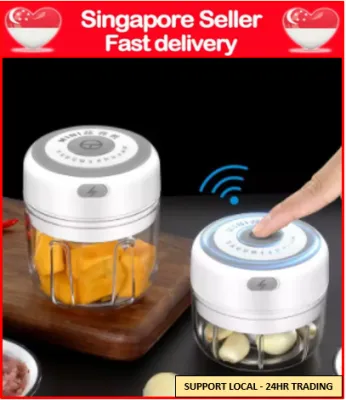
Prices are valid at publication and may change. Please refer to the product page for the latest price.
By Stage 3 (typically nine to twelve months and beyond), infants are ready for chopped foods, soft chunks, and finger foods. At this point, the primary role of the processor shifts from pureeing to steaming and light chopping. You will benefit from models that feature separate steaming trays or multi-tier compartments, which allow you to steam different food groups simultaneously without mixing their natural juices or flavors. The blending function must be robust enough to handle tougher textures, such as cooked meats or dense root vegetables, without over-processing them into a liquid state.
Key Specifications to Compare Across Brands
When comparing different brands on the market, the technical specifications listed on the product packaging and user manuals should guide your decision. First, examine the blade design and motor power. A motor with variable speed settings or a dedicated pulse button offers the most flexibility across different weaning stages. High-wattage motors generally handle dense foods more consistently, but you must verify the manufacturer’s guidelines regarding maximum continuous run times to prevent the motor from overheating during heavy blending sessions.

Next, evaluate the water tank capacity and heating mechanisms. The size of the water tank directly dictates the maximum steaming time available before a refill is required. Look for models that feature an automatic shutoff mechanism that triggers when the water tank runs dry; this is an essential safety feature that prevents damage to the heating element. Some premium models also offer a keep-warm function, which can be convenient but requires careful monitoring to ensure food is not left at temperatures that encourage bacterial growth.
Material safety is another critical factor to verify before purchasing. Ensure that all components coming into direct contact with food—such as the blending jug, steaming baskets, and lids—are certified BPA-free. Common materials include specialized plastics like Tritan, tempered glass, and stainless steel. Because safety standards and certifications can vary, look for recognized testing marks on the packaging, and verify that the appliance complies with local electrical safety regulations, such as the Safety Mark in Singapore, to ensure safe operation in your home.
Finally, pay close attention to the ease of disassembly and cleaning. Food residue and moisture trapped in hard-to-reach areas can quickly lead to mold or bacterial contamination. Prioritize models where the blending jug base, blade assembly, and sealing rings can be completely disassembled for washing. The water tank should have a wide opening that allows you to visually inspect the interior and easily wipe away mineral deposits, rather than a narrow, enclosed design that makes thorough cleaning impossible.
Decision Framework: Choosing the Right Setup
To narrow down your choices, consider how different appliance setups fit into your daily routine and kitchen space. An all-in-one steam-and-blend unit is highly convenient for parents who prioritize minimal cleanup and daily, small-batch preparation. These compact appliances steam and blend in the same container—often requiring you to simply flip the jug or press a single button to transition between functions. This setup is particularly advantageous in smaller kitchens where counter space is limited, as it eliminates the need for multiple bulky appliances.
Alternatively, a standalone baby steamer paired with a separate, high-quality kitchen blender or hand blender may be more suitable for certain households. This setup is ideal if you prefer to prepare large batches of food to freeze for the week, or if you already own a powerful blender capable of achieving smooth consistencies. Standalone steamers often feature larger capacities and multiple tiers, allowing you to prepare family-sized portions of steamed vegetables alongside your baby’s meals, making the appliance useful long after the weaning phase is over.
It is also worth considering whether you need a dedicated baby food processor at all. If your baby is already approaching the later stages of weaning or transitioning quickly to modified family meals, standard kitchen pots, a simple stovetop steaming basket, and a manual potato masher or fork may be entirely sufficient. Investing in a specialized appliance may not be necessary if you only plan to prepare purees for a few weeks before moving on to soft family foods.
Before making a final decision, always verify the appliance’s maximum capacity and motor durability against your intended use. If you plan to regularly process tough root vegetables, fibrous greens, or meats, ensure the product specifications explicitly state that the motor and blades are rated for these ingredients. Using an underpowered appliance to blend dense foods can strain the motor, dull the blades prematurely, and lead to inconsistent textures that could pose a choking hazard for your baby.
Safety Checks, Maintenance, and Transitioning
Maintaining your baby food processor is essential for both the longevity of the appliance and the safety of your child’s food. Routine descaling of the steam tank is necessary to remove mineral buildup, which can reduce heating efficiency and cause unpleasant odors. Because water hardness varies, you should inspect the tank weekly. Only use descaling methods approved by the manufacturer, which typically involve a mild solution of food-grade citric acid or white vinegar and water. Never use harsh chemical descalers or abrasive scrubbing pads, as these can damage the tank’s protective lining.
Perform regular visual and tactile checks on all moving parts. Inspect the blending blades for any signs of dullness or physical damage, and check plastic components for micro-cracks or cloudiness, which can occur over time due to repeated heating and washing. Sealing rings should be checked for elasticity and signs of wear, as degraded seals can cause hot liquids to leak during blending. If you observe any mineral buildup on the heating element that cannot be removed through standard descaling, consult the user manual for advanced cleaning instructions.
For your safety, establish strict conditions for stopping use. If you notice unusual noises during operation, water leaking from the base of the unit, steam escaping from unexpected seams, or inconsistent heating times, stop using the appliance immediately. Do not attempt to repair electrical components or complex blade mechanisms yourself; instead, contact the manufacturer’s customer service or a qualified technician for assistance.
Finally, observe your baby’s developmental milestones to recognize when it is time to transition away from the processor. When your child is chewing efficiently, successfully managing a variety of textures, and showing a strong preference for self-feeding finger foods, they are ready to transition to standard family meals. At this stage, you can gradually phase out the use of the processor and begin preparing meals using regular household cookware, ensuring a smooth transition to the next phase of their development.
Frequently Asked Questions (FAQ)
Can I use a regular kitchen food processor for making baby food?
Yes, you can use a standard kitchen food processor, but there are practical limitations to consider. Standard appliances are typically designed for larger volumes, meaning they may struggle to blend the very small portions required during the initial stages of weaning, often leaving large, unblended chunks. Additionally, using a general kitchen processor requires strict hygiene practices to prevent cross-contamination, especially if the appliance is also used to process raw meats, garlic, chili, or other strong spices. You will also need to steam the food separately on the stovetop before transferring it to the processor, which increases preparation time and cleanup.
How often should I descale the steam tank, and what solutions are safe?
The frequency of descaling depends on how often you use the appliance and the mineral content of your local water supply. Even in areas with relatively soft tap water, mineral deposits will gradually accumulate on the heating element. A general guideline is to descale the tank once every two to four weeks, or as soon as you notice white mineral spots or a decline in steaming performance. Always refer to your product’s manual for approved descaling agents. Most manufacturers recommend a simple mixture of equal parts white vinegar and water, or a specific ratio of food-grade citric acid. Avoid using commercial chemical descalers, bleach, or abrasive tools, as they can leave toxic residues or permanently damage the heating chamber.
Community discussion
Share your experience or ask a question. Comments are reviewed before publication.