
Returning to work after maternity leave in Singapore presents unique challenges for breastfeeding mothers. Choosing a breast pump requires balancing your professional duties with your personal pumping needs. The ideal spectra breast pump model depends entirely on your workplace layout, daily commute, and access to private spaces.
If you work in an open-plan office or need to multitask during meetings, a wearable, tubeless model provides maximum discretion. For mothers who commute daily on the MRT or bus and have access to private rooms, a portable battery-operated model offers a practical balance of mobility and power. If you are fortunate enough to have a dedicated, lockable office nursing room with accessible power outlets, a traditional plug-in model provides consistent, customizable suction without the worry of battery degradation. Evaluating your specific workplace constraints before purchasing ensures you select a model that supports your breastfeeding journey without adding unnecessary stress to your workday.
Assessing Your Workplace Setup and Pumping Schedule
Before looking at technical specifications, you must evaluate the physical environment where you will spend most of your day. Singapore offices vary widely, from modern open-concept co-working spaces to traditional layouts with private cubicles or dedicated wellness rooms. If your workplace lacks a private, lockable room with a power outlet, your options will naturally lean toward highly discreet, battery-powered, or wearable designs.
Products mentioned in this guide
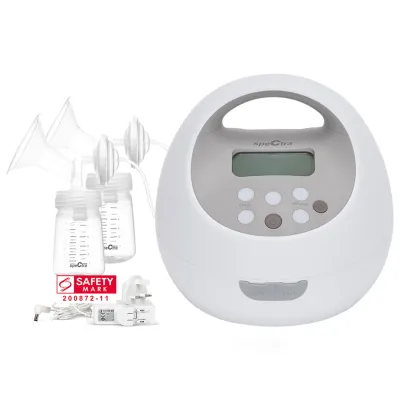
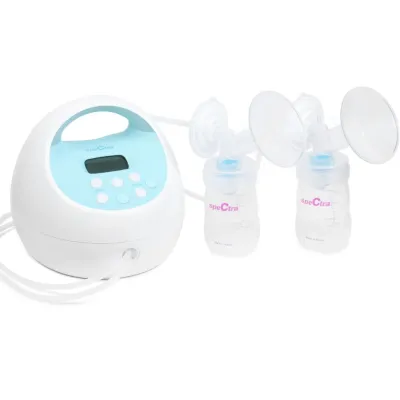
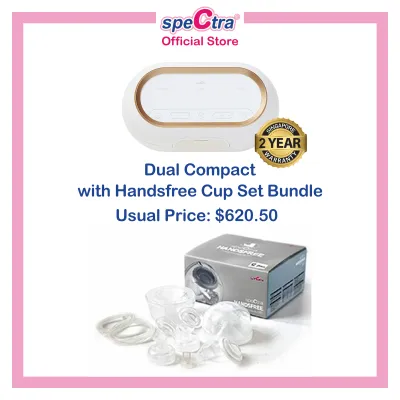
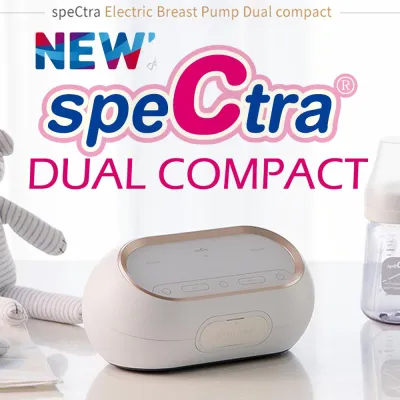
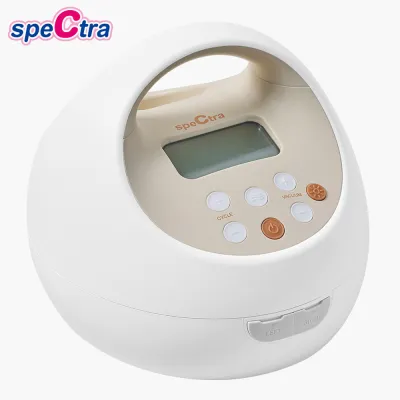
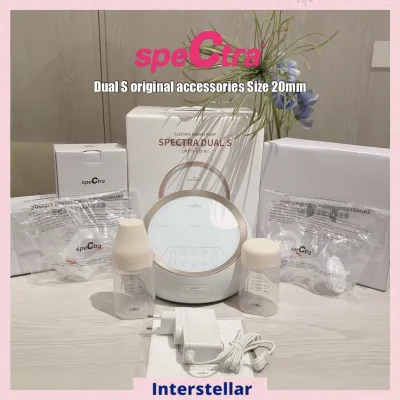
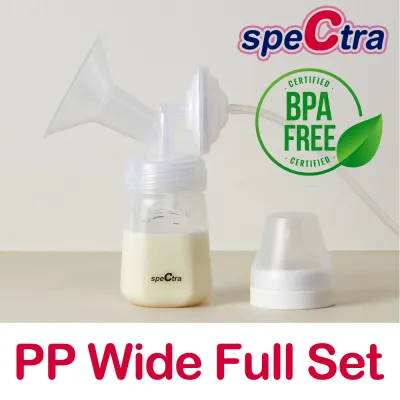
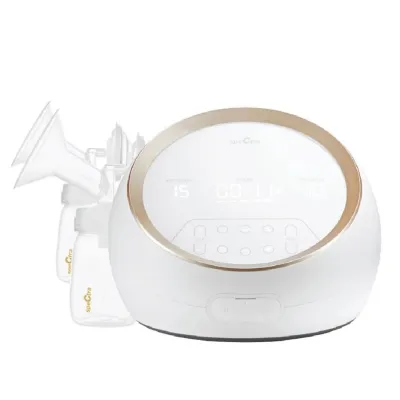
Prices are valid at publication and may change. Please refer to the product page for the latest price.
Your daily commute also plays a significant role in this decision. Carrying a heavy pump along with your laptop, lunch, and cooler bag on a crowded MRT train during peak hours can quickly become exhausting. If you commute via public transport, minimizing the weight and bulk of your pumping gear is essential. Conversely, if you drive to work or can leave your pump safely at your desk overnight, a larger, more robust model becomes a highly practical choice.
Consider your daily meeting schedule and the frequency of your pumping sessions. A typical working mother may need to pump two to three times during an eight-hour shift. If your role requires constant collaboration, virtual meetings, or moving between different office zones, you will need a pump that allows you to remain hands-free or operates quietly enough to not be heard over a microphone. Identifying these physical and temporal boundaries first prevents the frustration of buying a high-performing pump that is simply too cumbersome for your actual work routine.
Comparing Spectra Pump Categories for the Workplace
Spectra offers several distinct categories of breast pumps, each designed to address different lifestyle needs. Understanding how these categories function in a professional setting will help you narrow down your choices.

Plug-in and Traditional Models
Traditional plug-in models are designed for stationary use and must be connected to a continuous wall outlet. These models are widely regarded for their durability and consistent power delivery, as they do not rely on rechargeable batteries that can degrade over time.
These pumps are best suited for mothers who have a dedicated, private space at work, such as a designated lactation room or a private office where they can sit comfortably near a power source. Because they do not contain a heavy internal battery, the pump motors themselves can sometimes be lighter than portable alternatives, though the overall setup is less mobile due to the power cord.
When considering a plug-in model, verify the length of the power cord and the location of the outlets in your workplace pumping space. Some older office buildings may have outlets in inconvenient locations, requiring you to sit in awkward positions unless you bring an extension cord. Additionally, because these models require traditional tubing, flanges, and bottles, they require a complete setup and teardown process for each session, which is best done in a private, clean environment.
Portable and Battery-Operated Models
Portable models feature built-in rechargeable batteries, allowing you to pump without being tethered to a wall outlet. This category offers excellent flexibility for working mothers who need to commute, hot-desk, or travel between different office branches.
With a rechargeable battery, you can easily pump in a private room that lacks accessible wall outlets, or even during your commute if you travel by private transport. When evaluating these models, it is important to check the manufacturer’s stated battery life per charge and the time required to reach a full charge. A battery that lasts for several sessions ensures you will not be caught without power during a busy workday.
Keep in mind that while the motor is portable, these models still utilize traditional silicone tubing, connectors, and bottles. This means they are not entirely hands-free or invisible under clothing unless you pair them with a specialized pumping bra or hands-free collection cups. They offer a middle ground: the suction performance and customization of a traditional pump, combined with the freedom to move around without searching for a power socket.
Wearable and In-Bra Discreet Models
Wearable breast pumps represent a modern shift in pumping technology, designed to fit entirely inside a standard nursing bra. These tubeless, self-contained units eliminate external cords and bottles, offering the highest level of discretion and mobility.
For mothers working in open-plan offices, shared workspaces, or roles that require constant physical movement, wearable models can be incredibly useful. They allow you to pump at your desk while continuing to type, answer phone calls, or even attend virtual meetings with minimal visual distraction.
However, wearable models require careful evaluation before purchase. You must verify flange compatibility, as a poor fit can lead to discomfort and reduced milk expression. The physical weight of the motor sits directly on your chest, which requires a supportive, structured nursing bra to keep the pump securely in place. Additionally, compare the manufacturer’s specifications regarding suction customization and milk capacity limits, as wearable models typically feature smaller collection cups and may offer fewer suction levels compared to traditional or portable models.
Key Features to Evaluate for Office and Commute Use
When comparing specific Spectra models, several practical features will directly impact your daily comfort and efficiency in a professional environment.
- Noise Level: In a quiet office or during a virtual call, the sound of a breast pump motor can feel amplified. Look for models that emphasize quiet operation. While manufacturers often provide decibel ratings, it is helpful to read user reviews from other working mothers to gauge how the pump performs in real-world office environments. A quiet hum is easily masked by office white noise, whereas a loud, rhythmic vibration can cause unnecessary self-consciousness.
- Flange Sizing and Comfort: The flange is the breast shield that contacts your skin. A correct fit is essential not only for comfort but also for maintaining your milk supply and preventing tissue damage. Spectra pumps typically come with standard flange sizes, but many mothers require smaller or larger sizes. Before your return-to-work date, measure your nipple diameter according to manufacturer guidelines and verify which compatible flange inserts or alternative sizes you need to purchase.
- Cleaning and Maintenance at Work: Managing pump parts in an office pantry requires a practical strategy. You must wash parts with warm water and dedicated dish soap, then allow them to air dry. If your office lacks a private pantry or if you prefer discretion, you can use microwave steam sterilizer bags if a microwave is available. Alternatively, many working mothers practice the "fridge hack"—storing unwashed pump parts in a sealed, clean zip-top bag inside a dedicated cooler bag in the office refrigerator between sessions, then performing a thorough wash and sterilization once they return home. Always consult your pediatrician or a lactation consultant regarding safe cleaning practices, especially if your baby is newborn or has health vulnerabilities.
- Budget and Warranty: A breast pump is a significant investment. When budgeting, consider not only the initial cost of the pump but also the ongoing expense of replacement parts like valves, membranes, and tubing, which wear out over time. It is highly recommended to purchase your pump from an authorized distributor in Singapore. This ensures you receive a valid local warranty and access to reliable after-sales support, which is crucial if your pump requires servicing during your breastfeeding journey.
Decision Framework: Which Spectra Pump Should You Choose?
To finalize your decision, match your daily workplace scenario to the following framework:
- Choose a Wearable model if: You work in a shared or open-plan office without access to a private room, need to remain highly mobile, and prioritize discretion and multitasking over maximum suction customization.
- Choose a Portable Battery model if: You have access to a private room or lactation space but need the flexibility to commute easily, move between meeting rooms, or pump without worrying about the proximity of wall outlets.
- Choose a Plug-in model if: Your workplace provides a dedicated, fully equipped lactation room, you do not need to transport the pump back and forth daily, and you prioritize maximum suction customization and long-term motor reliability.
- Verify first if: You have specific medical concerns, such as low milk supply or a premature infant. In these cases, consult a certified lactation consultant or healthcare professional before making a purchase, as they may recommend a hospital-grade pump to support your specific lactation needs.
Frequently Asked Questions (FAQ)
How should I clean and store pump parts during the workday?
To maintain hygiene at work, rinse your pump parts with clean drinking water after use. If your workplace refrigerator allows, store the damp parts in a clean, sealed zip-top bag or container inside a dedicated cooler bag to keep them cold between sessions. At the end of the workday, perform a thorough wash with warm, soapy water and sterilize all parts at home using a steam or UV sterilizer. Always check your workplace pantry guidelines to ensure compliance with shared space hygiene policies.
Are third-party flanges and bottles safe to use with Spectra pumps?
While many third-party accessories claim compatibility with Spectra pumps, you should always consult the manufacturer’s official compatibility charts before using them. Utilizing unverified third-party flanges, valves, or tubing can compromise the suction seal, leading to reduced milk expression and potential motor strain. Additionally, using non-standard parts may void your product warranty. To protect your investment and ensure optimal performance, prioritize official Spectra accessories or verified compatible brands.

Community discussion
Share your experience or ask a question. Comments are reviewed before publication.