
Storing plush toys in a nursery requires balancing accessibility, safety, and space efficiency. In Singapore, where apartment layouts like HDB flats and condominiums often feature compact bedrooms, maximizing every square meter is essential. The ideal soft toys organizer is not a one-size-fits-all solution; it depends heavily on your room’s layout, the volume of your child’s plush collection, and their developmental stage. By focusing on vertical space, choosing child-safe materials, and verifying installation requirements, you can keep your nursery organized, clean, and safe.
Plush toys accumulate quickly from baby showers, family gifts, and developmental milestones. Unlike hard plastic toys, soft toys are highly compressible but bulky, making standard toy boxes inefficient. They can easily gather dust or become tripping hazards if left scattered on the floor. Selecting the right storage solution involves assessing how your child interacts with their toys and how much floor space you can afford to dedicate to storage.
Key Factors for Choosing Nursery Storage in Compact Homes
Singapore apartments typically have limited floor areas in secondary bedrooms. When planning a nursery, floor space is premium real estate needed for cribs, changing tables, and play mats. Therefore, looking upward is a practical strategy. Vertical space—such as walls, the backs of doors, and unused corners—offers excellent storage potential without encroaching on the room’s walkable area. Before purchasing any organizer, measure the exact dimensions of your available wall space and door frames to ensure a proper fit.
Products mentioned in this guide
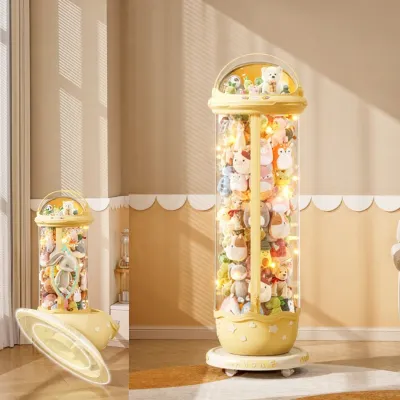
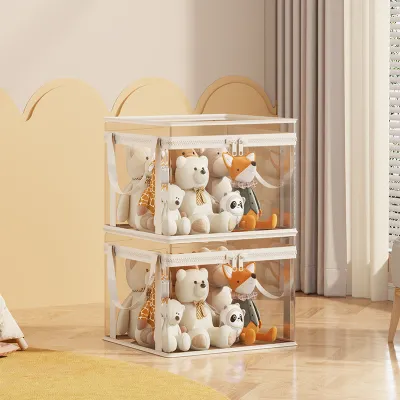
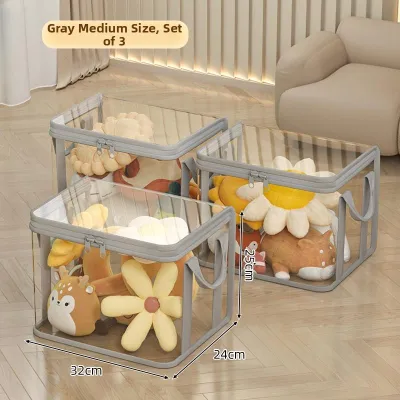
Prices are valid at publication and may change. Please refer to the product page for the latest price.
Take an inventory of the plush toys before deciding on a storage method. Are they mostly small, palm-sized rattles, or do you have giant, oversized teddy bears? A collection of small toys is well suited for pocket-style organizers or small baskets, whereas large plushies require deep bins or dedicated shelving. Consider the weight as well; while plush toys are generally light, a large volume of them can add up, putting stress on hanging organizers or lightweight nets.
Consider who will be retrieving and putting away the toys based on your child’s age. For infants, storage is primarily for the caregiver’s convenience, so high-mounted shelves or over-the-door organizers work well to keep items out of reach. However, as your baby grows into a toddler, independent access becomes crucial for developmental growth and teaching tidiness. Low-level bins or open baskets allow toddlers to choose their toys safely and participate in cleanup time. Ensure that any floor-level storage is free of sharp edges and cannot tip over if a child climbs or leans on it.
Types of Soft Toys Organizers and Their Best Use Cases
To help you navigate the wide variety of storage solutions available, we have categorized the most common organizers based on their design, placement, and functionality. Each type addresses specific spatial constraints and user needs, allowing you to mix and match solutions to create a customized storage system that grows with your child.

Hanging and Over-the-Door Organizers
Hanging and over-the-door organizers are excellent for small nurseries because they utilize completely unused vertical surfaces. These organizers typically feature multiple pockets or tiers made of fabric, mesh, or clear plastic, allowing you to store dozens of small to medium-sized plush toys without taking up a single centimeter of floor space.
Before buying an over-the-door model, measure your door’s thickness and check the clearance between the top of the door and the frame. Standard door hooks may not fit thicker doors or might prevent the door from closing smoothly if the clearance is too tight. For wall-mounted versions, avoid relying on simple adhesive hooks, which can fail under weight or damage the paint. Instead, use appropriate wall anchors and screws suitable for your wall type—whether it is concrete, drywall, or partition wall—to ensure the organizer remains securely attached.
Open Bins, Baskets, and Canvas Bags
Open bins, woven baskets, and canvas storage bags are the go-to choices for quick, hassle-free cleanups. They sit directly on the floor, making them highly accessible for toddlers who are learning to explore their environment. Because they lack lids or complex latches, children can easily toss their plush toys inside at the end of the day.
When selecting floor bins, prioritize stability. Look for baskets with wide, sturdy bases or canvas bags with structured, reinforced walls that prevent them from collapsing or tipping over when empty or partially filled. Soft materials like cotton rope, felt, or organic canvas are ideal for nurseries because they have no sharp corners or hard surfaces that could cause injury if a toddler bumps into them. Additionally, choose machine-washable fabrics or options with removable, washable liners, as plush toy storage can accumulate dust and lint over time.
Cube Storage and Modular Shelving Units
Cube storage units and modular shelves offer a highly structured way to organize a nursery. These units can house fabric bins in some compartments to hide clutter, while leaving other cubes open to display favorite plush toys or books. This versatility makes modular shelving an excellent long-term investment, as the unit can easily transition from storing baby toys to holding school supplies and books as your child grows.
Because shelving units are heavier and taller than simple baskets, safety is paramount. Any free-standing furniture in a child’s room poses a tip-over risk, especially when toddlers begin to pull themselves up or attempt to climb. Always verify that the shelving unit includes robust anti-tip wall anchoring hardware and follow the manufacturer’s installation instructions precisely. Ensure the unit is anchored securely to a wall stud or using heavy-duty masonry plugs if mounting on concrete walls.
Toy Hammocks and Corner Nets
Toy hammocks and corner nets are specifically designed to turn unused wall corners into functional storage zones. Suspended high up on the wall, these mesh nets keep lightweight plush toys off the floor while keeping them visible and out of the way of daily activities. They are particularly useful above changing tables or cribs, where floor space is unavailable.
While hammocks are highly space-efficient, they are strictly intended for lightweight items. Always check the manufacturer’s specified weight limits before installation, as overloading a net can cause it to sag excessively, pull anchors out of the wall, or drop toys onto the floor. Ensure that the hammock is installed well out of your child’s reach to prevent them from pulling on the net or attempting to climb it, which could lead to hardware failure or injury.
Safety and Maintenance Checks for Nursery Storage
The safety of your nursery storage setup depends on proper installation and regular maintenance. For any tall or heavy furniture, such as cube organizers or wooden shelving, anti-tip straps are non-negotiable. Even if a unit feels stable, a child pulling open a drawer or climbing on a shelf can shift the center of gravity instantly. Use high-quality metal brackets or heavy-duty nylon straps anchored directly into the wall structure, and check them periodically to ensure they remain tight and secure.
Before placing any organizer in the nursery, conduct a thorough physical inspection. Check for small detachable parts, loose screws, sharp plastic edges, or rough wooden splinters that could scratch a baby’s sensitive skin or pose a choking hazard. For fabric and mesh organizers, inspect the stitching and seams to ensure there are no loose threads or loops that could trap tiny fingers or limbs.
If you are using hanging organizers, wall hooks, or toy hammocks, position them carefully. They must be mounted high enough that a standing child in a crib or on the floor cannot reach them. Avoid hanging heavy items or organizers with long cords or straps near the crib, as these can present strangulation or entanglement hazards.
Singapore’s warm, humid climate creates an environment where dust mites and mold can thrive, particularly on fabric, canvas, and plush materials. Establish a routine cleaning schedule for both the organizers and the toys themselves. Vacuum fabric bins regularly to remove dust and lint, and wash machine-safe canvas bags periodically. Ensure that any storage area has adequate ventilation, and avoid placing fabric bins directly against damp external walls to prevent mold growth. If you notice any signs of wear, fraying, or structural weakness during your inspections, repair or replace the organizer immediately.
How to Build Your Shortlist on Local E-Commerce Platforms
When shopping for soft toys organizers on online marketplaces in Singapore, start by using precise search filters to narrow down your options. Instead of searching for broad terms, use specific keywords like “cotton rope toy basket,” “over-the-door mesh organizer,” or “anti-tip wall anchor shelving.” Filter by dimensions to ensure the product will fit into your designated nursery space, paying close attention to depth and height.
Customer reviews are invaluable for verifying the real-world quality of an organizer. Look for reviews that specifically mention the sturdiness of the materials, the ease of assembly, and the quality of the included hardware. Pay attention to photos uploaded by other parents to get a realistic sense of the product’s size, color, and how much weight it can actually support. If multiple reviews mention flimsy hooks, sagging fabric, or chemical odors, it is highly advisable to look for alternative options.
Before finalizing your purchase, cross-reference the product description with the manufacturer’s official specifications. Verify the maximum weight capacity, material composition, and care instructions. Additionally, check the seller’s return policy; since nursery layouts require precise fitting, having the option to return or exchange an item that does not fit or meet your expectations provides peace of mind.
Frequently Asked Questions (FAQ)
How do I prevent a toy hammock from sagging over time?
To prevent a toy hammock from sagging, you must strictly adhere to the manufacturer’s stated weight capacity and avoid overloading it with heavy or oversized plush toys. When arranging the toys, distribute the weight strategically by placing the lightest items in the center of the net and positioning slightly heavier toys closer to the wall anchors where the support is strongest. Additionally, make it a habit to inspect the wall hooks and anchors periodically during your routine nursery maintenance, tightening any loose hardware to keep the net taut and secure.
Are fabric bins better than plastic bins for plush toys?
Both materials have distinct advantages depending on your nursery’s needs and your child’s age. Fabric bins are lightweight, soft, and have no sharp edges, making them exceptionally safe for toddlers who are learning to pull toys out independently; if a fabric bin falls, the risk of injury is minimal. Many fabric options are also machine-washable, which is ideal for keeping dust at bay. On the other hand, plastic bins are highly durable, rigid, and easy to wipe clean with a damp cloth, but they can crack over time and have harder edges. For younger infants and toddlers, soft fabric bins are generally preferred, while plastic bins are highly practical for older children who require sturdier, stackable storage.

Community discussion
Share your experience or ask a question. Comments are reviewed before publication.