
Selecting the right skip hop backpack involves balancing your child’s current developmental stage with their daily carrying needs. While it is tempting to buy a larger bag that they can grow into, an incorrectly sized backpack can cause physical discomfort, strain small shoulders, or simply be too cumbersome for a young child to carry. By understanding the differences between toddler, preschool, and early primary school sizes, you can choose a model that supports your child’s independence while keeping them comfortable. Whether they are heading to playgroup, preschool, or a weekend family outing, the right fit makes all the difference in their daily comfort and physical development.
Understanding Skip Hop Backpack Categories by Age Group
To make selection straightforward, Skip Hop categorizes its signature bags into distinct size tiers that correspond to specific age ranges and physical milestones. Matching the bag to your child’s age group ensures the harness system, overall height, and storage capacity align with their physical capabilities. Let us examine the three primary categories to help you identify the starting point for your child.
Toddler Backpacks (Ages 1 to 3)
Designed for early walkers and toddlers up to age three, these are the smallest options in the brand’s lineup. They are scaled down intentionally to prevent the bottom of the bag from dragging on the ground or pulling a small child off balance. These compact bags typically hold just a few personal items, such as a small snack container, a favorite toy, or a pacifier.
Products mentioned in this guide
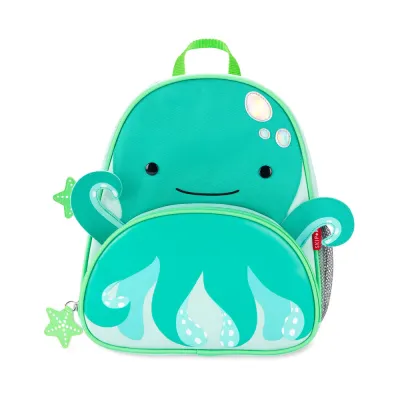
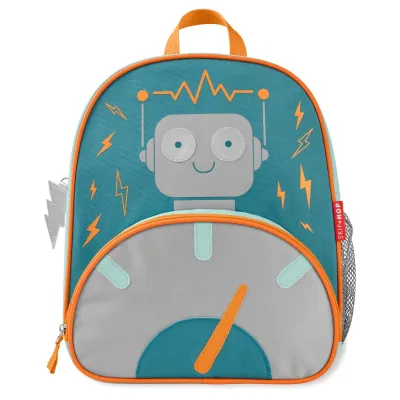
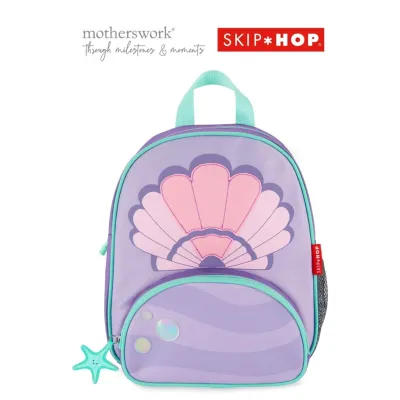
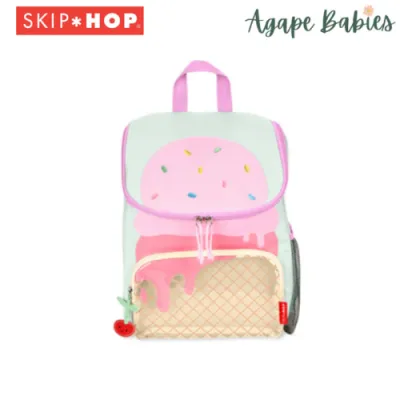
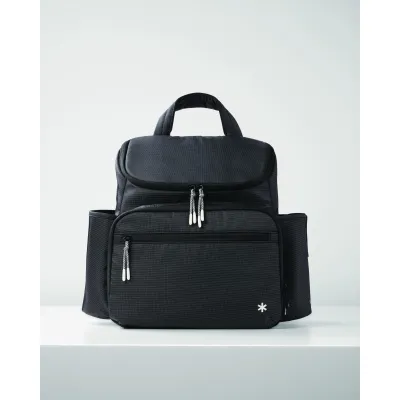
![[2 Yr Local Warranty] Skip Hop Forma Next Nappy Backpack](https://img.lazcdn.com/g/p/fa8751a3e183a531f09586dc0cadccb8.png_400x400q80.png_.webp)
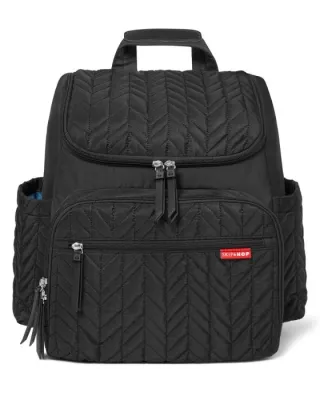
Prices are valid at publication and may change. Please refer to the product page for the latest price.
When choosing a toddler model, look for simple zipper pulls designed for developing motor skills. Because physical growth varies significantly during these early years, always check the specific product dimensions on the manufacturer’s label before purchasing. This ensures the bag sits comfortably between your toddler’s shoulders and waist without restricting their movement.
Preschool and Kindergarten Backpacks (Ages 3 to 5)
As children transition to preschool, childcare, or kindergarten, their daily carrying needs expand to include learning supplies, spare clothing, and food containers. The mid-size tier is the most versatile option for this age group, offering a generous main compartment that can comfortably house a standard lunch bag, a small water bottle, and a complete change of clothes.
These backpacks are engineered to bridge the gap between toddler-sized gear and school-age bags. They often feature external mesh pockets that are perfect for keeping water bottles upright and separating wet or soiled items from dry schoolwork. Ensure you verify the height of the backpack against your child’s torso to guarantee a comfortable fit during their daily commute.
Big Kid and Early Primary Backpacks (Ages 5 and Up)
For children entering early primary school, the largest tier in the kids’ range provides the structured space required for a full day of learning. These models are built to accommodate standard school supplies, library books, homework folders, and larger insulated lunch containers.
To support the heavier loads associated with primary school, these backpacks feature wider, more heavily padded shoulder straps and cushioned back panels. This extra support helps distribute weight more evenly across your child’s shoulders and back. Before purchasing, check the manufacturer’s specified liter capacity to ensure the bag complies with your child’s school requirements and can handle their daily workload.
Matching Backpack Capacity to Daily Activities
Beyond age, the best way to determine the right size is to look closely at what your child will actually carry on a typical day. A bag that is perfect for a structured school environment might be unnecessarily bulky for a quick weekend outing to the playground, while a small outing bag will fall short of school storage requirements.

Daily Outings and Travel Essentials
For weekend trips, playground visits, or family travel, a smaller, lighter backpack is almost always the better choice. When packing for a recreational outing, you generally only need space for a few immediate essentials: a travel pack of wet wipes, a light jacket for air-conditioned spaces, a small snack, and perhaps a small toy.
Using a smaller bag for these excursions prevents your child from becoming fatigued during long walks. Look for models with easy-to-clean, water-resistant interior linings, as outing bags are highly likely to encounter accidental juice spills, melted snacks, or outdoor dirt. Keeping the capacity compact encourages your child to carry their own bag, fostering a sense of responsibility without physical strain.
Preschool and School Supply Requirements
Structured school environments demand a different approach to storage capacity. Before deciding on a bag, measure your child’s standard lunchbox and water bottle. They must be able to slide into the main compartment easily without forcing the zipper, which can lead to premature wear and tear on the seams.
Many local preschools and primary schools require children to bring home daily communication folders, completed artwork, or library books. A bag that is too narrow will crease these items or fail to close entirely. Additionally, consider whether you prefer a backpack with a dedicated, built-in insulated pocket for food, or if you will need extra internal space to slide in a separate, fully insulated lunch bag alongside their other school supplies.
How to Ensure a Proper and Safe Fit for Your Child
Even the most well-designed backpack can cause discomfort if it is not fitted correctly to your child’s body. Ensuring a safe fit involves checking physical proportions, adjusting straps properly, and monitoring the total weight of the loaded bag.
- Proportion Check: When your child is wearing the backpack, the top of the bag should not extend above their shoulders, and the bottom should not drop more than a few inches below their waistline. A bag that hangs too low pulls the child’s center of gravity backward, forcing them to lean forward awkwardly.
- Strap and Clip Adjustment: Adjust the shoulder straps so the backpack sits snugly against your child's back. The bag should not sway as they walk. If the model includes a chest clip (sternum strap), buckle it to prevent the shoulder straps from slipping off narrow shoulders, which helps distribute the weight more evenly.
- Weight Guidelines: As a general pediatric guideline, a fully loaded backpack should not exceed 10% to 15% of your child's total body weight. For a toddler weighing 12 kilograms, this means the packed bag should weigh no more than 1.2 to 1.8 kilograms.
- Safety Boundary: Always read the manufacturer’s product tag for specific weight limits, age recommendations, and safety warnings. If your child complains of back, neck, or shoulder pain, leans forward excessively, or develops red marks on their shoulders, stop using the bag immediately. Reduce the weight of the contents, readjust the straps, and consult a pediatrician if physical discomfort or pain persists.
Common Sizing Mistakes to Avoid
Selecting a children’s bag can be challenging, and it is easy to fall into common traps that lead to discomfort or unused gear. Being aware of these pitfalls will help you make a more practical, long-lasting purchase.
- Buying for the Future: It is tempting to purchase a larger size so your child can "grow into it" over several years. However, an oversized backpack shifts your child's center of gravity, increasing the risk of trips, falls, and muscle strain. A backpack should fit your child's current physical size, not their future height.
- Ignoring the Empty Weight: Heavily structured backpacks with extensive padding, thick rubber accents, and heavy hardware have a higher baseline weight before you even place a single item inside. For younger children, look for lightweight fabrics that minimize this baseline weight.
- Overlooking School Policies: Before buying, check if your child's school or preschool in Singapore has specific rules regarding bag dimensions. Some classrooms utilize small cubby holes or lockers with strict size limits. A bulky or oversized backpack may not fit into these storage spaces, forcing your child to leave it on the floor.
- Overpacking "Just in Case": It is easy for unnecessary items—such as broken crayons, multiple toy figures, and old school notices—to accumulate at the bottom of a backpack. Establish a weekly routine to audit and empty the bag's contents. Keeping only the daily essentials inside ensures the load remains safe and manageable.
Frequently Asked Questions (FAQ)
Can a Toddler Backpack Fit a Standard A4 Folder?
No, toddler-sized backpacks are physically too small to accommodate a standard A4 folder without bending or folding the paper. If your child’s preschool requires them to transport A4-sized books, communication folders, or artwork flat, you should look at the preschool or big kid size tiers. Always verify the exact interior dimensions on the product specifications before making a purchase.
Are Skip Hop Backpacks Machine Washable?
Care instructions vary depending on the specific model, fabric, and structural components of the backpack. You must always check the sewn-in care label inside the bag before cleaning. While some lightweight fabric models may be surface-washable or suitable for a gentle machine cycle, models with insulated compartments, rigid frames, or delicate embellishments typically require spot cleaning with a damp cloth and mild detergent to preserve their shape and safety features.
Do Toddler Backpacks Come With a Safety Harness?
Some toddler-specific models include an optional, detachable safety harness, often referred to as a tether. This feature is designed to help parents keep early walkers close in crowded public spaces or near busy roads. Always ensure the harness is attached securely to the designated lower loop of the backpack to prevent pulling or choking risks, use it under direct caregiver supervision, and remove the tether entirely when your child is playing in a safe, enclosed area or riding in a vehicle.
Community discussion
Share your experience or ask a question. Comments are reviewed before publication.