
Selecting the right skip hop backpack for your child involves balancing developmental milestones, physical comfort, and daily utility. While the brand’s whimsical animal designs and vibrant patterns are instantly appealing, the physical fit of the bag on your child’s back is the most critical factor for their comfort and physical well-being. To find the right size, you must match the manufacturer’s age recommendations and physical dimensions to your child’s torso length and daily carry needs. A backpack that is too large can cause a child to lean forward, straining their shoulders and lower back, while a bag that is too small will fail to hold essential school or outing supplies. By taking a few simple measurements and understanding how different models align with specific age groups, you can choose a backpack that supports your child’s independence and keeps them comfortable throughout the day.
How to Match Skip Hop Backpack Sizes to Your Child's Age
When shopping for a skip hop backpack, it is tempting to rely solely on the age labels printed on the product tags. However, these age ranges are best treated as general starting points rather than absolute rules. Children grow at vastly different rates, and a child who is tall for their age may require a larger model sooner than their peers, while a petite child might be overwhelmed by a standard preschool bag. To ensure a proper fit, you should measure your child’s physical dimensions before comparing them to the product specifications.
To measure your child’s torso, have them stand up straight and locate the bony bump at the base of their neck, which is the C7 vertebra. Next, find the top of their hip bones, known as the iliac crest. Use a flexible measuring tape to measure the distance along the spine from the base of the neck to the line directly between the tops of the hip bones. This measurement represents their torso length. A well-fitting backpack should rest comfortably within this zone, with the top of the bag starting just below the shoulders and the bottom resting at or slightly above the waistline.
Products mentioned in this guide
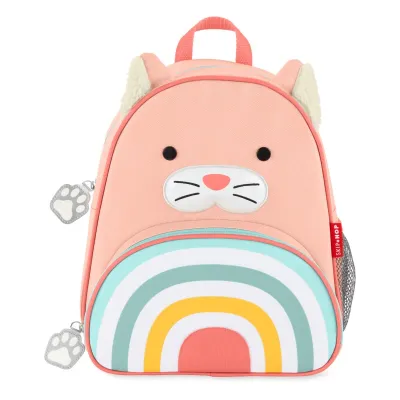
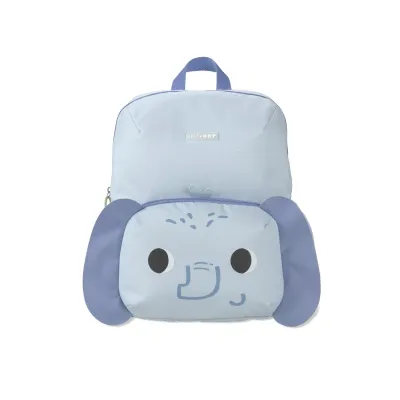
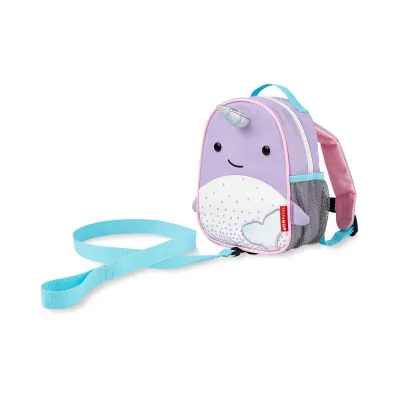
Prices are valid at publication and may change. Please refer to the product page for the latest price.
In addition to torso length, you should measure your child’s shoulder width to ensure the straps do not slip off or pinch their neck. Once you have these measurements, check the official product dimensions, height recommendations, and weight limits provided on the product tag or the brand’s official website. Comparing these specifications to your child’s actual measurements prevents the common mistake of buying a bag that is too wide or too long, ensuring a secure and comfortable fit for daily wear.
Skip Hop Backpack Categories by Age Group
The brand’s lineup progresses through several distinct size tiers designed to match a child’s growing independence and changing daily requirements. From compact mini bags for early walkers to spacious school bags for older children, each category serves a specific developmental stage. Because specific model names, exact capacities, and aesthetic designs vary by collection and release year, it is always wise to verify current product listings and specifications before making a final decision.

Toddler and Mini Backpacks (Ages 1–3)
The smallest tier in the lineup is specifically engineered for toddlers who are just beginning to explore the world on their own two feet. These mini backpacks are exceptionally lightweight, ensuring they do not place unnecessary strain on a developing toddler’s spine. The primary purpose of these bags is not heavy-duty hauling, but rather fostering a sense of responsibility and independence. They are sized to carry minimal, lightweight items such as a favorite small toy, a single spare diaper, or a small bag of snacks for a trip to the local playground.
When fitting a mini backpack on a toddler, it is crucial to check that the bag does not extend past the child’s lower back. A bag that hangs too low can alter a toddler’s center of gravity, making them more prone to trips and falls. Look for models that feature easy-grip zipper pulls, which help young children practice their fine motor skills. Additionally, check if the model includes an adjustable chest clip or a detachable tether; these features provide extra stability and keep the shoulder straps securely in place on narrow toddler shoulders.
Preschool and Kindergarten Backpacks (Ages 3–5)
As children transition into structured early education environments, such as nursery or kindergarten, their daily carrying needs increase. Backpacks in this category are designed to accommodate these new demands without overwhelming a young child’s frame. At this stage, the bag must have enough capacity to hold a standard child-sized water bottle, a complete change of clothes for school accidents, and a small folder or notebook for parent-teacher communication.
When selecting a bag for this age group, pay close attention to the shoulder straps. They should be padded and easily adjustable to accommodate rapid growth spurts and changing seasonal clothing. The width of the backpack is also a key consideration; it should not be wider than your child’s torso. A bag that is too wide can restrict arm movement, making it difficult for your child to run, play, or climb comfortably during outdoor activities.
Early Primary School Backpacks (Ages 5–7+)
Entering primary school marks a significant shift in both academic requirements and backpack size. Children in this age bracket require larger main compartments to hold standard A4-sized worksheets, reading books, lunchboxes, and occasionally digital devices like tablets. Backpacks designed for early primary schoolers feature more structured compartments and dedicated sleeves to keep these heavier items organized and close to the child’s back.
With the increase in carrying capacity comes a greater responsibility to monitor weight distribution. Parents should regularly check that the loaded backpack does not exceed safe weight limits relative to the child’s body weight. To prevent strain, heavier items like books and tablets should be packed closest to the child’s back, while lighter items go in the front pockets. Additionally, before purchasing a primary school bag, verify if the specific model’s dimensions comply with any size restrictions or storage locker limits set by your child’s school.
Essential Fit and Comfort Checks for Daily Use
Before letting your child wear their new backpack out the door, it is essential to perform a thorough physical fit check. Start by adjusting the shoulder straps using the “two-finger rule.” When the backpack is on, you should be able to slide two fingers comfortably between the strap and your child’s shoulder. If you cannot fit your fingers, the straps are too tight and may pinch or restrict circulation; if there is a large gap, the straps are too loose, which will cause the bag to sag and pull backward. If the model features a chest strap, ensure it sits across the middle of the chest, rather than riding up near the throat or slipping down toward the stomach.
Next, observe where the bottom of the backpack rests on your child’s body. The base of the bag should align with your child’s natural waistline and should never hang lower than two inches below the waist. A backpack that sags down toward the buttocks places excessive leverage on the lower back, forcing the child to lean forward to compensate. This forward lean can lead to poor posture and muscle fatigue over time.
Finally, test the backpack under real-world conditions by loading it with the items your child will actually carry on a typical day. Have your child put the loaded bag on and walk around the room. Observe their posture closely from the side. If you notice them slouching, leaning forward, or arching their back to support the weight, the bag is either too heavy, poorly adjusted, or simply too large for their current physical development. Encourage your child to give feedback on how the bag feels, checking for any rubbing, pinching, or pressure points before finalizing your purchase.
Features to Compare Before You Buy
Beyond physical dimensions, several secondary design elements play a major role in how easily your child can use their backpack independently. Closure types are a primary consideration. For younger toddlers, simple, chunky zippers with large pulls are ideal because they accommodate developing fine motor skills. As children reach preschool and primary school age, they can manage more complex closures, such as drawstrings, buckles, or magnetic snaps, which offer different levels of security and access.
Material care is another critical factor for busy parents. Children’s backpacks are subjected to spills, mud, and daily wear, making easy maintenance a priority. Before buying, check the manufacturer’s care label to see if the fabric is wipeable, water-resistant, or machine-washable. Many bags feature canvas or polyester blends that can be easily spot-cleaned with a damp cloth, while others may require specialized care to preserve their water-resistant coatings or decorative elements.
Lastly, evaluate the design and placement of external pockets. Side mesh pockets are excellent for holding water bottles, keeping hydration easily accessible and preventing leaks inside the main compartment. However, ensure these pockets do not add excessive bulk or cause the bag to become lopsided when only one side is loaded. Front zippered pockets are highly useful for separating small items like snacks, tissues, or keys, allowing your child to find what they need quickly without rummaging through the entire bag.
Frequently Asked Questions (FAQ)
Can my child use a preschool backpack for primary school?
Generally, a preschool backpack is not suitable for primary school use due to significant differences in capacity and structural support. Preschool bags are designed for lightweight, compact items like a change of clothes and a snack box. Primary school requirements typically include larger A4 folders, textbooks, and heavier lunchboxes, which will not fit comfortably inside a preschool-sized bag. Forcing these items into a smaller bag can damage the zippers and seams. Additionally, preschool bags lack the wider, more supportive shoulder straps needed to distribute the heavier weight of primary school supplies safely.
How do I clean a Skip Hop backpack without damaging it?
To clean your backpack safely, always check the internal care label first for specific manufacturer instructions. For general maintenance, spot cleaning is the safest and most effective method. Use a soft cloth or sponge dampened with cold water and a mild, gentle detergent to wipe away dirt and spills. Avoid using harsh chemical cleaners, bleach, or abrasive brushes, as these can degrade the fabric and fade the vibrant designs. Always allow the backpack to air dry completely in a well-ventilated area away from direct sunlight, and never place it in a tumble dryer, as high heat can warp the structural materials and damage the water-resistant backing.
Community discussion
Share your experience or ask a question. Comments are reviewed before publication.