
Choosing between a silicone and a nylon bottle brush is a decision that directly impacts your daily cleaning routine, the lifespan of your baby bottles, and the overall hygiene of your feeding equipment. While traditional nylon brushes have long been the standard for their rich lathering ability and aggressive scrubbing power, silicone brushes have surged in popularity due to their non-porous, quick-drying properties. Neither material is universally superior for every household; instead, the right choice depends on your bottle materials, how quickly you wash them after feedings, and your local drying conditions. By understanding the physical characteristics of both materials, you can select a tool that keeps your baby’s bottles clean and free from damage.
Cleaning Effectiveness and Scrubbing Power
Nylon bottle brushes are characterized by their dense, stiff bristles that excel at creating a rich, soapy lather. This high-friction scrubbing action is highly effective at breaking down stubborn, dried-on formula or breast milk residue that has settled at the bottom of a bottle. The flexible nylon fibers can easily bend and compress to reach into tight corners, collar threads, and the narrow necks of standard bottles. However, this aggressive scrubbing power comes with a trade-off, as the stiff tips can be abrasive on softer surfaces over time.
Silicone bottle brushes, on the other hand, feature thicker, more widely spaced nubs that offer a gentler cleaning action. Because silicone is non-absorbent, these brushes do not generate the same volume of soapy lather as nylon, which may require you to use slightly more water or detergent to achieve a thorough clean. While they are highly effective at wiping away fresh liquid residue, they require more physical pressure and targeted effort to dislodge dried, hardened milk film. The flexibility of silicone allows the brush head to conform to various bottle shapes, but the lack of fine, pointed bristles means you must pay closer attention to the very bottom corners of the bottle.
Products mentioned in this guide
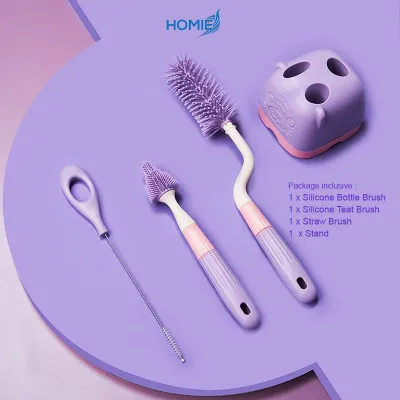
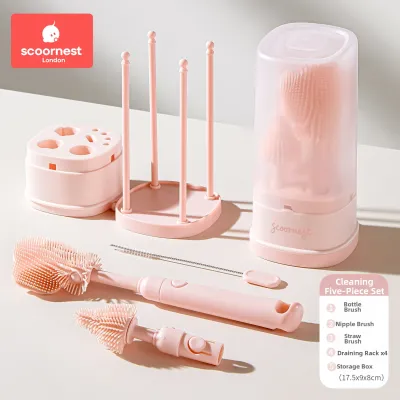
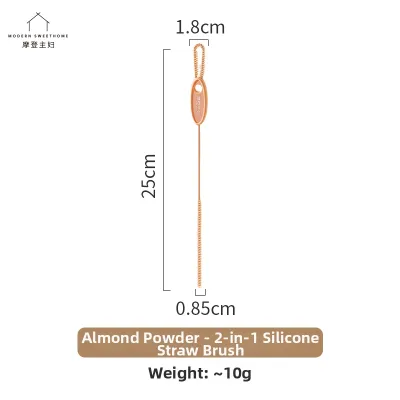
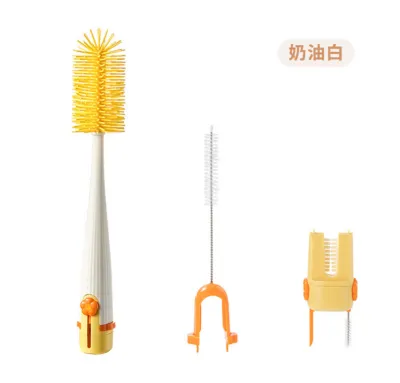
Prices are valid at publication and may change. Please refer to the product page for the latest price.
Before deciding on a brush based on scrubbing power alone, it is essential to check your bottle manufacturer’s guidelines. Some manufacturers of specialized plastic or silicone bottles recommend specific cleaning tools to prevent surface wear, while glass bottle manufacturers often permit more robust scrubbing tools.
Hygiene, Drying, and Bacterial Risk
The structural differences between nylon and silicone significantly influence how hygienic each brush remains over weeks of daily use. Nylon is a porous material, and the dense arrangement of bristles creates hundreds of tiny spaces where water, soap scum, and microscopic milk particles can become trapped. In humid environments, such as Singapore’s tropical climate, a wet nylon brush can take several hours to dry completely. This prolonged dampness creates an ideal breeding ground for bacteria, mold, and mildew, which can compromise the cleanliness of the very bottles you are trying to sanitize.

Silicone is inherently non-porous and hydrophobic, meaning it repels water rather than absorbing it. After cleaning, a simple shake of a silicone brush removes most of the clinging water droplets, allowing the brush to dry in a fraction of the time required for nylon. This rapid drying speed dramatically reduces the risk of bacterial colonization, mold growth, and the development of sour, unpleasant odors.
To maintain a safe feeding environment, caregivers must regularly inspect their cleaning tools for observable signs of contamination. If you notice black spots of mold at the base of the bristles, persistent odors that remain after washing, or a slimy texture on the handle, the brush must be discarded immediately. Regardless of the material, any brush that shows signs of structural decay or bacterial buildup should be replaced to protect your infant’s developing immune system.
Bottle Compatibility and Surface Protection
Baby bottles are manufactured from a variety of materials, including borosilicate glass, polypropylene (PP), polyphenylsulfone (PPSU), and food-grade silicone. Each of these materials reacts differently to the abrasive qualities of cleaning brushes. Glass bottles are highly scratch-resistant and can easily withstand the stiff, repetitive scrubbing of nylon bristles without sustaining damage.
In contrast, plastic and silicone bottles are relatively soft and highly susceptible to micro-scratches. When stiff nylon bristles—especially those with exposed metal wire cores—are repeatedly scraped against plastic walls, they create microscopic abrasions. Over time, these tiny scratches dull the appearance of the bottle and, more importantly, create microscopic crevices where milk proteins and bacteria can hide, resisting standard washing.
Using a silicone brush on silicone bottles presents a unique physical interaction. The high friction between two dry silicone surfaces can make insertion difficult, but once lubricated with soapy water, the silicone brush glides smoothly, providing a safe, scratch-free clean. When shopping for a brush, always verify the product labels for food-grade material certifications and check both the brush and bottle manufacturer warnings to ensure compatibility.
Durability, Lifespan, and Replacement Signals
The long-term value of a bottle brush is determined by its durability and how well it maintains its structural integrity under daily use. Nylon brushes are prone to rapid wear; with regular use, the bristles begin to splay, bend, and shed. Once the bristles lose their stiffness and shape, the brush’s cleaning efficiency drops significantly, and the exposed metal core may scratch the interior of your bottles.
Silicone brushes are exceptionally durable and resistant to deformation. They do not splay or lose their shape, even after months of heavy use. However, they are not completely indestructible. The individual silicone nubs can tear or stretch if they are repeatedly caught on sharp bottle threads, collar ridges, or the metal edges of breast pump parts.
From a budget perspective, silicone brushes generally carry a higher initial purchase price, often ranging from S$10 to S$25, whereas nylon brushes are more affordable upfront, typically costing between S$5 and S$12. However, because a silicone brush can last significantly longer than a nylon counterpart before showing signs of wear, its cost-per-use is often lower over time. Regardless of the brush’s age, you must stop use immediately if you observe shedding bristles, torn silicone pieces, or a loose brush head, as these detached fragments can pose a serious choking hazard.
How to Choose the Right Bottle Brush for Your Needs
Selecting the right bottle brush requires a careful evaluation of your specific feeding setup and daily routine. By matching the physical properties of the brush to your household’s needs, you can streamline your dishwashing process while protecting your investment in baby bottles.
You should choose a silicone brush if your baby primarily feeds from plastic or silicone bottles, as its gentle nubs will prevent micro-scratches. It is also the ideal choice if you live in a humid climate where quick drying is essential to prevent mold, or if you prefer a highly durable tool that does not require frequent replacement.
Conversely, a nylon brush is the better option if you use glass bottles, which are impervious to scratching, or if you frequently have to clean bottles with dried-on formula or breast milk that has sat overnight. The stiff bristles and rich lathering capability of nylon make quick work of tough residues.
Before making a final purchase, always verify if your bottle’s warranty or manufacturer instructions require a specific type of cleaning tool. Some high-end bottle brands specify that only silicone or soft sponge brushes should be used to maintain the integrity of their products.
Proper Cleaning and Maintenance Routine
Regardless of the brush material you choose, establishing a consistent cleaning and maintenance routine is vital to ensure the tool remains hygienic and safe for daily use. The process begins immediately after you finish scrubbing a bottle. Rinse the brush thoroughly under warm running water to clear away any remaining milk debris, soap residue, or foam trapped between the bristles.
Next, check the manufacturer’s instructions regarding sterilization compatibility. Many silicone brushes are highly heat-resistant and can be safely boiled, steamed, or placed in a UV sterilizer alongside your baby bottles to eliminate lingering pathogens. Nylon brushes, however, often feature plastic handles or metal cores that cannot tolerate high heat, meaning they may warp, melt, or rust if subjected to boiling or steaming.
Finally, proper storage is critical to prevent cross-contamination. Store your bottle brush upright in a clean, dedicated holder that allows for maximum airflow. Avoid laying the brush flat on the countertop or leaving it in a damp sink basin, where it can easily collect bacteria from other kitchen items. Ensuring the brush dries completely between uses is your best defense against microbial growth.
Frequently Asked Questions (FAQ)
Can I put silicone and nylon bottle brushes in the dishwasher?
Whether you can clean your bottle brush in the dishwasher depends entirely on the manufacturer’s specifications. Before placing any brush in the dishwasher, check the product packaging or the manufacturer’s website for the dishwasher-safe symbol and any specific temperature limits. If the brush is cleared for dishwasher use, always place it on the top rack to keep it away from the high-heat heating elements at the bottom of the machine, which can melt plastic handles or warp nylon bristles. If the brush contains a metal wire core, ensure it is thoroughly dried after the cycle to prevent rust.
How often should I replace my baby bottle brush?
While many general guidelines suggest replacing bottle brushes every few weeks, a condition-based check is a far more reliable method for ensuring hygiene. You should inspect your brush daily for visual and olfactory cues of wear and contamination. Replace the brush immediately if you notice splayed or shedding bristles, torn silicone nubs, persistent sour odors, or any discoloration that suggests mold or mildew growth. For nylon brushes, this wear often becomes apparent within four to eight weeks, whereas high-quality silicone brushes can often remain in excellent condition for several months under normal use.
Do I need a separate brush for silicone baby bottles?
Silicone baby bottles require gentle care to prevent damage to their soft, flexible walls. While you do not strictly need a separate brush, using a silicone brush is highly recommended for silicone bottles because it eliminates the risk of micro-scratches that stiff nylon bristles can cause. When using a silicone brush inside a silicone bottle, ensure the bottle is filled with warm, soapy water first; the soap acts as a lubricant to reduce surface friction, allowing the brush to glide easily and clean effectively. Always consult the bottle manufacturer’s care instructions to verify their recommended cleaning methods.
Community discussion
Share your experience or ask a question. Comments are reviewed before publication.