
Deciding between silicone and natural rubber for your baby’s bottle nipples is a common crossroads for parents. The ideal material for a Pigeon wide-neck nipple depends on your baby’s unique latch preference, potential allergy risks, and your daily sterilization routine. While silicone is highly durable and widely available, natural rubber offers a distinct softness that some infants prefer. To make the right choice, you must evaluate the physical properties of each material, verify the details on the product packaging, and closely observe your baby’s feeding cues.
Material Basics: What to Check on the Packaging
When shopping for baby bottle accessories, the first step is understanding what to look for on the retail shelf. Silicone nipples are easily recognizable by their crystal-clear transparency and smooth, firm texture. They maintain their shape under pressure and do not retain odors or colors from milk or cleaning agents. In contrast, natural rubber nipples, often referred to as latex, have a characteristic amber or yellowish-brown tint. They feel noticeably softer, more matte, and highly pliable to the touch, mimicking the natural elasticity of skin.
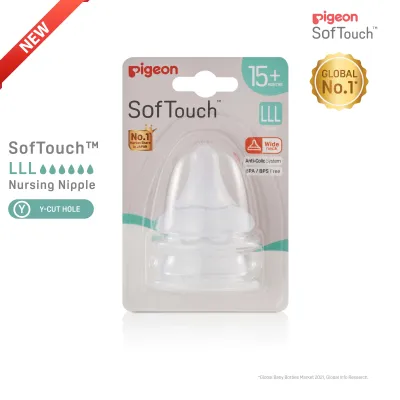
Before purchasing, always inspect the product packaging carefully to verify the exact material composition. Pigeon wide nipples are designed to fit specific bottle ranges, so you must ensure the box explicitly states compatibility with wide-neck bottles. Look for clear age-grade indicators, such as size designations ranging from SS for newborns to LLL for older infants. These sizes correspond to different flow rates and hole designs, which are crucial for preventing feeding fatigue or choking. Never infer suitability solely from the product name; instead, verify the recommended age and development stage printed on the box.
Products mentioned in this guide
![Pigeon SofTouch Peristaltic PLUS Wide Neck Nipple [5 Sizes] (total of 4 teats)](https://img.lazcdn.com/g/p/46cd14b8f42c1529bcdba728663f3ccc.png_400x400q80.png_.webp)
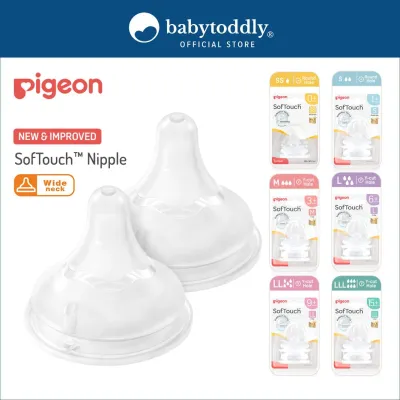
![[NEW] Pigeon SofTouch™ Wide Neck Nipple (Promo)](https://img.lazcdn.com/g/p/9ad1bd0730a6805e5e1f59444563dce2.jpg_400x400q80.jpg_.webp)
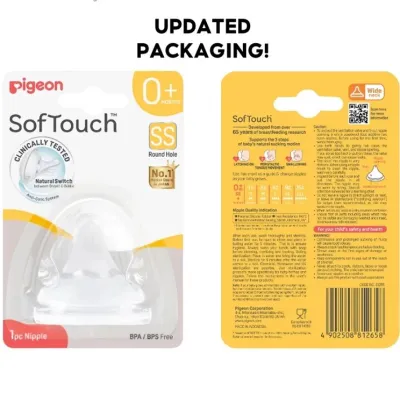
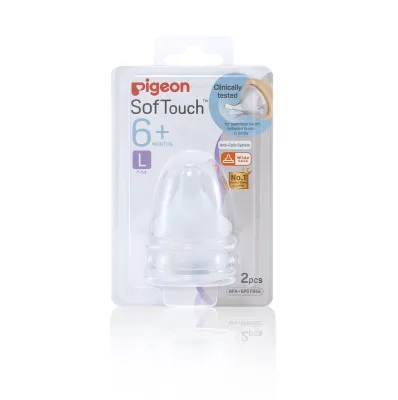
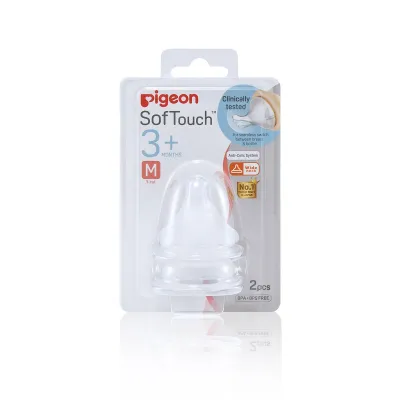
Prices are valid at publication and may change. Please refer to the product page for the latest price.
Additionally, examine the packaging for safety labels. Ensure the box displays clear indications of being BPA-free and BPS-free. Because manufacturing standards and product lines can update, verifying these details on the physical box is the most reliable way to confirm that the nipples meet current food-grade safety standards. If you are shopping online, look for clear photos of the packaging or contact the retailer to confirm these specifications before ordering.
Feeding Experience and Latch Acceptance
The physical sensation of the nipple plays a significant role in how comfortably your baby feeds. Silicone’s inherent firmness provides a structured shape that does not easily collapse during vigorous sucking. This resistance requires your baby to apply active jaw pressure, which closely mimics the mechanics of breastfeeding. For parents practicing mixed feeding—alternating between breast and bottle—silicone is often selected to help maintain a consistent latch style.

On the other hand, natural rubber is exceptionally soft and flexible. It conforms effortlessly to the shape of your baby’s oral cavity, requiring less physical effort to compress. This can be highly beneficial for newborns, premature infants, or babies with weaker suction who struggle with firmer materials. However, because natural rubber is so pliable, it can occasionally collapse if the baby sucks very strongly or if the bottle’s venting system is not functioning correctly.
Observing your baby’s feeding behavior is key to identifying their preference. If your baby rejects a silicone nipple, spits it out, or shows signs of jaw fatigue during a feed, they may prefer the softer texture of natural rubber. Conversely, if they seem frustrated by a collapsing rubber nipple or struggle with an inconsistent flow, a firmer silicone option might provide the structural support they need. Watch for signs of feeding distress, such as milk leaking from the corners of the mouth or excessive air swallowing, which indicate that the material or flow rate needs adjustment.
Durability, Sterilization, and Replacement Rules
Maintaining hygiene is a top priority for parents, but the sterilization method you choose must align with the nipple material. Silicone is highly resilient to temperature extremes. It can safely withstand boiling water, steam sterilization, and the UV light cycles common in modern household sterilizers. This high heat tolerance makes silicone exceptionally easy to maintain over long periods without compromising its structural integrity.
Natural rubber is far more sensitive to environmental factors. It degrades rapidly when exposed to high heat, direct sunlight, UV radiation, and the natural fats present in breast milk or infant formula. If you choose natural rubber, you must strictly consult the manufacturer’s instructions on the packaging regarding sterilization limits. Often, high-heat steam or UV sterilization is discouraged for natural rubber, as it can cause the material to become sticky, weak, and prone to tearing.
Regularly inspecting the nipples before every feed is essential for your baby’s safety. For silicone, look for any cloudy discoloration, fine cracks, or tears around the feeding hole or vent valve. For natural rubber, watch for swelling, a sticky or tacky texture, significant darkening of the amber color, or a loss of elasticity where the nipple fails to spring back after being stretched.
Because of these physical differences, their lifespans vary significantly. Silicone nipples typically remain safe and functional for approximately one to two months of regular use before they should be replaced. Natural rubber nipples degrade much faster and generally require replacement every four to six weeks, or immediately if you observe any of the physical signs of degradation mentioned above.
Safety Considerations and Allergy Risks
While natural rubber offers a comforting softness, it carries a risk of allergic reactions because it is derived from natural latex. Infants can develop sensitivities to latex proteins, which can manifest during or after feeding. Parents must remain vigilant for any observable signs of an allergic reaction, such as redness, swelling, or hives around the baby’s mouth, persistent diaper rash, or unexplained fussiness and respiratory discomfort during feeds.
To mitigate safety risks, always verify that the nipples you purchase carry recognized food-grade safety certifications on the packaging. Avoid purchasing unbranded or unverified feeding accessories from unauthorized online marketplaces, as these may not comply with strict safety standards regarding chemical purity and manufacturing quality.
If you suspect your baby is experiencing an allergic reaction or sensitivity to a natural rubber nipple, stop using the product immediately. Transition to a silicone alternative and consult a pediatrician or qualified healthcare professional for a proper assessment. Similarly, if your baby experiences persistent feeding difficulties, such as frequent choking, excessive gas, or refusal to feed, seek professional medical advice rather than repeatedly switching materials on your own.
Decision Framework: Which Material Fits Your Needs?
To help streamline your choice, consider how each material fits into your daily routine and your baby’s specific needs.
You should choose silicone if you prioritize a highly durable, long-lasting material that is easy to clean. Silicone is ideal for parents who rely on steam or UV sterilizers and want a low-maintenance option that resists odors, stains, and structural wear over several months. It is also the safest starting point if you want to avoid any risk of latex allergies.
You should choose natural rubber if your baby has consistently rejected firmer silicone nipples or struggles to maintain a secure latch due to a weaker suck. This material is suitable if you do not mind a shorter product lifespan and are willing to follow gentler, low-heat cleaning and sterilization routines to prevent rapid degradation.
Neither material may fit your needs if your baby consistently rejects wide-neck bottles altogether. In such cases, the issue may not be the material itself, but rather the wide-neck shape, the flow rate of the nipple, or the bottle’s venting design. You may need to evaluate alternative bottle shapes or consult a lactation specialist to address the underlying feeding challenges.
Always verify the product details first if you are shopping in Singapore. Natural rubber wide-neck nipples can be more difficult to find in local retail stores compared to the widely distributed silicone options. Check with authorized distributors or official brand stores to confirm current availability and to ensure you are purchasing genuine, safety-tested products.
Frequently Asked Questions (FAQ)
Can I mix silicone and natural rubber nipples in the same feeding routine?
It is generally recommended to maintain consistency in your baby’s feeding routine. Mixing silicone and natural rubber nipples can cause confusion for some infants because the two materials feel completely different in the mouth. The transition from a firm, structured silicone nipple to a very soft, highly pliable natural rubber nipple can disrupt your baby’s latch mechanics and flow expectations. If your baby is feeding well on one material, it is best to stick with that option to ensure comfortable and predictable feeding sessions.
How do I safely dispose of old natural rubber nipples?
When it is time to replace your baby’s nipples, disposal methods differ by material. Natural rubber is a plant-derived, biodegradable material, meaning it will break down naturally over time in standard waste systems. Silicone, however, is a synthetic polymer that does not biodegrade. To dispose of silicone nipples responsibly, check if local recycling programs in Singapore accept food-grade silicone, or dispose of them in accordance with general household waste guidelines if specialized recycling is unavailable.
Are Pigeon wide nipples available in both materials in Singapore?
In Singapore, silicone wide-neck nipples are the standard offering and are widely available across physical baby boutiques, department stores, and official online marketplaces. Natural rubber wide-neck nipples are less common and may only be available through select specialty retailers or direct import channels. Before making a purchase, carefully read the product descriptions and inspect the packaging to confirm the material, as some listings may use generic terms that confuse the two.
Community discussion
Share your experience or ask a question. Comments are reviewed before publication.