
Transitioning a toddler from the secure confines of a crib to a larger bed is a significant milestone in your child’s development. While this transition represents an exciting step toward independence, it also introduces new safety considerations, particularly the risk of nighttime falls. Many parents turn to bed rails as a practical solution to keep their little ones secure during sleep. However, because bed rails are aftermarket additions to adult beds, they require meticulous evaluation to ensure they do not introduce new, unforeseen hazards.
Before purchasing a bed rail, it is vital to understand that these products are not universal safety guarantees. If chosen incorrectly or installed improperly, they can create dangerous gaps, pose entrapment risks, or fail under pressure. To protect your child, you must approach the buying process with a clear, safety-first checklist. This guide outlines the essential checks you must perform, covering developmental readiness, structural design, mattress compatibility, material safety, and official safety verifications.
Age and Developmental Readiness for Bed Rails
One of the most common mistakes is introducing a bed rail too early in a child’s life. Bed rails are designed for children who are transitioning out of a crib, typically between two and five years of age. You must verify the manufacturer’s stated minimum age, weight, and developmental milestones from the specific product documentation; never infer suitability from a product name or marketing images.
Products mentioned in this guide
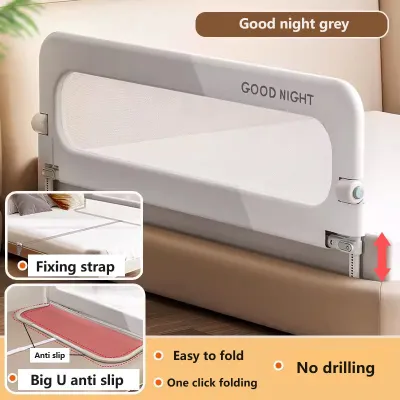
![[SG Stock] Baby Bed Guard Safety Fence FOLD DOWN DESIGN anti-fall bumpe Bed Rail Guard 1.2/1.5/1.8/2M](https://img.lazcdn.com/g/p/2c9d0e468e36d919b57f6854452f7152.jpg_400x400q80.jpg_.webp)
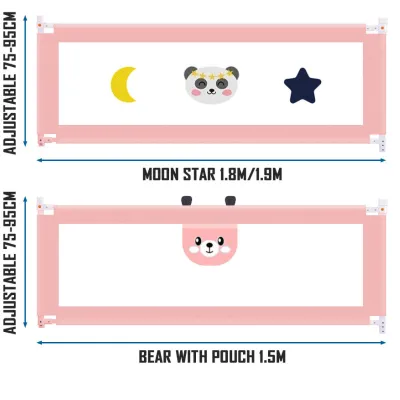
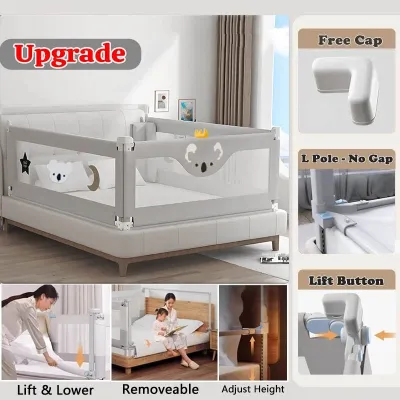
Prices are valid at publication and may change. Please refer to the product page for the latest price.
Assess your child’s individual motor skills before buying. A child is ready for a bed rail only when they can independently roll over, sit up, crawl, and climb in and out of bed. These skills ensure they have the physical capability to reposition themselves or alert a caregiver if they accidentally press against the rail. If your child lacks these abilities, they face a high risk of entrapment and should not use a bed rail.
Furthermore, bed rails are not designed for cribs or as a substitute for safe infant sleep environments. Attempting to install them on cribs, playpens, or toddler beds with built-in low sides can create highly dangerous gaps. If you are unsure about your child’s readiness to transition to a bed with rails, stop use and consult a pediatrician or a qualified child safety professional.
Structural Safety and Entrapment Hazards
When evaluating bed rails, structural safety is paramount to prevent entrapment and injury. The most severe hazard associated with bed rails is entrapment, which occurs when a child’s head, neck, or torso becomes wedged between the rail and the mattress, or within the structure of the rail itself. You must inspect the physical design of the rail carefully before purchasing.

First, check the bar spacing and mesh dimensions. If the rail uses vertical or horizontal bars, the gaps must be narrow enough to prevent a child’s head or limbs from slipping through. For mesh rails, ensure the fabric is tightly woven and securely attached to the frame. Loose or sagging mesh can create a dangerous pocket if a child’s face presses against it, posing a suffocation risk.
Second, evaluate the gap between the bed rail and the mattress. When installed, there must be no space between the rail and the side of the mattress. Even a small gap can allow a child to slide down and become trapped. Look for designs that press firmly against the mattress side or feature a protective barrier that seals this space.
Finally, confirm that folding mechanisms include secure locking devices. If the rail swings down for easy bed-making, the hinges must require a deliberate, multi-step action to unlock. This prevents accidental collapse if your child bumps against the rail during sleep.
Mattress Compatibility and Secure Installation
A bed rail’s safety depends entirely on its installation and compatibility with your specific bed setup. Before buying, verify the rail’s compatibility with your mattress thickness, size, and bed frame type. Bed rails are not one-size-fits-all products and must be carefully matched to your bed.
Some rails are designed only for standard mattresses and will not function safely on extra-thick pillow-top mattresses or thin futons. If the mattress is too thin, the rail may leave dangerous gaps at the bottom; if it is too thick, the effective height of the rail is reduced, making it easier for a child to roll over the top. Check the manufacturer’s specifications to ensure a proper fit.
Next, inspect the anchoring system. Avoid rails that rely solely on the weight of the mattress to stay in place, as mattresses shift easily during sleep. Instead, look for systems that use heavy-duty straps, non-slip bases, or frame clamps to ensure a tight, shift-free fit. These anchors must secure the rail firmly to the bed frame or the opposite side of the mattress.
After installation, always perform a rigorous push-and-pull stability test. Shake the rail firmly in all directions to simulate a child leaning or rolling against it. If the rail shifts, sags, or pulls away from the mattress, stop use immediately. Re-adjust the anchors or consult the manufacturer’s manual to verify if your bed configuration is compatible.
Material Safety and Breathability
The materials used in a bed rail come into close contact with your child, making material safety and breathability essential considerations. Because toddlers often sleep with their faces pressed against the side of the bed, the fabric panels must not obstruct breathing.
Assess the breathability of mesh fabrics to reduce suffocation risks. You can perform a simple check by holding the mesh up to your own face to ensure you can breathe through it easily. Avoid rails that use solid, non-porous fabrics near the sleeping surface. The mesh should also be easy to remove and wash to maintain hygiene.
Next, inspect all plastic, metal, or wooden components. Run your hands along the frame to ensure there are no sharp edges, rough burrs, or exposed hardware that could scratch your child. Any joints or folding hinges should be designed to prevent finger pinching, featuring protective sleeves where appropriate.
Finally, check product labels for non-toxic material claims. Verify that all fabrics, plastics, and paints are free from harmful chemicals like lead, phthalates, and flame retardants. If a manufacturer does not provide clear chemical safety disclosures, consider choosing a different model.
Recognizing Safety Certifications and Recalls
Because safety standards are dynamic, you must treat certifications and recalls as critical items to verify before purchasing. Do not rely solely on brand marketing to assume a product is safe.
Explain how to identify relevant safety standard marks on product packaging or official websites. Look for compliance with recognized standards, such as those from ASTM or other safety organizations, which indicate the product has undergone physical testing for structural integrity.
Before buying, check official consumer safety databases for any recall history associated with the brand or model. This is especially important if you are purchasing from an online marketplace or buying a secondhand rail. A history of recalls indicates a design flaw that makes the product unsafe.
After purchasing, keep your receipts and register the product with the manufacturer. This ensures you will receive immediate safety updates or recall notices if a defect is discovered later. If you ever suspect the rail is compromised, stop use immediately and contact the manufacturer.
Frequently Asked Questions (FAQ)
Is it safe to use a bed rail for a newborn or young infant?
No, it is highly unsafe to use a bed rail for a newborn or young infant. Infants lack the motor skills, head control, and physical strength to free themselves if they roll or slide into a gap. Using a bed rail prematurely poses a severe risk of entrapment and suffocation. For safe infant sleep, always use a crib, bassinet, or playpen that meets current safety standards, featuring a firm, flat mattress and a fitted sheet, completely free of loose bedding or soft objects.
What should I do if the bed rail shifts or detaches during use?
If the bed rail shifts, sags, or detaches during use, you must stop using it immediately. Remove your child from the bed and do not allow them to sleep there until the issue is resolved. Check the manufacturer’s instructions to ensure all anchoring straps, clamps, and locking mechanisms are correctly positioned and tightened. Verify that your mattress and bed frame match the compatibility guidelines. If the rail continues to shift, or if any part appears damaged, discontinue use permanently and contact the manufacturer.
Community discussion
Share your experience or ask a question. Comments are reviewed before publication.