
The moment a baby begins to crawl, their relationship with the nursery changes entirely. No longer passive observers, crawling infants are active explorers who use every piece of furniture within reach to pull themselves up, balance, and investigate. During this transitional phase—typically occurring between six and twelve months of age—ordinary storage solutions can quickly become significant safety hazards.
To keep your crawling baby safe, the most reliable toy storage strategy combines low-profile, open-concept shelving units (under 30 inches or 75 cm in height) with soft, collapsible fabric bins. This setup keeps toys highly visible and accessible at the baby’s eye level, eliminating the temptation to climb while removing the risk of heavy lids, sharp corners, and tipping furniture. However, even the lowest shelving units require secure wall anchoring to completely mitigate tipping risks as your child transitions from crawling to pulling themselves up to stand.
When organizing a nursery for an active infant, selecting storage is not just about aesthetics or keeping clutter out of sight. It requires a systematic evaluation of how a child physically interacts with furniture. By understanding the mechanical, material, and structural risks of nursery furniture, you can create a secure play environment that fosters independence and cognitive development without compromising on safety.
Products mentioned in this guide
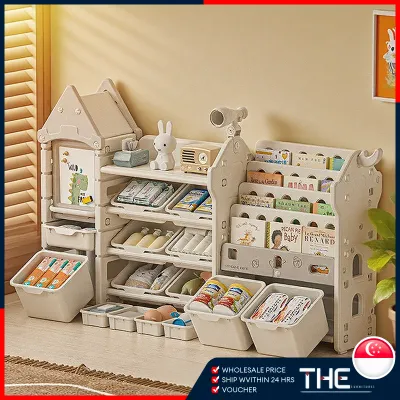
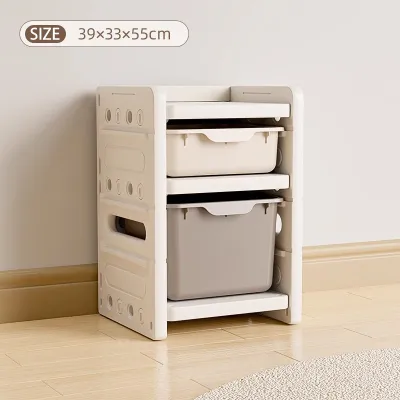
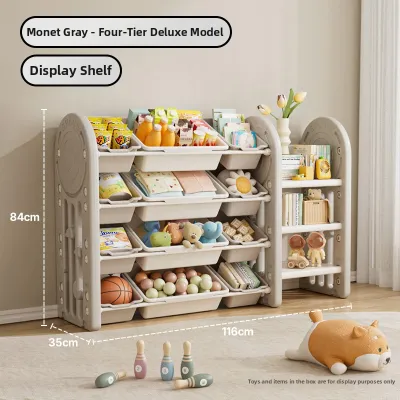
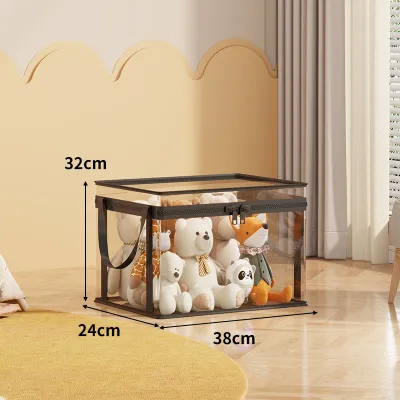
![[SG LOCAL STOCKS] Multi-purpose Kids Cartoon Toys Storage Box Foldable Collapsible for Clothes Book Toys Able to Sit](https://img.lazcdn.com/g/p/1e355a9a54eaa5586bd2bf80e46e4d16.jpg_400x400q80.jpg_.webp)
Prices are valid at publication and may change. Please refer to the product page for the latest price.
Critical Safety Features for Crawling Baby Toy Storage
Evaluating nursery furniture requires looking beyond the product label to examine its physical construction and material safety. Crawling babies lack the coordination and balance of older children, making them highly susceptible to falls, bumps, and accidental impacts. Understanding the core safety features of infant-safe storage will help you make informed decisions before bringing any new furniture into your home.
Tipping Hazards and the Pull-Up Phase
When babies master crawling, they almost immediately begin “cruising”—using furniture to pull themselves into a standing position. A lightweight shelf, a chest of drawers, or an unstable bookcase can easily tip forward under a baby’s weight. The physics of a tip-over accident are straightforward: when a baby pulls on the upper edge of a shelf or stands on a lower ledge, their body weight shifts the furniture’s center of gravity forward.
To prevent catastrophic tipping accidents, any freestanding furniture in the nursery must be secured with an anti-tip anchoring kit. Do not assume that a low-profile shelf is naturally safe from tipping; even a short unit can cause serious injury if it falls onto a crawling infant. Look for storage units that come with manufacturer-approved wall anchors, or purchase heavy-duty aftermarket furniture straps designed specifically for childproofing.
Sharp Edges and Corner Protection
As infants learn to navigate their surroundings on hands and knees, their movements are often sudden and unpredictable. Falls are a natural part of physical development, which makes sharp furniture corners a major hazard. A baby losing their balance can easily bump their head or face against the sharp edge of a toy organizer.
When shopping for storage units, prioritize designs with rounded corners, smooth chamfered edges, or soft-molded borders. If you already own a wooden shelf with sharp 90-degree corners, apply high-quality, non-toxic foam or silicone corner guards. Ensure these guards are attached with heavy-duty adhesive that a teething baby cannot easily pull off and swallow.
Toxic Materials and Chemical Off-Gassing
Crawling babies explore their world sensory-first, which frequently involves chewing on furniture surfaces, especially when teething. Consequently, the chemical composition of your toy storage is just as important as its structural integrity. Cheap particleboard or medium-density fibreboard (MDF) furniture often contains urea-formaldehyde binders, which can off-gas volatile organic compounds (VOCs) into the nursery air.
Always verify that your nursery storage is constructed from solid wood or low-emission materials certified by recognized bodies, such as Greenguard Gold. Ensure all paints, varnishes, and sealants are labeled non-toxic, lead-free, and phthalate-free. If you are using plastic storage bins, verify that they are made from food-grade, BPA-free plastics that will not leach harmful chemicals if chewed on by an inquisitive baby.
Pinch Points and Heavy Lids
Traditional toy boxes with heavy, unassisted wooden lids pose a severe risk to crawling infants. If a baby attempts to reach inside a chest and the lid falls, it can trap their fingers, hands, or even cause neck and head injuries. The closing mechanism of any lidded storage unit must be carefully evaluated.
Safe toy chests must feature certified slow-close safety hinges or torsion lid supports. These specialized hinges are designed to hold the lid open at any angle, preventing it from dropping suddenly under its own weight. The lid should require active downward pressure to close, moving at a slow, controlled pace. If a toy chest does not have this hardware, the lid should be removed entirely until the child is older.
Choking and Suffocation Risks
Storage accessories can sometimes present hidden choking or suffocation hazards. Bins featuring thin plastic liners can tear easily, posing a suffocation risk if a baby places the plastic over their face. Similarly, storage baskets with loose drawstrings, long decorative ropes, or dangling tassels can lead to accidental entanglement.
Inspect all storage bins for small, detachable parts such as decorative buttons, metal rivets, or plastic feet that could break off. If a baby can pull a small component off with their fingers or teeth, it is a choking hazard. Choose minimalist designs with integrated, securely stitched handles and no small embellishments.
Top Safe Toy Storage Options for Your Nursery
Selecting the right storage is about matching the physical capabilities of your crawling baby with furniture designed to mitigate common nursery risks. The following options offer a balance of accessibility, structural stability, and physical safety.

Low-Profile Open Shelving Units
Low-profile open shelving units are widely considered the gold standard for early childhood nurseries. Typically standing under 30 inches (75 cm) tall, these units keep books and toys within a crawling baby’s natural line of sight and reach. This open-concept design allows babies to see their toys clearly, which encourages independent choice and cognitive engagement without forcing them to climb or stretch.
From a structural standpoint, low-profile shelves generally feature a wide, deep base that naturally lowers the center of gravity, making them inherently more stable than tall bookcases. However, even with a low center of gravity, these units must still be anchored to the wall. Crawling babies will inevitably try to use the shelves as steps as they transition to standing, making secure wall attachment essential.
One limitation of open shelving is that it requires regular decluttering and curation. Overfilling shelves with too many items can lead to toys spilling onto the floor, creating a tripping hazard for both you and your baby. Implementing a toy rotation system—where only a few select toys are displayed on the open shelves while the rest are stored out of sight—keeps the nursery organized, visually calm, and physically safe.
Soft Fabric Storage Bins and Baskets
Soft fabric bins and baskets are an excellent, low-risk alternative to rigid plastic or heavy wooden storage boxes. Made from materials like cotton rope, felt, or heavy canvas, these containers are lightweight and collapsible. If a crawling baby pulls a fabric bin down from a low shelf, the bin will simply collapse or land softly, eliminating the risk of bruising or head injuries.
When selecting fabric bins, look for options with reinforced, double-stitched handles that can withstand constant pulling and dragging. Avoid bins that rely on thin, rigid wire frames hidden inside the fabric lining; over time, these metal wires can bend, puncture the fabric, and expose sharp metal points that could injure your child. Instead, opt for self-supporting woven cotton rope baskets or thick felt bins that maintain their shape naturally.
In humid climates, such as Singapore’s tropical environment, material breathability is a key consideration. Natural fibers like cotton allow air circulation, reducing the risk of moisture retention and mold growth inside the bins. Regularly wash fabric containers according to the manufacturer’s care instructions, and ensure they are completely dry before returning them to the nursery floor.
Toy Chests with Safety Hinges
While open shelving and soft bins are ideal for daily play, a traditional toy chest can be useful for storing bulkier items, such as large plush toys, activity mats, or baby gyms, that would otherwise clutter the nursery floor. However, a toy chest is only safe for a nursery with a crawling baby if it meets strict mechanical safety standards.
First and foremost, the chest must feature certified slow-close safety hinges. These hinges use a counter-balancing mechanism that prevents the lid from slamming shut, protecting delicate hands and fingers from painful pinches. Additionally, the chest design should include ventilation cutouts or a generous gap between the lid and the front panel. This ensures that if a curious baby manages to climb inside the chest, there is a continuous supply of fresh air.
If you have a vintage or heirloom toy chest that lacks these modern safety features, do not place it in an active nursery. Keep it locked securely, use it in a room inaccessible to the baby, or remove the lid entirely. For crawling infants, a toy chest should primarily serve as a parent-managed storage unit, with the lid kept closed and latched during unsupervised playtime.
How to Anchor and Baby-Proof Your Storage Furniture
Proper installation and ongoing maintenance are just as important as choosing the right furniture. Even the safest storage unit can become a hazard if it is not secured correctly or if routine safety checks are neglected.
Wall Anchoring Techniques
Securing furniture to the wall is the single most effective way to prevent tip-over accidents. When installing wall anchors, do not rely on simple drywall anchors, as they can easily pull out under the sudden force of a falling shelf. Instead, locate the wooden wall studs behind your drywall using a stud finder, and screw the furniture straps or metal L-brackets directly into the studs.
In Singapore, many residential homes, such as HDB flats and condominiums, feature solid concrete or brick walls rather than drywall. For concrete walls, you must use a hammer drill with a masonry drill bit to create pilot holes, insert high-quality nylon wall plugs (anchors), and then secure the heavy-duty metal brackets or furniture straps with matching screws. Ensure the straps are pulled taut so there is minimal forward movement if the furniture is pulled.
Strategic Weight Distribution
How you arrange items within your storage units directly impacts their stability. Always place the heaviest items—such as wooden blocks, heavy board books, and developmental activity centers—on the bottom shelves or in the lowest bins. This lowers the overall center of gravity of the furniture, making it significantly harder to tip forward.
Reserve the upper shelves for lightweight items like plush toys, soft fabric books, or empty fabric bins. Never place heavy, tempting items on top of a shelf where a baby might see them and attempt to climb up to reach them. Keep the top surface of low shelving units completely clear of heavy decor, monitors, or picture frames.
Routine Safety Checks
Baby-proofing is not a one-time task; it requires continuous monitoring as your baby grows and gains strength. Establish a monthly routine to inspect all nursery storage furniture. Use this quick checklist to maintain a safe environment:
- Check Wall Anchors: Tug firmly on anchored furniture to ensure the straps, brackets, and wall plugs remain tightly secured and have not loosened over time.
- Inspect Woodwork: Run your hands along wooden shelves to check for any splinters, cracking laminate, or peeling paint that could injure a crawling baby.
- Tighten Hardware: Use a screwdriver to tighten any loose screws, drawer pulls, or hinge mechanisms on toy chests and shelves.
- Examine Fabric Bins: Inspect fabric baskets for fraying seams, loose threads, or failing handles that could present a choking or entanglement risk.
- Verify Hinge Function: Open and close toy chest lids to ensure the slow-close safety hinges are still operating correctly and holding the lid's weight.
Hazard Removal
When unboxing new storage furniture or bins, immediately remove and discard all packaging materials before placing the items in the nursery. Plastic wrapping, protective foam corners, and silica gel desiccant packets are highly dangerous to crawling babies. Ensure no electrical cords, window blind cords, or baby monitor cables run behind or near the storage units, as these can easily become strangulation hazards if a baby reaches behind the furniture.
Quick Comparison of Nursery Storage Types
To help you decide which storage solutions best fit your nursery layout and lifestyle, the table below summarizes the key safety profiles, accessibility levels, and ideal use cases for each option.
| Storage Type | Safety Level for Crawlers | Accessibility | Best Use Case |
|---|---|---|---|
| Low-Profile Open Shelving | High (Requires mandatory wall anchoring to prevent tipping) | Excellent (Toys are at eye level, encouraging independent play) | Daily toy rotation, display of books, and wooden developmental toys |
| Soft Fabric Bins | Excellent (Lightweight, collapsible, and free of hard edges) | High (Easy for babies to pull down and explore safely) | Storing soft toys, rattles, building blocks, and lightweight items |
| Safety-Hinge Toy Chests | Moderate (Requires certified slow-close hinges and ventilation) | Low (Best operated by parents to prevent finger pinches) | Bulk storage of large toys, extra bedding, and seasonal nursery items |
Regardless of the storage type you choose, remember that any freestanding furniture unit in the nursery must be securely anchored to the wall to eliminate tipping hazards as your baby learns to stand.
Frequently Asked Questions (FAQ)
At what age can a baby safely use a traditional toy chest?
While a high-quality toy chest equipped with certified slow-close safety hinges is safe to keep in the nursery, independent use by a child should generally wait until they reach toddlerhood, typically around two to three years of age. At this stage, children have developed the gross motor skills, coordination, and spatial awareness required to safely open, hold, and close a heavy lid without risking injury.
For crawling babies (six to twelve months), a toy chest should be treated as a parent-managed storage unit. Keep the chest closed during playtime, and use it to store bulky items that you retrieve for your baby. This prevents the baby from using the chest to pull themselves up, which could lead to falls or trapped fingers if they attempt to open the lid independently.
Are plastic storage bins safe for crawling babies?
Yes, plastic storage bins can be safe for crawling babies, provided they meet specific safety criteria. Always choose bins made from high-quality, food-grade, BPA-free plastics that are free from PVC and phthalates, as crawling babies often chew on bin edges. Ensure the bins have smooth, rounded corners and are structurally sturdy.
Avoid cheap, brittle plastic bins that can crack or shatter if stepped on or dropped; cracked plastic creates razor-sharp shards and small plastic fragments that pose severe cutting and choking hazards. Additionally, opt for bins with integrated cutout handles rather than snap-on plastic lids, which can easily pinch small fingers and present a choking hazard if the locking clips break off. If the manufacturer’s instructions indicate the plastic is prone to cracking or is not rated for infant use, replace it with a fabric alternative immediately.
Community discussion
Share your experience or ask a question. Comments are reviewed before publication.