
The safest and most reliable choices for parents in Singapore are reputable brands specializing in push walkers—also known as walk-behind walkers—rather than traditional sit-in models. Brands like VTech, Hape, Fisher-Price, and Skip Hop are widely regarded as reliable choices due to their sturdy construction, stability features, and adjustable wheel resistance.
Pediatric experts in Singapore and globally strongly recommend push walkers over sit-in models. Push walkers encourage natural motor development and carry significantly lower safety risks, making them the preferred choice for supporting your baby’s first steps. Selecting the right brand involves evaluating specific design features that ensure stability and control in your home environment.
Understanding Baby Walker Safety: Sit-In vs. Push Walkers
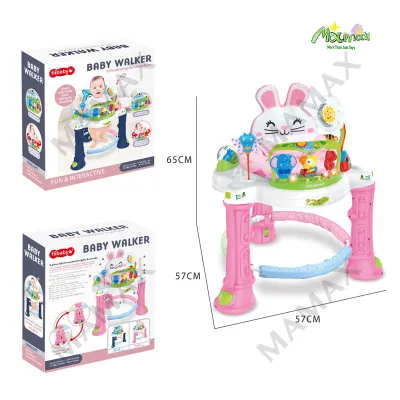
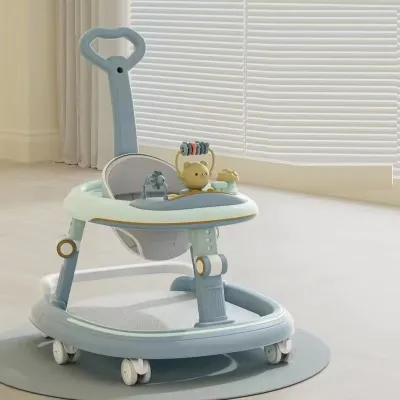
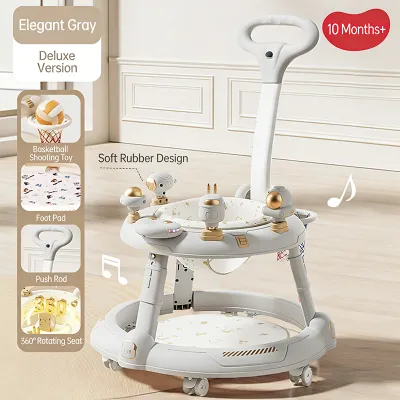
A traditional sit-in walker suspends a baby in a fabric seat surrounded by a wheeled frame. This design allows infants to move rapidly across the floor before their leg muscles, coordination, and balance are naturally developed. Because babies can reach high speeds in these devices, they are highly prone to accidents that caregivers cannot prevent in time.
Products mentioned in this guide
Prices are valid at publication and may change. Please refer to the product page for the latest price.
The safety hazards associated with sit-in walkers are well-documented. These include tipping over door thresholds, falling down split-level steps, and gaining access to dangerous heights. In a sit-in walker, a baby can easily reach kitchen counters, hot liquids, electrical cords, or household chemicals that would otherwise be out of reach.
Beyond immediate physical dangers, sit-in walkers can actively delay natural motor development. They encourage babies to walk on their tiptoes, which can cause tightness in the calf muscles and heel cords. Furthermore, because the seat supports the baby’s weight, it deprives them of the opportunity to strengthen their core and thigh muscles through natural pulling up and balancing.
Push walkers, or walk-behind walkers, serve as a much safer and developmentally appropriate alternative. With a push walker, your baby must actively pull themselves up to a stand, grip a handlebar, and push the toy forward. This action engages the core, legs, and feet in a natural walking posture, allowing them to practice weight-bearing and balance at their own pace.
Regardless of the type of walking aid you choose, active adult supervision is always mandatory. No toy or walker can replace the watchful eye of a caregiver, and babies should never be left unattended while using these products.
How to Evaluate Baby Walker Brands for Safety and Reliability
When shopping for a walking aid in Singapore, it is essential to look beyond bright colors and electronic toys. Parents should evaluate the fundamental engineering of the walker to ensure it meets high safety and reliability standards.

Base Stability and Anti-Tip Design The base of the walker must be wider than the top handle frame and sufficiently weighted. A heavy, wide base lowers the center of gravity, preventing the walker from tipping backward or sideways when a baby pulls themselves up using the handlebar.
Wheel Speed Control and Resistance For early walkers, wheels that spin too freely can cause the walker to shoot forward, leading to face-forward falls. Look for brands that offer adjustable wheel friction, tension dials, or rubberized traction strips that slow down the wheels and provide steady resistance.
Non-Toxic Material Certifications Babies frequently put their mouths on toy handles and panels. Ensure the brand uses food-grade plastics, BPA-free components, and non-toxic, water-based paints or finishes. This is especially crucial for wooden models that may be subjected to teething.
Structural Durability The walker must withstand repeated impacts, drops, and the weight of a child leaning heavily on it. Check that joints are secure, screws are deeply recessed, and the plastic or wood does not flex under pressure.
Clear Age, Weight, and Developmental Limits Reputable brands clearly state these parameters on their packaging. A brand’s reliability is reflected in its transparency regarding safety testing and clear guidelines on when a baby is physically ready to use the product. Always verify these specifications against your child’s current development.
Trusted Baby Walker Brands Available in Singapore
These selected brands are widely available in Singapore through major department stores, specialized baby boutiques, and official online brand stores. They have established strong reputations for safety, structural integrity, and thoughtful design.
When choosing among them, select a model based on your specific home layout, flooring type, and your child’s current physical development.
VTech
VTech is highly popular in Singapore for its interactive sit-to-stand push walkers. These models feature a detachable activity panel packed with sensory toys, music, and educational buttons, allowing babies to play on the floor before they are ready to stand.
From a safety perspective, the structural build of VTech walkers is robust, typically featuring a broad plastic wheelbase. However, because the front panel is loaded with electronic components, parents must verify that the panel is securely locked into the frame before the baby attempts to push it.
Additionally, because these plastic walkers are relatively lightweight compared to wooden alternatives, caregivers should check the base weight. Ensure the baby does not attempt to pull themselves up from the side of the walker, which can cause it to slide or tip if the wheels are not locked or placed against a supportive surface like a wall.
Hape
For parents who prefer natural, sustainable materials, Hape offers exceptional wooden push walkers. Known for their eco-friendly craftsmanship, Hape models are constructed from durable wood and finished with non-toxic, water-based paints that are safe for teething infants.
The primary safety advantage of a wooden walker like Hape’s is its natural weight. The heavy wooden base provides excellent stability, making it much harder to tip over when a baby pulls up to a standing position.
Many Hape models feature rubber-rimmed wheels. These rubber strips serve a dual purpose: they protect polished wooden or vinyl floors in Singapore homes from scratches and provide a natural, built-in resistance that prevents the walker from rolling away too quickly on smooth tiled surfaces. Parents should regularly inspect the wooden edges to ensure they remain smooth and free of splinters after long-term use.
Fisher-Price
Fisher-Price is a household name that offers highly durable, versatile push-to-stand walkers, many of which feature convertible designs. These products can transition from a sitting toy to a push walker, and sometimes even to a ride-on toy for older toddlers.
When evaluating a convertible Fisher-Price walker, the locking mechanism is the most critical safety point. Parents must carefully read the manufacturer’s instructions to ensure that all joints, latches, and folding parts are completely locked into the “walker” mode before letting the baby use it.
Fisher-Price designs typically feature a very wide, low-profile wheelbase that provides excellent lateral stability. The molded plastic surfaces are incredibly easy to wipe down and sanitize, which is highly practical for busy Singaporean households.
Skip Hop
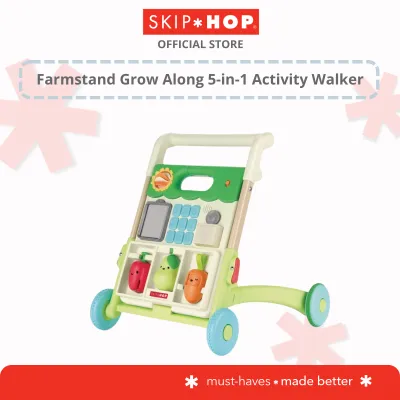
Skip Hop is recognized for blending modern, minimalist aesthetics with highly functional safety adjustments. Their activity centers and push walkers are designed to fit seamlessly into contemporary Singapore apartments while prioritizing child development.
A standout safety feature on many Skip Hop walking toys is the adjustable wheel speed or resistance control. This allows parents to increase wheel friction for early walkers who need a slower, more stable support, and then loosen the resistance as the child gains confidence and leg strength.
When transitioning a Skip Hop product between its various modes (such as from a stationary activity center to a push walker), caregivers must carefully supervise the baby to ensure they adapt safely to the sudden mobility.
Essential Safety Features to Verify Before Purchase
Before purchasing any walker, parents should perform a hands-on or detailed digital inspection of the product’s safety features. Use this practical checklist to verify suitability:
- Wide and Heavy Base: Ensure the bottom of the walker is significantly wider than the top handle bar. A lower center of gravity reduces the risk of tipping.
- Speed Adjustability: Look for a physical switch, dial, or rubber traction bands on the rear wheels. Verify if the wheels can be locked completely or tightened to slow down the rolling speed.
- Ergonomic Handle Position: The handle should be at a height where the baby can hold it with a slight bend in the elbow while standing upright. If the handle is too low, it forces the baby to hunch forward; if it is too high, it compromises their balance.
- No Choking Hazards: Inspect the activity panel and frame for small, detachable parts, loose beads, or poorly secured battery compartments. All battery covers must be secured with screws.
- Smooth Edges and Recessed Hardware: Run your hands along the plastic seams or wooden edges. There should be no sharp corners, rough plastic flashing, or exposed metal screws that could scratch your baby's skin.
- International Safety Standards: Verify that the packaging or product documentation indicates compliance with recognized safety standards, such as EN 71 (European Standard for Toy Safety) or ASTM F963 (Standard Consumer Safety Specification for Toy Safety).
Safe Usage Guidelines and Environment Setup
Even the safest push walker requires a properly prepared environment to prevent accidents. Singapore homes, whether spacious landed properties or compact HDB flats, must be thoroughly baby-proofed before introducing a walking aid.
- Clear the Pathways: Remove loose rugs, floor mats, electrical cords, and clutter from the walking zone. A baby pushing a walker cannot easily steer around obstacles, and a rug edge can catch the wheels, causing a sudden forward fall.
- Block Off Hazard Areas: Install sturdy, certified safety gates at the top and bottom of all staircases, split-level steps, and balcony entrances. Keep doors to kitchens, bathrooms, and service yards firmly closed or gated to prevent access to wet floors and household chemicals.
- Manage Reachable Heights: A push walker elevates your baby and gives them extra reach. Re-evaluate your home’s vertical safety: ensure hot liquids, heavy mugs, sharp objects, and table runners are pushed far back from the edges of dining tables and kitchen counters.
- Active Adult Supervision: Never leave your baby unattended with a walker, even for a brief moment. Stay within arm's reach so you can intervene immediately if the walker tips or if your baby loses their grip.
- Recognize When to Transition: Monitor your baby's development closely. Once your child can stand independently and take several steps without holding onto the walker, or when they exceed the manufacturer's maximum height or weight limits, it is time to retire the walker. Transition them to independent walking to allow their natural balance and gait to mature fully.
Frequently Asked Questions (FAQ)
Are traditional sit-in baby walkers banned in Singapore?
Traditional sit-in baby walkers are not legally banned from sale in Singapore, but they are strongly discouraged by local pediatricians, the Health Promotion Board, and global healthcare organizations. Because sit-in walkers allow babies to move at speeds up to one meter per second, they lead to a high frequency of serious injuries, such as head trauma from tipping over or falling down steps. Additionally, they do not aid natural walking development. Parents are highly encouraged to choose push walkers, which are safer and support natural muscle and balance progression.
At what age should my baby start using a push walker?
A baby’s readiness for a push walker is determined by physical milestones rather than a strict chronological age. Most babies are ready to try a push walker when they can pull themselves up to a standing position using furniture and can stand stably while holding on with both hands. This milestone typically occurs between 9 and 12 months of age. Always check the manufacturer’s specific minimum age and weight guidelines, and ensure your baby is supervised at all times during use.
Can a baby walker delay my child's walking development?
Yes, traditional sit-in walkers can actively delay walking development. They place the baby in an unnatural seated position, bypassing the crucial muscle-building stages of crawling and pulling up. They also encourage walking on tiptoes, which can cause calf muscle tightness. In contrast, push walkers do not delay development when used in moderation. Because they require the baby to bear their own weight, balance independently, and step forward naturally, they support the development of the core and leg muscles needed for independent walking.
Community discussion
Share your experience or ask a question. Comments are reviewed before publication.