
When shopping for baby essentials in Singapore, safety is understandably the top priority for parents. In the search for the safest bathing options, many parents look specifically for “HSA-certified” baby foldable bathtubs. However, it is important to clarify a common misconception: the Health Sciences Authority (HSA) of Singapore does not certify, register, or approve general consumer baby products like foldable bathtubs. The HSA’s regulatory mandate is strictly focused on health products, which include pharmaceuticals, medical devices, cosmetics, and health supplements.
Because baby bathtubs are classified as general consumer goods rather than medical devices, they do not fall under the purview of the HSA. Instead, their safety is governed by other regulatory frameworks and international standards. Understanding how these products are regulated, what safety marks to look for, and how to evaluate a tub’s design will help you choose a safe, reliable, and convenient foldable bathtub for your baby.
Clarifying Safety Standards for Baby Bathtubs in Singapore
While the HSA does not oversee baby bathtubs, consumer product safety in Singapore is actively monitored by the Consumer Product Safety Office (CPSO), which is safeguarded by Enterprise Singapore. The CPSO ensures that general consumer goods sold in the local market meet basic safety requirements and do not pose hazards to users. While the CPSO does not issue individual safety certificates for every bathtub model, they enforce safety guidelines and have the authority to recall products that are found to be unsafe or non-compliant with general safety expectations.
Products mentioned in this guide
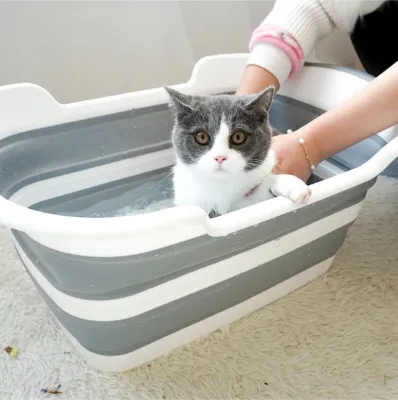
Prices are valid at publication and may change. Please refer to the product page for the latest price.
To ensure a foldable baby bathtub is safe, parents should look for compliance with recognized international safety standards rather than searching for local health authority registrations. The most common and rigorous standard for these products is the European standard EN 17072, which specifically outlines safety requirements and test methods for children’s bath tubs, bath stands, and non-standalone bathing aids. Another highly regarded standard is the American ASTM F2674, which covers safety specifications for infant bath tubs. When a brand publicly states compliance with these standards, it indicates that the product has undergone testing for structural stability, load-bearing capacity, and the absence of sharp edges or entrapment hazards.
Material safety is another critical factor that parents must verify independently. Foldable bathtubs are made of a combination of rigid plastics and flexible materials that allow them to collapse. It is vital to ensure that these materials are non-toxic and free from harmful chemicals. Look for clear labels indicating that the product is free from Bisphenol A (BPA), phthalates, lead, and heavy metals. Since these claims are made by the manufacturers, you should verify them by checking the product packaging, reading the official user manual, or visiting the manufacturer’s official website to review their material safety data sheets or third-party testing reports.
Essential Safety and Design Features to Check Before Buying
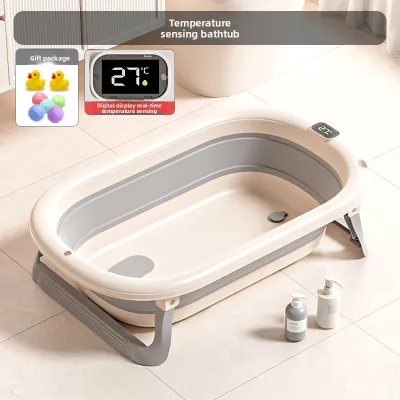
Evaluating the structural integrity of a foldable baby bathtub is essential before making a purchase. Because these tubs rely on mechanical joints and folding legs to collapse for easy storage, they must be exceptionally robust when fully expanded. Look for a tub with secure folding mechanisms and reliable locking hinges. When the tub is open, the legs should lock firmly into place with a distinct click, ensuring they cannot accidentally fold or collapse under the weight of the water and your baby. The legs should also have a wide, stable stance to prevent the tub from tipping over if your baby moves or splashes.

The base of the bathtub must be designed to prevent slipping. Look for models that feature non-slip rubber pads or feet on the bottom of the legs to keep the tub firmly anchored to wet bathroom tiles. Additionally, the interior bottom of the tub should have a textured, non-slip surface or a rubberized coating to prevent your baby from sliding around during the bath. This is particularly important as babies grow more active and begin to sit up on their own.
Material quality directly impacts both safety and durability. The flexible folding sections of the tub are typically made of thermoplastic elastomers (TPE) or silicone, while the rigid frame is constructed from polypropylene (PP) plastic. High-quality TPE and PP are durable, resistant to tearing, and capable of withstanding repeated folding and unfolding without weakening. Inspect the joints of the tub to ensure the flexible material is seamlessly bonded to the rigid plastic, as any gaps or weak bonds can lead to leaks or structural failure over time.
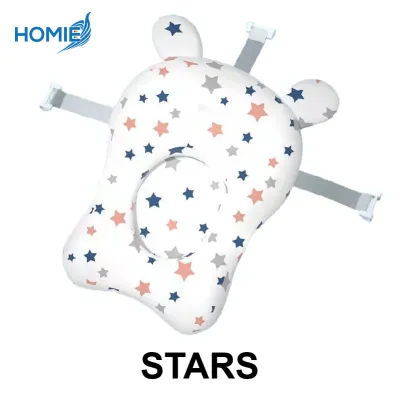
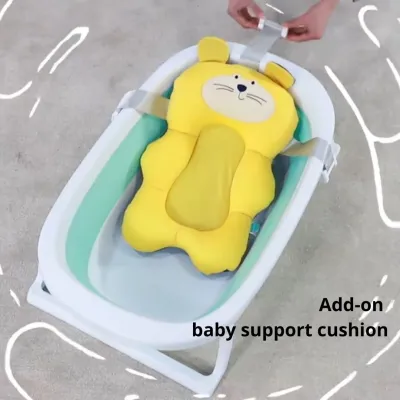
Ergonomics and drainage are also key design features that simplify the bathing process and enhance safety. For newborns and young infants who cannot support their own heads, the tub should be compatible with secure infant support accessories, such as bath slings, hammocks, or ergonomic foam inserts. The drainage plug should be located at the bottom of the tub, allowing you to empty the water easily without having to lift and tilt a heavy, water-filled basin. Some drainage plugs feature heat-sensitive technology that changes color when the water is too hot, providing a helpful visual cue, though this should always be cross-checked with a thermometer.
Where to Find Reliable Baby Bathtubs in Singapore
To ensure you are purchasing a genuine, safe, and high-quality foldable baby bathtub, it is highly recommended to buy from reputable retail channels in Singapore. Established physical maternity stores, official brand websites, and verified official flagship stores on major e-commerce platforms are the safest options. Purchasing through these authorized channels guarantees that you are getting an authentic product that complies with international safety standards, and it also ensures you have access to reliable customer support, return policies, and product warranties.
In contrast, parents should exercise extreme caution and avoid purchasing unbranded or unusually cheap foldable bathtubs from unauthorized third-party sellers on online marketplaces. While these products may look identical to name-brand options in photos, they are often manufactured using substandard materials that may leach harmful chemicals like BPA or phthalates when exposed to warm water. Furthermore, these low-cost alternatives often lack rigorous quality control, meaning they may have weak hinges, unstable legs, or poorly designed drainage plugs that can fail during use, posing a direct safety risk to your baby.
When shopping, look for well-established maternal and infant brands that are transparent about their manufacturing processes and safety testing. Reputable brands will openly share their compliance with international safety standards on their packaging and websites. If you are unsure about a product’s safety credentials, do not hesitate to contact the manufacturer or authorized distributor to ask for verification of their material safety reports. Investing in a trusted brand from an authorized retailer provides peace of mind that the product has been thoroughly vetted for safety and durability.
Daily Maintenance and Safe Bathing Practices
Proper maintenance of your foldable baby bathtub is essential to keep it hygienic and prolong its lifespan. Because these tubs feature flexible folding joints made of TPE or silicone, water can easily become trapped in the crevices, creating an ideal environment for mold and mildew to grow. To prevent this, rinse the tub thoroughly with clean water after every use to remove soap residue, baby oil, and skin flakes. Wipe down the flexible joints with a soft, dry cloth, and leave the tub fully unfolded in a well-ventilated area to air-dry completely before folding and storing it away.
Before every bath, perform a quick pre-bath safety check on the tub. Inspect the folding legs, locking hinges, and structural joints for any signs of wear, cracking, or loosening. Ensure the drainage plug is tightly sealed to prevent leaks. Always test the water temperature with a reliable bath thermometer before placing your baby in the tub. The ideal temperature for baby bath water is between 37°C and 38°C, which is close to body temperature. Always mix the water thoroughly to eliminate any hot spots before testing.
The most critical safety rule of baby bathing is continuous, undivided adult supervision. No safety feature, bath sling, or ergonomic insert can replace the active presence of a caregiver. Never leave your baby unattended in the bathtub, even for a single second, and regardless of how shallow the water is. Drowning can occur silently and quickly in as little as a few centimeters of water. Always keep your baby within arm’s reach and maintain constant visual and physical contact throughout the entire bathing process. If you must leave the bathroom for any reason, wrap your baby in a towel and take them with you.
Frequently Asked Questions (FAQ)
Are foldable bathtubs suitable for newborns?
Yes, foldable bathtubs can be suitable for newborns, but they must be used with appropriate support accessories. Because newborns lack the muscle strength to support their head and neck, they cannot sit upright in a standard tub and can easily slip under the water. To use a foldable tub safely with a newborn, you must pair it with a compatible bath sling, hammock, or ergonomic newborn insert that keeps their head and upper body securely elevated above the water level. Always check the manufacturer’s guidelines to ensure that any accessory you use is officially compatible with your specific bathtub model and matches your baby’s weight and age range.
How can I prevent mold in the folding joints?
To prevent mold and mildew from developing in the flexible folding joints of your bathtub, always allow the tub to dry completely in an unfolded position in a well-ventilated space after each use. Clean the joints regularly using a mild, baby-safe detergent and a soft-bristled brush to gently scrub away any trapped soap scum or moisture. Avoid using harsh chemical cleaners, bleach, or abrasive scrubbing pads, as these can degrade the silicone or TPE material, leading to leaks, cracking, and structural weakness over time. Ensuring the tub is completely dry before folding it for storage is the most effective way to keep it hygienic.
Community discussion
Share your experience or ask a question. Comments are reviewed before publication.