
Quick Answer: Is Rototo Bebe the Right Comfort Fit for You?
When selecting a nursing pillow, “comfort” is a highly personalized metric. The ideal fit depends on your unique body shape, your baby’s physical development, and your preferred feeding positions. The rototo bebe nursing pillow has gained attention for its distinct ergonomic structure, but how it compares to traditional options depends entirely on your specific physical needs.
While the rototo bebe offers targeted contouring designed to support a baby’s posture and potentially ease feeding angles, traditional C-shaped pillows often excel in portability and classic positioning. There is no single “best” option for every parent, as your physical comfort during feeds is determined by how well the pillow’s height and firmness align with your torso.
Before comparing these designs, you must prioritize infant safety. Nursing pillows are strictly designed to support supervised feeding sessions. In alignment with safe sleep guidelines, never use any nursing pillow or lounger for infant sleep, napping, lounging, or unsupervised resting. If your baby falls asleep on a nursing pillow, immediately transfer them to a firm, flat sleep surface such as a crib or bassinet. If you experience persistent feeding discomfort or have concerns about your baby’s positioning, consult a certified lactation consultant or pediatrician.
Products mentioned in this guide
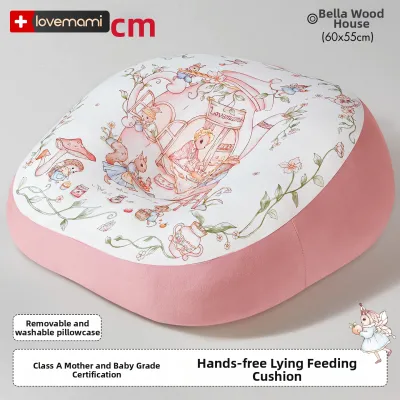
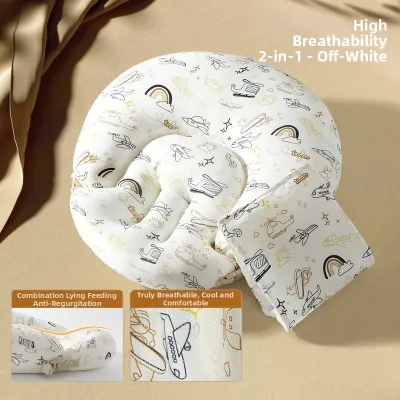
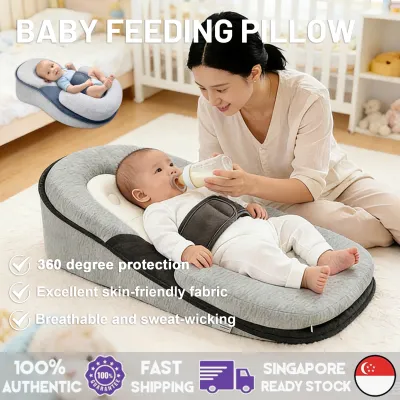
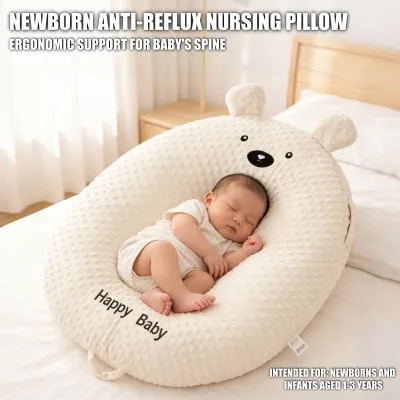
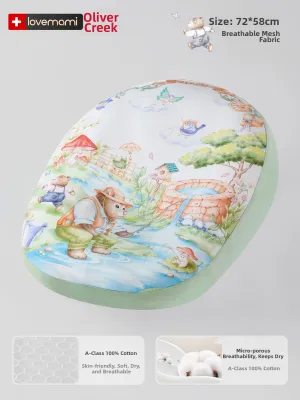
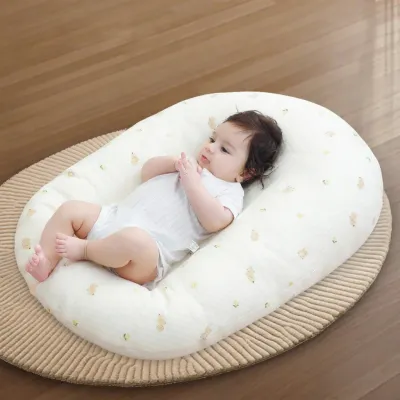
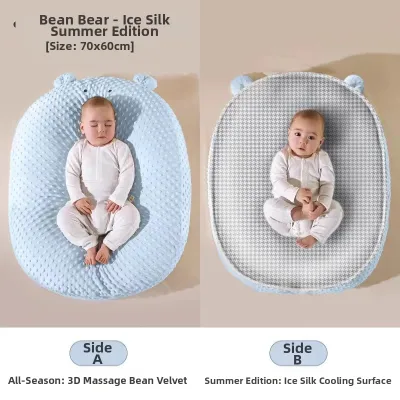
Prices are valid at publication and may change. Please refer to the product page for the latest price.
Core Comfort Features: Rototo Bebe vs. Traditional C-Shaped Pillows
The structural blueprint of a nursing pillow directly influences how much physical strain you experience during feeding sessions. Traditional C-shaped pillows are designed to slide around your waist, creating a semi-circular platform directly in front of your abdomen. While this classic shape is highly versatile, it often leaves a gap between the pillow and your torso, which can cause the pillow to shift forward as your baby moves.

In contrast, contoured options like the rototo bebe utilize a more structured, ergonomic curve. This design is engineered to wrap snugly around your waist, minimizing the gap between your body and the support platform. By keeping the baby positioned close to your torso, a contoured pillow helps prevent you from leaning forward, which is a primary cause of lower back and shoulder strain.
To evaluate which design will offer better relief, consider the height and thickness profile of the pillow. A pillow that is too flat forces you to hunch over to bring your baby to breast or bottle level, leading to rapid neck and shoulder fatigue. Conversely, a pillow that is too tall can push your baby too high, straining your arms as you try to maintain a natural feeding angle. You should check the official manufacturer specifications for the rototo bebe to verify its exact height and compare it to your torso length.
The snugness of the fit around your waist also plays a vital role in cumulative fatigue. When a pillow slides or shifts during a 30-minute feeding session, your arms, wrists, and shoulders must work overtime to stabilize both the pillow and your baby. A secure fit allows you to rest your forearms comfortably, transferring the baby’s weight entirely to the pillow and freeing up your hands.
Adjustability is another critical factor in achieving a personalized fit. Some nursing pillows feature built-in closure mechanisms, such as adjustable straps, buckles, ties, or elastic bands, while others rely solely on the tension of the foam or fabric. You should verify the closure mechanism of the rototo bebe on its official product page to ensure it can accommodate your waist size comfortably. If a pillow lacks adjustability, it may feel too tight on a larger frame or too loose on a petite frame, compromising its ergonomic benefits.
Fill and Firmness: Preventing Baby from Sinking During Feeds
Beyond the external shape, the internal filling of a nursing pillow determines its long-term comfort and safety. Firmness is not merely a matter of personal preference; it is a structural necessity. If a nursing pillow is too soft, your baby’s weight will cause them to sink into the material, rolling their body inward or downward. This sinking forces you to hunch forward to maintain the feeding connection, defeating the ergonomic purpose of the pillow.
Different manufacturers utilize various filling materials, each offering distinct support characteristics. Polyester fiberfill is a common choice for traditional C-shaped pillows, providing a plush, cloud-like feel. However, fiberfill tends to compress over time, creating uneven hollow spots that require regular fluffing to maintain support.
Memory foam and high-density polyurethane foam offer exceptional firmness and shape retention. These materials create a flat, stable platform that does not sag under weight, ensuring your baby remains at a consistent height throughout the feed. The trade-off is that solid foam can feel rigid and may retain body heat, which can become uncomfortable during longer feeding sessions.
Microbead fillings represent another alternative, offering a highly conforming surface that molds to your baby’s body shape. While comfortable, microbeads can shift easily under pressure, requiring you to manually redistribute the fill to prevent your baby from sinking into a dip.
To determine the suitability of the rototo bebe’s support, you should check its official material tags or product descriptions to identify its specific fill type and density. If you are shopping in-store or already have access to the pillow, perform a simple physical test: press your palm firmly into the center of the pillow and release. A supportive nursing pillow should rebound quickly, resisting deep compression and maintaining a stable, level surface rather than leaving a lasting indentation.
Ergonomic Support for Different Nursing Positions
Your preferred feeding style should heavily influence your choice of nursing pillow. The three most common holds—the cradle hold, the cross-cradle hold, and the football (or clutch) hold—each place different demands on a pillow’s shape, width, and surface area.
For the traditional cradle hold, where the baby’s head rests in the crook of your elbow, you need a wide, supportive front platform. The pillow must bridge the gap between your lap and your arm, allowing your elbow to rest naturally without dropping. If the pillow is too narrow, your arm will hover, leading to shoulder fatigue within minutes.
The cross-cradle hold requires even more precise height alignment. Because you use the opposite hand to support your baby’s head and guide their latch, the pillow must fully support the baby’s body weight at breast level. A contoured design like the rototo bebe can be highly beneficial here, as its sloped or elevated edges can help position the baby’s head at a natural, slightly upright angle.
If you prefer the football hold—commonly recommended for mothers recovering from a C-section or those with a fast milk flow—the pillow’s side support is critical. In this position, the baby is tucked under your arm, resting along your side. Traditional C-shaped pillows often taper off at the sides, offering minimal support under your armpit. A U-shaped pillow or a rectangular design with consistent lateral thickness provides a much more stable foundation for this hold.
Mothers recovering from a C-section must also consider how the pillow interacts with their incision site. A pillow that presses tightly against the abdomen can cause significant discomfort. In these scenarios, look for pillows with soft, adjustable waistbands or designs that allow you to position the bulk of the support slightly away from your body while still maintaining arm support.
Before purchasing, take the time to match your most frequently used feeding positions with the physical strengths of the rototo bebe versus alternative shapes. If you primarily use the football hold, a wider, flat-backed pillow may serve you better. If you prefer the cradle or cross-cradle holds, the contoured front platform of the rototo bebe may offer superior ergonomic alignment.
Decision Framework: Which Nursing Pillow Matches Your Needs?
To help you navigate these options, use the following structured decision framework to match a nursing pillow to your physical needs, lifestyle, and feeding preferences.
- Choose the Rototo Bebe if:
- You prefer a highly structured, contoured design that wraps snugly around your torso to minimize gaps.
- You require targeted ergonomic support to relieve lower back, neck, and shoulder pressure during long feeds.
- You primarily utilize the traditional cradle or cross-cradle feeding holds.
- You want a dedicated feeding platform that helps maintain your baby's head at a slightly elevated angle.
- Choose a traditional C-shaped pillow if:
- You need a lightweight, highly flexible option that is easy to pack and carry for travel or outings.
- You prefer a simple design without straps, buckles, or ties that you can quickly slide on and off.
- You want a multi-purpose pillow that can also serve as a comfortable pregnancy support wedge behind your back.
- Choose a firm, flat-backed or U-shaped pillow if:
- You are tandem feeding twins and require a wide, symmetrical platform on both sides of your body.
- You frequently use the football (clutch) hold and need substantial, consistent support under your arms.
- You prefer a pillow that remains perfectly flat against the back of your nursing chair or wall.
- Verify first if:
- You have specific postpartum recovery needs, such as C-section incision care, or chronic physical limitations like severe scoliosis or herniated discs. Always consult your healthcare provider or a certified lactation consultant to determine the safest and most comfortable positioning for your body.
- You have a very petite or very tall frame. Check the pillow's exact height and waist circumference specifications on the manufacturer's official page before buying to ensure it will align properly with your torso.
Maintaining Comfort: Breathable Covers and Hygiene in Tropical Climates
In a tropical climate like Singapore’s, where high temperatures and humidity are constant, the material of your nursing pillow cover is just as important as its internal structure. A cover fabric that traps heat can quickly cause both you and your baby to sweat, leading to discomfort, skin chafing, and general restlessness during feeds.
When reviewing cover materials, prioritize highly breathable, moisture-wicking fabrics. Natural fibers such as cotton and bamboo rayon are excellent choices for tropical environments, as they allow air to circulate freely and feel cool against sensitive skin. Synthetic polyester blends can be highly durable and stain-resistant, but they may retain more heat, making them less ideal for non-air-conditioned spaces.
Hygiene is another critical component of long-term comfort. Nursing pillows are inevitably subjected to milk spills, spit-up, drool, and sweat. Without regular cleaning, these organic materials can seep into the pillow core, creating an environment ripe for bacterial growth and unpleasant odors.
Ensure that any pillow you select features a fully removable, machine-washable cover. You should check the rototo bebe’s specific care instructions to verify how easily the cover can be unzipped and washed, and whether the inner core itself is washable or if it requires spot cleaning. Keeping a spare cover on hand is highly recommended so you can continue using the pillow while one cover is in the wash.
Finally, because Singapore’s high humidity levels can accelerate the growth of mold and mildew, you must inspect your nursing pillow regularly. Check the seams, zipper tracks, and the inner filling for any signs of dampness, musty smells, or dark spots. If the inner core becomes deeply wet or begins to lose its structural integrity and flatten permanently, it will no longer provide the firm, supportive surface required for ergonomic feeding. In such cases, replace the pillow or the inner insert immediately to safeguard your baby’s health and maintain your own physical comfort.
Community discussion
Share your experience or ask a question. Comments are reviewed before publication.