
When your baby reaches the one-year mark, their mobility transitions from tentative crawling to active upright exploration. Choosing a baby walker for a 1-year-old in Singapore requires shifting focus from traditional seated devices to active, developmental push toys. The ideal choice supports your child’s natural balance, fits the typical hard-floor layouts of Singaporean homes, and complies with rigorous international safety standards.
To find the best option, parents must evaluate structural stability, wheel resistance, and developmental suitability. Rather than focusing on a single magic model, understanding the design philosophies of leading global toy manufacturers and specialized wooden toy brands helps you make an informed decision. This guide breaks down the essential safety, design, and practical factors to consider when selecting a push walker for your child.
Sit-In vs. Push Walkers: Choosing the Safe Option for 1-Year-Olds
Before exploring specific brands, you must understand the fundamental design differences between traditional sit-in walkers and modern push-along walkers. Sit-in walkers feature a suspended fabric seat surrounded by a wheeled plastic frame, allowing a non-walking infant to move rapidly by pushing off the floor with their toes. Push walkers, conversely, are active wooden or plastic carts with handles that a standing baby pushes from behind, using their own core strength and balance to guide the toy.
Products mentioned in this guide
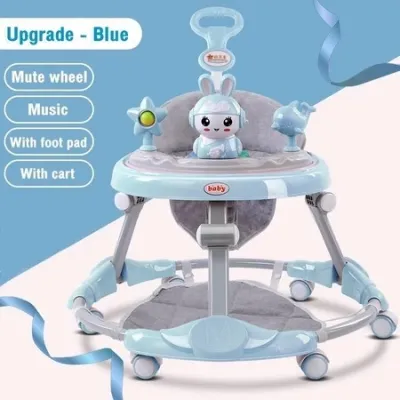
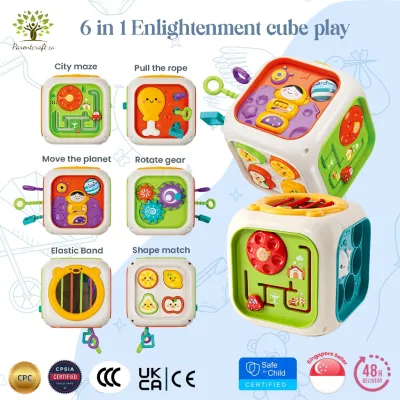
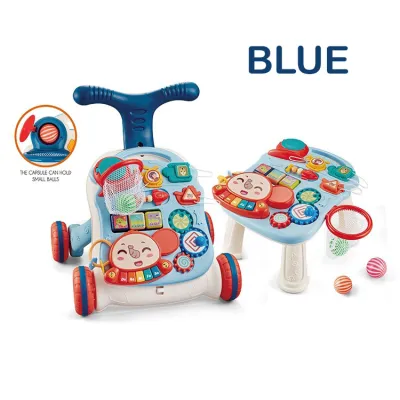
Prices are valid at publication and may change. Please refer to the product page for the latest price.
Pediatric associations and safety authorities worldwide, including local health experts in Singapore, strongly advise against the use of traditional sit-in walkers. These devices pose significant safety risks, particularly tipping over when encountering thresholds or rolling down steps. Furthermore, sit-in walkers can delay natural motor development; they suspend the baby in an unnatural pelvic position, encourage toe-walking, and bypass the critical core and hip strengthening that occurs when a child balances independently.
For a one-year-old who is already pulling up to stand and cruising along furniture, a push walker is the developmentally appropriate choice. These toys act as stable support systems that complement, rather than bypass, the child’s natural walking progression. They require active engagement of the abdominal, back, and leg muscles, helping your child learn to distribute their weight evenly across their feet.
Because of these established safety and developmental guidelines, this evaluation focuses exclusively on push walker brands. These active toys support your child’s journey toward independent steps while keeping their feet flat on the ground and their posture naturally aligned.
Core Safety and Design Features to Evaluate in Any Brand
When evaluating any baby walker brand, look past colorful play panels and focus on structural engineering. A high-quality push walker must withstand sudden shifts in weight and provide controlled movement on smooth home surfaces. Prioritize the following mechanical and material features during your search.

Speed Control and Wheel Resistance
Standard wheels can roll forward too quickly on smooth flooring, causing a learning walker to lose their footing and fall forward. Look for brands that incorporate adjustable wheel friction, tension screws, or rubber traction strips. These features allow you to tighten the wheels to provide resistance, ensuring the walker moves at a slow, manageable pace that matches your baby’s current physical capabilities.
Base Width and Weight Distribution
A safe push walker requires a wide, low-slung wheelbase that resists tipping when a baby pulls themselves up using the handlebar. The center of gravity should sit low and forward, ideally between the front and rear axles. If the handlebar is positioned too far behind the rear wheels, the front of the walker can lift off the ground when the baby leans heavily on the handle.
Material Safety and Build Quality
At one year of age, babies continue to explore objects with their mouths, making material non-toxicity a critical priority. Ensure the brand uses BPA-free, food-grade plastics or sustainably sourced, splinter-free solid wood. Painted components must utilize certified lead-free, water-based finishes, and the overall construction must feature rounded corners, smooth edges, and recessed hardware to prevent finger pinching.
Ergonomic Handle Design
The handlebar should support your baby’s posture, keeping their spine relatively straight rather than hunched forward. Look for models with adjustable height settings or handles angled slightly forward over the base. A non-slip, textured grip helps sweaty little hands maintain a firm hold as they navigate across the room.
Finding Reliable Baby Walker Brands in Singapore
Navigating the Singapore market involves verifying that international brands meet local safety expectations and are backed by reliable distribution. Look for product packaging or retail listings that explicitly state compliance with global safety standards, such as EN71 (Europe) or ASTM F963 (United States). In Singapore, consumer goods must also align with safety guidelines monitored by Enterprise Singapore.
Buying through authorized local distributors or reputable nursery retailers ensures you receive authentic products rather than counterfeit goods. Authorized purchases also secure access to local warranties, clear return policies, and official replacement parts, such as replacement rubber traction strips for wheels.
Established Global Toy and Nursery Brands
Global toy brands are widely recognized for their standardized production processes and extensive safety testing. These companies design push walkers that double as electronic activity centers, featuring buttons, lights, and music to engage sitting babies before they transition to walking. Their products are widely available in major Singapore department stores, physical baby boutiques, and official online marketplaces.
- Key Strengths: These brands conduct rigorous mechanical testing to ensure plastic components resist impact without cracking. Their designs often feature lightweight, molded plastic frames that are easy to wipe clean and highly portable.
- What to Verify: Always check the manufacturer's age and weight ratings on the packaging. Some models are designed for younger infants to use while sitting, and their wheel resistance may not be stiff enough for an active one-year-old who needs substantial physical support.
Specialized Developmental and Activity Brands
Parents seeking a minimalist or Montessori-aligned approach often turn to specialized developmental brands that focus on wooden toys. These brands prioritize open-ended play, sensory exploration, and natural materials, often designing walkers that resemble classic wooden wagons, block carts, or lawnmowers.
- Key Strengths: Wooden push walkers are naturally heavier than their plastic counterparts, providing excellent physical stability and a lower center of gravity. They often feature generous cargo areas where babies can transport their favorite toys, which adds functional weight and keeps the walker grounded.
- What to Verify: Examine the wheel design closely before purchasing. On smooth Singaporean flooring, such as polished ceramic tiles or marble, bare wooden wheels can slip or scratch the surface; look for wooden models equipped with rubber rim bands to ensure quiet, scuff-free traction.
Essential Safety Rules and Home Preparation for Walker Use
Even the most stable, highly rated push walker requires careful home preparation and active parental oversight to prevent accidents. Treat the walker as an active developmental toy rather than a passive containment device. Implementing these safety protocols ensures a secure environment for your child’s first steps.
- Maintain Active Supervision: Never leave a child unattended with a push walker. An adult should remain within arm's reach to assist if the baby loses their balance, turns too quickly, or encounters an obstacle.
- Clear the Walking Path: Prepare your floors by removing loose area rugs, securing electrical cords, and clearing away small toys that could jam the wheels. Ensure transitions between different flooring types, such as moving from ceramic tiles to play mats, are smooth and free of sudden lips.
- Block Off Hazard Zones: Install sturdy safety gates at the top and bottom of all staircases. Keep doors to bathrooms, balconies, and kitchens firmly shut, as these areas often feature wet floors, drainage grates, or raised thresholds that can cause a walker to tip.
- Anchor Heavy Furniture: A baby standing behind a push walker can reach significantly higher than a crawling infant. Ensure all heavy bookshelves, television consoles, chest of drawers, and floor lamps are securely anchored to the wall to prevent tip-over accidents if your child uses them for support.
- Monitor for Outgrown Signs: Pay attention to how your child interacts with the toy as their strength increases. If your baby begins climbing onto the activity tray, attempting to ride inside the cargo cart, or using the walker to ram violently into walls and glass doors, it is time to retire the walker and transition to independent walking.
Frequently Asked Questions (FAQ)
At what exact developmental milestone should a baby start using a push walker?
Age is a secondary factor when introducing a push walker; physical readiness is the true metric. Your baby is ready for a push walker when they can consistently pull themselves up to a standing position using furniture and cruise sideways while holding on. They must possess sufficient trunk control to stand upright without slouching and show the desire to take forward steps when you support them by their hands. If a baby cannot yet stand independently or support their own weight, introducing a walker prematurely can strain their developing joints.
Can a push walker cause a 1-year-old to walk on their tiptoes?
While traditional sit-in walkers are notorious for causing toe-walking due to suspended seating, push walkers can also contribute to this habit if set up incorrectly. If the handlebar is positioned too high, or if the wheels roll forward too quickly without resistance, the baby will lean excessively forward, elevating their heels off the ground to keep up with the toy. To encourage flat-footed walking, adjust the handlebar to elbow height, tighten the wheel friction to match your baby’s pace, and ensure they practice walking barefoot to promote healthy sensory feedback from the soles of their feet.
Are second-hand or hand-me-down baby walkers safe to use?
Second-hand push walkers can be safe, provided you perform a meticulous safety inspection before use. Check the frame for hairline cracks in plastic or splinters and loose joints in wood. Test the wheels to ensure they turn smoothly, the friction adjustment mechanisms still function, and the rubber traction strips are not dry-rotted, cracked, or missing. Verify that all original screws and hardware are present and tightly secured, and cross-reference the model number online to confirm the product has not been subject to safety recalls or manufacturer notices.
Community discussion
Share your experience or ask a question. Comments are reviewed before publication.