
When shopping for baby bath products in Singapore, you might wonder if a popular option like QV Baby Wash is “HSA-approved.” The short answer is that the Health Sciences Authority (HSA) does not officially “approve” cosmetic products, including baby washes, shampoos, and lotions, before they are sold. Instead, the HSA operates a cosmetic product notification system. This means that while QV Baby Wash must be notified with the HSA before it can be legally marketed and sold in Singapore, this notification is not an endorsement of safety or efficacy by the government. Understanding this distinction is crucial for parents who want to make informed decisions about what goes onto their baby’s delicate skin.
In Singapore’s hot and humid climate, babies often require frequent baths to wash away sweat, dirt, and excess oil. This frequent bathing makes the choice of a gentle, safe baby wash incredibly important. Because infant skin is significantly thinner and more sensitive than adult skin, parents naturally look for regulatory reassurances. However, relying solely on the assumption that a product is “approved” can lead to a false sense of security. By understanding how the local regulatory framework works, you can take a more active and informed role in evaluating the products you bring into your home.
This guide will walk you through the realities of HSA regulations for baby cosmetics, how to independently verify the notification status of your baby wash, what to look for on ingredient labels, and how to safely introduce new bath products to your little one.
Products mentioned in this guide
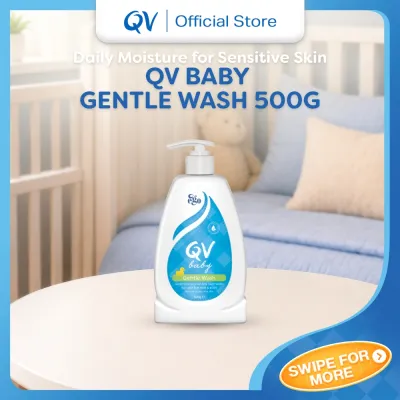
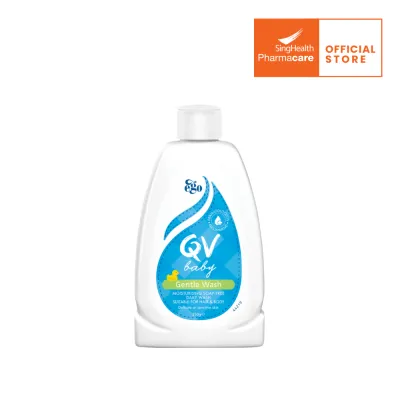
![[Bundle of 2] QV Baby Gentle Wash 500g x 2](https://img.lazcdn.com/g/p/c2fba2c76531e252b1c3751a55a51607.jpg_400x400q80.jpg_.webp)
![[Bundle of 3] QV Baby Gentle Wash 500g x 3](https://img.lazcdn.com/g/p/2cbd7ddaf7fd9b22191b7ff8ace9a414.jpg_400x400q80.jpg_.webp)
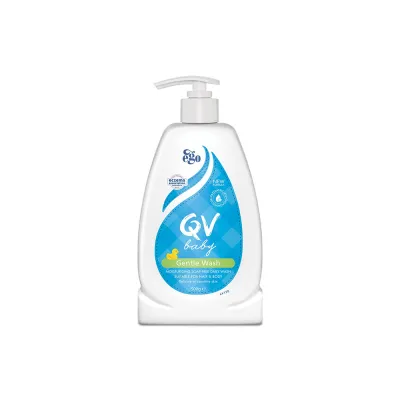
![EGO QV BABY Moisturising Cream / Gentle Wash 250g | 500g (Suitable for Dry Sensitive & Eczema prone baby skin) [Baebear.sg]](https://img.lazcdn.com/g/p/d1d9b4f7ffbbf41288c0f630fe02dea9.jpg_400x400q80.jpg_.webp)
![[Bundle of 2] QV Baby Gentle Wash 500G - By Medic Drugstore](https://img.lazcdn.com/g/p/ecb0b966b42a46bad37121b633eaaa10.jpg_400x400q80.jpg_.webp)
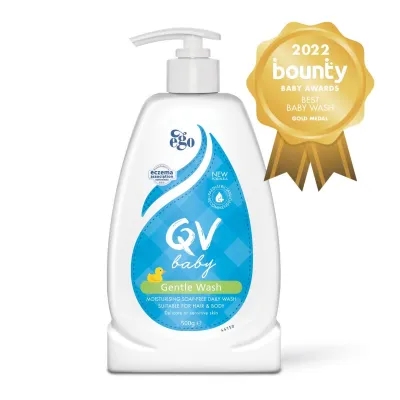
Prices are valid at publication and may change. Please refer to the product page for the latest price.
Understanding How HSA Regulates Baby Bath Products in Singapore
To navigate the baby care market safely, it is essential to understand the difference between pre-market approval and cosmetic product notification. The Health Sciences Authority (HSA) reserves pre-market approval for high-risk items such as prescription medicines, vaccines, and medical devices. These products must undergo rigorous clinical trial reviews, safety evaluations, and efficacy testing by government scientists before they can be prescribed or sold to the public.
In contrast, baby washes, lotions, and shampoos are classified as cosmetic products under the ASEAN Cosmetic Directive (ACD). Under this regional framework, cosmetic products do not undergo pre-market testing or approval by the HSA. Instead, the local importer, distributor, or manufacturer is legally required to submit a cosmetic product notification to the HSA before placing the product on the Singapore market. This notification is essentially a declaration by the company that the product complies with all safety guidelines and does not contain any prohibited substances.
Therefore, when a product like QV Baby Wash is successfully notified, it receives a notification number. This number indicates that the product is registered for sale and that the responsible company has declared its compliance with local laws. It does not mean that the HSA has chemically analyzed the formula in a government laboratory or certified it as completely risk-free for every infant. The legal responsibility for ensuring the product’s safety under normal conditions of use remains entirely with the manufacturer and the local distributor.
To protect consumers, the HSA relies heavily on a robust post-market surveillance system. This means the authority monitors the market, conducts random product audits, and investigates adverse event reports from healthcare professionals and the public. If a baby wash is found to contain undeclared harmful ingredients, heavy metals, or microbial contamination after it has gone on sale, the HSA will take swift action. This action can include ordering immediate product recalls, issuing public alerts, and prosecuting the responsible company.
How to Check the Regulatory Status of QV Baby Wash
If you want to verify whether the specific bottle of QV Baby Wash you purchased is legally registered for sale in Singapore, you can do so independently. The HSA maintains a public registry of all notified cosmetic products, allowing parents to verify the compliance status of their baby care items. This is a practical step to ensure you are not using parallel imports or counterfeit goods that have bypassed local regulatory checks.

To begin your search, visit the official Health Sciences Authority website and navigate to the “Consumer Product Search” or “Cosmetic Products Database” section. Once there, you can enter the brand name “QV” or the specific product name in the search field. The database will display a list of matching notified products, along with their respective notification numbers, the country of manufacture, and the name of the local responsible company.
When reviewing the search results, pay close attention to the local responsible company listed in the database. This company is the entity legally accountable for the product’s safety in Singapore. If you purchase your baby wash from an authorized local retailer, the importer listed on the database should match the distribution details on the product’s physical label. This alignment gives you peace of mind that the product has been imported through legitimate channels and stored under appropriate conditions.
If you search the database and cannot find a specific variant of the baby wash, it could be due to a few reasons. Sometimes, the product name is registered under a slightly different technical spelling, or the notification is held under the parent company’s name. However, it could also mean the product is a parallel import brought in from another country without a local notification, or it could be an unauthorized product. In such cases, the safest approach is to contact the manufacturer’s official local distributor or purchase the product from established, reputable pharmacies and supermarkets in Singapore.
Beyond Certification: Reading Baby Wash Labels for Safety
While regulatory notification ensures a product does not contain banned or restricted chemicals, it cannot guarantee that a product will not cause an individual skin reaction. Infant skin is highly permeable, meaning it absorbs substances more easily than adult skin, and its natural barrier is still developing. To truly evaluate the safety and suitability of a baby wash, parents must learn to look beyond marketing claims and read the ingredient list.
When examining the label of a baby wash, look out for common irritants and allergens that can disrupt a baby’s delicate skin barrier. Synthetic fragrances, often listed simply as “parfum” or “fragrance,” are among the leading causes of cosmetic contact dermatitis in infants. Even products labeled as “gentle” or “soothing” can contain masking fragrances that irritate sensitive skin. Additionally, harsh surfactants like Sodium Lauryl Sulfate (SLS) should generally be avoided in baby washes, as they can strip away the skin’s natural lipids and lead to severe dryness.
Many baby products prominently feature claims such as “dermatologically tested,” “hypoallergenic,” or “pediatrician recommended.” It is important to understand that these terms are not standardized or strictly defined by cosmetic regulations. A “dermatologically tested” claim simply means a dermatologist oversaw some form of testing on human subjects, but it does not disclose the test’s parameters, the number of participants, or the full results. Therefore, these claims should be viewed as helpful indicators rather than absolute guarantees of safety.
Finally, always perform a physical inspection of the product packaging before use. Check that the safety seal is completely intact and has not been tampered with. Locate the batch number and the expiry date, which are typically stamped on the bottom of the bottle or along the crimp of the tube. In Singapore’s warm, humid environment, storing baby products in damp bathrooms can accelerate the degradation of preservatives, making it even more critical to use products well within their shelf life and discard any that show changes in color, consistency, or smell.
Recognizing Skin Reactions and When to Seek Medical Help
Even when using a highly reputable, notified baby wash, there is always a small possibility that your baby’s skin may react to an ingredient. Because every infant’s skin microbiome and immune system are unique, what works perfectly for one baby might cause irritation for another. Recognizing the early signs of a skin reaction allows you to take prompt action and prevent further discomfort.
Common signs of contact dermatitis or an allergic reaction in infants include localized redness, dry or flaky patches, small raised bumps, or a sudden rash in the areas where the wash was applied. You may also notice your baby scratching or rubbing their skin, indicating itchiness and discomfort. These symptoms typically appear shortly after bath time or within a few hours of exposure to the product.
If you suspect your baby is having a reaction to their bath product, take immediate, low-risk steps to soothe their skin. Stop using the suspected baby wash immediately and revert to bathing your baby with lukewarm, plain water. Gently rinse the affected areas to ensure all product residue is completely removed, and pat the skin dry with a soft, clean towel without rubbing. Avoid applying any new lotions, scented creams, or home remedies to the irritated skin, as these can exacerbate the reaction.
While mild redness often resolves on its own once the offending product is discontinued, certain symptoms require professional medical evaluation. You should consult a pediatrician or a pediatric dermatologist if the rash spreads rapidly, if the skin becomes intensely red, swollen, or hot to the touch, or if you notice signs of infection such as oozing, blistering, or yellow crusting. Additionally, if your baby seems unusually irritable, is unable to sleep due to itching, or develops a fever, seek medical attention promptly rather than attempting to manage the condition at home.
Frequently Asked Questions (FAQ)
Does an HSA Notification Guarantee a Product Is Hypoallergenic?
No, an HSA notification does not guarantee that a product is hypoallergenic or free from causing allergic reactions. The notification process focuses on ensuring the product complies with safety standards, does not contain prohibited ingredients, and is marketed by a legally responsible local company. It does not assess individual biological sensitivities or guarantee that a specific baby will not experience an allergic reaction.
To minimize the risk of a widespread reaction, parents should perform a simple patch test before introducing any new baby wash. Apply a small, coin-sized amount of the product to a clean area of your baby’s skin, such as the inner arm or behind the ear, during their bath. Rinse it off as directed, and monitor the area for 24 to 48 hours for any signs of redness, swelling, or irritation. If the skin remains clear, the product is generally suitable to use on the rest of the body.
Is an HSA-Notified Adult Body Wash Safe for Babies?
No, an adult body wash is generally not suitable for babies, even if it is legally notified and perfectly safe for adult use. The structural and functional differences between adult and infant skin mean that products formulated for adults can be highly damaging to a baby’s delicate skin barrier.
Adult skin is thicker, less permeable, and has a fully developed acid mantle with a natural pH of around 5.5. Adult body washes are often formulated with stronger surfactants to remove heavier oils, higher concentrations of active ingredients, and synthetic fragrances. If used on an infant, these ingredients can easily penetrate the thin skin barrier, strip away essential moisture, disrupt the skin’s natural pH, and lead to severe dryness, irritation, or chemical sensitivity.
Community discussion
Share your experience or ask a question. Comments are reviewed before publication.