
Choosing a push walker is an exciting milestone as your baby transitions from crawling to those first tentative steps. To prevent accidents at home, the most critical safety features to look for in a push walker are a wide, stable wheelbase, adjustable wheel resistance, non-slip rubberized wheels, and a low center of gravity. These design elements work together to prevent the toy from tipping over or rolling away too quickly on smooth floors.
While traditional sit-in baby walkers are widely discouraged or even banned by pediatric associations worldwide due to high rates of injuries, push walkers (or walk-behind toys) are generally considered a safer alternative. Because push walkers require babies to actively support their own weight and balance, they promote natural motor development. However, they are not entirely risk-free. Common hazards include tipping backward when a child pulls up on the handlebar, rolling too rapidly on slick indoor surfaces, and minor finger-pinching from moving parts. Evaluating these physical features before purchasing is your first line of defense in creating a secure environment for your learning walker.
Structural Stability: Features That Prevent Tipping and Falls
A baby learning to walk does not yet possess refined balance or motor control. When using a push walker, they rely heavily on the toy for physical support, often leaning their entire body weight against the handlebar or pulling on it to stand up. If the walker lacks physical stability, these shifting forces can easily cause the toy to flip backward or slide sideways, leading to sudden falls.
Products mentioned in this guide
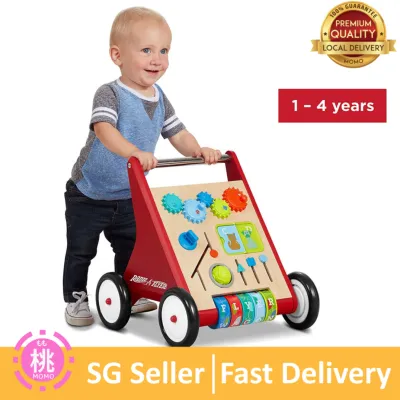
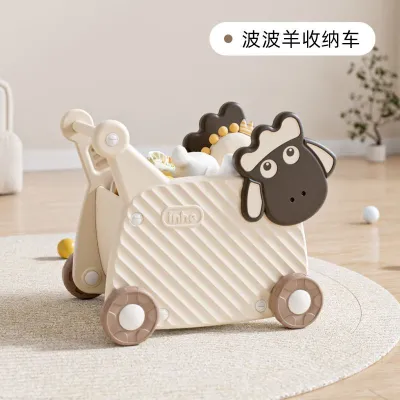
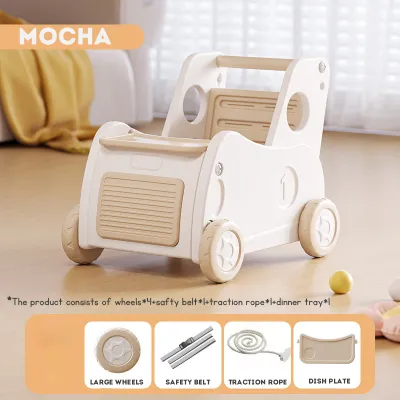
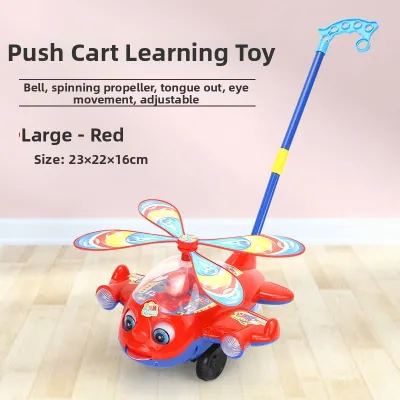
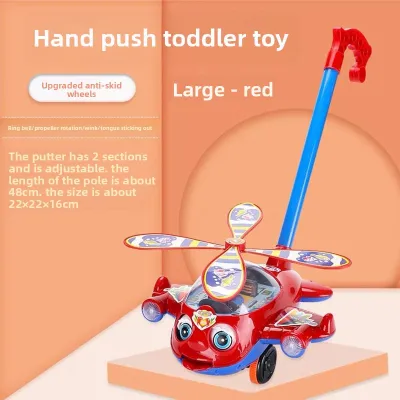
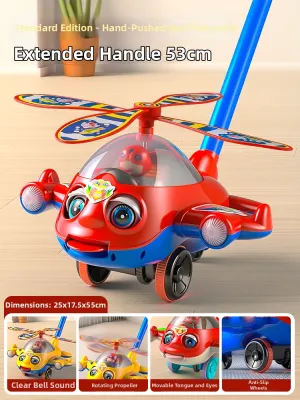
![[SG Seller] Premium Wooden Shopping Trolley Walker for Children Toddlers Infant](https://img.lazcdn.com/g/p/301ab06b974ac905d780349cbfc807d0.png_400x400q80.png_.webp)
Prices are valid at publication and may change. Please refer to the product page for the latest price.
To ensure the walker remains firmly grounded, you must look beyond aesthetic designs and carefully inspect the structural frame. Whether you are shopping in-store or browsing product specifications online, prioritizing heavy-duty construction and balanced proportions is essential. While models span broad price bands—typically ranging from S$30 for basic plastic models to over S$150 for premium wooden designs—safety features should always dictate your choice rather than price alone.
Wide Base and Proper Weight Distribution
The physical footprint of the push walker determines its resistance to tipping. Look for a model with a wide wheelbase where the distance between the wheels is noticeably wider than the upper frame or activity board. This design creates a broad support footprint that prevents the walker from tilting sideways when your baby leans off-center.
Weight distribution is equally critical to overall stability. The heaviest components of the toy, such as solid wooden frames, weighted bases, or heavy toy compartments, should be positioned as low to the ground as possible. A low center of gravity ensures that the downward force of your baby’s weight stabilizes the unit rather than causing it to pivot.
If you are testing a model in a retail store, you can perform a simple stability check. Place the walker on a flat surface, grasp the handlebar, and gently press down and pull back toward yourself. If the front wheels lift off the ground with minimal effort, the weight distribution is insufficient, and the walker may easily tip backward when your baby attempts to pull themselves up using the bar.
Anti-Tip Mechanisms and Wheel Locks
Advanced structural engineering can further mitigate tipping risks through dedicated safety mechanisms. Many high-quality push walkers feature rear anti-tip bars or extended rear axles that protrude backward past the handlebar. These physical stoppers act as a lever, blocking the walker from tilting past a safe angle if your baby pulls backward with excessive force.
Another valuable feature is a reliable wheel-locking system or parking brake. In the early stages of development, your baby may want to interact with the colorful activity board on the front of the walker while remaining stationary. Engaging the wheel locks prevents the walker from rolling out from under them while they play on the floor.
When evaluating these locks, check their durability and ease of engagement. The brakes should lock securely enough to withstand a baby pushing against the frame without slipping. Ensure the locking mechanisms are made of sturdy materials that will not wear down or accidentally disengage after repeated use.
Speed Control and Wheel Design for Safe Movement
Uncontrolled rolling is one of the most common causes of push walker accidents. When a baby pushes a toy that moves too quickly, their legs cannot keep pace, causing them to lose their footing and fall forward onto the toy or the floor. This hazard is particularly pronounced on smooth, hard flooring surfaces common in modern homes.

In Singapore, residential spaces frequently feature polished ceramic tiles, smooth vinyl, marble, or varnished hardwood floors. These materials offer very little natural friction, meaning a standard toy wheel can slide or roll forward with minimal resistance. Choosing a push walker designed to regulate speed is vital to keeping your baby in control of their movements.
Adjustable Speed Resistance
To accommodate your baby’s growing strength and coordination, look for a push walker equipped with adjustable wheel resistance. These models typically feature tension screws, dial mechanisms, or adjustable braking pads located directly on the wheel axles.
By tightening these mechanisms, you can increase the friction on the wheels, making the walker harder to push. This slow, controlled movement is ideal for beginners who are still finding their balance and need a steady anchor. As your baby’s walking skills, leg strength, and confidence improve, you can gradually loosen the tension to allow smoother, faster rolling.
Wheel Material and Grip
The material of the wheels directly impacts how safely the walker travels across slick indoor floors. Cheap, hard plastic wheels are highly prone to slipping sideways or spinning out of control on smooth tiles and laminate surfaces. They also tend to make significant noise and can scratch delicate wooden floors.
Instead, look for wheels wrapped in a thick band of textured rubber or high-density EVA foam. These materials provide excellent traction and grip, preventing the walker from sliding laterally when your baby turns. The added friction also helps naturally dampen the rolling speed, offering a safer, quieter experience on smooth indoor surfaces.
Handlebar Ergonomics
The placement and texture of the handlebar play an important role in your baby’s physical alignment. The handlebar should be sturdy, rigid, and covered in a non-slip material that allows small hands to maintain a secure grip even if their palms get sweaty.
An ideal handlebar is positioned at a height that allows your baby to stand upright with a slight bend in their elbows. If the handlebar is too low, your baby will hunch forward, shifting their center of gravity too far over the walker and increasing the risk of a forward fall. Conversely, a handlebar that is too high forces them to reach upward, reducing their leverage and control. Some premium models offer height-adjustable handlebars, which extend the usable lifespan of the toy as your child grows.
Material Safety and Physical Hazard Prevention
Beyond structural stability and movement control, the physical materials used to construct the push walker must be safe for close contact. Babies frequently explore their toys using their hands, mouths, and feet, making chemical purity and physical craftsmanship essential considerations before bringing a new toy into your home.
Non-Toxic Finishes
Because infants are prone to teething on whatever they can reach, you must ensure that all paints, varnishes, plastics, and metal parts are completely non-toxic. Check the product packaging, labels, and manufacturer specifications for explicit assurances that the materials are free from lead, phthalates, bisphenol A (BPA), and heavy metals.
Rather than relying solely on vague marketing claims like “baby-safe” or “natural,” look for verified international toy safety standards. Common certifications include the European Standard EN71, the American Society for Testing and Materials (ASTM F963) standards, or compliance with local consumer product safety regulations managed by Enterprise Singapore. These marks indicate that the product has undergone rigorous laboratory testing for chemical migration and physical safety.
Smooth Edges and Splinter-Free Surfaces
The physical finish of the walker must be thoroughly inspected for manufacturing defects. If you prefer a classic wooden push walker, inspect every surface to ensure the wood is perfectly sanded, smooth, and sealed with a non-toxic water-based lacquer. There should be no risk of splinters, rough grain, or peeling paint.
For plastic models, examine the seams where different molded parts join together. Low-quality manufacturing can leave sharp plastic burrs, rough edges, or flashing along the seams that can scratch a baby’s delicate skin. Run your hand along all edges, corners, and handles to verify they are perfectly rounded and smooth.
Choking and Pinch Hazards
Push walkers often double as multi-activity centers, featuring spinning gears, sliding beads, and detachable shape sorters. While these elements are excellent for sensory development, they can present physical hazards if not designed carefully.
Inspect the toy for small, easily detachable parts that could fit entirely inside a baby’s mouth, posing a choking risk. Ensure that all screws, pegs, and decorative elements are deeply recessed and securely tightened.
Additionally, examine any moving parts, hinges, or folding mechanisms. There should be no small gaps or scissor-like joints where a baby’s tiny fingers could get trapped or pinched when the walker is in motion or being folded for storage.
Verifying Safety Standards and Setting Usage Boundaries
Selecting a high-quality push walker with excellent safety features is only the first step. To truly prevent accidents, parents must actively verify product compliance and establish strict safety boundaries for how and where the walker is used within the home.
Checking Certifications and Recalls Before finalizing your purchase, confirm that the specific model meets recognized safety benchmarks. Look for clear certification labels on the packaging or verify the product’s safety credentials on the manufacturer’s official website. It is also highly recommended to search online recall databases to ensure the model has not been flagged for safety defects, structural failures, or chemical hazards.
Adhering to Manufacturer Limits Always consult the manufacturer’s user manual to verify the recommended age, weight, and developmental stage limits. These parameters are calculated based on the structural limits of the materials and the height of the handlebar. Exceeding the maximum weight limit can compromise the frame’s structural integrity, cause the anti-tip features to fail, or wear down the braking systems prematurely.
The Role of Active Supervision Even the most advanced safety features cannot replace the watchful eye of an adult. A push walker should only be used under direct, active caregiver supervision. Establish clear boundaries within your home to keep your baby safe:
- Restrict the walker to flat, single-level floors: Avoid areas with thresholds, transitions, or thick rugs that could cause the wheels to catch suddenly.
- Block off all staircases and steps: Use secure safety gates to isolate split-level transitions, which are particularly hazardous if a baby loses control of their speed.
- Clear the walking path: Remove loose rugs, electrical cords, and clutter that could catch the wheels and cause a sudden trip.
- Keep away from water hazards: Keep the baby far away from open bathrooms, laundry areas, balconies, and swimming pools.
- Inspect the toy regularly: Always stop using the walker immediately if you notice any loose screws, cracked plastic, or splintering wood, and consult the manufacturer for replacement parts or repair advice.
Frequently Asked Questions (FAQ)
At what developmental stage is it safe to introduce a push walker?
A baby is typically ready for a push walker when they can pull themselves up to a standing position independently and comfortably bear weight on their legs. They should show a natural desire to cruise along furniture. Introducing a push walker too early, before their leg muscles and core stability are sufficiently developed, can lead to frequent falls, muscle strain, or improper walking posture. If you are unsure about your baby’s physical readiness, consult your pediatrician for professional guidance.
Do push walkers with attached activity toys pose additional risks?
Multi-functional activity boards are highly engaging, but they can introduce safety risks if not properly balanced. The added toys can shift the walker’s center of gravity forward, making it more prone to tipping if a baby leans heavily on the front. Ensure all attached toys are securely fastened with no loose parts, do not obstruct your baby’s view of the floor ahead, and do not compromise the overall stability of the frame when the walker is pushed.
Community discussion
Share your experience or ask a question. Comments are reviewed before publication.