
The transition to solid foods is an exciting milestone in your baby’s development, but it often brings unexpected changes to their digestive system. One of the most common challenges parents face during this period is infant constipation. As your baby’s gut adapts to processing complex nutrients, bowel movements can become infrequent, firm, or difficult to pass. If you are looking for a gentle, natural way to ease their discomfort, prune puree is a widely recommended dietary option. However, introducing any new food to relieve physical symptoms requires a careful approach to ensure you do not inadvertently cause digestive upset.
To use prune puree safely, you must understand the correct serving sizes, how to prepare it hygienically, and how to monitor your baby’s unique response. While prunes are highly effective at softening stools, giving too much too quickly can lead to gas, bloating, or diarrhoea. This guide outlines practical, age-appropriate serving recommendations, safe preparation methods, and clear signs that indicate when it is time to seek professional medical advice.
Recognising Baby Constipation and When Prune Puree Helps
Before reaching for prune puree, it is essential to determine whether your baby is actually constipated or simply experiencing a normal shift in their bowel patterns. Infant bowel habits vary widely depending on their age, diet, and whether they are primarily breastfed or formula-fed. For instance, breastfed infants may naturally go several days or even a week without a bowel movement because breast milk is highly digestible and leaves very little waste. Formula-fed infants tend to have more frequent, firmer stools, but variations in timing are still common and do not automatically indicate a problem.
Products mentioned in this guide
![Gerber 1st Foods Prunes Puree Baby Food 80G - From 6 Months [Carton of 6]](https://img.lazcdn.com/g/p/a9c2d888c5e27a7939c4b3af2246bdcf.jpg_400x400q80.jpg_.webp)
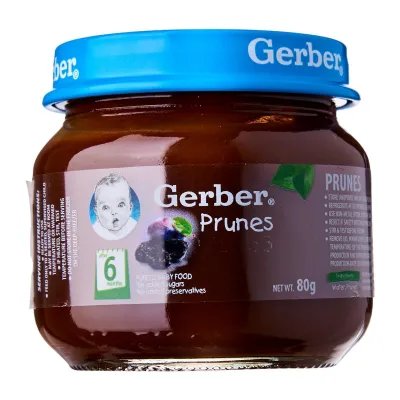


Prices are valid at publication and may change. Please refer to the product page for the latest price.
True constipation is defined by the consistency of the stool rather than the frequency of bowel movements. You should look for specific physical signs, such as hard, dry, pellet-like stools that are difficult for your baby to pass. Other indicators include visible straining accompanied by crying, irritability, a firm or slightly bloated abdomen, or small streaks of blood on the outside of the stool caused by tiny tears in the delicate anal skin. If your baby’s stools remain soft and pass easily, they are likely not constipated, even if several days have passed since their last dirty nappy.
When true constipation occurs, prune puree serves as an effective dietary intervention due to its unique nutritional profile. Prunes contain a high concentration of dietary fibre, both soluble and insoluble, which adds bulk to the stool and promotes regular muscle contractions in the intestines. Additionally, prunes are naturally rich in sorbitol, a type of sugar alcohol that the human body digests very slowly. Because sorbitol remains in the large intestine, it naturally draws water into the bowel through osmosis, softening the stool and making it much easier to pass.
Despite its benefits, prune puree is not suitable for every infant. It should only be introduced after your baby has officially started solid foods—typically around six months of age—and after you have secured approval from your paediatrician. Introducing complex fibres or sorbitol to an infant under six months whose digestive system is still highly immature can cause severe gastrointestinal distress and interfere with their intake of essential breast milk or formula.
Safe Serving Sizes and Feeding Frequency
When introducing prune puree to manage constipation, the core principle is to start with minimal amounts and increase the portion gradually. Because every baby’s digestive tract develops at a different rate, what works perfectly for one child might cause gas or loose stools in another. Prioritising gut tolerance over quick results ensures your baby finds relief without experiencing secondary abdominal discomfort.

Babies Just Starting Solids (Around 6 Months)
For babies who have recently transitioned to solid foods, their digestive systems are highly sensitive to new substances. When offering prune puree for the first time, start with an extremely small portion, such as a single teaspoon (approximately 5 millilitres) mixed into their usual meal or offered on its own. This tiny amount is sufficient to introduce the active fibres and sorbitol to their gut without overwhelming their system.
After this initial taste, limit the frequency to once a day or even every other day. This deliberate pause allows you to closely monitor your baby over the next 24 to 48 hours for any adverse reactions, such as excessive flatulence, tummy rumbling, or sudden watery stools. If your baby shows signs of discomfort or gas, suspend the prune puree and allow their stomach to settle before trying again or consulting your doctor.
Always read the manufacturer’s labels on commercial baby food packaging to verify the recommended age range and ingredient list. Commercial purees may contain additional fruits or thickening agents that could affect your baby’s response. When in doubt, consult a paediatrician to establish a starting portion tailored specifically to your baby’s current weight, developmental stage, and overall health status.
Older Babies and Toddlers
As babies grow older, typically between 8 and 12 months, their digestive tracts become more robust, and they can comfortably handle larger portions of high-fibre foods. If your older baby has tolerated small amounts of prune puree well, you can gradually increase the serving size to one or two tablespoons per meal. For toddlers over one year old, a serving of two to four tablespoons (about 30 to 60 millilitres) may be appropriate to help regulate their bowel movements.
If constipation persists, you can offer this adjusted portion once or twice a day. However, it is vital to ensure that prune puree does not dominate your baby’s plate or displace other essential nutrients. A balanced, varied diet remains the foundation of healthy infant development, and over-relying on a single food to regulate digestion can lead to nutritional imbalances or a preference for sweet flavours.
Crucially, dietary fibre requires adequate hydration to function correctly in the digestive tract. If you increase your baby’s fibre intake without providing enough fluids, the fibre can absorb existing moisture in the bowel, paradoxically worsening the constipation. Always pair prune puree with sufficient fluids, such as breast milk, formula, or small sips of boiled and cooled water for babies over six months. In Singapore’s warm, humid climate, keeping your baby well-hydrated is especially important to maintain healthy, soft stools.
Preparing and Serving Prune Puree Safely
Whether you choose to buy pre-packaged baby food or prepare it yourself at home, safety and hygiene must be your top priorities. Both commercial and homemade prune purees have distinct advantages, and understanding how to handle them properly protects your baby from foodborne illnesses and digestive irritation.
Commercial prune puree pouches and jars are highly convenient and undergo strict quality control and pasteurisation processes to ensure they are free from harmful bacteria. When purchasing commercial options, always check the packaging for safety seals, expiry dates, and manufacturer warnings. Read the ingredient list carefully to verify that the product contains only prunes and water, with no added sugars, artificial preservatives, or chemical thickeners that are unsuitable for young infants.
If you prefer to make prune puree at home, you have complete control over the quality of the ingredients. Start by sourcing high-quality, pitted dried prunes from a reputable retailer, ensuring they do not contain added preservatives like sulfur dioxide, which can trigger allergic reactions or digestive sensitivity in some infants. Thoroughly wash your hands, sterilise all preparation utensils, and steam or soak the prunes in hot, boiled water until they are soft and plump. Blend the softened prunes in a clean food processor, adding small amounts of the soaking water, breast milk, or formula to achieve a completely smooth, lump-free consistency.
Adjusting the texture of the puree is a vital step in preventing choking, especially for babies who are new to solid foods. The puree should be thin and runny for beginners, and can be made slightly thicker as your baby’s chewing and swallowing skills progress. To ensure food safety, store any leftover homemade prune puree in a sealed, airtight container in the refrigerator for no more than 24 to 48 hours. For longer storage, freeze the puree in clean, single-serving silicone trays and thaw individual portions thoroughly in the refrigerator before serving. Never add honey, white sugar, or alternative sweeteners to the puree; honey carries a strict risk of infant botulism for babies under 12 months, and added sugars are completely unnecessary for their developing palate.
Preventing Digestive Upset and Over-Reliance
While prune puree is an excellent temporary remedy for constipation, using it excessively can disrupt your baby’s delicate digestive balance. A baby’s gut microbiome is still developing, and sudden, large increases in high-fibre foods or sorbitol can lead to secondary gastrointestinal issues.
Overconsumption of prune puree typically manifests through clear signs of digestive distress. If you notice your baby experiencing abdominal bloating, excessive or painful gas, frequent stomach rumbling, or a sudden shift from constipation to watery, loose stools, you have likely given them too much. If these symptoms occur, reduce the portion size immediately or pause the use of prunes until their digestive system returns to normal.
Adhering to a “start low and go slow” approach is the most effective way to prevent these issues. This gradual introduction gives your baby’s gut bacteria sufficient time to adapt to the increased fibre load, minimizing the risk of gas and cramping. Remember that prune puree should serve as a helpful tool rather than a permanent crutch for bowel regulation.
To encourage long-term digestive health, focus on building a balanced diet that incorporates a variety of gentle, naturally laxative foods. Alongside prunes, you can introduce other pureed fruits such as pears, plums, and peaches, as well as fibre-rich vegetables and infant oats. Ensuring your baby receives a diverse range of nutrients and stays consistently hydrated throughout the day will naturally support their digestive transit, reducing the need to rely solely on prunes to prevent constipation.
When to Stop and Consult a Paediatrician
Although mild constipation can often be managed through simple dietary adjustments at home, there are clear safety boundaries where home remedies must be suspended in favour of professional medical evaluation. Knowing when to stop administering prune puree and seek expert care is critical to your baby’s safety and well-being.
You must stop giving your baby prune puree immediately if they develop severe diarrhoea, persistent vomiting, or any signs of dehydration. In infants, dehydration can escalate quickly and is a serious medical concern. Watch for indicators such as a dry mouth, crying with few or no tears, a sunken soft spot (fontanelle) on the head, extreme lethargy, or a significant decrease in the number of wet nappies.
There are several red flag symptoms associated with infant constipation that require urgent medical attention rather than dietary changes. If you observe blood in your baby’s stool, if they show signs of severe abdominal pain (such as screaming persistently or pulling their knees up to their chest in distress), if they develop a fever, or if they have not had a bowel movement for several days despite dietary adjustments, consult a doctor immediately. These symptoms can sometimes indicate an underlying medical condition or a physical blockage that requires targeted treatment.
In Singapore, parents can access excellent paediatric care through local polyclinics, private paediatric clinics, or hospital emergency departments. You should seek professional medical advice if your baby suffers from chronic, recurring constipation, if they exhibit poor weight gain or developmental delays, or if they are under six months of age. Babies under six months should never be treated with dietary interventions like prune puree without direct, professional medical supervision, as their nutritional and developmental needs require precise clinical oversight.
Frequently Asked Questions (FAQ)
Can I give prune juice instead of prune puree?
Prune puree is generally the preferred option for infants because it retains the natural, beneficial dietary fibre found in the whole fruit. This fibre is essential for adding bulk to the stool and supporting long-term digestive health, whereas much of this dietary fibre is lost during the juicing process. Additionally, fruit juices contain highly concentrated natural sugars and can easily displace essential breast milk or formula feeds. Paediatric guidelines typically recommend avoiding fruit juice for young infants, making smooth prune puree a much safer, more nutritionally balanced, and more effective choice for relieving constipation.
How long does it take for prune puree to relieve constipation?
The time it takes for prune puree to work can vary depending on your baby’s unique digestive rate, the severity of the constipation, and their overall hydration levels. In many cases, the combination of dietary fibre and natural sorbitol will begin to soften the stool and stimulate a bowel movement within 12 to 24 hours of consumption. However, if you do not see any improvement after 48 hours, or if your baby’s discomfort seems to be worsening, you should stop waiting and contact a healthcare professional or visit a paediatric clinic for a personalized assessment.
Community discussion
Share your experience or ask a question. Comments are reviewed before publication.