
Choosing between a pregnancy pillow and a belly support band depends entirely on when and where you experience physical discomfort. If your primary struggle is tossing and turning at night due to hip pressure or back strain, a pregnancy pillow is the ideal tool to support your resting body. Conversely, if you experience lower back fatigue, pelvic heaviness, or abdominal strain while walking, standing, or working during the day, a belly support band offers the active compression and weight distribution you need. Many expectant parents find that these two tools complement each other, but understanding their distinct functions helps you prioritize the right purchase for your daily routine.
Identifying Your Discomfort and Daily Routine
To determine which maternity support will bring the most relief, start by tracking your physical symptoms over a typical forty-eight-hour period. Note whether your discomfort peaks during periods of movement or when you are trying to settle down for sleep. Nighttime discomfort often manifests as a dull ache in the hips, a pulling sensation in the abdomen when turning over, or general restlessness that prevents deep sleep. These issues are typically caused by the physical strain of a growing belly pulling on the spine when lying on your side.
Daytime discomfort, on the other hand, is closely tied to gravity and movement. You might feel a heavy, downward pressure in your pelvis after walking short distances, or a sharp ache in your lower back after standing to prepare a meal. Your daily work routine plays a significant role here. If your job involves a sedentary desk setup, you might experience stiffness in your lower back that requires targeted lumbar support. If your role requires prolonged standing, walking, or commuting on public transport, your abdominal muscles and pelvic floor bear a continuous load that can lead to premature fatigue.
Products mentioned in this guide
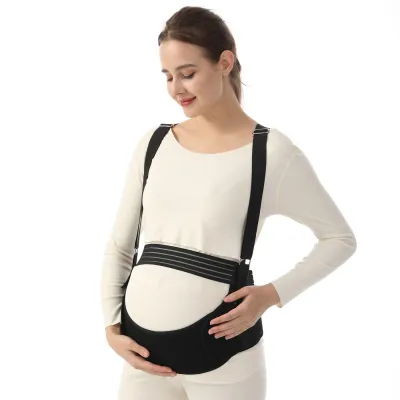
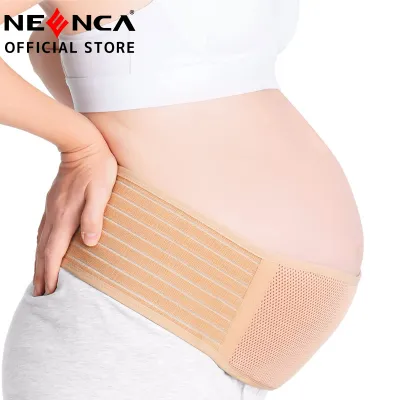
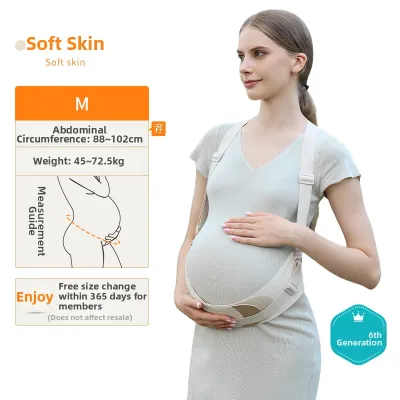

Prices are valid at publication and may change. Please refer to the product page for the latest price.
While physical support products can greatly improve your daily comfort, it is crucial to distinguish between normal pregnancy aches and symptoms that require immediate medical attention. Over-the-counter maternity supports are designed for comfort, not medical treatment. If you experience sharp, sudden, or severe abdominal pain, regular cramping, vaginal bleeding, or a sudden reduction in fetal movement, do not rely on a support band or pillow. These are red-flag symptoms that require immediate evaluation by your obstetrician or healthcare provider.
Pregnancy Pillows: Best for Sleep and Resting
As your pregnancy progresses, sleeping on your side becomes the recommended position to optimize blood flow. However, side sleeping without support can cause your upper leg to slide forward, twisting your pelvis and putting strain on your lower back. Pregnancy pillows are specifically engineered to address this misalignment by filling the gaps between your body and the mattress.

Different pillow shapes offer varying levels of support depending on your sleeping habits and bedroom setup. Full-body pillows, such as C-shaped or U-shaped designs, provide comprehensive support for your head, neck, back, and knees simultaneously. A C-shaped pillow cradles your back while tucking between your knees to keep your hips stacked, which is highly beneficial if you tend to stay in one position. U-shaped pillows allow you to turn from side to side during the night without having to reposition the pillow, making them excellent for restless sleepers. For those who prefer minimal intervention, a compact wedge pillow can be tucked directly under the belly to prevent pulling, or placed behind the back to prevent rolling onto your spine.
Before choosing a large full-body pillow, it is essential to evaluate your bedroom space and bed size. In many homes where queen-sized or standard double beds are common, a massive U-shaped pillow can take up more than half the mattress, leaving very little room for a partner. If bed space is limited, a modular pillow system or a simple wedge pillow might be a more practical choice. Additionally, consider the ease of moving the pillow; a lighter, more compact option is much easier to adjust in the dark when you need to get up for frequent bathroom visits.
Belly Support Bands: Best for Active Days
While pillows address the challenges of gravity when you are lying down, belly support bands are designed to counteract gravity when you are upright. A belly support band, or maternity belt, works by gently lifting the abdomen and distributing the weight of your growing bump more evenly across your lower back and shoulders. This temporary lift relieves pressure on your pelvic floor muscles and bladder, making walking and standing significantly more comfortable.
If your daily routine involves physical activity, light exercise, or long commutes, a support band can help you maintain proper posture. As your center of gravity shifts forward during pregnancy, your lower back naturally arches more to compensate, which can lead to muscle strain. By providing gentle abdominal compression, a support band encourages a more neutral pelvic tilt, reducing the workload on your lower back muscles. This is particularly helpful during low-impact exercises like prenatal walking or yoga, where maintaining core stability is key.
When selecting a belly band for daily wear, material and construction are critical factors, especially in warm and humid climates like Singapore. Look for bands made from breathable, moisture-wicking fabrics with minimal, flat seams to prevent skin irritation and chafing. Adjustability is also vital; a good band should feature secure, adjustable fasteners that allow you to loosen or tighten the support as your body changes throughout the day and across different trimesters. Keep in mind that while support bands help manage discomfort, they do not replace core strength or allow for heavy lifting; always listen to your body and avoid overexertion.
Safety Checks and What to Verify Before Use
Using maternity support products safely requires adhering to manufacturer guidelines and paying close attention to your body’s signals. For belly support bands, restriction is a primary concern. Wearing a band too tightly or for too long can compress major blood vessels, restrict circulation, and interfere with digestion. Most manufacturers recommend limiting belly band wear to a maximum of three to four consecutive hours at a time, or using them only during periods of physical activity rather than during prolonged sitting.
Hygiene is another important consideration, particularly for items in close contact with your skin. Check product labels carefully to verify that the materials are hypoallergenic and free from irritating dyes or chemicals. Because you will likely use these products daily, ensure they are easy to clean. Look for pregnancy pillows with removable, machine-washable covers, and check whether your belly band requires gentle hand washing or can be placed in a laundry bag for a machine cycle. Keeping these items clean prevents sweat accumulation and skin breakouts.
Finally, establish clear boundaries for when to stop using any support product. If you experience numbness, tingling, sharp pain, skin rashes, or any restriction in your breathing while using a pillow or band, remove the item immediately. These symptoms indicate that the support is either ill-fitting, worn incorrectly, or unsuitable for your body shape. Always consult your healthcare provider or a physical therapist if you are unsure about the fit or if your physical discomfort persists despite using these supports.
Frequently Asked Questions (FAQ)
When is the right time to start using maternity support?
There is no single calendar week when you must begin using maternity support, as every pregnancy develops differently. Most expectant parents start considering support options during the second trimester, typically between week sixteen and week twenty-four, as the baby bump becomes more prominent. You might notice physical signs such as a shifting center of gravity, mild lower back stiffness after walking, or difficulty finding a comfortable sleeping position. Rather than waiting for severe discomfort to set in, you can introduce a wedge pillow or a light support band as soon as you notice these early changes. Always discuss your physical symptoms with your healthcare provider to ensure these supports are appropriate for your specific stage of development.
Can I wear a belly band while sleeping?
Generally, active belly support bands are not recommended for use while sleeping. These garments are designed to provide compression and weight distribution while your body is upright and fighting gravity. When you lie down, the gravitational forces on your abdomen change, and wearing a tight, compressive band can restrict your circulation, limit your breathing, and cause unnecessary discomfort. If you require abdominal support during the night, a soft wedge pillow or a specialized sleep-safe maternity belt designed specifically for nighttime use is a much safer and more comfortable alternative. Always check the manufacturer’s instructions for your specific product and consult your doctor before wearing any supportive garment to bed.
Community discussion
Share your experience or ask a question. Comments are reviewed before publication.