
Choosing the right baby bottle material is a highly personal decision that directly impacts your daily feeding routine, your baby’s comfort, and your household budget. The optimal bottle material depends on your baby’s developmental stage, your preferred sterilization routine, and how much you are willing to invest upfront. While polyphenylsulfone (PPSU), borosilicate glass, and polypropylene (PP) are the three primary candidates on the market today, each material presents distinct trade-offs in terms of weight, durability, and long-term maintenance. Understanding these differences allows you to select a bottle that aligns with your lifestyle and supports your baby’s feeding journey safely.
Understanding the Core Materials: PPSU, Glass, and PP
Before evaluating how these bottles perform under daily use, it is helpful to understand their physical characteristics and how to identify them. PPSU is a high-performance thermoplastic known for its distinct natural amber or honey-toned hue. Unlike clear plastics, this golden tint is a natural characteristic of the raw material and is not the result of added colorants. Glass bottles, typically made from thermal-shock-resistant borosilicate glass, are completely transparent, heavy, and smooth to the touch. PP bottles, on the other hand, are the most common plastic bottles and generally have a slightly cloudy, milky, or semi-translucent appearance.
To verify exactly what material you are purchasing, always inspect the packaging or look at the base of the bottle itself. Manufacturers typically stamp the material abbreviation—such as “PPSU”, “PP”, or “Glass”—directly onto the bottom of the container alongside recycling symbols. These base material names dictate the baseline physical properties of the bottle, such as its maximum heat tolerance and impact resistance, before any brand-specific features, ergonomic shapes, or protective outer coatings are applied. Knowing how to read these markings ensures you are paying for the exact material performance you expect.
Products mentioned in this guide
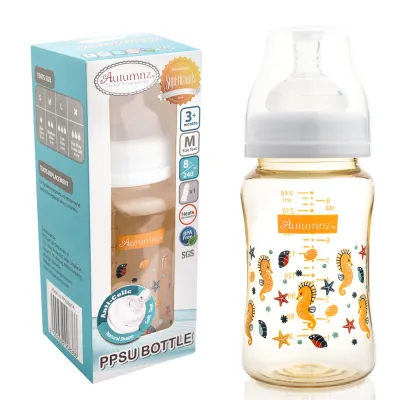
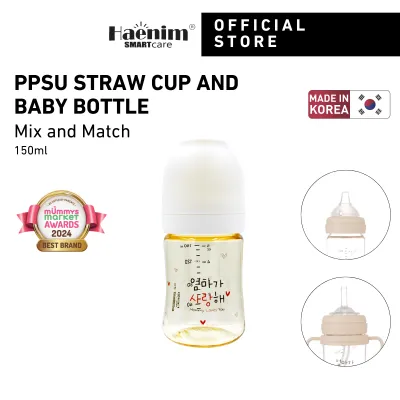
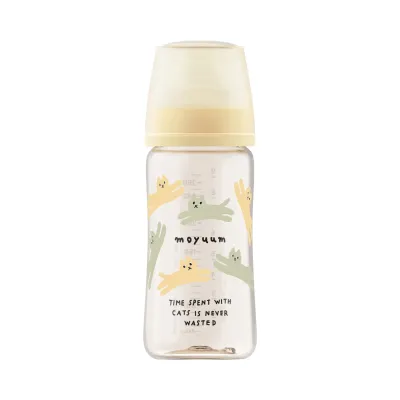
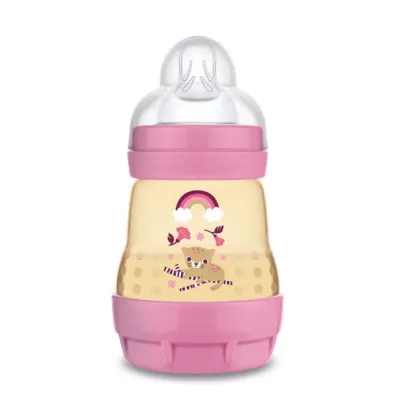
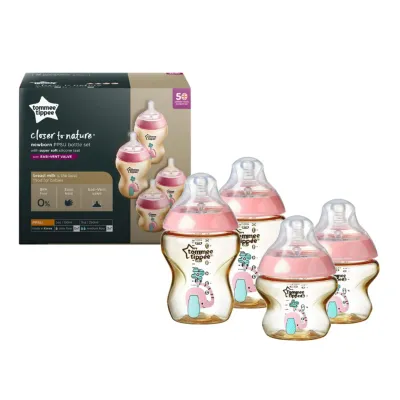
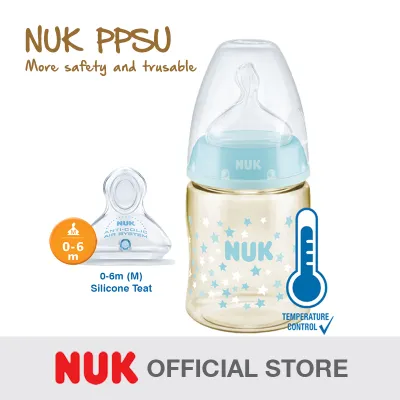
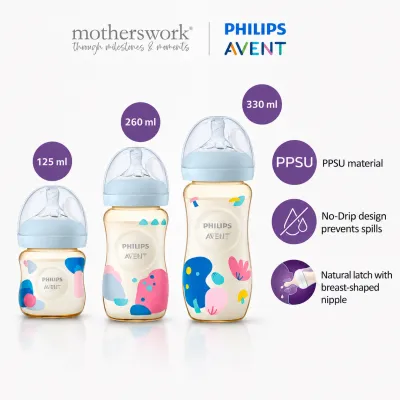
Prices are valid at publication and may change. Please refer to the product page for the latest price.
Comparing Key Decision Factors for Daily Feeding
Feeding a baby requires a bottle that can withstand constant handling, frequent washing, and rapid temperature changes. To find the right fit, parents must weigh several practical dimensions, including how the bottle handles accidental drops, how it responds to daily sterilization, and how easy it is to keep hygienically clean over months of continuous use.

Durability and Weight
As babies grow, their motor skills develop, and they eventually attempt to hold their own bottles during feeding sessions. This developmental milestone makes the weight and shatter resistance of your chosen material a critical consideration. Plastic variants like PPSU and PP are exceptionally lightweight and virtually shatterproof, making them highly suitable for self-feeding and travel. If a plastic bottle slips from a high chair or a baby’s hands onto a hard floor, it is highly likely to survive the impact without structural damage.
In contrast, glass bottles are significantly heavier, which can make it difficult for younger infants to hold them independently. Furthermore, glass poses a distinct breakage risk when dropped on hard surfaces, such as the ceramic tile or vinyl flooring common in modern kitchens. While borosilicate glass is designed to resist thermal shock, it can still crack or shatter upon high-impact drops. To mitigate this risk, caregivers should check the manufacturer’s guidelines regarding drop-test claims or consider purchasing compatible protective silicone sleeves, which help absorb impact and improve grip.
Heat Resistance and Sterilization
Maintaining strict hygiene is essential for protecting an infant’s developing immune system, meaning baby bottles must undergo regular sterilization. However, different materials respond differently to high temperatures, and choosing the wrong sterilization method can lead to premature degradation. Caregivers must always check the exact maximum temperature rating printed on the product label or instruction manual before exposing bottles to boiling water, steam sterilizers, or UV sterilizers.
PPSU stands out for its exceptional heat resistance, often tolerating temperatures up to 180 degrees Celsius, which allows it to withstand repeated steam and UV sterilization cycles without losing its structural integrity. Standard PP bottles have a lower heat tolerance, typically around 110 to 120 degrees Celsius, meaning frequent exposure to high-heat sterilization can cause the plastic to warp, become brittle, or cloud over time. While glass bottles generally tolerate extreme heat exceptionally well, they are susceptible to thermal shock. Rapidly transitioning a glass bottle from a cold refrigerator to boiling water can cause it to crack, so always verify the manufacturer’s instructions regarding safe heating and cooling intervals.
Cleaning and Maintenance
The ease of removing milk residue and preventing bacterial growth is another vital factor in daily bottle maintenance. Glass is naturally non-porous and highly resistant to scratching, which prevents milk fats, proteins, and odors from clinging to the inner walls. This smooth surface makes glass bottles exceptionally easy to clean, ensuring they remain crystal clear and odor-free even after months of use.
Plastic bottles, including both PPSU and PP, are softer than glass and more prone to developing micro-scratches from bottle brushes during washing. These tiny, invisible scratches can harbor bacteria, milk residue, and stubborn odors, which may eventually lead to cloudiness or staining. PPSU is significantly harder and more scratch-resistant than PP, meaning it maintains its clarity and hygiene for a much longer period. Regardless of the material, caregivers should check if the specific bottle model and its individual components—such as collars, caps, and anti-colic valves—are dishwasher safe according to the manufacturer’s instructions, as some parts may require gentle hand-washing to prevent damage.
Safety and Chemical Stability: What to Verify on the Label
When selecting feeding equipment, verifying chemical stability is a top priority for parents. While modern manufacturing has largely phased out harmful chemicals, you should never assume absolute safety based on the material name alone. Always look for explicit “BPA-free” and “BPS-free” labels on both the outer packaging and the bottle itself to ensure the product does not contain Bisphenol A or Bisphenol S.
Additionally, it is highly recommended to verify compliance with recognized safety standards applicable in Singapore for baby feeding products. Look for certifications or compliance statements indicating the product meets international safety benchmarks, such as European Standard (EN 14350) or local consumer product safety requirements. To ensure safety, avoid purchasing unbranded, heavily discounted, or uncertified bottles from unregulated online marketplaces. Without verifiable manufacturing details, it is impossible to confirm the purity of the plastic, the safety of the colorants used, or whether the factory adhered to strict hygienic standards during production.
Price and Value: Evaluating Your Budget and Replacement Cycle
Balancing the initial purchase price against the expected lifespan of the bottle is key to determining its true long-term value. On the retail shelf, baby bottles are priced across distinct tiers. PP bottles are the most budget-friendly option, making them highly accessible for families looking to minimize upfront costs. Glass bottles generally occupy a mid-to-high price tier, while PPSU bottles command a premium price due to the complex manufacturing process of the medical-grade plastic.
However, the initial S$ price tag does not tell the whole story; you must also consider the replacement cycle of each material. Because PP is prone to scratching and cloudiness, manufacturers often recommend replacing these bottles every three to six months of active use. PPSU bottles, with their superior durability and scratch resistance, can often last up to a year or more with proper care. Glass bottles can theoretically last indefinitely, provided they do not chip, crack, or shatter. When planning your budget, calculate the cost per month of use rather than just comparing the initial shelf price to find the most economical solution for your household.
Decision Framework: Which Material Fits Your Lifestyle?
To finalize your choice, consider how each material aligns with your daily routine, your baby’s age, and your specific feeding environment.
PPSU is often the optimal choice for active families who travel frequently, utilize daycare services, or have older babies who are transitioning to holding their own bottles. Its lightweight, shatterproof nature combined with high heat resistance makes it incredibly convenient for on-the-go sterilization and transport, offering the durability of glass without the heavy weight or breakage risks.
Glass is highly preferred for home-only use, particularly during the newborn stage when caregivers handle all feedings. It is the ideal choice for parents who prioritize zero plastic contact, want a material that is exceptionally easy to sanitize, and do not mind the extra weight. If you have a dedicated, stable feeding area at home with cushioned surfaces, the risk of dropping and breaking a glass bottle is significantly minimized.
PP is highly suitable for families operating on a tight budget, those who need lightweight backup bottles for occasional use, or parents who plan to transition their baby to a different feeding system within a few months. It provides a safe, functional, and cost-effective solution for short-term feeding phases.
Verify first if your baby experiences specific feeding aversions, latching difficulties, or severe colic. In these situations, the design of the nipple, the venting system, and the flow rate are far more critical than the bottle’s base material. If your baby struggles to feed consistently, consult a pediatrician or a certified lactation consultant to address underlying feeding mechanics before investing in a large set of bottles.
Frequently Asked Questions (FAQ)
Can I mix different bottle materials for the same baby?
Yes, you can safely mix different bottle materials, such as using glass bottles at home and lightweight PPSU bottles when traveling. Infants typically adapt to the shape, texture, and flow rate of the silicone nipple rather than the material of the bottle container itself. To prevent feeding confusion or aversion, it is highly recommended to maintain consistent nipple types, brands, and flow levels across all the different bottle bodies you use.
What are the visible signs that a plastic bottle needs to be replaced?
Caregivers should regularly inspect plastic bottles for physical signs of wear and tear. Discard and replace any PPSU or PP bottle immediately if you observe persistent cloudiness that does not clear after washing, deep scratches on the inner walls, a sticky texture, or a sour milk odor that remains after thorough sterilization. Always follow the manufacturer’s recommended replacement timeline printed in the product manual to ensure optimal hygiene and safety.

Community discussion
Share your experience or ask a question. Comments are reviewed before publication.