
Selecting the ideal floor mat baby gear for travel and outdoor excursions in Singapore requires balancing your family’s transportation habits with your child’s developmental stage. There is no single brand that reigns supreme for every scenario; instead, the right choice depends heavily on the mat’s structural design.
For family outings to places like the Singapore Botanic Gardens or East Coast Park where you travel by car, a foldable mat made of cross-linked polyethylene (XPE) or thermoplastic polyurethane (TPU) offers the most practical blend of thick cushioning and rapid setup. Conversely, if you frequently navigate public transport, board flights at Changi Airport, or have limited storage space in your home, a lightweight roll-up mat made of fabric or thin TPU is highly superior due to its compact rolled footprint. Interlocking puzzle mats, while excellent for permanent indoor play areas, are generally the least practical option for travel due to the tedious assembly process and the ease with which dirt and moisture can penetrate the seams.
Key Dimensions to Evaluate a Floor Mat Baby Product for Outdoors
When shopping for a floor mat baby product specifically for outdoor and travel use, looking past standard marketing descriptions is essential. You must evaluate several core dimensions to ensure the mat can withstand the rigors of travel while keeping your baby comfortable and secure.
Products mentioned in this guide
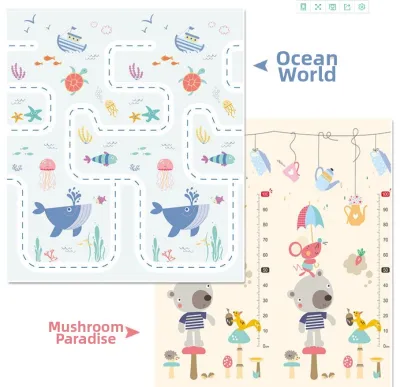
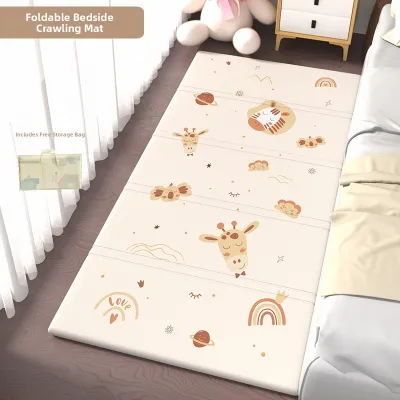
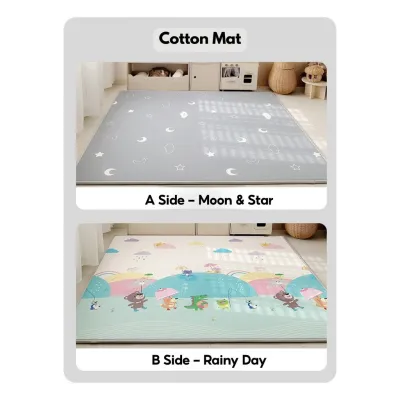
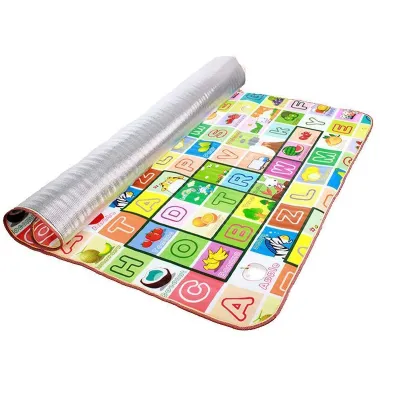
Prices are valid at publication and may change. Please refer to the product page for the latest price.
Portability & Storage Footprint
A travel mat must be easy to transport alongside a stroller, diaper bag, and other baby essentials. Evaluate the folded or rolled dimensions rather than just the fully expanded size. A mat that is lightweight but bulky can still be highly inconvenient if it cannot fit into your car trunk or stroller basket. Look closely at the carrying solutions provided by the brand. Some mats feature basic plastic handles that can easily snap, while others include heavy-duty canvas carry bags with padded shoulder straps. If you plan to walk long distances or use public transport, a backpack-style carry bag is highly beneficial as it keeps your hands free to manage your baby or stroller.
Outdoor Durability & Maintenance
Singapore’s tropical climate introduces specific challenges for outdoor baby gear. Damp grass, sandy beaches, and sudden rain showers mean your mat will frequently encounter moisture and dirt. A water-resistant or waterproof surface is non-negotiable for outdoor use. Look for mats with sealed edges that prevent water from seeping into the inner foam core, which can lead to mold and mildew growth in humid conditions. Maintenance should be straightforward: you should be able to wipe away mud, spilled milk, or sunscreen with a damp cloth or mild soapy water. Always review the manufacturer’s care instructions, as some materials can degrade if exposed to harsh sanitising sprays or direct sunlight for extended periods.
Cushioning & Firmness
The level of cushioning your baby needs depends on their physical milestones. For younger babies practicing tummy time or learning to sit, a thicker mat (around 1cm to 1.5cm) provides essential impact protection against hard outdoor surfaces like concrete, wooden decking, or packed earth. However, as your baby begins to stand or take their first steps, a surface that is too soft can compromise their balance. A high-quality travel mat must strike a balance between shock absorption and firmness, ensuring the surface does not bottom out under pressure while still providing a stable foundation for early steps.
Safety & Material Verification
Because your baby’s skin will be in direct contact with the mat for long periods, verifying the material composition is critical. Common materials include TPU, XPE, and PVC. TPU is highly regarded for being lightweight, durable, and free from heavy metals, though it tends to be more expensive. XPE is an excellent mid-range option that offers superb cushioning and water resistance, though it can be prone to punctures from sharp twigs or gravel. PVC is highly durable and heavy, but lower-quality versions may contain chemical plasticisers. Always look for physical labels or official manufacturer documentation verifying non-toxic certifications, rather than relying solely on unverified product descriptions on online marketplaces.
Foldable vs. Roll-Up vs. Puzzle Mats: A Design Comparison
Understanding the structural differences between the three primary mat designs will help you narrow down your choices based on your travel habits and storage limitations.

Foldable Mats (Accordion Style)
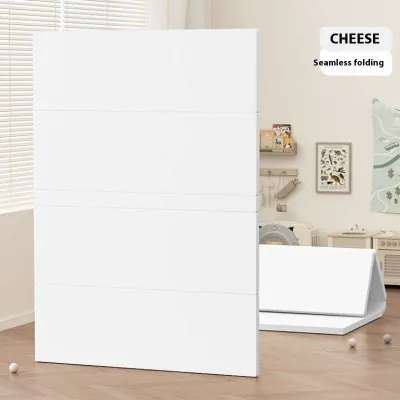
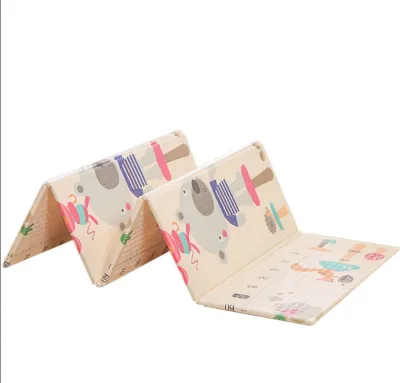
Foldable mats feature pre-creased sections that fold back and forth like an accordion. This design is highly popular for local day trips because it can be unfolded and packed away in a matter of seconds, which is incredibly helpful when you are managing an active baby outdoors.
These mats typically offer superior thickness and cushioning compared to roll-up designs, often ranging from 1cm to 2cm in thickness. This makes them ideal for rougher outdoor terrains, such as pebbled ground or uneven grass at local parks. The accordion folds also allow you to adjust the size of the mat by leaving some sections folded over, which can be useful if you are fitting the mat into a tight space.
The primary drawback of foldable mats is their bulk. Even when fully folded, they retain a large, flat rectangular shape that is difficult to carry on public transport or pack into a compact stroller basket. They are best suited for families who travel primarily by car or taxi, where the mat can be easily tossed into the trunk.
Roll-Up Mats (Fabric or Thin TPU)
Roll-up mats are designed to be rolled tightly into a cylinder, similar to a yoga mat. They are typically made from lightweight fabrics with a water-resistant backing or thin sheets of flexible TPU.
Portability is the standout feature of this design. Because they roll up so compactly, they can easily fit into a standard stroller basket, strap to the side of a diaper bag, or pack neatly into a suitcase for overseas flights. They are incredibly lightweight, making them the preferred choice for parents who rely on public transport or enjoy traveling light.
However, roll-up mats generally offer much thinner cushioning, often measuring less than 0.5cm in thickness. This means they provide minimal impact protection on hard surfaces and are better suited as a clean, dry barrier rather than a soft play surface. Additionally, the edges of roll-up mats can curl upward when first unrolled, creating a potential tripping hazard for crawling or walking babies. To mitigate this, check if the brand includes heavy-duty straps or weighted corners to help the mat lie flat.
Interlocking Puzzle Mats
Interlocking puzzle mats consist of square foam tiles that connect like puzzle pieces. While they are a staple in many home playrooms, they are generally not recommended for frequent travel or outdoor use.
On the positive side, puzzle mats are highly customizable, allowing you to assemble only the number of tiles you need for a specific space. They also tend to be affordable and offer decent cushioning. If you are visiting a relative’s home for an extended period, leaving a set of puzzle tiles there can be a practical way to set up a temporary play area.
For active travel, however, the disadvantages far outweigh the benefits. Assembling and disassembling multiple tiles in a park or airport is tedious and time-consuming. Furthermore, the interlocking seams are not watertight; if your baby spills a drink or if the ground underneath is damp, liquid and dirt will seep through the cracks, requiring you to clean both sides of every single tile. Transporting loose tiles is also highly inconvenient without a dedicated, bulky storage box.
How to Evaluate Popular Brands for Your Needs
When researching portable baby mat brands at local baby boutiques or online marketplaces, it is easy to get overwhelmed by competing claims. Use this practical evaluation checklist to assess any brand you encounter.
Checking Material Specifications
Always look past the promotional titles and read the detailed technical specifications of the mat. Verify whether the material is listed as TPU, XPE, or PVC. Ensure the manufacturer explicitly states that the mat is free from BPA, phthalates, and lead. If a brand cannot provide a clear material breakdown on its official website or packaging, it is best to opt for a brand that prioritizes transparency.
Assessing Carry Solutions
A travel mat’s utility is heavily influenced by how easily it can be carried. Check if the brand includes a dedicated carrying bag or strap. Look for bags made from durable, water-resistant canvas or oxford fabric, which will protect the mat from dirt during transit and prevent any dampness on the mat from leaking onto your car seats. Avoid brands that only provide thin, flimsy plastic covers that are prone to tearing after a few uses.
Verifying Safety Standards
Do not rely on generic “non-toxic” claims. Look for recognized international safety testing certifications. In Europe, look for the EN71 certification; in the United States, look for ASTM or CPSIA compliance; and in South Korea, look for the KC (Korea Certification) mark. These certifications indicate that the material has undergone rigorous testing for chemical safety and physical durability. You should be able to verify these marks on the physical product label or the manufacturer’s official documentation.
Analyzing Real-World User Feedback
When browsing customer reviews, ignore generic praise and search specifically for feedback regarding outdoor durability and long-term wear. Look for comments addressing how well the surface resists punctures from grass or twigs, whether the seams begin to split after repeated folding, and how easy it is to wipe away stubborn stains like sunscreen or fruit juice. Pay close attention to reviews from users in humid climates, as they can provide valuable insights into whether the mat tends to retain moisture or develop a musty odor.
Decision Framework: Choosing the Right Mat for Your Trip
To make your final decision, consider your typical travel scenarios and match them to the correct mat design.
Choose a thick foldable mat if:
- You primarily travel by car or private hire vehicle and have ample trunk space.
- Your typical destinations are local parks, beaches, or condo lawn areas where you plan to stay in one spot for an extended period.
- Your baby is actively crawling, tumbling, or learning to sit, requiring maximum shock absorption (typically 1cm to 1.5cm thickness) to protect against hard ground.
Choose a lightweight roll-up mat if:
- You rely on public transport (MRT and buses) where managing bulky items alongside a stroller is highly challenging.
- You are traveling overseas and need a compact mat that fits within standard airline baggage allowances.
- You primarily need a quick, hygienic barrier for public play areas, airport lounges, or hotel floors, rather than heavy cushioning.
Verify first if:
- The manufacturer's care instructions explicitly permit outdoor use. Some luxury indoor mats have delicate outer membranes that can be punctured by grass stalks or degraded by direct UV exposure, which may void your warranty.
- The mat has a reliable non-slip backing to prevent it from sliding on smooth tiled or wooden floors if you plan to use it indoors as well.
- Always supervise your baby closely during outdoor play to prevent them from putting outdoor debris, insects, or loose mat material in their mouths.
Neither may fit if:
- You expect a single mat to be both ultra-thick (over 1.5cm) and compact enough to fit inside a small backpack. In this case, you must prioritize either comfort or portability, or consider owning two distinct mats for different travel scenarios.
Frequently Asked Questions (FAQ)
Can I use a portable baby mat directly on grass or sand?
Yes, provided the mat has a water-resistant or waterproof outer layer. However, sand and fine dirt can easily get trapped in the folds of accordion mats or the textured surfaces of roll-up mats. Always wipe down the surface with a damp cloth and let it dry completely before folding it away. Storing a damp mat in Singapore’s humid climate can quickly lead to mold and mildew growth.
Are thicker portable mats always safer for babies learning to walk?
Not necessarily. While a thicker, highly cushioned mat (such as 2cm XPE foam) provides excellent impact protection during falls, a surface that is too soft or squishy can make the ground unstable for a baby who is learning to stand or take their first steps. For walking practice, a firmer, thinner mat with a reliable non-slip backing is often safer as it provides a stable foundation and prevents slipping on smooth tiled or wooden floors.
Community discussion
Share your experience or ask a question. Comments are reviewed before publication.