
Selecting the right baby bottle in Singapore is a highly individualized process that depends on your baby’s unique feeding style, developmental stage, and physical comfort. While the Pigeon Softouch range is a household name across Singapore for its soft silicone and breast-like shape, it is not the only option available to parents. Other popular brands offer distinct advantages, such as specialized internal venting systems for gas-prone infants or alternative bottle materials that cater to different sterilization preferences. To find the ideal match, you must evaluate how your baby latches, handles milk flow, and reacts to different nipple textures.
Core Features of the Pigeon Softouch Range
Pigeon Softouch bottles are designed to facilitate a smooth transition between breastfeeding and bottle-feeding. The cornerstone of this range is the wide-neck nipple, which is crafted from ultra-soft, double-thickness silicone. This design allows the nipple to stretch and flex during feeding, mimicking the natural peristaltic movement of a baby’s tongue. The matte-textured surface is engineered to help babies secure a firm, non-slip latch, reducing the amount of air they swallow during feeds.
In terms of bottle bodies, the Softouch range primarily utilizes glass and Polyphenylsulfone (PPSU). Glass bottles are highly durable, scratch-resistant, and can withstand frequent sterilization cycles without degrading, though they are heavier and prone to breaking if dropped. PPSU, often recognizable by its natural honey-colored tint, is a medical-grade plastic that combines the lightweight convenience of plastic with high heat resistance and durability, making it a popular choice for busy parents in Singapore.
Products mentioned in this guide
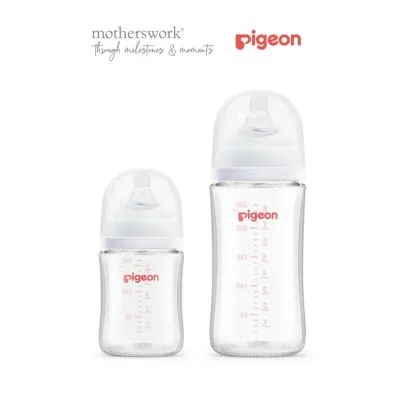
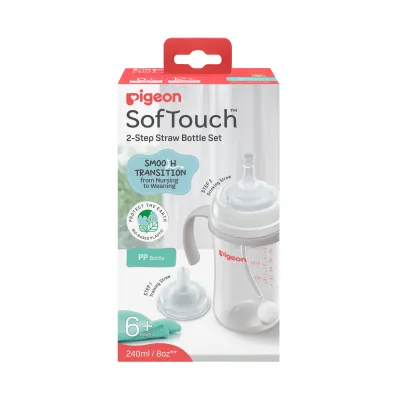
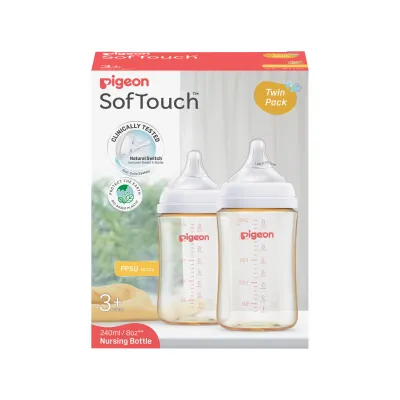
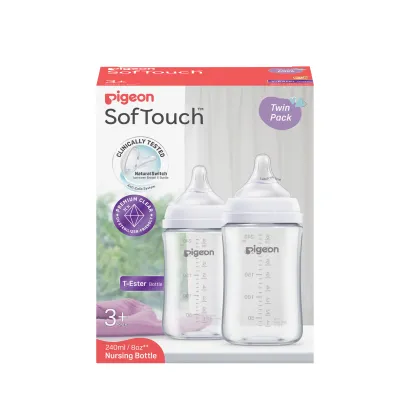
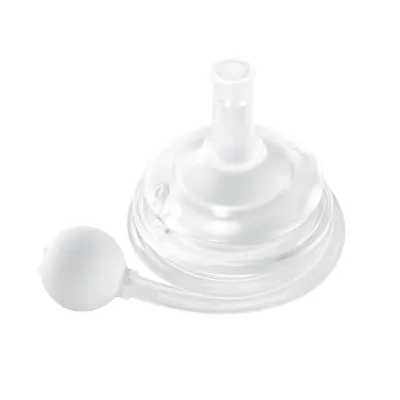
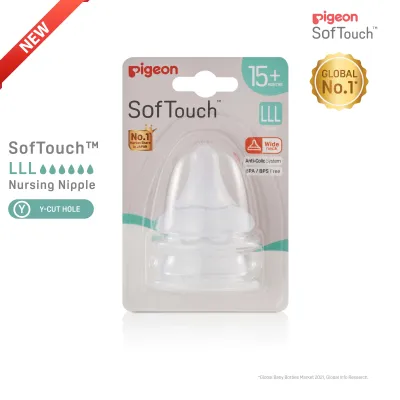
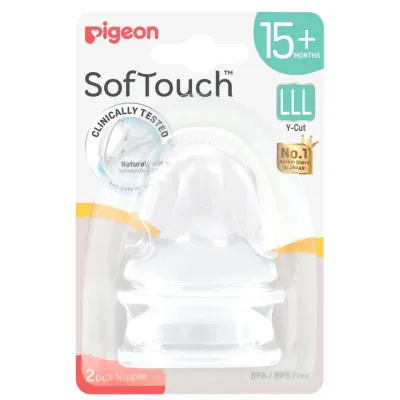
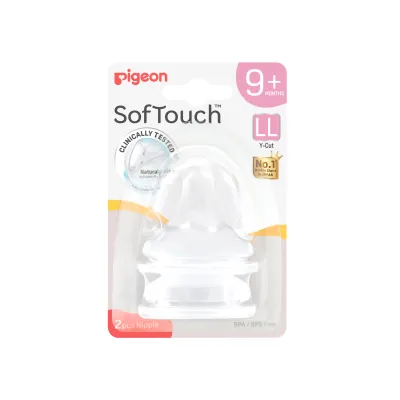
Prices are valid at publication and may change. Please refer to the product page for the latest price.
Understanding the flow rates and hole shapes is crucial when navigating the Softouch lineup. Pigeon uses a combination of round holes and Y-cut (cross-cut) openings. Round holes, typically found on newborn and slow-flow nipples, allow milk to drip consistently with minimal effort. Y-cut nipples, designed for older babies, remain closed until the baby actively sucks, giving them greater control over the milk flow and preventing choking as their sucking strength increases.
Essential Dimensions for Comparing Baby Bottles
When comparing Pigeon Softouch to other popular brands in Singapore, nipple shape and firmness are the first critical dimensions to evaluate. Some brands offer narrow-neck bottles, which feature slimmer, longer nipples that may suit babies with smaller mouths or those who struggle to wrap their lips around a wide-neck base. Additionally, silicone firmness varies significantly; some manufacturers use a firmer silicone to prevent the nipple from collapsing under strong suction, while others prioritize maximum flexibility.

Anti-colic venting mechanisms represent another major point of differentiation. Pigeon Softouch utilizes a built-in Air Ventilation System (AVS) on the flange of the nipple, which allows air to enter the bottle and equalizes pressure without requiring extra parts. In contrast, other specialized brands employ complex internal venting tubes that route air directly to the bottom of the bottle, completely bypassing the milk. While these internal tube systems are highly regarded for minimizing air bubbles, they require more assembly steps and meticulous cleaning with specialized micro-brushes.
Bottle materials also come with distinct trade-offs in weight, durability, and heat tolerance. Polypropylene (PP) is a common, budget-friendly plastic that is lightweight but has a lower heat resistance limit (typically around 110°C) and tends to scratch or cloud over time. PPSU offers a much higher heat limit (often up to 180°C) and superior durability, while borosilicate glass provides excellent thermal shock resistance but adds significant weight to your diaper bag.
Finally, consider the cleaning complexity of each bottle system. A standard wide-neck bottle with a built-in nipple valve consists of only four parts: the bottle, nipple, collar, and cap. Systems with internal venting tubes or multi-piece bases can have six or seven individual components. Washing, sterilizing, and reassembling multiple bottles with numerous small parts multiple times a day can significantly increase your daily chore load, so balancing venting efficiency with cleaning convenience is essential.
Matching Bottle Designs to Your Baby's Feeding Cues
Your baby’s behavior during and after feeds provides the most reliable clues for choosing the right bottle. If your baby frequently exhibits signs of discomfort, such as arching their back, pulling their legs to their chest, or crying from trapped gas shortly after feeding, they may benefit from a bottle with an advanced internal venting tube system. These systems are specifically engineered to keep air completely separate from the liquid, reducing the volume of bubbles your baby swallows.
If you are practicing mixed feeding or transitioning your baby back to the breast, an ultra-soft, wide-neck design like the Pigeon Softouch is often highly effective. Babies who are used to the breast may reject firmer silicone nipples because they do not compress or stretch in the same way. A wide-neck nipple encourages a wide, open-mouthed latch similar to breastfeeding, which helps prevent nipple confusion and supports a seamless transition between the two methods.
As your baby grows and begins to show interest in holding their own bottle, ergonomics and weight become primary considerations. Heavy glass bottles are unsuitable for self-feeding due to the risk of drops and injury. At this developmental stage, switching to a lightweight PPSU or PP bottle with contoured, easy-grip sides or attachable handles allows your baby to practice self-feeding safely under your close supervision.
Before purchasing an entirely new bottle brand, always verify whether your baby’s fussiness is simply due to an incorrect flow rate or nipple hole shape. If milk is leaking from the corners of your baby’s mouth, or if they are coughing and gulping, the flow rate is likely too fast. Conversely, if they suck vigorously for a long time, collapse the nipple, or fall asleep out of frustration, the flow is likely too slow. Adjusting the nipple size within your current brand is often a simpler and more cost-effective solution than switching systems entirely.
Purchasing, Safety, and Maintenance Guidelines
To ensure the safety and authenticity of your baby’s feeding equipment, purchase bottles and replacement parts exclusively from official brand stores, authorized maternity retailers, or established e-commerce platforms in Singapore. Avoid buying from unverified third-party sellers or parallel importers, as counterfeit baby products may not comply with local safety standards and could contain harmful chemicals or structural defects.
When planning your budget, compare the prices of starter sets and replacement nipple multi-packs in S$ across authorized sellers. While some brands may seem affordable initially, the long-term cost of replacing nipples every few months can add up. Opting for starter bundles that include multiple bottle sizes, cleaning brushes, and varying nipple flow rates often provides better overall value than purchasing items individually.
Regular inspection of all bottle components is vital for your baby’s safety. Silicone nipples degrade over time due to exposure to saliva, milk fats, and heat from sterilization. Inspect each nipple daily by pulling on the bulb in all directions; look for visible wear, stickiness, discoloration, or tiny tears. If you notice any of these signs, or if the nipple has become soft and collapses easily during feeds, replace it immediately to prevent choking hazards.
Always adhere to the specific sterilization temperature limits and methods printed on the product packaging. While glass and PPSU can withstand high-temperature steam, boiling, and UV sterilization, PP plastics and silicone components may degrade faster under prolonged UV exposure or extreme heat. Following the manufacturer’s guidelines ensures your bottles remain structurally sound and free from micro-cracks where bacteria could accumulate.
Frequently Asked Questions (FAQ)
How often should I replace Pigeon Softouch nipples?
According to general manufacturer guidelines, silicone nipples should be replaced every two to three months for hygiene and safety reasons. However, you should inspect them daily and replace them immediately if you observe any signs of physical wear, such as discoloration, stickiness, swelling, or tears. As your baby grows and their sucking strength increases, you will also need to transition to larger nipple sizes with faster flow rates to match their developmental needs.
Can I mix Pigeon Softouch nipples with other brand bottles?
It is highly recommended to avoid mixing nipples and bottles from different manufacturers unless they are explicitly certified as cross-compatible by both brands. Even if a nipple appears to fit into another brand’s collar, minor differences in millimeter measurements can cause slow leaks, improper venting, or sudden nipple collapse. These issues can disrupt your baby’s feeding pace, cause them to swallow excess air, or create a potential choking hazard if the nipple detaches during use.
Community discussion
Share your experience or ask a question. Comments are reviewed before publication.