
Quick Answer: Is the Pigeon Softouch Teat Right for Your Baby?
The Pigeon Softouch teat is designed to support the natural peristaltic movement of a baby’s tongue, making it a popular choice for parents practicing mixed feeding. However, there is no single “best” silicone teat on the market, as infant feeding preferences are highly individual. Your baby’s unique latch style, oral anatomy, and flow requirements will ultimately determine which teat is most suitable.
Without independent clinical trials or standardized comparative testing, claims of absolute material or functional superiority cannot be verified. Instead, parents should focus on observable signs of feeding comfort, such as a secure lip seal, steady swallowing, and minimal air intake during feeds.
Generally, the Pigeon Softouch is preferred when you want a highly flexible, wide-neck teat that closely mirrors breastfeeding mechanics and you are using compatible wide-neck bottles. Conversely, standard or competing silicone teats may be more appropriate if your baby prefers a firmer texture, requires a specific orthodontic shape, or uses narrow-neck bottles.
Products mentioned in this guide
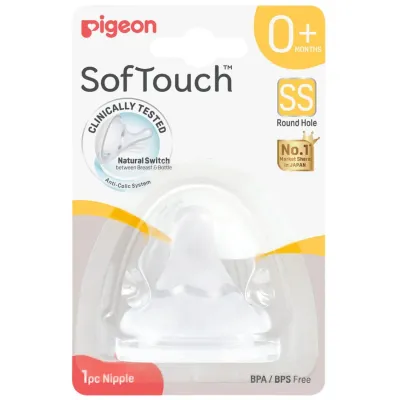
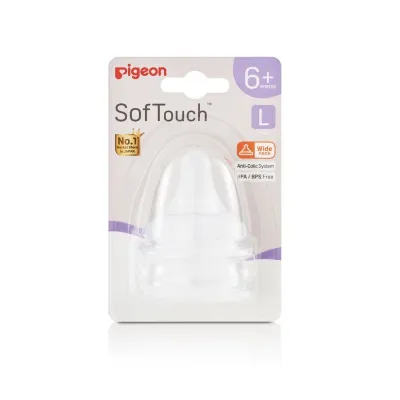
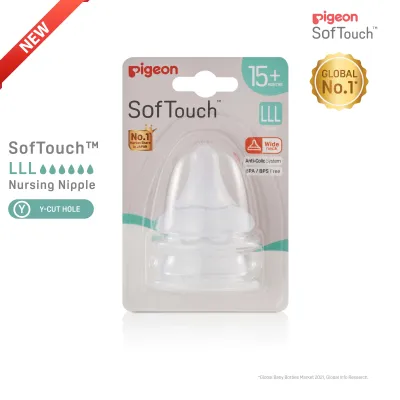
![[NEW] Pigeon SofTouch™ Wide Neck Nipple (Promo)](https://img.lazcdn.com/g/p/9ad1bd0730a6805e5e1f59444563dce2.jpg_400x400q80.jpg_.webp)
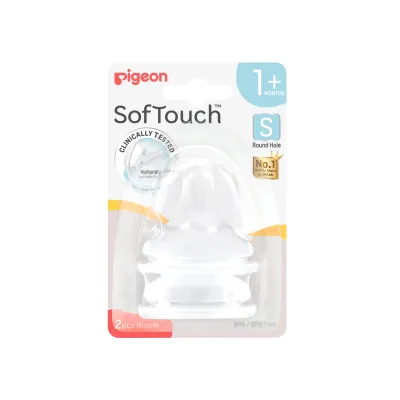
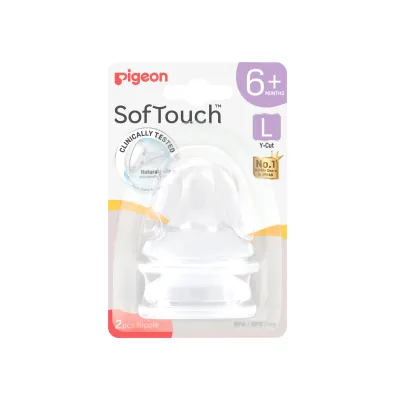

Prices are valid at publication and may change. Please refer to the product page for the latest price.
Evaluating Silicone Softness and Material Feel
The tactile feel of a bottle teat plays a critical role in how readily a baby accepts it. The design intent behind the Pigeon Softouch teat is to provide a highly flexible, stretchable silicone that mimics the elasticity of maternal skin during feeding. This flexibility allows the teat to expand and conform to the baby’s sucking fossa, which is the small depression in the roof of an infant’s mouth.

In contrast, many standard silicone teats on the market utilize a firmer, more rigid silicone structure. While firmer teats can be beneficial for babies who collapse softer nipples with a strong suck, they may not offer the same degree of natural stretch. To evaluate the physical properties of different teats yourself, you can perform a gentle pinch-and-stretch test.
To perform this check, hold the base of the clean, dry teat with one hand and gently pull the tip upward and outward. A highly flexible teat like the Softouch will exhibit noticeable elongation and return smoothly to its original shape without warping. A firmer teat will offer more resistance and stretch very little, indicating a more rigid feeding profile.
Regardless of the brand you choose, material safety is a paramount consideration that parents must verify independently. All reputable silicone teats sold in Singapore must comply with local safety standards, including being free from Bisphenol A (BPA) and Bisphenol S (BPS). Always inspect the product packaging for certified food-grade silicone labels and safety declarations rather than relying on general marketing claims.
Comparing Shape Design and Latch Comfort
The physical shape of a silicone teat directly influences how a baby latches and coordinates their swallowing. The Pigeon Softouch features a wide, sloping base that tapers gradually to a rounded nipple tip. This wide-neck design is intended to encourage a wide-open latch, similar to how a baby attaches to the breast, allowing their lips to rest comfortably on the flared base.
Traditional narrow-neck silicone teats, by comparison, have a much slimmer profile. These narrow teats often require a different latching style where the baby’s lips grip closer to the shaft of the nipple. Additionally, some brands offer orthodontic teats, which feature a slanted tip designed to fit the contours of the baby’s tongue and palate, promoting a specific jaw alignment during feeding.
These structural differences significantly impact tongue movement and latch depth. A wide-base teat supports the natural wave-like peristaltic motion of the tongue, which is highly beneficial for babies transitioning between breast and bottle. However, some infants may find a wide base challenging to grasp and may latch more securely onto a narrower or contoured orthodontic shape.
To determine if a specific shape supports a comfortable and effective latch, parents should closely observe their baby during a feed. Look for a wide-open mouth with lips flanged outward like fish lips, forming a tight seal around the base of the teat. The cheeks should remain rounded and full rather than dimpling inward, and there should be no clicking or smacking sounds, which often indicate a broken seal or an improper latch depth.
Matching Flow Rates, Venting, and Durability
Selecting the correct flow rate is essential to prevent feeding frustration, choking, or excessive air ingestion. Sizing systems are not universally standardized across different brands; a “Medium” flow teat from one manufacturer may flow significantly faster or slower than a “Medium” or “M” teat from another. Pigeon Softouch utilizes a system ranging from SS (for newborns) up to L or LL, often incorporating round holes for slower flows and Y-cut or cross-cut openings for faster, baby-controlled flows.
When comparing brands, parents must carefully review the manufacturer’s age guidelines and flow descriptions on the packaging. However, these age recommendations are merely starting points. You must monitor your baby’s feeding behavior: if they are coughing, sputtering, or milk is spilling from the corners of their mouth, the flow may be too fast. Conversely, if they are sucking vigorously for long periods but taking in very little milk, they may need a faster flow rate.
Venting mechanisms are another critical feature to compare. The Pigeon Softouch incorporates a built-in Air Ventilation System (AVS) designed to regulate air pressure inside the bottle and minimize the amount of air the baby swallows. Other brands may use external venting tubes, specialized valves in the bottle collar, or fully vented bottle bases. It is vital to check if the teat requires a specific alignment with the bottle collar or ring to function correctly, as improper assembly can disable the venting system.
Durability and wear patterns also vary, though all silicone teats degrade over time due to exposure to heat, milk fats, and cleaning agents. Standard care involves gentle washing with mild detergent and sterilizing according to the manufacturer’s instructions. Parents must regularly inspect teats for signs of wear, such as stickiness, discoloration, micro-tears, or a loss of elasticity. If a teat becomes sticky or fails to spring back when squeezed, it must be replaced immediately to ensure feeding safety.
Side-by-Side Specification Checklist
To assist in your decision-making process, the following checklist outlines key specifications you should verify when comparing the Pigeon Softouch with other wide-neck silicone options. Because product specifications can vary by region, manufacturing batch, and product generation, always verify these details on the physical packaging before purchasing.
| Feature | Pigeon Softouch Teat | Competing Wide-Neck Silicone Teats |
|---|---|---|
| Bottle Compatibility | Designed specifically for Pigeon wide-neck bottles; limited cross-brand compatibility. | Varies; typically designed for proprietary wide-neck bottles of the same brand. |
| Material Verification | Food-grade silicone; verify BPA-free and BPS-free labels on packaging. | Food-grade silicone; verify BPA-free, BPS-free, or phthalate-free certifications. |
| Flow Rate Sizing System | Uses a letter-based system (SS, S, M, L, LL, LLL) with round or Y-cut holes. | Often uses numbers (1, 2, 3, 4) or age ranges (0m+, 3m+, 6m+) with varying hole shapes. |
| Recommended Replacement | Typically 1 to 2 months of regular use, or immediately upon showing signs of wear. | Typically 1 to 3 months, depending on the manufacturer's guidelines and wear checks. |
How to Choose: Decision Framework for Silicone Teats
To finalize your selection, consider your baby’s current feeding setup, physical preferences, and any specific developmental needs. This structured framework can guide your choice based on observable conditions.
Choose the Pigeon Softouch Teat if:
- Your baby is practicing mixed feeding (breast and bottle) and benefits from a highly flexible, stretchable teat that supports natural tongue movement.
- You already own or plan to purchase compatible wide-neck bottles from the same manufacturer.
- Your baby prefers a wide, sloping latch base that mimics natural breast contours.
Choose Competing Standard Silicone Teats if:
- Your baby prefers a firmer silicone texture that resists collapsing under a very strong suck.
- You are using narrow-neck bottles or require a highly specific orthodontic shape to support jaw alignment.
- Your baby has already established a comfortable, successful latch on another specific brand's shape.
Verify First and Consult a Professional if:
- Your baby has specific medical feeding challenges, such as a cleft lip or palate, severe gastroesophageal reflux, or oral motor delays.
- Your baby was born prematurely and requires specialized flow rates or therapeutic feeding support.
- You observe persistent feeding difficulties, such as frequent choking, excessive gas, or refusal of all bottle types. In these scenarios, always consult a pediatrician, pediatric speech therapist, or certified lactation consultant before introducing new feeding equipment.
Frequently Asked Questions (FAQ)
Can I use Pigeon Softouch teats on other brand bottles?
Wide-neck teats are generally not cross-compatible across different brands. Even if a Pigeon Softouch teat appears to fit into another brand’s wide-neck collar, the threading, diameter, and sealing mechanism often differ by fractions of a millimeter. Mixing brands can compromise the anti-colic venting system, leading to poor air regulation, milk leaks, or even choking hazards if the teat slips out of place during a feed. To ensure safety and proper function, always use the teat and bottle system recommended by the manufacturer.
How do I know when it is time to replace a silicone teat?
You should perform a physical safety check on all silicone teats before every single feed. Gently pull the teat tip in all directions to inspect for micro-tears, cracks, or punctures, especially if your baby has begun teething or biting. Look for signs of material degradation such as cloudiness, stickiness, permanent stretching, or a change in the flow rate where milk pours out instead of dripping. While manufacturers generally recommend replacing teats every one to two months as a baseline, you must prioritize the physical condition of the teat and replace it immediately if any wear is observed.
Community discussion
Share your experience or ask a question. Comments are reviewed before publication.