
Choosing the right baby bottle material is one of the most frequent decisions you will face as a parent. When selecting between Pigeon glass bottles and plastic alternatives like Polypropylene (PP) and Polyphenylsulfone (PPSU), the ideal choice depends on your baby’s age, where feeding takes place, and your daily sterilization routine. Glass provides excellent scratch resistance and chemical stability for newborn feeding at home, whereas lightweight plastics like PPSU and PP offer shatterproof safety and ease of handling as your baby learns to hold their own bottle.
To make an informed decision, you must evaluate how each material performs under daily wear, cleaning, and sterilization. By understanding the physical properties and manufacturer guidelines for each option, you can build a safe, practical, and efficient feeding system that supports your baby’s developmental milestones. Always verify the recommended age, development stage, and weight range from the specific product documentation, and ensure a caregiver supervises all feeding sessions.
Understanding Pigeon Bottle Materials: Glass, PP, and PPSU
Pigeon offers baby bottles in three primary materials, each with distinct physical properties, visual appearances, and tactile qualities. Glass bottles are made from borosilicate glass, which is highly transparent, heavy, and completely rigid. When you hold a glass bottle, it feels cool to the touch and offers a perfectly smooth, non-porous surface that does not bend or flex under pressure.
Products mentioned in this guide
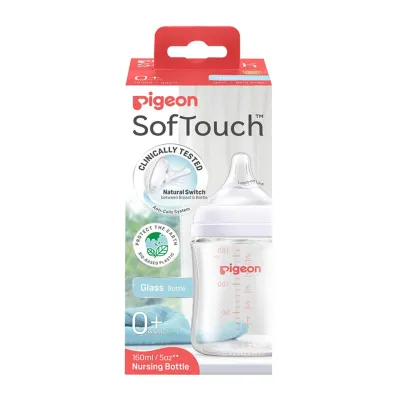
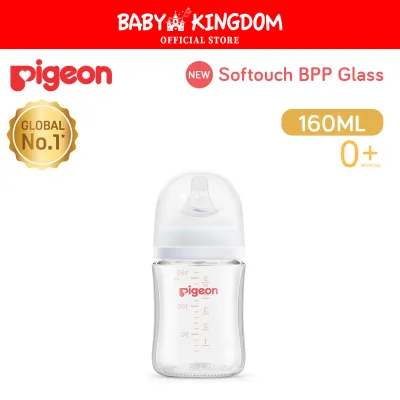
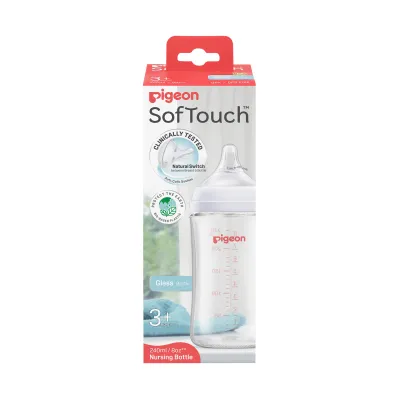
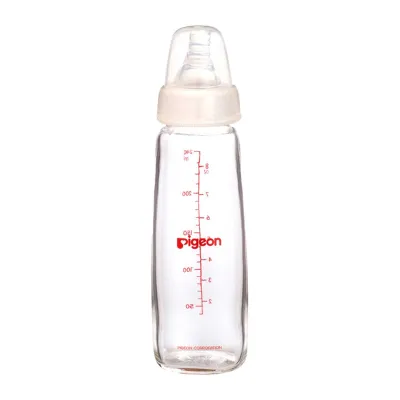
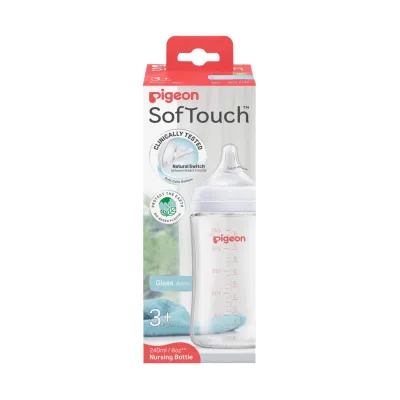
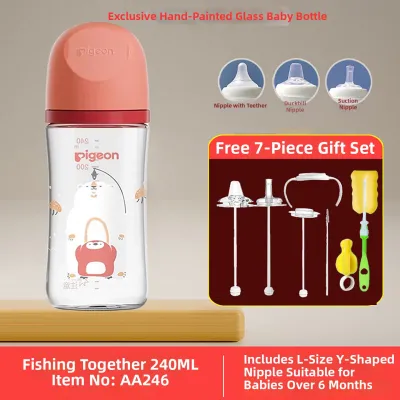
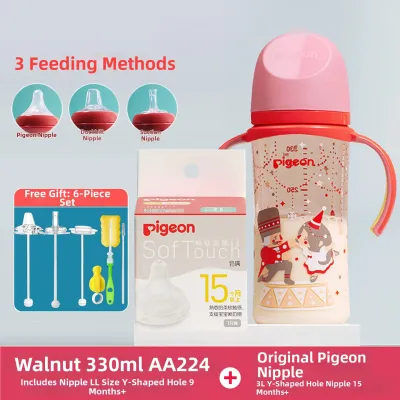
Prices are valid at publication and may change. Please refer to the product page for the latest price.
Polypropylene (PP) is a widely used plastic that is lightweight and slightly flexible. Visually, PP bottles have a characteristic milky or semi-translucent appearance rather than crystal-clear transparency. They feel slightly soft or textured compared to glass and are highly resilient to impact.
Polyphenylsulfone (PPSU) represents a high-performance thermoplastic option. PPSU bottles are easily recognizable by their natural honey-colored or golden-amber tint. They combine the crystal-clear transparency of glass with the lightweight, shatterproof durability of plastic, offering a rigid feel that is significantly tougher than PP.
To identify which material you are holding, you should check the packaging and the base of the bottle. Pigeon molds material indicators directly into the plastic or glass on the bottom of the bottle. Look for embossed markings such as “PPSU”, “PP”, or specific recycling codes. The packaging will also clearly state the material composition of both the bottle body and its accompanying parts, such as the collar, cap, and silicone nipple.
Safety, Hygiene, and Chemical Stability
When evaluating feeding bottles, safety and chemical stability are paramount. Parents should always verify the product packaging and official documentation to ensure the bottles are certified BPA-free and BPS-free. These certifications indicate that the materials do not contain bisphenol compounds, which are restricted in food-contact products due to potential health concerns. Always check the official manufacturer or local regulatory websites to verify the latest safety standards and potential product recalls.

Chemical stability is closely linked to how a material responds to high temperatures during preparation and sterilization. Borosilicate glass is exceptionally stable and does not degrade or leach chemicals when exposed to boiling water or high-heat sterilizers. It maintains its structural integrity indefinitely unless it suffers physical damage.
Plastic materials have specific heat resistance thresholds that you must verify in the manufacturer’s user manual. PPSU generally exhibits much higher heat resistance than PP, allowing it to withstand repeated high-temperature sterilization cycles without losing its structural integrity. PP has a lower heat tolerance, meaning it can become prone to warping or degrading faster if subjected to temperatures beyond its rated limit.
Over time, all plastic bottles are susceptible to micro-scratches from cleaning brushes, as well as cloudiness from mineral deposits and milk fats. These micro-scratches can harbor microscopic milk residue and bacteria, making the bottle harder to sanitize. You should regularly inspect plastic bottles under bright light; if you observe persistent cloudiness, deep scratches, or a sticky texture, it is time to replace the bottle immediately to maintain proper hygiene.
Durability, Weight, and Daily Handling
The physical weight and durability of your baby’s bottle directly affect your daily feeding routine and your baby’s developmental progress. Glass bottles are significantly heavier than plastic alternatives. While this weight is manageable for an adult during quiet home feedings, it poses a challenge for infants who are developing their motor skills and attempting to hold the bottle independently.
For self-feeding stages, lightweight plastic bottles like PP and PPSU are much easier for small hands to grip and control. A heavy glass bottle can easily slip from a baby’s grasp, presenting a safety hazard. If a glass bottle drops onto a hard surface, such as tile flooring common in Singapore homes, it carries a risk of shattering or chipping, which requires immediate cleanup and disposal.
In contrast, PP and PPSU bottles are virtually shatterproof. They can survive repeated drops from high chairs or strollers without breaking, making them the preferred choice for travel, daycare, and outdoor excursions.
Ergonomics also play a role during late-night or early-morning feeds when caregivers are fatigued. A lighter bottle reduces wrist strain during prolonged feeding sessions. However, some parents prefer the solid, premium feel of glass, finding that its weight provides a more stable balance when mixing formula or resting the bottle on a flat surface.
Cleaning, Sterilization, and Long-Term Maintenance
Maintaining a strict hygiene routine requires understanding how each material responds to different cleaning tools and sterilization methods. Before using any sterilization equipment, you must consult the official Pigeon manual to verify compatibility.
Glass bottles are highly versatile and compatible with almost all sterilization methods, including boiling water, steam sterilizers, microwave sterilizers, and chemical sterilizing tablets. Because glass has a hard, scratch-resistant surface, you can use standard bottle brushes without worrying about creating microscopic grooves where bacteria can hide.
Plastic bottles require gentler handling. When cleaning PP and PPSU, it is highly recommended to use soft sponge brushes rather than stiff nylon bristle brushes to prevent scratching the inner walls.
Sterilization compatibility for plastics varies. While PPSU is highly durable and compatible with steam, boiling, and most UV sterilizers, some UV sterilizers can accelerate the aging and discoloration of certain plastics. PP bottles are more sensitive to prolonged heat exposure and may warp if boiled for too long or placed too close to heating elements.
Milk fats and pigments can also affect these materials differently. Glass is completely non-porous, meaning it does not absorb odors, retain milk fats, or stain from colored liquids. Plastic bottles, particularly PP, can develop a cloudy film or retain a stale milk odor over time if not washed immediately after use.
To ensure safety, establish a regular replacement schedule. While a glass bottle can last for years if free of chips and scratches, manufacturers generally recommend replacing PP bottles every few months, and PPSU bottles every six to twelve months, depending on the frequency of use and sterilization.
Decision Framework: Which Pigeon Bottle Should You Buy?
To choose the right Pigeon bottle material, consider your baby’s age, your primary feeding location, and your budget. This framework helps you match the material to your specific household needs:
- Choose glass if you are feeding a newborn, primarily feed at home, prioritize maximum scratch resistance, and want a bottle that can be sterilized repeatedly for years without degrading.
- Choose PPSU if your baby is transitioning to self-feeding, you travel frequently, and you want a premium, lightweight, highly durable bottle that withstands rigorous sterilization and lasts longer than standard plastic.
- Choose PP if you need a budget-friendly, lightweight option for occasional use, short-term feeding phases, or as backup bottles in your diaper bag.
Before purchasing, verify if you plan to mix different bottle types in your daily rotation. Ensuring that your chosen bottles are compatible with your existing sterilizer and breast pump setup will save time and prevent unnecessary expenses. If your baby experiences persistent feeding difficulties, colic, or refusal of the bottle, stop use and consult a qualified pediatrician or lactation consultant for professional guidance.
Frequently Asked Questions (FAQ)
Can I mix glass and plastic Pigeon bottles for the same baby?
Yes, you can mix glass and plastic Pigeon bottles in your daily rotation, provided you maintain consistency in nipple flow rates. Babies are highly sensitive to changes in nipple shape and milk flow, so using the same Pigeon SofTouch or standard nipple across both glass and plastic bodies can help ensure a smooth transition. Keep in mind that your baby may notice the weight difference; they might easily hold a plastic bottle during the day but require your assistance with a heavier glass bottle during night feeds. Additionally, you must manage different cleaning tools, using soft sponges for the plastic bottles to prevent scratches while using standard brushes for the glass ones.
How often should I replace Pigeon plastic bottles compared to glass?
You should replace plastic bottles based on visible wear and manufacturer guidelines rather than a strict calendar rule. Generally, PP bottles should be replaced every 2 to 3 months due to their lower heat tolerance and susceptibility to scratches. PPSU bottles, being more durable, can last up to 6 to 12 months with proper care. Glass bottles do not require routine replacement and can be used indefinitely, provided you inspect them regularly and find no chips, cracks, or deep scratches. Always replace any bottle immediately if you notice structural weakness, persistent cloudiness, or stubborn odors.
Do Pigeon glass bottles require special nipples or collars?
Pigeon glass bottles do not require unique nipples or collars, but they must match the specific neck design of the bottle model you own. Pigeon bottles are divided into wide-neck and standard-neck (slim) categories. A wide-neck glass bottle uses the same wide-neck collars, caps, and SofTouch nipples as a wide-neck PPSU or PP bottle. Similarly, standard-neck glass bottles are compatible only with standard-neck accessories. Always verify the neck width and model series of your bottle before purchasing replacement parts to ensure a leak-free fit.

Community discussion
Share your experience or ask a question. Comments are reviewed before publication.