
Finding the right pigeon bottle handle for your baby’s feeding bottle requires understanding the specific design of your bottle. Pigeon bottles are not a one-size-fits-all system, and handles are not universally interchangeable across all models. Compatibility depends strictly on neck size, bottle series, and attachment mechanisms. Choosing the wrong handle can lead to leaks, drops, or damaged bottles.
To ensure a safe and comfortable feeding experience, caregivers must match the handle to the exact bottle type, whether it is a wide-neck SofTouch bottle, a standard-neck model, or a Mag Mag training cup. This guide breaks down the physical constraints, series differences, and safety considerations to help you make an informed decision for your baby’s development.
Decoding Pigeon Bottle Neck Sizes for Handle Fitment
The primary physical constraint determining whether a handle will fit your Pigeon bottle is the neck diameter. Pigeon designs its bottles in two distinct categories: Wide Neck and Standard (or Slender) Neck. Wide Neck bottles, such as the popular SofTouch series, feature a much larger opening and collar diameter compared to the classic Standard Neck bottles. Consequently, any add-on handle must match this inner diameter exactly to sit securely beneath or around the collar.
Products mentioned in this guide
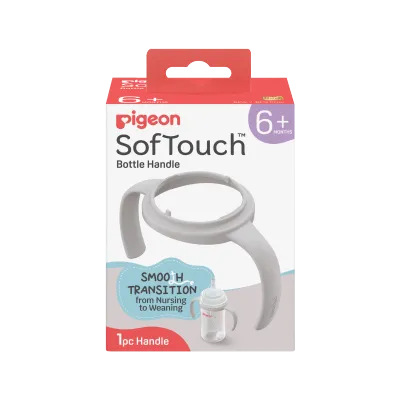
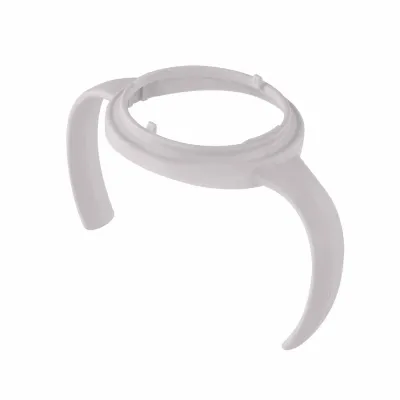
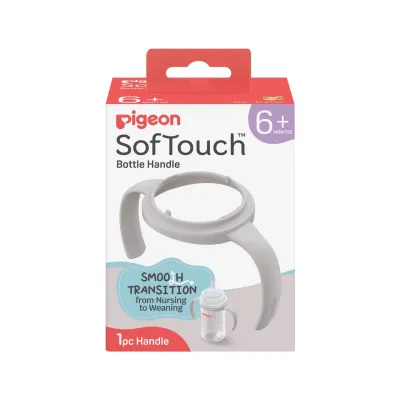
Prices are valid at publication and may change. Please refer to the product page for the latest price.
Beyond diameter, the attachment mechanism plays a crucial role in fitment. Handles generally fall into two categories: snap-on (clip-style) handles and screw-on (collar-style) handles. Snap-on handles rely on specific physical ridges molded onto the bottle’s neck or collar to clip into place. Screw-on handles, on the other hand, are held in place by the threading of the bottle’s collar itself, requiring the handle’s ring to be thin enough to allow the collar to tighten fully without stripping the threads.
Attempting to force a handle designed for a Wide Neck bottle onto a Standard Neck bottle, or vice versa, is highly discouraged. A loose handle can slip during a feed, leading to dropped bottles and potential spills, while a forced fit can crack plastic collars, strip bottle threads, or prevent a proper seal. This lack of a proper seal often results in slow leaks that disrupt feeding and frustrate your baby.
Matching Handles to Your Pigeon Bottle Series
Identifying your specific Pigeon bottle series is the most reliable way to determine which handles will fit. Pigeon offers several distinct product lines in Singapore, each tailored to different developmental stages, and their handle compatibility varies significantly.

Mag Mag and Training Cup Transitions
The Pigeon Mag Mag series and similar training cups are explicitly engineered to support your baby’s transition from bottle-feeding to independent drinking. These cups are designed with integrated handle systems or official snap-on handles that lock securely into the cup’s unique collar. Because these cups are intended for older babies developing their grip, the handles are robust and ergonomically curved.
However, these training cup handles are typically model-specific. The threading and collar dimensions of a Mag Mag cup differ from those of standard infant feeding bottles, meaning you cannot easily swap a Mag Mag handle onto a standard SofTouch feeding bottle. Always check the specific step number of your Mag Mag system (such as Step 3 for straw drinking) to ensure any replacement handle matches that exact model.
Everyday PPSU and Glass Bottles
Standard Pigeon feeding bottles, which are available in PPSU (polyphenylsulfone), T-Ester, and borosilicate glass, are primarily designed for caregiver-led feeding and do not typically come with official add-on handles. While some third-party manufacturers produce universal handles designed to slip over these bottles, using them requires caution, particularly with glass.
Glass bottles are significantly heavier than PPSU or plastic alternatives, and they lack the molded plastic ridges that allow snap-on handles to grip securely. Using a rigid, non-official universal handle on a glass bottle can create uneven pressure points, which may compromise the integrity of the glass or cause the bottle to slip out of the handle entirely. Additionally, the shape of the bottle—whether it is a straight-sided design or a curved, ergonomic shape—can interfere with how a universal handle grips the body of the bottle. Always supervise your baby closely during transitions, and prioritize lightweight PPSU bottles if you plan to introduce handles for self-feeding.
How to Verify Handle Compatibility Before You Buy
To avoid the hassle of purchasing incompatible accessories, follow this structured verification checklist before making a purchase from online marketplaces or local baby boutiques.
- Check the Bottle Base and Packaging: Inspect the bottom of your bottle or the original packaging for official markings. Identify the material (such as PPSU or Glass), the volume (e.g., 160ml or 240ml), and the series name (such as SofTouch). This information is vital because handle dimensions often differ between small and large bottle capacities.
- Read Accessory Labels Carefully: When browsing replacement handles, read the packaging or product description thoroughly. Look for an explicit list of compatible models rather than relying on vague claims like "fits most baby bottles" or "compatible with Pigeon."
- Consult Authorized Retailers: If you are unsure, visit an authorized baby product retailer in Singapore or contact Pigeon’s local customer service. Providing them with the exact model number of your bottle will ensure you receive accurate compatibility advice.
- Perform a Fit Test: Once you acquire a handle, perform a dry fit test before filling the bottle. Slide or clip the handle onto the empty bottle and check for any wobbling, gaps, or sliding. The handle should feel snug, and the bottle collar must screw down completely without resistance. If you have to use excessive force, stop immediately to prevent damaging the bottle.
How Handles Affect Warming, Sterilizing, and Cleaning
Adding a handle to your baby’s bottle introduces practical changes to your daily sterilization and preparation routine. It is important to consider how this accessory fits into your existing equipment.
- Bottle Warmers: A handle significantly increases the overall width of a feeding bottle. This added bulk may prevent the bottle from fitting into compact, single-bottle warmers or travel-sized warming chambers. You may need to remove the handle before warming and reattach it afterward, which requires extra handling.
- Sterilizers and Dishwashers: Before placing any handle into a steam sterilizer, UV sterilizer, or dishwasher, verify the manufacturer's temperature limits and material safety warnings. In UV sterilizers, handles can cast shadows that block light from reaching critical areas of the bottle neck. Ensure the handle is positioned to allow proper heat and light circulation, or sterilize it separately.
- Cleaning and Hygiene: Snap-on and slide-on handles create small crevices where milk residue, water, and moisture can accumulate, potentially leading to mold or bacterial growth. To maintain hygiene, always detach the handle completely during every wash. Clean the attachment ridges on the bottle neck thoroughly with a dedicated bottle brush and warm, soapy water.
Frequently Asked Questions (FAQ)
Can I use third-party universal handles on Pigeon bottles?
While third-party universal handles are widely available on e-commerce platforms, they are not officially tested by Pigeon. They may not provide a secure grip on the specific neck contours of your bottle. If you choose to use one, check the retailer’s return policy and test the fit over a soft surface or a sink filled with water to ensure the bottle does not slip out and break.
Do Pigeon glass bottles support snap-on handles?
Generally, Pigeon glass feeding bottles do not support standard plastic snap-on handles because glass cannot be molded with the sharp, rigid plastic ridges required for a secure snap fit. Attempting to force a plastic snap-on handle onto glass carries a high risk of scratching or cracking the bottle. For glass bottles, a flexible silicone sleeve-style handle with integrated grips is a much safer alternative, provided it is rated for use with your specific bottle size.
Community discussion
Share your experience or ask a question. Comments are reviewed before publication.