
Newborn skin is exceptionally delicate, thin, and highly sensitive to environmental factors. When preparing your baby’s nursery, clothing, and bedding, choosing the right laundry products is one of the most important decisions you will make. While fabric softeners are excellent for keeping cotton onesies and swaddles feeling cozy, many parents wonder if products like Pigeon Baby Fabric Softener are truly safe for newborns. Evaluating the ingredient list on a pigeon softener refill is essential to understanding what comes into direct contact with your baby’s skin. While baby-specific softeners are formulated to be much gentler than standard household alternatives, parents must still verify the specific ingredients, understand how they interact with sensitive skin, and perform careful home checks before incorporating them into a daily laundry routine.
Understanding the Role of Baby Fabric Softeners
Standard household fabric softeners are designed with adult preferences in mind, often containing heavy cationic surfactants, synthetic silicones, and strong artificial fragrances that are engineered to cling to fabric fibers for weeks. While these ingredients make clothes feel exceptionally slick and smell intensely fresh, they leave behind a significant amount of chemical residue. For a newborn, whose skin barrier is still developing and is up to thirty percent thinner than adult skin, these residues can easily penetrate the skin, leading to irritation, dryness, and contact dermatitis.
Baby-specific fabric softeners are formulated differently to address these vulnerabilities. Their primary goal is to maintain fabric softness and reduce static electricity without leaving a heavy, irritating residue. They typically utilize milder conditioning agents, often derived from plant sources, which smooth fabric fibers gently. Keeping fabrics soft is not just about comfort; stiff, rough fabrics can physically chafe a newborn’s skin, causing micro-abrasions that compromise the skin barrier.
Products mentioned in this guide
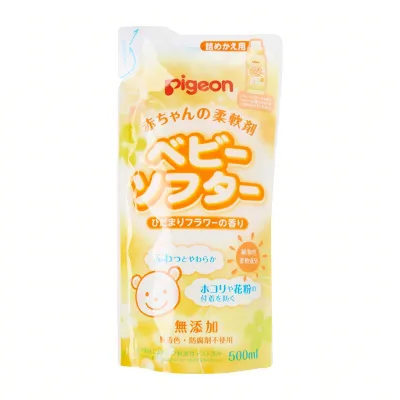
Prices are valid at publication and may change. Please refer to the product page for the latest price.
However, even the gentlest baby softener works by leaving a microscopic coating on the fabric. This coating can sometimes reduce the natural breathability and moisture-absorbing capabilities of cotton fabrics. Because newborns cannot regulate their body temperature as efficiently as older children, maintaining fabric breathability is crucial to prevent overheating and heat rashes. Therefore, understanding the balance between physical softness and fabric breathability is the first step in deciding whether to use a softener for your newborn’s laundry.
How to Evaluate Pigeon Baby Fabric Softener Ingredients
To make an informed decision, you must know how to read and interpret the ingredient list on your laundry products. When purchasing a pigeon softener refill, the full ingredient list is typically located on the back of the packaging. If the print is too small or if the refill pouch only lists general ingredient categories, you should cross-reference the product details on the manufacturer’s official website or consult their customer service channels to verify the exact formulation.

When reviewing the ingredients, look for plant-derived conditioning agents. These are often lipid-based compounds derived from natural sources like coconut or palm oil. These agents are biodegradable and tend to be much gentler on sensitive skin compared to petroleum-derived synthetic softeners. They work by lubricating the fibers naturally, reducing friction against your baby’s skin without building up a thick, impermeable layer on the fabric.
Equally important is identifying components that you should verify or avoid. Synthetic dyes are completely unnecessary in baby laundry products and serve only an aesthetic purpose; because they are common skin sensitizers, it is best to choose products that are dye-free. Fragrance is another critical factor. While some parents enjoy a mild, clean scent on baby clothes, synthetic fragrances are among the most common causes of allergic skin reactions in infants. If your newborn has a family history of eczema, asthma, or highly sensitive skin, prioritizing fragrance-free formulas is a safer approach.
Additionally, pay close attention to the preservative system used in the liquid. Preservatives are essential in liquid fabric softeners to prevent the growth of harmful bacteria, mold, and yeast during storage. However, some preservatives, such as formaldehyde-releasing agents, methylisothiazolinone (MIT), or certain parabens, can be highly irritating to newborn skin. Look for mild, food-grade, or skin-safe preservatives that keep the product stable without posing a risk to your baby.
Finally, do not rely solely on front-label marketing claims like “hypoallergenic,” “dermatologically tested,” or “natural.” These terms are often used broadly for marketing purposes and are not subject to strict, universal regulatory definitions. Always cross-reference these claims with the actual ingredient list and the manufacturer’s official specifications to ensure the product meets your standards for newborn safety.
Safety Checks for Newborn Clothing and Bedding
Introducing any new laundry product to a newborn’s environment requires a cautious, step-by-step approach. One of the most effective ways to minimize the risk of skin irritation is to ensure thorough rinsing. Always run an extra rinse cycle on your washing machine when laundering newborn clothing, bedding, and swaddles. This extra step helps flush out any excess detergent or softener residue that may have clung to the fabric fibers during the main wash cycle.
Before washing your baby’s entire wardrobe with a new fabric softener, conduct a safe patch test. Select a single, small item of clothing, such as a washcloth or a cotton onesie, and wash it using the softener according to the package instructions. Once dry, have your baby wear or interact with this single item for a few hours. Monitor the skin area in direct contact with the fabric closely for any signs of redness, tiny bumps, or localized dryness. If no reaction occurs after twenty-four to forty-eight hours, you can gradually introduce the product to other clothing items.
You should also perform regular visual and tactile checks on the washed fabrics. Feel the clothing to ensure it feels soft and light, rather than greasy, heavy, or excessively coated. Test the absorbency of your baby’s cotton towels and cloth diapers by dropping a few drops of water onto the fabric. If the water is absorbed instantly, the fabric retains its breathability and moisture-wicking properties. If the water beads up and rolls off, the softener has left too much residue, which can trap sweat against your baby’s skin and cause discomfort.
Always remain vigilant for signs of skin irritation. Newborns cannot communicate physical discomfort verbally, so they may express irritation through unexplained fussiness, rubbing against bedding, or scratching. If you notice any dry patches, redness, or hives on their skin, it is a clear indication that the current laundry routine needs to be adjusted.
Usage Guidelines and Best Practices for Refills
Transitioning to a pigeon softener refill is an economical and environmentally friendly choice, but it requires specific handling to maintain hygiene and safety. Always follow the correct dosing instructions printed on the manufacturer’s label. Over-softening is a frequent mistake that leads to excessive chemical buildup on fabrics, which not only irritates skin but can also degrade the fabric fibers over time. Use the measuring cap from the original bottle to ensure precise dosing rather than pouring the liquid directly from the refill pouch into the washing machine.
Hygiene is critical when transferring liquid from a refill pouch to the main dispenser bottle. Over time, moisture and residual liquid inside an empty bottle can become a breeding ground for mold, mildew, and bacteria. Before refilling, thoroughly wash the original bottle with warm water and a mild soap, rinse it completely, and allow it to dry entirely. This simple step ensures that you are not introducing contaminants into your fresh batch of fabric softener.
Before purchasing a refill pouch, verify its packaging integrity. Check that the seals are completely intact, and look for clear batch codes and expiration dates. In Singapore’s warm and humid climate, storing laundry products correctly is essential. Keep both the refill pouches and the main bottles in a cool, dry place away from direct sunlight, as extreme heat can cause the ingredients to separate, degrade, or lose their effectiveness.
Water temperature also plays a role in how well the softener performs. Most baby fabric softeners are formulated to dissolve and distribute evenly in cool or lukewarm water. If your washing machine’s rinse cycle uses water that is too cold, the softener may not dissolve completely, leading to uneven distribution and concentrated spots of residue on your baby’s clothes.
When to Stop Using and Seek Alternatives
Knowing when to discontinue using a fabric softener is vital for protecting your newborn’s health. You should stop using the product immediately if your baby exhibits any signs of an allergic reaction or skin sensitivity. Immediate cessation triggers include unexplained skin rashes, hives, dry eczema flare-ups, or respiratory symptoms such as sudden sneezing, coughing, or wheezing when exposed to freshly washed fabrics.
If an adverse reaction occurs, take immediate steps to clear the residue from your baby’s environment. Strip-wash all recently laundered clothing, bedding, and swaddles. To do this, run the items through a hot wash cycle using a sensitive-skin, fragrance-free detergent and absolutely no fabric softener. You may need to run multiple rinse cycles to ensure that all lingering chemical residues are completely flushed from the fabric fibers.
If your baby’s skin irritation does not improve within a few days of stopping the softener, or if the rash appears severe, spreads rapidly, or causes significant distress, consult a pediatrician or a pediatric dermatologist. They can help determine whether the reaction was caused by the fabric softener, a detergent, or another environmental factor, and provide appropriate medical guidance.
If you decide that liquid fabric softeners are not suitable for your newborn, there are several safe alternatives to keep fabrics soft. You can use 100% wool dryer balls in the clothes dryer, which naturally soften fabrics by gently separating the fibers as they tumble. Alternatively, adding a small cup of distilled white vinegar to the washing machine’s fabric softener compartment helps strip away stiffening detergent residues naturally, leaving clothes soft and completely residue-free.
Frequently Asked Questions (FAQ)
Can I use regular fabric softener if I run out of the baby-specific one?
No, you should avoid using regular adult fabric softeners on newborn clothing and bedding. Adult formulations contain significantly higher concentrations of strong cationic surfactants, heavy synthetic silicones, and intense artificial fragrances designed to linger on fabrics. These ingredients are highly likely to irritate a newborn’s delicate skin barrier and can trigger allergic reactions or contact dermatitis. If you run out of baby-specific softener, it is far safer to skip the softener entirely for that load of laundry rather than substituting it with an adult product. Your baby’s skin safety should always take priority over fabric softness.
Does fabric softener reduce the flame resistance of baby sleepwear?
Yes, fabric softeners can significantly reduce the flame resistance of baby sleepwear and swaddles. Softeners work by coating fabric fibers with a thin, lubricating layer of chemicals. This chemical coating can mask or degrade the flame-retardant treatments applied to children’s sleepwear, making the garments more flammable and posing a safety hazard. Always check the care label on your baby’s sleepwear before washing; many manufacturers explicitly state that you should not use fabric softeners on flame-resistant garments to maintain their safety standards.
Community discussion
Share your experience or ask a question. Comments are reviewed before publication.