
Quick Answer: Which Baby Food Maker Works Best?
Choosing the right baby food maker depends on your daily kitchen routine, available counter space, and how you prefer to manage meal preparation. The Philips Avent baby food maker is highly regarded for its compact, vertical design and its signature single-jar steam-and-blend workflow. By allowing parents to steam ingredients and simply flip the jar upside down to blend, it minimizes food transfer, reduces cleanup time, and fits easily into smaller kitchens. This makes it an excellent option for preparing fresh, single-meal portions or small batches during the early stages of weaning.
In contrast, competing brands often cater to different preparation styles by offering larger capacities, multi-tier steaming baskets, or dedicated defrosting and reheating cycles. These multi-basket systems allow you to cook different food groups—such as proteins and vegetables—at the same time without mixing their flavors. Ultimately, the best machine for your home is determined by whether you prioritize a quick, single-jar cleanup or the ability to prepare large, varied batches to freeze for the week.
Core Comparison: Steaming and Blending Capabilities
Preparing homemade baby food involves two primary mechanical steps: steaming to cook the food while preserving its nutritional value, and blending to achieve a safe, age-appropriate consistency. Understanding how different brands design these functions reveals which machine will integrate most smoothly into your daily routine.
Products mentioned in this guide
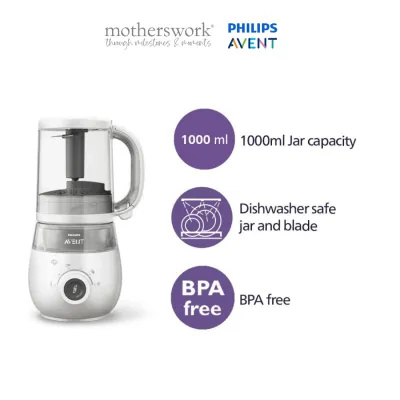
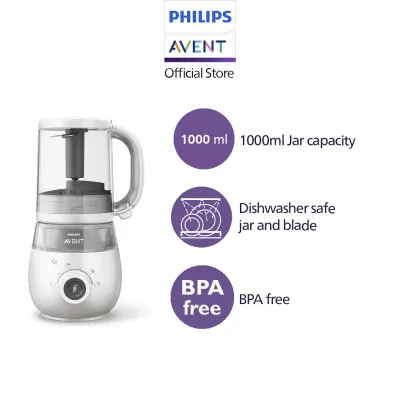
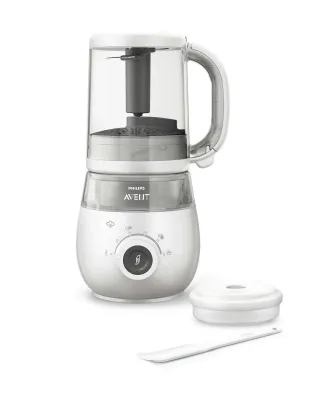
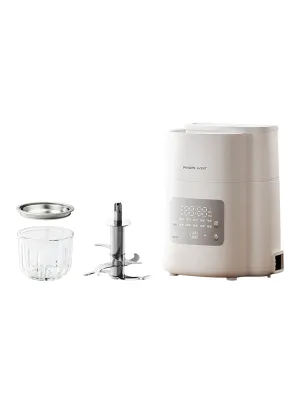
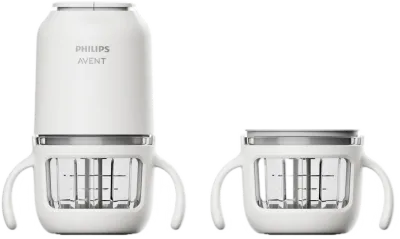
Prices are valid at publication and may change. Please refer to the product page for the latest price.

Steaming Efficiency and Basket Design
Steaming is an ideal cooking method for infant nutrition because it uses gentle, indirect heat to cook food, which helps retain water-soluble vitamins and minerals that can otherwise leach out during boiling. The efficiency of this process depends heavily on the water tank capacity, steam circulation, and basket configuration of the appliance.
The Philips Avent baby food maker utilizes a streamlined, single-basket design. In this system, steam is generated in the base and rises directly through the raw ingredients inside the jar. Once the steaming cycle finishes, you do not need to transfer the hot food; instead, you lift the jar, flip it upside down, and lock it back onto the base to begin blending. This closed system keeps all the nutrient-rich cooking juices inside the jar, allowing them to be reincorporated during the blending phase. This is highly efficient for single-ingredient purees or simple combinations where ingredients cook at similar rates.
Conversely, many competing brands feature multi-tier steaming baskets stacked vertically or arranged side-by-side. This design allows you to separate food groups during the cooking process. For example, you can place chicken or fish in the bottom basket—which receives the most direct heat—and delicate vegetables or fruits in the upper baskets. This prevents the transfer of flavors and allows you to remove faster-cooking items early to prevent overcooking.
When evaluating these designs, parents should verify the maximum raw ingredient volume, typically measured in grams or milliliters, on the product label or in the manufacturer’s manual. Marketing descriptions such as “large capacity” can be highly subjective and may refer to the total volume of the jar rather than the actual capacity of the steaming basket. For safe and thorough cooking, steam must circulate freely around the food. Packed baskets can lead to uneven heat distribution, leaving some areas undercooked. Parents must always cut raw ingredients into uniform cubes—typically between 1cm and 1.5cm, as recommended by most manufacturers—to ensure the steam thoroughly penetrates to the center of every piece.
Blending Texture and Minimum Volume Limits
Once food is cooked, the blending mechanism must transform it into a texture that matches your baby’s current developmental stage. This transition ranges from ultra-smooth purees at the start of weaning (around six months of age) to thicker, chunkier textures as the baby develops chewing skills (around eight to ten months). The success of this process depends on blade design, motor power, and the physical shape of the blending container.
The Philips Avent system blends directly in the same jar used for steaming. When the jar is flipped into the blending position, the blade assembly sits at the bottom, and gravity naturally pulls the steamed food down into the spinning blades. This configuration is highly effective at creating incredibly smooth, consistent purees with minimal added liquid. However, because the jar is optimized for this dual-purpose flip design, it may have a more restricted physical shape compared to dedicated blending containers, which can make processing very large batches or highly fibrous ingredients more challenging.
Some competing models feature completely separate, dedicated blending jugs equipped with high-performance motors and multi-speed controls or manual pulse triggers. These machines allow for precise texture customization, making it easier to graduate from smooth purees to textured mashes and finely minced meals. The dedicated blending jugs often feature specialized blade geometries designed to handle dry or thick ingredients without requiring the addition of excess water, which can dilute the nutrient density of the meal.
Before purchasing, it is crucial to check the manufacturer’s specified minimum blending volume. Many high-capacity or multi-basket machines require a relatively large volume of food (often 150ml to 200ml or more) for the blades to engage the ingredients effectively. If you attempt to blend a portion smaller than this limit, the blades may simply spin beneath the food or fling it against the walls of the jar, leaving it unblended. If you plan to prepare fresh, single-serving meals daily rather than bulk batches, a machine with a lower minimum blending volume is far more practical.
Practical Daily Use: Cleanup, Descaling, and Storage
While functional specifications are important, the day-to-day usability of a baby food maker dictates how helpful it will actually be in a busy household. Factors like countertop footprint, ease of cleaning, and regular maintenance requirements are critical to consider before making a final decision.
In Singapore, kitchen space is often at a premium, particularly in compact HDB flats or condominium apartments. A baby food maker with a compact, vertical footprint, like the Philips Avent, occupies very little counter space and can be easily stored in a standard kitchen cabinet when not in use. Multi-basket models, especially those with side-by-side steaming and blending stations, require a much larger permanent footprint on your countertop and can be cumbersome to store and retrieve daily.
Cleaning is another repetitive task that can quickly become a chore if the appliance has a complicated design. The Philips Avent consists of relatively few components: the main jar, the blade assembly, a sealing ring, and the lid. This simple construction makes hand washing quick and straightforward. While many manufacturers state that their jars and blades are dishwasher-safe on the top rack, frequent exposure to high-temperature dishwasher cycles can accelerate the degradation of plastic parts and weaken silicone seals over time. Hand washing with mild, baby-safe dish soap and a soft brush is generally recommended to extend the lifespan of these components. Additionally, because Singapore’s tropical climate features high humidity, all parts must be dried completely in a well-ventilated area after washing to prevent the growth of mold or mildew in hard-to-reach crevices.
Maintenance of the heating element is vital for safety and performance. Over time, mineral deposits—commonly referred to as limescale—will accumulate inside the water reservoir of any steam generator. Even though Singapore’s tap water is safe and moderately soft, regular heating causes dissolved minerals to precipitate and form a crust on the heating element. This buildup acts as an insulator, causing the machine to heat less efficiently, take longer to steam, or shut off prematurely before the food is fully cooked. Undercooked food can pose a serious bacterial risk to infants.
To prevent this, parents must follow the manufacturer’s recommended descaling schedule, which is typically every two to four weeks depending on how frequently the machine is used. Most user manuals instruct parents to fill the water tank with a mixture of white vinegar and water, allow it to sit for several hours or run a steam cycle without food, and then rinse the tank thoroughly with clean water. Never use commercial chemical descaling agents unless they are explicitly approved by the manufacturer, as chemical residues can contaminate the steam and enter your baby’s food. Failing to descale the machine regularly can permanently damage the heating element and will void the manufacturer’s warranty.
Feature Breakdown: Philips Avent vs Leading Alternatives
To help visualize how these design philosophies translate into physical specifications, the table below outlines the general characteristics of the Philips Avent design compared to typical multi-basket and high-capacity competitors. These details are based on standard manufacturer specifications and represent general product categories rather than specific, fluctuating model numbers.
| Feature | Philips Avent (General Design) | Multi-Basket Competitor | High-Capacity Competitor |
|---|---|---|---|
| Steaming Configuration | Single jar, vertical steam path; ingredients are cooked together in one chamber. | Multi-tier stacked baskets; allows separate, simultaneous steaming of different ingredients. | Large single or dual baskets; designed for processing large volumes of a single ingredient. |
| Blending Mechanism | Flip-to-blend system; uses the same jar for steaming and blending by turning it upside down. | Separate blending jar or dedicated side station; requires transferring hot food from basket to jug. | High-powered dedicated blending station, often with variable speed or pulse controls. |
| Additional Functions | Basic models focus on steam/blend; advanced models include defrost and reheat cycles. | Often includes independent defrosting, reheating, and sterilizing functions. | Often includes advanced digital timers, pre-programmed settings, and warming modes. |
| Minimum Blending Volume | Typically low; designed to handle small, fresh single-meal portions effectively. | Moderate; requires a minimum volume to ensure blades make consistent contact with food. | High; optimized for batch cooking and may struggle with very small individual portions. |
| Cleaning & Descaling | Few parts to wash; vertical water tank requires regular descaling with vinegar. | Multiple baskets and lids to wash; separate water reservoir requires regular descaling. | Large jars and blade assemblies; spacious water reservoir requires regular descaling. |
| Counter Footprint | Compact and vertical; ideal for limited counter space and easy cabinet storage. | Moderate to wide; requires more horizontal countertop space due to stacked or side-by-side parts. | Wide; occupies significant countertop space and may be heavy to move frequently. |
Disclaimer: Specifications, accessory inclusions, and warranty terms can vary by model and region. Always check the official manufacturer websites or authorized local distributors in Singapore to verify exact product details, current availability, and local warranty coverage before purchasing.
How to Choose the Right Baby Food Maker for Your Kitchen
Selecting the ideal appliance requires balancing your cooking habits, kitchen space, and how you plan to introduce solids to your baby. Use the following conditional framework to identify which style of baby food maker best aligns with your household needs.
Choose the Philips Avent design if:
- You have limited kitchen space: If you live in a compact apartment or prefer keeping your countertops clear, the vertical, space-saving footprint of this design is highly practical.
- You want minimal cleanup: If you want to avoid washing multiple pots, baskets, and blenders, the single-jar flip-and-blend mechanism significantly reduces daily dishwashing.
- You prefer preparing fresh, small portions: If you plan to make fresh meals daily or every other day, this machine handles small volumes efficiently without requiring excess liquid.
Choose a Multi-Basket Competitor if:
- You want to cook diverse ingredients separately: If you want to prepare a complete meal containing fish, grains, and vegetables simultaneously without mixing their distinct flavors or textures during steaming.
- You want precise control over cooking times: If you prefer removing delicate vegetables early while letting meats or root vegetables continue steaming.
- You want built-in auxiliary functions: If you highly value having dedicated, separate cycles for warming bottles, sterilizing pacifiers, or defrosting pre-frozen purees in their storage pots.
Choose a High-Capacity Competitor if:
- You practice weekly batch cooking: If you prefer spending one afternoon preparing a massive quantity of purees to portion out and freeze for the entire week or month.
- You have ample counter and storage space: If your kitchen easily accommodates a larger, heavier appliance that will remain on the countertop permanently.
Choose a Basic Steamer and Standard Blender if:
- You already own quality kitchen appliances: If you already have a reliable stove-top steaming basket and a high-performance blender or food processor, you can easily prepare baby food without purchasing a single-use appliance.
- You plan to transition quickly to family meals: If you intend to follow a baby-led weaning approach or transition your baby to modified family meals early on, a dedicated baby food maker may only be useful for a very short period.
Before making your purchase, always cross-reference your family’s specific dietary plans and kitchen space with the manufacturer’s instruction manual. Verify that the appliance’s voltage is compatible with Singapore’s electrical standards (230V, 50Hz) and that you purchase from an authorized retailer to ensure valid local warranty coverage.
Frequently Asked Questions (FAQ)
Can I use a regular food processor instead of a dedicated baby food maker?
Yes, you can use a regular household food processor or standard kitchen blender to prepare baby food, but there are distinct trade-offs. Standard food processors lack an integrated steaming function, meaning you must first cook the food in a separate pot or steamer basket on your stove before transferring the hot ingredients into the processor. This increases both preparation time and the number of dishes you must wash.
Additionally, household food processors are designed to handle larger, family-sized portions. If you attempt to blend a very small, single-serving portion of baby food, the large bowl and high blade placement of a standard processor may fail to catch the ingredients, leaving you with an uneven, chunky consistency that is unsafe for early weaning. If you choose to use a standard processor, you will generally need to prepare food in much larger batches to ensure the machine blends the ingredients smoothly.
How often should I descale the water tank?
How often you need to descale depends directly on your local water hardness and how frequently you use the appliance. In Singapore, municipal tap water is moderately soft, but mineral deposits will still gradually accumulate on the heating element with daily use. As a general rule, you should descale the water tank every two to four weeks.
If you notice that the machine is taking longer than usual to complete a steaming cycle, produces less steam, makes a loud whistling sound during operation, or if you see white or rust-colored spots forming on the bottom of the water reservoir, these are clear signs that limescale has built up and immediate descaling is required. Always consult your specific model’s user manual for the exact descaling procedure. Most manufacturers recommend filling the reservoir with a solution of equal parts white vinegar and water, letting it sit to dissolve the minerals, and then rinsing it thoroughly with clean water before cooking food again.
Community discussion
Share your experience or ask a question. Comments are reviewed before publication.