
Choosing the right baby bottle is a highly personal decision that depends on your family’s daily routine, lifestyle, and feeding preferences. When deciding between NUK glass and plastic bottles, there is no single option that suits every situation. Glass bottles are generally preferred for home use and long-term durability because they resist heat degradation, scratching, and staining over time. On the other hand, plastic bottles offer excellent convenience for travel, daycare, and older babies who are learning to hold their own bottles, thanks to their lightweight and shatter-resistant design.
To make the best choice for your baby, you should evaluate how each material fits into your daily handling, cleaning, and sterilization routines. It is also essential to verify safety labels and manufacturer guidelines to ensure the bottles are used correctly at each stage of your baby’s development. By understanding the practical trade-offs of both materials, you can select the option—or combination of options—that best supports your feeding journey.
Comparing NUK Glass and Plastic Bottles: Key Features
To help you visualize the differences, it is useful to look at how these materials compare across key physical and functional categories. While both options serve the same primary purpose of delivering milk or formula, their physical properties affect how they feel in your hand and how they perform over months of daily use.
Products mentioned in this guide
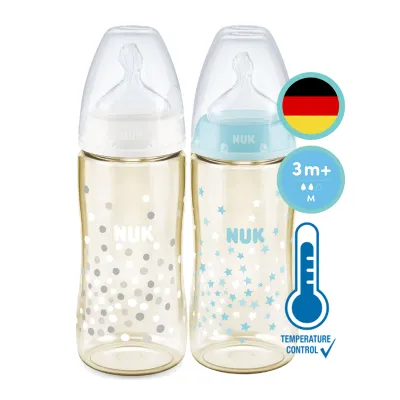
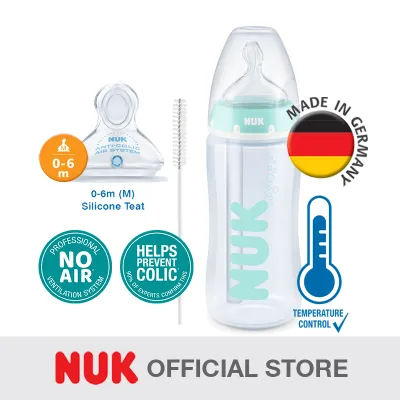
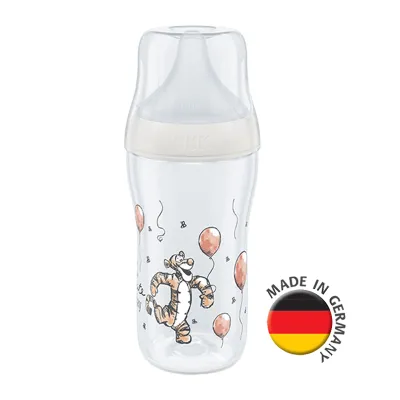
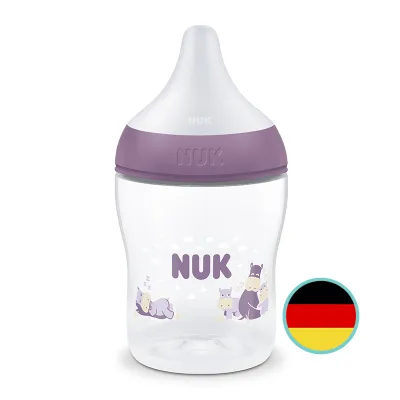
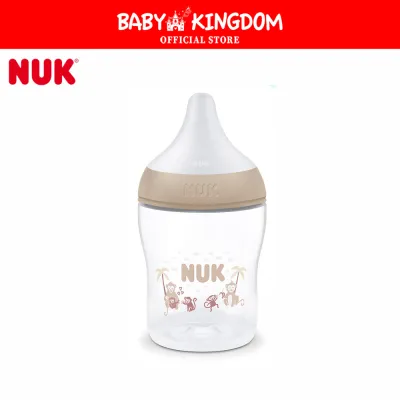
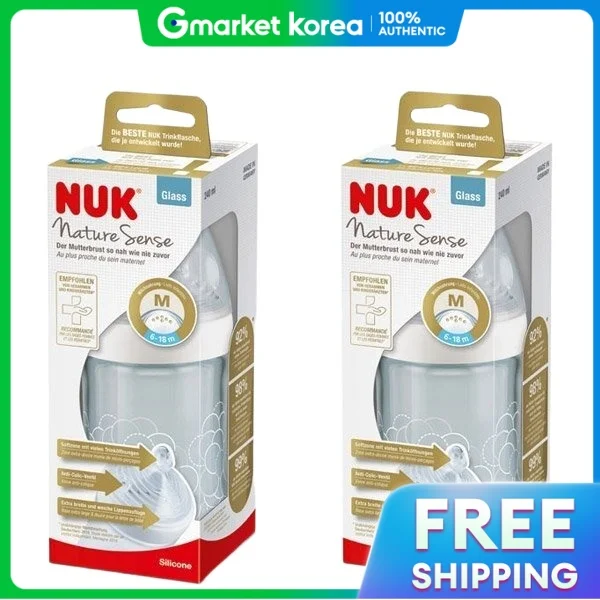
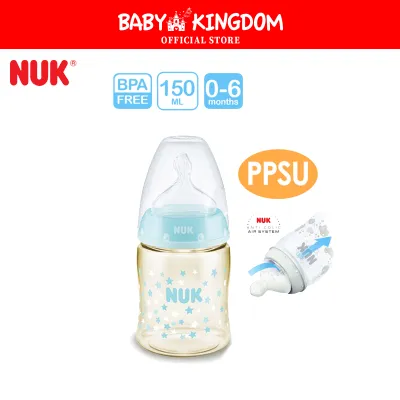
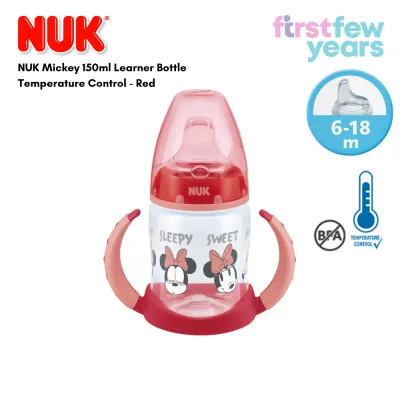
Prices are valid at publication and may change. Please refer to the product page for the latest price.
Let’s look at a quick comparison of their typical characteristics:
| Feature | Glass Bottles | Plastic Bottles |
|---|---|---|
| Weight | Heavier, solid feel | Lightweight, easy to carry |
| Drop Resistance | Fragile; can shatter or chip | Highly impact-resistant |
| Heat Tolerance | High; check packaging for limits | Variable; depends on plastic type |
| Stain & Odor Resistance | Excellent; non-porous surface | Moderate; can absorb odors over time |
| Best Suited For | Supervised home feeding, longevity | Travel, daycare, self-feeding |
When examining these bottles in person or online, you will notice distinct physical differences. Glass bottles offer high transparency, a smooth texture, and a solid grip, though they can become slippery when wet. Plastic bottles have a slightly softer texture, are easier for tiny hands to grasp, and are virtually unbreakable during normal daily use.
When shopping, always check the packaging for the specific material grade. NUK glass bottles are typically made from high-quality borosilicate glass, which is designed to withstand rapid temperature changes better than standard glass. Plastic bottles are available in different polymer types, such as Polypropylene (PP) or Polyphenylsulfone (PPSU). Each plastic type has its own thermal limits and durability profile, which you should verify on the product label before purchasing.
It is important to note that the bottle’s capacity and the nipple’s flow rate are independent of the bottle material itself. Whether you choose glass or plastic, you must select the appropriate bottle size and nipple flow rate based on your baby’s age, developmental stage, and feeding pace. Always monitor your baby during feeds to ensure the flow rate matches their swallowing ability.
Safety and Hygiene: What to Check on the Label
Ensuring the safety and hygiene of your baby’s feeding equipment is a top priority for every parent. Because safety standards and material formulations can change, you should always verify the specific certifications and chemical compositions printed on the product packaging rather than relying on general assumptions.

When purchasing plastic bottles, look closely for clear labels indicating they are BPA-free and BPS-free. Bisphenol A (BPA) and Bisphenol S (BPS) are chemical compounds historically used in some plastics that parents often prefer to avoid. Identifying the specific type of plastic—such as PP, PES, or PPSU—will give you a clearer understanding of the bottle’s heat limits and chemical stability. For instance, PPSU typically offers higher heat resistance and durability than standard PP, making it more resilient during frequent sterilization cycles.
Before sterilizing any bottle, verify the maximum temperature tolerance printed on the packaging or instruction manual. Glass bottles made of borosilicate glass can handle high temperatures, but they can still crack if subjected to extreme, sudden temperature shocks (such as moving directly from a freezer to boiling water). Plastic bottles have strict upper temperature limits that you must not exceed to prevent warping or material degradation.
Over time, all plastic bottles will show signs of wear. You should regularly inspect plastic bottles under good lighting for micro-cracks, cloudiness, scratches, or persistent discoloration. These physical changes can harbor microscopic milk residue or bacteria, making the bottle harder to sanitize. If you observe any of these signs, or if the plastic feels sticky or warped, it is time to replace the bottle immediately to maintain proper hygiene.
Durability and Daily Handling: Home vs. On-the-Go
The practical differences between glass and plastic become most apparent during daily handling and feeding sessions. The weight and breakability of each material directly impact how and where you can safely use them.
Glass bottles are significantly heavier than plastic ones, which can affect comfort during long feeding sessions. While the weight gives glass a premium, sturdy feel, it also increases the risk of accidental drops. If a glass bottle slips from your hands onto a tile floor, it can shatter or chip, creating a safety hazard in your home. For this reason, glass bottles are best suited for supervised home feeding where you can control the environment and minimize the risk of drops.
Plastic bottles are incredibly lightweight and drop-resistant, making them the ideal choice for active families. If a plastic bottle falls from a high chair or stroller, it will not break, ensuring your baby remains safe from sharp shards. This durability makes plastic the preferred option for travel, stroller trips, visits to the park, or when sending your baby to daycare.
As your baby grows and reaches developmental milestones, they will begin showing interest in holding their own bottle. Plastic bottles are much easier for older infants to grasp and lift independently due to their light weight. If an infant drops a plastic bottle onto their face or chest while learning to self-feed, the risk of injury is minimal. Conversely, glass bottles should never be left with an unsupervised baby or used for self-feeding due to the weight and shatter risks.
Cleaning, Sterilization, and Long-Term Maintenance
Keeping your baby’s bottles clean and sterile is a continuous task that requires understanding how different materials react to heat and cleaning agents. Both glass and plastic require specific care to maximize their lifespan and maintain hygiene.
Glass is a non-porous material, meaning it does not absorb liquids, fats, or odors. This makes glass bottles exceptionally easy to clean, as milk fat residue washes away quickly without leaving a greasy film. Glass is also highly resistant to staining from colored liquids and does not retain odors from previous feeds. Because glass does not degrade under high heat, you can sterilize it repeatedly using boiling water, steam, or UV sterilizers without worrying about the material clouding or breaking down over time.
Plastic bottles require a bit more care during cleaning and sterilization. Because plastic is softer and more porous than glass, it can scratch easily if you use abrasive bottle brushes. These scratches can trap milk fats and bacteria, leading to cloudiness and lingering odors. While plastic bottles are compatible with steam and boiling water sterilization, repeated exposure to high heat will eventually cause the plastic to degrade, lose its transparency, and become brittle. If you use a UV sterilizer, check the manufacturer’s guidelines, as some plastics can discolor or degrade faster under UV light.
To ensure you do not damage your bottles or void any product warranties, always read and follow the specific care and cleaning instructions provided by NUK. Avoid using harsh chemical detergents or abrasive scrubbing pads on either material. Regularly inspect the nipples, collars, and caps for wear, as these accessories typically need to be replaced more frequently than the bottle bodies themselves.
How to Decide: Matching the Bottle to Your Routine
Choosing between glass and plastic does not have to be an all-or-nothing decision. By evaluating your daily routine, lifestyle, and feeding environment, you can select the material that aligns best with your practical needs.
Choose Glass if:
- You prioritize long-term durability and want bottles that can last through multiple childhoods without degrading.
- You primarily feed your baby at home in a controlled, supervised environment.
- You want a material that is highly resistant to scratches, odors, staining, and frequent high-heat sterilization.
- You prefer a non-porous, traditional material and do not mind the extra weight.
Choose Plastic if:
- You need a lightweight, shatter-resistant option for travel, stroller outings, and daycare.
- Your baby is transitioning to self-feeding and needs a bottle they can easily lift and hold safely.
- You want to minimize the risk of heavy objects dropping onto hard floors or near your baby.
- You prefer a lower upfront cost and do not mind replacing the bottles periodically as they show signs of wear.
Many parents find that a mixed approach works best. You might choose to use glass bottles for night feeds and quiet times at home, while keeping a stock of plastic bottles in your diaper bag for outings and daycare. When preparing to buy, visit authorized local retailers or trusted online marketplaces to verify current stock, bundle options, and local S$ pricing. This ensures you receive genuine products that meet local safety standards.
Frequently Asked Questions (FAQ)
Can I mix glass and plastic NUK bottles in the same sterilizer?
Yes, you can generally sterilize both glass and plastic NUK bottles in the same steam or electric sterilizer, provided both materials are rated for the sterilizer’s operating temperature. Always check your sterilizer’s instruction manual and verify the maximum temperature limits printed on the packaging of your specific plastic bottles. Ensure that the plastic bottles do not touch the heating element directly, as this can cause localized overheating and warping.
Do NUK glass and plastic bottles use the same nipples and caps?
Nipple and cap compatibility depends on the specific NUK bottle product line rather than the bottle’s material. For example, NUK offers different systems like the Nature Sense or the First Choice+ lines. Accessories are interchangeable within the same product line and neck width (such as wide-neck or narrow-neck), regardless of whether the bottle body is made of glass or plastic. Always verify the product line name on the packaging before purchasing replacement nipples or caps to ensure a leak-free fit.

Community discussion
Share your experience or ask a question. Comments are reviewed before publication.