
Finding the right diaper for your baby in Singapore’s warm, humid climate is a balancing act between performance, comfort, and cost. While established household names like Pampers and Huggies have dominated local nursery shelves for decades, newer options like the Nina Nano diaper have entered the market, promising advanced technology and competitive value. Deciding which brand is best for your little one is not about finding a single universal winner, but rather identifying which diaper aligns with your baby’s unique physical build, skin sensitivity, and daily activity levels. By evaluating how these brands perform across the core pillars of absorbency, fit, and material comfort, you can make an informed choice that keeps your baby dry and your household budget intact.
Core Comparison Dimensions: Absorbency, Fit, and Comfort
To make an objective comparison, parents must look past marketing buzzwords and focus on observable physical indicators during daily use. Absorbency is the most critical functional requirement of any disposable diaper, especially for overnight wear when you want to minimize sleep disruptions. You can monitor absorbency by observing how quickly liquid is drawn away from your baby’s skin and checking for dampness during diaper changes. A highly absorbent diaper will feel heavy and swollen but dry to the touch on the inner lining, indicating that the core has successfully locked moisture away. If you notice frequent leaks around the legs or waist, or if the skin feels clammy upon removal, the diaper’s core may not be coping with your baby’s output volume.
Fit is equally vital, particularly as babies transition from quiet infants to active, crawling toddlers. A diaper with poor fit will either cause leaks due to gaps or leave painful red marks from being too tight. When evaluating fit, pay close attention to the elasticity of the waistband and the design of the leg cuffs. The waistband should stretch comfortably to accommodate a full tummy after feeding without digging into the skin. Leg cuffs should feature double-layered barriers that sit flat against the thighs, acting as a physical seal against blowouts. During active movement, observe whether the diaper stays securely in place or sags and shifts, which can compromise its protective seals.
Products mentioned in this guide
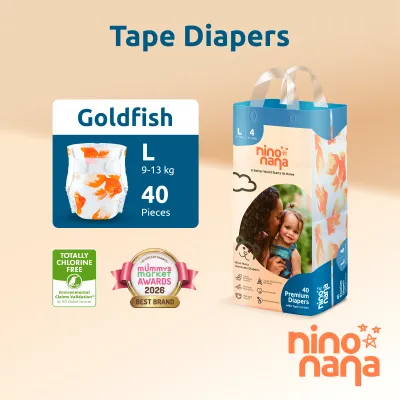
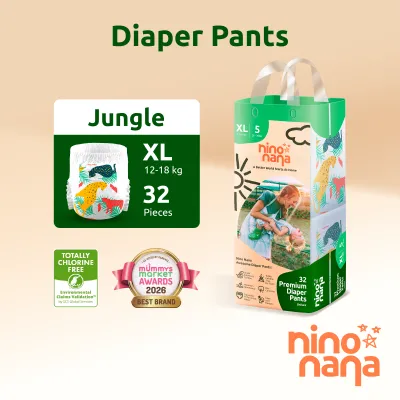
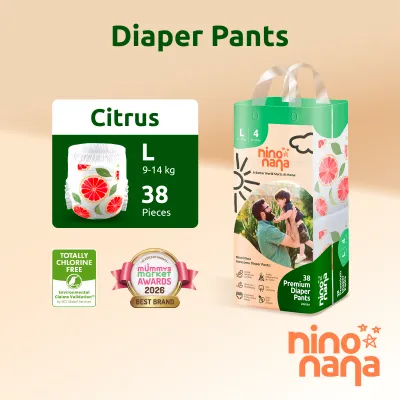
![Nino Nana MegaCase Diaper Pants [Bundle of 4] M (6-11kg) | L (9-14kg) | XL (12-18kg) | XXL (15-23kg)](https://img.lazcdn.com/g/p/6ad699409d46a942a5fcecd069362c18.png_400x400q80.png_.webp)
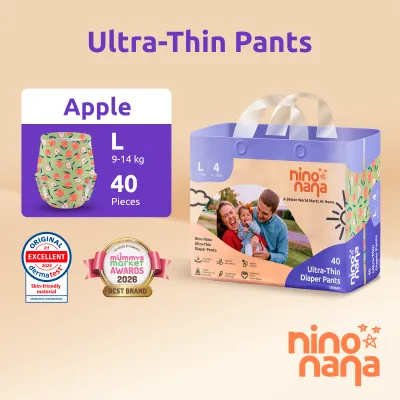
![Nino Nana Baby Ultra-Thin Diaper Pants Carton [Bundle of 3] | M (6–11kg) / L (9–14kg) / XL (12–18kg) / XXL (15–23kg)](https://img.lazcdn.com/g/p/9957fd368e89aa37136aced2c374aedf.png_400x400q80.png_.webp)
Prices are valid at publication and may change. Please refer to the product page for the latest price.
Comfort in Singapore’s tropical climate is heavily dependent on breathability and material softness. High humidity means that trapped heat and moisture can quickly lead to skin irritation or heat rash. To assess comfort, feel the inner and outer covers of the diaper; they should feel soft, fabric-like, and free of stiff, plastic-like textures. Breathability can be checked by observing if the outside of the diaper feels slightly warm or damp when full, which indicates that water vapor is escaping through the micro-pores of the outer cover. If your baby’s skin consistently shows signs of localized heat retention or redness under the waistband, it may indicate that the diaper material lacks sufficient airflow.
Nina Nano Diaper: Key Features and What to Verify
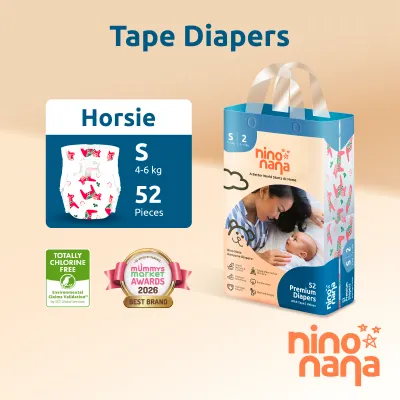
As a newer contender in the Singapore market, the Nina Nano diaper positions itself as a modern solution utilizing advanced manufacturing techniques. When considering this brand, parents should take a systematic approach to verify its packaging claims through direct inspection and trial. Start by reading the ingredient and manufacturing labels on the packaging to understand the materials used in the absorbent core and outer sheets. Look for details regarding the construction of the core, such as whether it uses a modern superabsorbent polymer (SAP) paper design, which is typically thinner and less prone to clumping than traditional wood pulp cores.

Safety and skin compatibility are paramount, so you should actively search the packaging for recognized dermatological testing logos or independent safety certifications. These certifications indicate that the materials have undergone third-party evaluation for common allergens and harmful chemical residues. However, because every baby’s skin chemistry is unique, official certifications are only the first step. The ultimate test is how the diaper performs on your baby’s skin.
When initiating a trial with Nina Nano, monitor your baby’s skin closely during the first few days of use. Check for any signs of localized redness, chafing, or diaper rash, particularly around the friction points like the inner thighs and the lower back. If the skin remains clear, dry, and free of irritation after several consecutive days of wear, it serves as a strong practical validation of the diaper’s compatibility with your baby’s skin.
Pampers and Huggies: Navigating Variants and Benchmarks
Comparing Nina Nano to established giants like Pampers and Huggies requires navigating a complex landscape of product tiers and variants. Both legacy brands offer multiple product lines ranging from budget-friendly everyday options to premium, high-performance variants. For an accurate comparison, you must ensure you are matching Nina Nano against the equivalent premium tier of the established brands, such as Pampers Premium Care or Huggies Platinum, rather than their standard entry-level lines like Pampers Baby-Dry or Huggies Ultra.
Structural differences in the absorbent cores of these brands play a significant role in how they distribute liquid. Pampers is widely recognized for its channel technology, which distributes wetness evenly across the diaper to prevent sagging and bulkiness between the legs. Huggies often features unique pocketed waistbands designed to trap runny messes at the back, along with highly textured inner liners that minimize skin contact with wetness. When comparing these to Nina Nano, observe how each diaper handles rapid liquid distribution and whether the core clumps or sags when fully saturated.
Matching the right variant to your baby’s specific daily routine is key to maximizing performance and managing costs. For instance, you might find that a highly structured, channel-based diaper is ideal for active daytime play because it maintains its shape and prevents sagging. Conversely, a variant with a thicker, high-capacity core and a pocketed waistband might be the preferred choice for overnight use, where long-lasting dryness and blowout protection are the primary goals.
Price, Value, and Sizing Considerations
Evaluating the financial impact of your diaper choice requires looking beyond the shelf price of a single pack. Because pack counts vary significantly between brands, sizes, and product tiers, the most accurate way to compare costs is by calculating the price per piece. You can easily do this by dividing the total cost of the pack by the number of diapers inside. When browsing online marketplaces or local retail platforms, keep an eye out for bulk purchase discounts, subscription models, or seasonal promotions, which can substantially lower the unit cost of premium diapers.
Sizing is another critical factor that directly influences both performance and value. Every brand utilizes its own proprietary sizing chart, which is typically based on weight ranges. However, weight is only a rough guideline; your baby’s unique body shape, such as chubby thighs or a round tummy, will greatly affect how a diaper fits. When transitioning between brands, always check the specific weight brackets on the packaging and compare them to your baby’s current measurements.
Be prepared for sizing inconsistencies between brands. A size Medium in one brand may fit snugly, while a size Medium in another might leave gaps around the legs. If your baby is approaching the upper limit of a weight bracket, or if you notice that the diaper is leaving red marks on their thighs, it is generally wise to size up, even if their weight technically falls within the current size’s range. Purchasing small trial packs or requesting samples before committing to a full carton is an excellent way to verify sizing without risking financial waste.
Decision Framework: Which Brand Should You Choose?
To help streamline your decision, a structured framework can guide your choice based on your baby’s physical needs and your household priorities.
Choose Nina Nano if you prefer a diaper that emphasizes modern, thin-core technology and you are looking for a competitive alternative to established premium brands. This option is highly suitable for parents who prioritize a lightweight feel that minimizes bulk under clothing, provided that your initial trial shows excellent skin compatibility and no leakage issues during your baby’s typical activity cycles.
Choose Pampers if your primary goal is securing a highly reliable, contoured fit that excels at even liquid distribution. This brand is particularly well-suited for active babies who require a diaper that stretches and moves with them without sagging, as well as parents who value a long-standing track record of overnight dryness and widely accessible retail availability across Singapore.
Choose Huggies if your baby has a physical build that benefits from a highly structured waistband, or if you frequently deal with back-leakage issues. The pocketed waistband design and robust leg cuffs make it an excellent choice for younger infants or babies with sensitive skin who benefit from textured inner liners designed to keep wetness away from the skin’s surface.
Verify first if your baby has extremely sensitive skin, a history of severe diaper rash, or if their physical measurements place them right on the border between two sizes. In these scenarios, regardless of the brand you choose, it is essential to monitor skin health closely, consult a pediatrician if persistent irritation occurs, and prioritize material breathability and frequent changes over any specific brand loyalty.
Frequently Asked Questions (FAQ)
Can I mix different diaper brands for day and night use?
Yes, mixing different diaper brands for daytime and nighttime use is a highly practical and cost-effective strategy for many families. During the day, when diaper changes are frequent, you can prioritize a lighter, highly breathable diaper that allows for maximum freedom of movement. For overnight use, you can switch to a high-capacity, premium diaper designed specifically for extended wear and maximum absorbency. When implementing this routine, monitor your baby’s skin to ensure they tolerate the transition between different materials and elastic designs without developing localized irritation.
How do I know if it is time to size up in a specific brand?
While weight guidelines on the packaging provide a starting point, physical signs are the most reliable indicators that it is time to size up. Look for red elastic marks around your baby’s thighs or waist, which indicate the diaper is too tight. Frequent leaks, blowouts, or a diaper that sits too low on the waist (below the belly button) also signal that the current size lacks the necessary coverage and absorbent capacity. If you find yourself struggling to fasten the adhesive tabs comfortably near the center of the waistband, it is time to transition to the next size up.
Community discussion
Share your experience or ask a question. Comments are reviewed before publication.