
Selecting the right diaper cream is essential for keeping your baby comfortable, especially when managing different skin conditions. Mustela offers several targeted diaper care formulas, primarily the Mustela 1-2-3 Vitamin Barrier Cream, the Mustela Stelatopia Soothing Diaper Cream, and specialized recovery options like Mustela Cicastela Moisture Recovery Cream. To choose the correct variant, you must evaluate your baby’s current skin state, as applying the wrong formula can fail to resolve the issue or even trap unwanted moisture.
For daily prevention on normal skin, a standard physical barrier cream is ideal to block wetness and friction. However, if your baby has naturally dry, sensitive, or eczema-prone skin, a lipid-replenishing formula is necessary to support a compromised skin barrier. When the skin is highly chafed, cracked, or showing localized damage, a targeted repair cream is required. Understanding these distinct skin needs allows you to select the formula that will most effectively protect and soothe your baby’s diaper area.
Assessing Your Baby's Diaper Area: Identifying Skin Signals
Before reaching for any tube, take a close look at your baby’s diaper area during a change. The skin’s visual appearance and texture provide direct clues about what type of topical support is needed. Normal, healthy skin in this region should feel soft, smooth, and dry, with no noticeable color changes or rough patches. If this is what you observe, your goal is simple maintenance and daily prevention to keep the skin in this healthy state.
Products mentioned in this guide
![Mustela Vitamin Barrier Cream 123 for Diaper Rash 100ml [Diaper Change Care] (exp: 09/2028 & beyond)](https://img.lazcdn.com/g/p/5c88ac90f90fcfb36d5b9fc0c103040f.jpg_400x400q80.jpg_.webp)
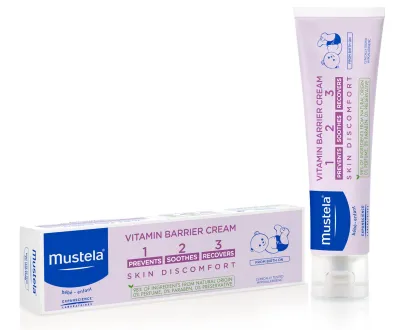
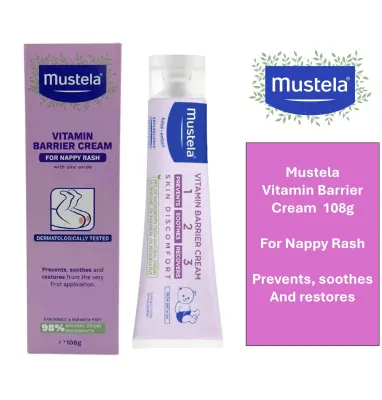
![[Mustela Bundle Deal] Vitamin Barrier Cream 100ml (exp: 09/2028 & beyond) [Nappy Diaper Change]](https://img.lazcdn.com/g/p/6ce9eb86d6f75b43faaf49a3d100bc49.jpg_400x400q80.jpg_.webp)
Prices are valid at publication and may change. Please refer to the product page for the latest price.
If you notice mild, localized redness—especially along the edges where the diaper elastic sits or where the skin folds rub together—this is typically a sign of friction and moisture-related irritation. Standard diaper rash occurs when prolonged exposure to urine and stool breaks down the skin’s natural protective layer. In Singapore’s warm and highly humid climate, sweat can also accumulate in these delicate skin folds, compounding the irritation. This type of reaction is primarily external and responds best to a thick, physical barrier that physically blocks wetness.
In contrast, some babies experience dryness, rough patches, or persistent flakiness that suggests a deeper skin barrier issue, such as eczema-prone skin. Eczema-prone skin in the diaper area is characterized by a lipid deficiency, meaning the skin struggles to retain moisture and is highly vulnerable to environmental irritants. This condition often looks less like a bright red, localized friction burn and more like a widespread, dry, slightly rough, or persistently pink area. Treating this requires more than just a physical block; it demands deep hydration and lipid replenishment to help rebuild the skin’s natural barrier.
It is vital to distinguish these common skin states from more severe dermatological issues. If you observe skin that is cracked, bleeding, oozing fluid, or showing bright red spots with smaller “satellite” pustules nearby, these are signs of a more severe rash or a potential fungal or bacterial infection. In these scenarios, over-the-counter diaper creams are not sufficient. You should skip self-selection, avoid applying standard barrier pastes which can trap infections, and consult a pediatrician immediately for a proper diagnosis and targeted treatment plan.
Mustela Diaper Cream Variants: Matching the Formula to the Need
Mustela has structured its diaper care range to address these distinct skin conditions directly. Rather than using a single, one-size-fits-all product, parents can choose a formula specifically engineered for daily prevention, lipid replenishment, or localized skin recovery. Understanding the mechanics, textures, and limitations of each variant ensures you apply the right product at the right time.

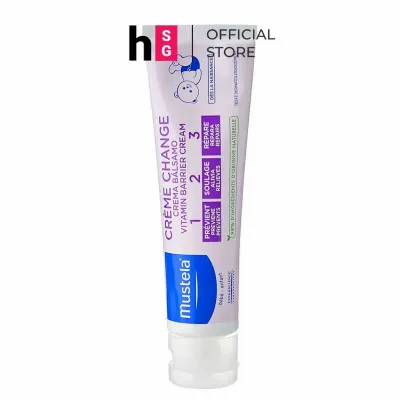
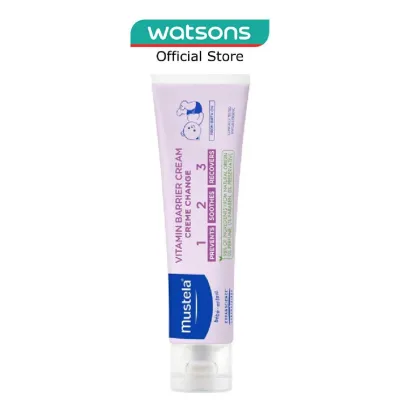
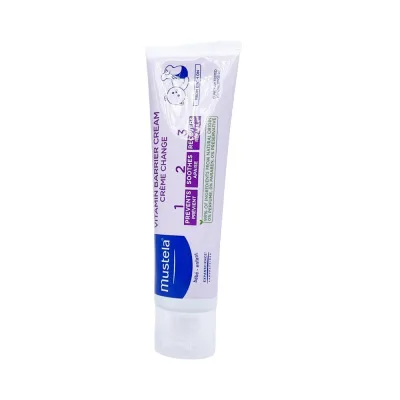
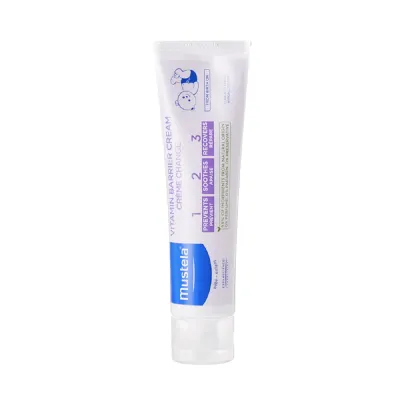
Mustela 1-2-3 Vitamin Barrier Cream (For Daily Prevention & Normal Skin)
The Mustela 1-2-3 Vitamin Barrier Cream is designed as an everyday preventive solution for babies with normal skin. Its primary objective is to act as a robust physical shield between your baby’s delicate skin and the harsh environment inside a wet diaper. By creating an occlusive layer, it prevents the acidic enzymes in urine and stool from making direct contact with the epidermis, while also minimizing the constant friction caused by diaper movement.
In terms of texture, this variant is a thick, white paste that is formulated to leave a visible, water-resistant film on the skin’s surface. It is designed to stay in place between diaper changes, ensuring continuous protection even during long sleep stretches. When applying, you will notice it has a rich consistency that requires gentle spreading to cover the area thoroughly, creating a reliable shield that resists washing away from contact with wetness.
However, this daily barrier cream has specific limitations. Because its primary function is physical occlusion and moisture blocking, it is not formulated to deliver deep hydration or lipid replenishment to a chronically compromised skin barrier. If your baby is experiencing severe dryness, flakiness, or eczema, the 1-2-3 Vitamin Barrier Cream may simply sit on top of the dry patches without addressing the underlying moisture deficit. For those conditions, a more emollient, lipid-focused formula is required.
Mustela Stelatopia Soothing Diaper Cream (For Dry & Eczema-Prone Skin)
For babies who struggle with naturally dry, sensitive, or eczema-prone skin, the Mustela Stelatopia Soothing Diaper Cream is the more appropriate choice. Eczema-prone skin lacks the essential lipids needed to maintain a strong skin barrier, making the diaper zone highly susceptible to deep irritation and persistent dryness. This variant is specifically formulated to address these systemic skin deficiencies rather than just blocking external moisture.
The core function of the Stelatopia variant is to soothe active discomfort, reduce the appearance of redness, and actively replenish the lipids in the skin’s outer layer. It works by delivering targeted hydration directly to the epidermis, helping to restore the skin’s natural barrier function over time. This makes it highly effective for babies who frequently experience rough, flaky, or dry patches in the diaper area that do not respond to standard barrier pastes.
The texture of the Stelatopia cream is typically richer and more emollient than the standard 1-2-3 cream, designed to absorb more readily into the skin to restore hydration rather than leaving an impermeable, heavy white wall. While highly beneficial for dry skin, this formula may be unnecessarily heavy or occlusive for babies with perfectly normal skin, particularly in humid tropical environments. Parents should always monitor their baby’s skin reaction, check the ingredient list for any personal sensitivities, and follow the manufacturer’s label instructions carefully.
Mustela Repair Creams (e.g., Cicastela) for Damaged or Highly Irritated Skin
When the diaper area skin is visibly damaged, chafed, or highly irritated, standard preventive barrier creams are no longer sufficient. In these situations, a targeted recovery product, such as Mustela Cicastela Moisture Recovery Cream, is designed to support the skin’s natural healing processes. These formulas are engineered for localized application on compromised skin zones rather than as an all-over daily diaper paste.
The primary function of a repair cream is to promote epidermal recovery, soothe intense localized irritation, and keep the affected area clean and protected while it heals. Unlike daily barrier creams, which focus on blocking external wetness, repair creams deliver active soothing agents and purifying ingredients directly to the irritated skin cells, helping to restore comfort and speed up the natural skin renewal cycle.
Before using any repair cream in the diaper area, it is critical to read the specific product packaging and manufacturer instructions to confirm that the formula is approved for use in the diaper zone. Additionally, parents must observe strict safety boundaries: never apply repair creams to open wounds, bleeding skin, or weeping lesions. If the skin barrier has broken down to this extent, you must seek professional medical guidance before applying any over-the-counter product.
Quick Comparison Matrix: Selecting the Right Variant
To help you quickly identify the best product for your baby’s current skin condition, the following comparison matrix outlines the key differences between the primary Mustela variants.
| Variant Name | Best For (Skin Type) | Primary Function | Texture / Feel | When to Use |
|---|---|---|---|---|
| Mustela 1-2-3 Vitamin Barrier Cream | Normal skin; daily prevention | Blocks wetness and friction; isolates skin from waste | Thick, white, water-resistant paste | At every diaper change for daily protection |
| Mustela Stelatopia Soothing Diaper Cream | Dry, sensitive, or eczema-prone skin | Replenishes lipids; soothes discomfort; restores barrier | Rich, emollient cream; absorbs well | When skin is dry, flaky, or eczema-prone |
| Mustela Cicastela (Repair Cream) | Chafed, highly irritated, or damaged skin | Supports epidermal recovery; soothes localized irritation | Light, targeted cream; non-greasy | On specific irritated patches (if label-approved) |
When selecting a product, you can follow this straightforward decision path based on your baby’s current skin signals:
- Normal skin or daily prevention needs: Use the 1-2-3 Vitamin Barrier Cream to maintain a healthy moisture barrier.
- Dry, flaky, or eczema-prone skin: Use the Stelatopia Soothing Diaper Cream to replenish essential lipids and soothe dryness.
- Damaged, chafed, or severely irritated skin: Consult your pediatrician first, and use a designated, label-approved repair cream like Cicastela on localized patches if recommended.
Always check the specific product packaging before application to verify age recommendations, complete ingredient lists, and exact usage instructions, as manufacturers may update formulations over time.
Safe Application and When to Consult a Pediatrician
Applying diaper cream correctly is just as important as choosing the right variant. Even the highest-quality cream cannot perform effectively if the application process traps moisture or irritates the skin further. Following a consistent, gentle routine ensures your baby gets the maximum benefit from their diaper care products.
The first and most critical step in the application process is preparation. Always clean your baby’s diaper area gently using a soft, damp cloth or fragrance-free wipes, avoiding any aggressive rubbing. Once clean, you must allow the skin to dry completely, or gently pat it dry with a clean, soft towel. Applying a thick barrier cream over damp skin is a common mistake; this traps the moisture directly against the skin, which can worsen irritation and create an ideal environment for yeast infections, particularly in Singapore’s humid climate.
When applying the cream, use a gentle patting motion rather than rubbing it vigorously into the skin. For barrier creams like the 1-2-3 variant, apply a thick, visible layer—often compared to “frosting a cake”—over the entire diaper area, paying close attention to the skin folds and areas most prone to friction. For soothing or repair creams, apply a thin, targeted layer to the affected areas as directed by the product label.
To maintain safety, avoid mixing different medicated creams or active ointments together unless explicitly directed by a healthcare professional. Mixing products can alter their formulas, reduce their effectiveness, or cause unexpected skin reactions. Additionally, always check the expiration date on your diaper cream tubes and discard any expired products, as active ingredients can degrade over time.
While consistent diaper hygiene and the right creams can resolve most mild irritations, you must know when to stop home care and seek professional help. Discontinue use and consult a pediatrician immediately if you observe any of the following red flags:
- The diaper rash persists or continues to worsen after three days of consistent care.
- The rash displays signs of a fungal infection, such as a bright red color with distinct borders and small, red "satellite" spots spreading outward.
- The skin begins to blister, peel, bleed, or weep fluid.
- Your baby exhibits signs of severe discomfort, pain during diaper changes, or develops a fever.
Frequently Asked Questions (FAQ)
Can I use Mustela Stelatopia on my baby's normal skin?
While Mustela Stelatopia is generally safe for baby skin, it is specifically formulated and priced to address dry, sensitive, or eczema-prone skin. If your baby has normal skin without dryness or eczema, using this specialized cream is usually unnecessary. For everyday protection and moisture blocking, the standard Mustela 1-2-3 Vitamin Barrier Cream is more appropriate and cost-effective, as it is specifically designed to create the physical shield needed for daily wear.
Should I apply Mustela diaper cream at every diaper change?
Preventive barrier creams, such as the Mustela 1-2-3 Vitamin Barrier Cream, are designed for daily use and are typically applied at every diaper change to maintain a continuous protective shield against wetness and friction. In contrast, soothing or repair creams like Stelatopia or Cicastela should be used according to active skin needs, the product label, or your pediatrician’s advice. These targeted creams are generally applied only when active dryness, irritation, or localized skin damage is present.
What is the difference between a diaper barrier cream and a soothing cream?
A diaper barrier cream is primarily preventive; it sits on top of the skin to form a physical, water-resistant shield that blocks urine, stool, and diaper friction from contacting the epidermis. A soothing cream, on the other hand, is designed to absorb into the skin to address existing issues like dryness, lipid deficiency, and irritation. Always check the specific product label to understand its primary mechanism and ensure it matches your baby’s current skin needs.
Community discussion
Share your experience or ask a question. Comments are reviewed before publication.