
Selecting the right baby bottle is one of the most personal decisions you will make as a parent in Singapore. With a vast array of options lining the shelves of local baby boutiques and online marketplaces, comparing brands like Moyuum, Pigeon, Dr. Brown’s, and Tommee Tippee requires looking closely at material composition, nipple mechanics, and daily maintenance. While Moyuum has gained popularity for its minimalist aesthetic and premium material options, established brands offer distinct functional advantages, such as specialized venting systems or highly textured nipples. The ideal bottle for your household depends on your baby’s unique latch, your preferred sterilization method, and how much time you want to spend cleaning multiple components each day.
Understanding the Core Design Philosophies
Wide-neck bottles, such as those from Moyuum, Tommee Tippee, and certain Pigeon lines, mimic the natural shape of a breast to encourage a wider, more natural latch. These designs are also significantly easier to fill with formula powder without spilling and allow easier access for cleaning brushes. Standard-neck bottles, often found in traditional Dr. Brown’s designs, are narrower, making them easier for small hands to grasp and highly compatible with standard breast pump connectors, though they require a narrower latch and more precise cleaning.
Anti-colic designs aim to reduce the amount of air a baby swallows during feeding to minimize gas and discomfort. Dr. Brown’s is famous for its internal reservoir venting system, which channels air away from the milk to the back of the bottle, preventing aeration. In contrast, Moyuum, Pigeon, and Tommee Tippee typically utilize built-in anti-colic valves integrated directly into the silicone nipple base. These valves allow air to enter the bottle as the baby drinks, equalizing pressure without requiring extra internal tubes.
Products mentioned in this guide
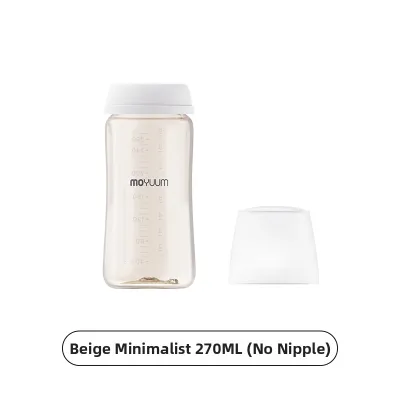
Prices are valid at publication and may change. Please refer to the product page for the latest price.
The physical shape of the bottle affects how comfortably you can hold it during long midnight feeds. Tommee Tippee features a distinct, bulbous shape designed to be held close to the body. Moyuum offers a sleek, straight-sided, minimalist aesthetic that is highly stable when set down and fits easily into standard diaper bag pockets. Pigeon bottles often feature a subtle curve that balances comfort for the caregiver with a shape that growing babies can eventually learn to hold under close supervision.
Material Quality and Safety Standards
Baby bottles are primarily manufactured from four materials: glass, Polyphenylsulfone (PPSU), silicone, and Polypropylene (PP). Glass is highly durable, scratch-resistant, and chemically inert, but it is heavy and prone to breaking if dropped. PPSU is a medical-grade plastic known for its honey-colored tint, exceptional durability, and high heat resistance, making it a popular premium choice for brands like Moyuum and Pigeon. Silicone bottles are soft, squeezable, and mimic the feel of skin, while PP is a lightweight, budget-friendly plastic that is highly drop-resistant but tends to scratch and cloud more quickly over time.

When purchasing bottles, always inspect the packaging to verify that all components are certified BPA-free and BPS-free. Heat tolerance is another critical specification to check, especially if you use steam, UV, or boiling water sterilizers. PPSU and glass can typically withstand temperatures well over 180 degrees Celsius, whereas standard PP plastics often have lower limits, sometimes around 110 degrees Celsius. Exceeding these limits can degrade the material prematurely, so you must cross-reference your sterilizer’s operating temperature with the manufacturer’s guidelines.
Lightweight materials like PP and PPSU are ideal for travel and for when your baby begins to show interest in holding the bottle under your watchful eye. Glass bottles, while excellent for hygiene and longevity, are best reserved for home use where they can be handled safely by an adult on carpeted or padded surfaces. Silicone bottles offer a middle ground, providing drop-resistance and a tactile grip, though they can sometimes feel less stable when placed on soft surfaces or filled with hot liquid.
Nipple Design and Flow Rate Compatibility
The nipple is the most critical point of contact for your baby, and its design heavily influences latch success. Tommee Tippee nipples feature an extra-wide, breast-like dome designed to mimic natural breast movement, which can assist babies transitioning between breast and bottle. Pigeon’s SofTouch nipples are designed with textured silicone to help the baby secure a firm, non-slip latch. Moyuum nipples feature a smooth, flexible silicone design with a gentle slope, while Dr. Brown’s offers both narrow and wide-neck options to accommodate different oral structures.
Every brand uses its own sizing system, such as Slow, Medium, Fast, or numbered stages, to designate flow rates. It is vital to remember that these age recommendations are general guidelines rather than strict rules. A specific stage nipple from one brand may flow significantly faster or slower than the equivalent stage from another. When switching brands or upgrading sizes, always monitor how your baby handles the flow during the first few feeds.
Caregivers must remain highly observant of their baby’s feeding behavior to determine if a flow rate is appropriate. If your baby is coughing, choking, sputtering, or has milk leaking from the corners of their mouth, the flow rate is likely too fast, which can increase the risk of gas or spit-up. Conversely, if your baby is sucking aggressively, collapsing the nipple, or taking an unusually long time to finish a feed while showing signs of frustration, the flow rate may be too slow. If you observe persistent feeding difficulties, consult a certified lactation consultant or pediatrician.
Cleaning, Maintenance and Daily Usability
The ease of cleaning a bottle system directly impacts your daily routine. Dr. Brown’s bottles, with their multi-piece internal venting systems, require disassembling several small parts—including the vent insert, reservoir tube, collar, nipple, and bottle body—for every single wash. Moyuum, Pigeon, and Tommee Tippee bottles are much simpler, typically consisting of only four parts: the bottle, nipple, collar, and cap. This simpler construction reduces the time spent washing and minimizes the risk of losing small components in the sink.
Before placing any bottle components into a dishwasher, microwave steam bag, or electric UV sterilizer, verify the manufacturer’s instructions for each specific part. While PPSU bottle bodies and silicone nipples are highly compatible with UV and steam sterilization, certain plastic collars, caps, or internal vent pieces may have lower heat tolerances or be prone to discoloration under UV light. Always separate all parts completely before sterilizing to ensure steam or light reaches every surface.
Narrow-neck bottles and complex venting tubes are notorious for harboring milk residue if not cleaned immediately. To maintain proper hygiene, you will need specialized tools, such as narrow wire brushes for venting tubes and curved sponge brushes for wide-neck bottle bases. Pay close attention to the rim of the bottle neck and the inner crevices of the screw collar, as dried milk can accumulate there and become a breeding ground for bacteria if overlooked during a quick wash.
How to Choose the Right Bottle for Your Baby
Consider Moyuum if you prefer a modern, minimalist aesthetic and want to invest in premium, durable materials like PPSU or soft silicone. Its wide-neck design is exceptionally easy to clean, and the straightforward assembly fits seamlessly into a busy lifestyle. It is an excellent option for parents who value aesthetic appeal alongside high-quality physical construction.
Opt for Dr. Brown’s if your baby experiences frequent colic, excessive gas, or reflux, and you are looking for a highly regarded, dedicated venting system to help manage these symptoms. While the extra parts require more cleaning effort, the physical separation of air and milk can provide significant comfort for sensitive tummies.
Choose Pigeon or Tommee Tippee if you are looking for widely accessible, highly reliable options with specialized nipple textures and shapes designed to support breast-to-bottle transitions. These brands offer a wide range of lightweight PP and durable PPSU options that are easy to find in local Singapore retail stores, making it simple to replace parts or upgrade nipple sizes at short notice.
Remember that every baby’s oral anatomy and swallowing mechanics are unique. Before purchasing a large starter set of any single brand, buy one or two individual bottles to test how your baby responds. If your baby exhibits persistent feeding difficulties, excessive spitting up, or struggles to maintain a seal, seek professional guidance from a pediatrician or a certified lactation consultant to address any underlying oral motor challenges.
Frequently Asked Questions (FAQ)
Can I mix nipples and bottles from different brands?
While some wide-neck nipples and collars may appear to have similar dimensions, cross-brand compatibility is rarely guaranteed. Even a fraction of a millimeter difference in threading or neck diameter can prevent a secure seal, leading to persistent leaks, improper air venting, or sudden nipple collapse. More importantly, an ill-fitting nipple can pose a safety hazard if it detaches during a feed. To ensure safe and consistent feeding, always stick to the manufacturer’s recommended nipple, collar, and bottle pairings.
How often should I replace baby bottle nipples and bottles?
You should regularly inspect all feeding equipment for signs of wear and tear. Silicone nipples typically need replacement every two to three months, or immediately if you notice stickiness, discoloration, swelling, or tears. Inspect plastic and silicone bottles regularly for micro-scratches, cracks, or persistent cloudiness, as these imperfections can harbor bacteria even after sterilization. Always refer to the specific replacement timelines and safety instructions provided on the product packaging.
Community discussion
Share your experience or ask a question. Comments are reviewed before publication.